

Introduction
Limecrete basement floors are lime-based, breathable floor layers that help moisture move through the slab. They differ from traditional concrete by using lime binders and softer finishes, which are more forgiving for moisture control. In practice, you’ll prep the area, mix according to the product label, and check for proper ventilation and curing.
DIY installation centers on careful surface prep, a suitable lime mix, and a controlled curing environment. Monitor moisture, follow manufacturer instructions, and compare breathability to conventional slabs to see the differences in feel and dryness. If in doubt, check local rules and the product label for mixing ratios, application thickness, and curing times before starting.
Key takeaways
- Limecrete breathability supports moisture management; ensure appropriate substrate preparation and insulation.
- Moisture control relies on proper vapor barriers and drainage planning before pour.
- Follow limecrete installation steps carefully; deviations affect curing, cracking, and breathability.
- Compared to traditional slabs, limecrete needs compatible substrates and slower drying.
- Safety: wear gloves, eye protection, and dust mask during mixing and finishing.
- Plan for ongoing maintenance, moisture monitoring, and occasional limewash or sealing checks.
Table of Contents
- Introduction
- Key takeaways
- Benefits of Limecrete in Basements
- Breathability and Moisture Control Mechanisms
- Material Specifications and Standards Explained
- Planning and Preparation Before DIY Installation
- Step-by-Step DIY Installation Process
- Safety, Common Mistakes, and Troubleshooting
- Cost, Maintenance, and Lifecycle Considerations
- Conclusion
- FAQ
Benefits of Limecrete in Basements
Limecrete brings breathability to a basement environment, helping moisture move and reducing damp surfaces that affect indoor air quality. This translates to a healthier, more comfortable living space for occupants.
In addition to moisture control, limecrete contributes to thermal mass and compatibility with traditional basement fabrics like lime plaster, stone, and timber framing. The result is a steady surface temperature and reduced risk of moisture traps when paired with appropriate insulation and detailing.
Breathability and building health
Limecrete’s breathability is its superpower. It lets moisture vapor move through, preventing damp buildup.
No trapped moisture means no mold or salt migration.
This keeps your basement air fresh and healthy. No more stuffy, damp rooms.
Thermal and acoustic advantages
Limecrete’s mass stores heat, keeping floors warm in winter. It’s like having a big, cozy thermal blanket.
Insulating aggregates can boost this effect. Ask your supplier about options.
Sound-wise, limecrete dampens noise.
Say goodbye to echoey basements and hello to peaceful spaces.
Repairability and compatibility with historic fabrics
Limecrete’s repairability is a game-changer. Need to fix a crack? Just mix up some more limecrete and patch it.
No need for heavy machinery or specialist skills. It’s like working with clay.
Historic buildings? No problem.
Limecrete plays nice with old stone, timber, and plaster. Keep your basement authentic.
Breathability and Moisture Control Mechanisms
Limecrete’s porosity and vapor permeability allow moisture to diffuse through the lime matrix and via capillary action, helping reduce surface dampness and condensation risks. This natural vapor flow supports a drier indoor environment.
Moisture buffering in lime-based mixes further stabilizes humidity by absorbing and releasing moisture as RH changes, while avoiding rigid barriers that can trap moisture. Practical DIY steps include managing curing moisture and ensuring compatibility with lime mortars and timber framing to preserve breathability.
How limecrete manages rising damp
Limecrete floors breathe. That means they let moisture move through them, instead of trapping it. Here’s how:
Moisture from the ground rises up through capillary action, like water moving in a thin straw. In limecrete, this moisture can then evaporate outwards into drier air.
To help this process, use capillary breaks – like a layer of plastic sheeting or a damp-proof membrane – below your limecrete. This stops moisture rising too quickly and overwhelming the floor’s ability to dry.
Ventilation is also key. Make sure your basement has enough air circulation to help moisture evaporate quickly.
Vapor permeability and capillarity
Limecrete deals with two types of moisture: water vapor and liquid water.
Vapor permeability lets water vapor – tiny droplets in the air – move through the limecrete. This happens by diffusion, like how heat moves from a hot cup of coffee to the cooler air around it.
Capillary action, on the other hand, is when liquid water moves up through tiny spaces, like in a straw or a sponge. Limecrete allows this too, but only to a point. It’s designed to let moisture move upwards until it reaches drier conditions, then it evaporates.
Both processes are important for controlling moisture in your basement floor. They work together to keep your limecrete dry and healthy.
Moisture risk assessment
Before you start laying your limecrete, check for signs of damp. You don’t want to trap moisture in your floor.
Check the groundwater level – is it high? If so, you might need extra protection. Look at the site drainage – does water flow away from your basement? If not, consider improving drainage before installing your limecrete.
Signs of previous damp include stains on walls or floors, musty smells, and mold growth. If you’re unsure about any of these, get a professional survey done. It’s better to be safe than sorry when it comes to moisture in basements.
Material Specifications and Standards Explained
Key lime binder options, from NHL to hydraulic lime or lime-putty, influence breathability, workability, curing, and compatibility with porous aggregates. Check the product data sheets and local guidance to confirm recommended dosages and mixing characteristics.
Aggregate choices and breathable insulation options determine strength, porosity, and moisture movement. Always review product data sheets and standards to ensure compatibility and document evidence of performance on site for future maintenance.
Choosing Lime Binders and Aggregates
Limecrete floors rely on the right mix of binders and aggregates for strength, breathability, and durability. Here’s what you need to know:
Lime Binders: Non-hydraulic lime (NHL) is ideal for breathable structures. It sets slowly, allowing better carbonation and improved strength over time. Hydrated lime can be used but may set too quickly, affecting workability and breathability. Lime-putty offers excellent workability but requires careful handling and storage.
Aggregates: Seasoned lime-sand mixes provide good compressive strength and breathability. Recycled aggregates can also be used, ensuring they’re non-reactive and free from contaminants. Avoid materials like cement or concrete that can block pores and hinder breathability.
Insulation Materials for Breathable Floors
Choosing the right insulation is crucial to maintain your floor’s breathability. Here are some options:
- Foam Glass: Provides good thermal insulation and high compressive strength. Look for products with low lambda values (0.1 W/mK or less). Avoid thin slabs that may crack under load.
- Cork: Offers excellent thermal and acoustic insulation. Check for density (around 150 kg/m³) and thickness (at least 20 mm). Avoid low-density cork that can compress too much.
- Perlite: Lightweight with good thermal properties. Ensure it’s dense enough (around 80-160 kg/m³) to provide sufficient insulation. Avoid loose-fill perlite for floor applications due to settling issues.
Standards, Testing, and Building Regs to Check
Ensure your materials meet relevant standards for a successful limecrete floor:
EN/BS Tests: Consult EN 459-1 (lime binders), EN 998-1/2 (aggregates), and relevant UK equivalents. Check for compressive strength (C-20/C-30 class) and vapor resistance (sd value).
Manufacturer Guidance: Follow manufacturer instructions for mixing, application, and curing. Conduct on-site compatibility tests to ensure materials work well together.
Building Regulations: Check local regulations regarding floor construction, insulation, and ventilation. Ensure your limecrete floor complies with these standards.
Planning and Preparation Before DIY Installation
Start by defining the project scope, site constraints, and any required permissions, followed by a high-level assessment of drainage and subfloor conditions. This helps prevent surprises during installation and reduces moisture risks later.
Gather drawings and plan access, sequencing, and safety measures. A clear plan helps coordinate materials, ventilation, and edge detailing to maintain breathability throughout the project.
Surveys, permissions, and professional input
Before diving into your DIY limecrete basement floor project, it’s crucial to gather all necessary information and approvals. Start by understanding what you’re dealing with – get a structural/ground survey if your property is on unstable ground or has a complex history.
Check for any planning permissions required for DIY work. If your project affects neighbors, like extending foundations, you’ll need to follow party wall matters. Consult with building control and consider hiring specialists for advice tailored to your site.
Remember, getting these steps right at the beginning saves time and money in the long run. Don’t skip this planning phase; it’s where your project’s success is laid out.
Sub-base, drainage, and ventilation preparation
Preparing a solid base for your limecrete floor is vital. Start with a permeable sub-base, like open-textured concrete or gravel, to allow moisture to escape. This prevents capillary rise and maintains breathability.
Ensure perimeter drainage is in place to channel water away from your basement walls. If you’re using underfloor heating or insulation, plan for underfloor ventilation. This helps maintain a consistent temperature and prevents condensation buildup.
Don’t overlook these steps. A well-prepared base ensures your limecrete floor performs as expected and lasts longer.
Tools and materials checklist
Before you mix your first batch of limecrete, make sure you have everything you need. Use this checklist to ensure a smooth DIY installation.
- Measuring devices: Tape measure, spirit level, and laser level for accurate thickness targets and control joints.
- Mixing equipment: Wheelbarrow or mixing trough, shovel, and mixing paddle (for electric drill).
- Finishing tools: Float, trowel, and edging tool for a smooth, even finish.
- Safety gear: Safety glasses, gloves, dust mask, and ear protection.
- Protective clothing: Coveralls or old clothes to protect from limecrete splashes.
- Concrete mixer (optional): For larger projects, consider renting a concrete mixer for easier mixing.
- Plastic sheeting: To protect your work area and keep moisture in during curing.
- Timber edging: For controlling the limecrete’s edges and maintaining thickness targets.
Quick rule: Check everything before you start. Missing a tool or material can halt progress and waste time.
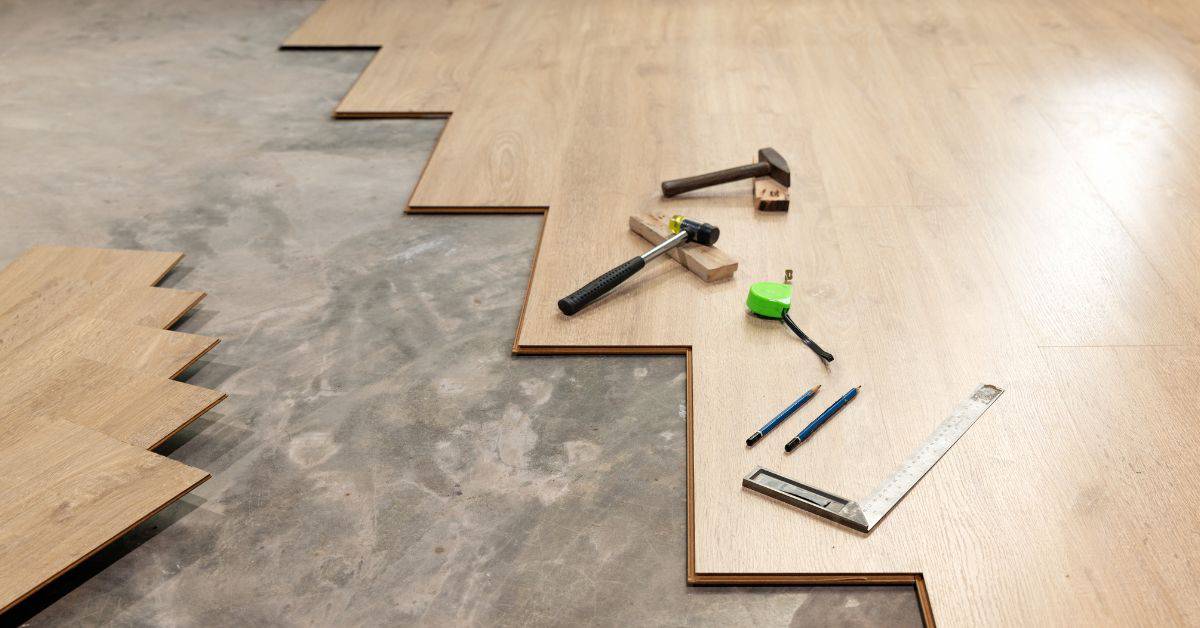
Step-by-Step DIY Installation Process
Establish edges, formwork, and continuous edge insulation, keeping breathability gaps at joints. Avoid airtight seals that could trap moisture and compromise drying.
Follow a careful limecrete batching and placement routine, manage water content for workability, and pour continuously from the source to the edge. Finish with a breathable texture and plan curing to maintain moisture control.
Step-by-Step Installation Process
The following is a clear, numbered sequence of practical steps for your DIY limecrete basement floor installation. This guide starts with preparation and safety checks, then walks you through the main work, and finishes with cleanup or final checks.
- Prepare the site: Clear debris, ensure sub-base is level and compacted, check drainage and ventilation.
- Set up edges and formwork: Establish squared edges using timber or metal formwork. Ensure breathability gaps at joints to avoid trapping moisture.
- Install insulation and moisture management: Apply a breathable insulating layer (e.g., hemp-lime or recycled glass gravel) over the sub-base, ensuring proper drainage and capillary break. If necessary, install a damp-proof course.
- Mix limecrete: Follow supplier mix instructions for correct lime-putty or hydraulic lime mix ratios, water content, and mixing sequence. Avoid over-wetting to maintain workability for the entire pour.
- Place, compact, and finish limecrete: Reduce air voids by continuous pouring from source to edge. Use screeding techniques and a lime-based rubbed finish or lattice surface while preserving breathability.
- Cure, dry, and inspect: Maintain moisture and temperature controls during curing. Monitor for cracks or carbonation indicators. Ensure safe ventilation practices.
Mixing, placing, and compacting limecrete
Correct mixing, placement, and compaction techniques ensure a strong, breathable limecrete floor. Always follow supplier mix instructions for best results.
Mixing: Combine aggregates with lime putty or hydraulic lime in the correct ratio. Gradually add water while mixing to maintain workability. Avoid over-wetting to prevent weak spots.
Placing: Pour limecrete continuously from source to edge to reduce air voids. Use a straight edge to screed and level the surface as you go.
Compacting: Use a vibrating poker or hand tamper to compact the limecrete, reducing air voids further. Ensure even compaction across the entire floor area.
Insulation, edge details, and movement joints
Proper insulation, edge details, and movement joints maintain breathability and allow for natural expansion and contraction of your limecrete floor.
Perimeter Insulation: Install continuous edge insulation around the perimeter of the floor. Use a breathable material like recycled glass gravel or hemp-lime to maintain moisture control.
Thermal Breaks: Incorporate thermal breaks at changes in floor level or where the floor meets walls to prevent thermal bridging and condensation.
Movement Joints: Install movement joints at regular intervals (every 6-8 meters) to allow for natural movement of the floor. Use a flexible material like recycled rubber or cork to fill these joints.
Finishing options and curing regime
Surface finishes and proper curing practices ensure a durable, long-lasting limecrete floor. Here are some finishing options and recommended curing practices:
Finishes: Apply a lime-based rubbed finish or lattice surface for a traditional look. Alternatively, apply boards or tiles once the floor is fully cured.
Curing: Keep the limecrete consistently moist during the initial curing period (usually 7-28 days). Cover the floor with plastic sheeting and spray it lightly with water daily. Avoid rapid drying or contamination to prevent cracking.
Final Inspection: Once cured, inspect the floor for any signs of cracking or carbonation. Address any issues promptly to maintain the integrity of your limecrete floor.
Safety, Common Mistakes, and Troubleshooting
Prioritize PPE, ventilation, and site prep tailored to limecrete and basement conditions. Be mindful of handling lime materials and the unique hazards in confined spaces.
Watch for common pitfalls such as substrate prep gaps, improper mix, and inadequate curing. Use a diagnostic approach to assess moisture, cracks, or delamination and plan corrective steps with ventilation and drying in mind.
Safety precautions and PPE
Working with limecrete, especially in basements, requires proper safety measures. Start by wearing the right personal protective equipment (PPE). This includes:
Respiratory protection: Lime dust can be harmful if inhaled. Use a suitable respirator or dust mask.
Eye and face protection: Wear safety glasses with side shields to protect your eyes from lime splashes and dust.
Skin protection: Lime can cause skin irritation. Wear long sleeves, gloves, and protective clothing to minimize contact.
Common installation mistakes to avoid
To ensure a successful limecrete basement floor, steer clear of these common pitfalls:
- Inappropriate DPM use: Don’t rely solely on a damp-proof membrane (DPM) for moisture control. Limecrete needs breathability to manage moisture.
- Poor drainage: Ensure your sub-base has adequate drainage to prevent water buildup beneath the limecrete.
- Incorrect mixes: Follow the recommended mix ratios and slump guidelines to avoid weak or poorly performing floors.
- Inadequate curing: Keep the floor consistently moist for at least 7 days after installation to allow proper curing.
Addressing these issues upfront will save you time, money, and potential headaches down the road.
Troubleshooting post-installation problems
Even with careful planning, issues can arise after installing your limecrete floor. Here’s how to diagnose and address common problems:
Moisture management issues: Look for signs like efflorescence (white powdery deposits) or damp odors. Use a moisture meter to confirm excessive moisture and adjust ventilation or insulation as needed.
Movement-related problems: Cracking, curling, or delamination can indicate movement due to settlement, thermal expansion, or inadequate support. Inspect the floor for signs of movement and consider reinforcing or reworking joints if necessary.
Insulation failures: Check your insulation materials for any signs of degradation or failure. If you suspect an issue, consult with a professional to determine the best course of action.
Cost, Maintenance, and Lifecycle Considerations
Cost drivers include the lime-based materials, additives, labor for mixing and finishing, and any insulation or vapor management measures. Plan for contingencies and potential damp-proofing needs as part of the budget.
Consider long-term maintenance needs like crack monitoring, moisture checks, and occasional surface refreshes. Evaluate quotes by requesting spec sheets, test data, and warranty terms to compare life-cycle implications.
Cost comparison and budgeting tips
The primary cost drivers for limecrete basement floors are materials, labor, site preparation, insulation, and curing conditions. Lime-based mixes, lime-putty or additives, mixing, trowelling, surface prep, and any damp-proofing or vapor barriers all contribute to the overall cost.
When budgeting, consider these factors:
- Materials: Prices vary by region and supplier. Get quotes from multiple sources for lime-based mixes, aggregates, and additives.
- Labor: Mixing and trowelling require skilled labor. Consider hiring experienced professionals or learning the process yourself to save costs.
- Contingencies: Allocate 10-15% of your budget for unexpected expenses like additional materials, equipment rentals, or site prep issues.
Maintenance and inspection recommendations
Regularly inspecting your limecrete basement floor ensures its longevity and performance. Here’s a simple checklist:
- Check for cracks: Inspect the surface for hairline cracks, which can widen over time if not addressed.
- Moisture ingress: Monitor for signs of moisture penetration, such as damp patches or efflorescence. This could indicate waterproofing issues.
- Efflorescence: Inspect for white powdery deposits on the surface, which can be removed with a stiff brush and mild detergent.
- Joints: Ensure movement joints remain intact and aren’t cracking or crumbling. Repoint if necessary.
- Sealing: Check sealed areas, like edges and joints, for signs of wear or damage. Reseal as needed.
- Cleaning: Clean the floor using a mild detergent and soft brush to remove dirt and debris. Avoid harsh chemicals that can damage the surface.
- Seasonal maintenance: Inspect the floor annually, paying extra attention during spring and fall when temperature changes can cause expansion and contraction.
Quick rule: Address any issues promptly to prevent minor problems from becoming major ones.
Retrofit potential and long-term performance
Limecrete is suitable for retrofits, offering a breathable alternative to traditional concrete. Its long-term performance depends on proper installation and maintenance.
Future upgrade paths: Limecrete can be easily overlaid with other floor finishes like timber or tiles, making it a versatile choice for future upgrades.
Building fabric health: Due to its breathability, limecrete helps regulate moisture levels within the building structure. This reduces the risk of damp and mold growth, prolonging the life of your basement and overall home health.
Long-term behavior: Over time, expect some natural wear and tear, such as minor cracking or efflorescence. Regular maintenance will help mitigate these issues and ensure optimal performance.
Conclusion
Breathability and proper moisture control are non negotiable for a durable limecrete floor. If you do the prep right and respect the cure and ventilation, you’ll get a solid, long-lasting surface that stays comfortable and looks finished.
Start by checking moisture baseline and the concrete slab condition, then prepare the space, mix and apply limecrete per the plan, monitor humidity and ventilation during curing, and protect the surface as it hardens. Make it a simple, repeatable sequence: test, prep, mix, install, cure, and protect—step by step, in that order, with safety as the constant.
Common mistakes to avoid: skipping a moisture test or patch test, rushing the mix or cure, and sealing or finishing too early. Safety rules are simple: wear gloves and eye protection, keep the area well ventilated, control heat and moisture during curing, and never work with unfamiliar materials without instructions. If you see active water intrusion, wide cracks, or signs of structural movement, stop and consult a professional rather than pushing on.
If the job feels beyond your comfort zone, or you’re unsure about slab moisture, structural concerns, or long-term maintenance, call a professional. With careful planning and disciplined execution, you can finish with a breathable, durable floor that supports a dry, safe basement for years to come.
FAQ
How breathable is a limecrete floor compared to traditional concrete slabs?
Limecrete breathes, so it lets moisture move in and out. It won’t trap humidity like some dense concretes can. Check the lime mix label or manufacturer instructions for any guidance on vapor permeability.
What should I know about moisture control when pouring limecrete in a basement?
Fix underlying damp issues before you start. Use proper drainage and a damp-proof layer where advised by the product instructions. If in doubt, consult the product label and local rules for moisture handling.
Is the DIY installation process for limecrete different from standard concrete slabs?
Yes. Limecrete typically uses lime putty or hydraulic lime with aggregate, not Portland cement. Work in thinner, workable layers and let each cure. Rely on the product instructions for mixing ratios, set times, and curing tips.
How does limecrete compare to traditional concrete slabs for a basement?
Limecrete is more breathable and helps manage moisture. It can be more forgiving with small cracks but may require more careful moisture control and longer curing. Review the material data and compare long-term performance to your basement conditions. If unsure, follow the manufacturer’s guidance and local recommendations.