Introduction
Choosing kitchen paint colors is about picking hues that look good in your space and hold up in real life. This guide helps you pick colors and test them before you commit. We’ll cover testing ideas, lighting, and how to compare swatches in your kitchen.
Start with a small test area by painting a swatch on the wall or taping large color samples to a cabinet panel. Observe how the color reads in morning and evening light and how it plays with cabinets, countertops, and hardware. Always follow the label directions and check manufacturer instructions for ventilation, drying, and curing, and follow any local rules.
Key takeaways
- Test color swatches on large panels in your kitchen under common lighting.
- Check primer needs and surface prep for durable topcoats on backsplash and ceilings.
- Use proper safety gear: masks, eye protection, and ventilation during painting.
- Choose finishes and test durability by washing a painted sample.
- Budget time for curing and plan touch-ups after color settles.
Table of Contents
- Introduction
- Key takeaways
- Why Kitchen Color Matters
- Top Kitchen Color Schemes to Copy (with Examples)
- How to Choose the Right Shade for Your Kitchen
- How to Test Paint Colors Safely and Effectively
- Paint Finishes, Formula Choice, and Durability Considerations
- Tools and Materials Checklist for DIY Painting
- Common Mistakes and How to Avoid Them
- Budgeting and Timeline for a Kitchen Paint Project
- Conclusion
- FAQ
Why Kitchen Color Matters
Color in a kitchen does more than look nice. It affects mood, energy, and how long you want to cook or linger at the counter. The right shade can also make small kitchens feel more open and inviting.
Color choices can influence perceived cleanliness and organization. Subtle tones can hide wear, while brighter hues can highlight features you love. When you plan for resale, choose hues that appeal to a broad range of buyers without draining personality from the space.
Color psychology for kitchens
Colors in your kitchen aren’t just about looks. They can stir up feelings and influence how you feel and act.
Warm tones, like reds, oranges, and yellows, boost appetite and energy. Think of a cozy restaurant with warm lighting.
Cool colors, such as blues and greens, have a calming effect. They can make your kitchen feel more relaxed and spacious.
High-contrast palettes can make your kitchen feel modern and dramatic. Neutral bases are versatile and timeless, letting you change up accent colors easily.
Practical impacts: light, size, and materials
Your kitchen’s paint color can look different depending on the lighting and what it’s up against. Here’s how:
- Natural Light: North-facing windows cast cool light, making warm colors appear duller. South-facing windows bring in bright, warm light that can make colors pop.
- Artificial Light: Incandescent bulbs cast a warm glow, while fluorescent or LED lights give off cooler tones. Choose bulb color temperature to complement your paint.
- Cabinet Finishes: Glossy cabinets reflect light and make colors appear brighter. Matte finishes absorb light, making colors look darker.
- Countertop Materials: Dark countertops can make walls appear lighter. Light counters do the opposite. Granite or quartz with veining can also affect how colors are perceived.
- Size and Layout: Lighter colors make small kitchens feel bigger. Darker shades can make large kitchens feel cozier.
Top Kitchen Color Schemes to Copy (with Examples)
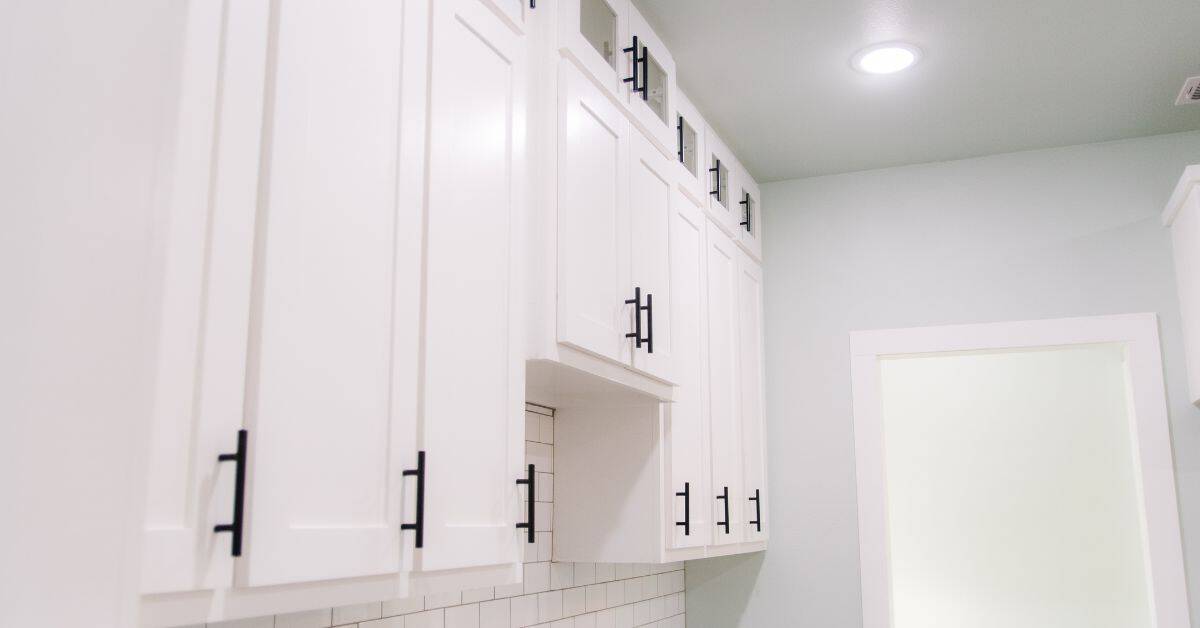
Soft neutrals paired with warm woods create a calm, timeless base that works with many styles. Add a pop with hardware or towels for a simple update. This scheme is easy to live with long term.
Bold two-tone palettes can define a zone, like a white upper cabinet with a darker lower cabinet. This approach adds depth and contrast without overwhelming the room. Use it where light and space allow it to breathe.
Classic neutrals and modern whites
When choosing whites, consider the temperature of your kitchen. Warm whites like Benjamin Moore’s ‘Simply White’ work well with traditional or transitional styles. They pair nicely with natural wood countertops and hardware.
For a cooler, more contemporary feel, try Sherwin-Williams’ ‘Alabaster’. It complements sleek quartz counters and stainless steel appliances.
Tip: Test paint samples in different lighting to see how they look at various times of day.
Bold accents and moody hues
Don’t be afraid to go dark. Deep blues like Farrow & Ball’s ‘Down Pipe’ on cabinets create a striking contrast with bright countertops. Green is another trending hue; try Sherwin-Williams’ ‘Evergreen Fog’. Balance these colors with lighter walls and plenty of natural light.
For a dramatic look, consider black cabinets. Benjamin Moore’s ‘Wrought Iron’ can make a statement, but keep the rest of the kitchen light to prevent it from feeling too heavy.
Tip: Use lighter countertops and backsplashes to offset dark cabinetry.
Two-tone kitchens and painted islands
Create contrast and cohesion with two-tone cabinets. Paint upper cabinets a lighter color than lower ones, or vice versa. This works especially well in smaller kitchens where it can create the illusion of height.
Painting your island a different color from your perimeter cabinets adds visual interest. For example, use a dark blue on the island to complement white cabinets and countertops.
Tip: Choose complementary tones that are adjacent to each other on the color wheel for a harmonious look.
How to Choose the Right Shade for Your Kitchen
Start by listing your musts: light, durability, and how often you want to repaint. Next, identify your priorities, such as warmth, brightness, or drama. This helps narrow down the options before swatching.
Assess the room’s existing finishes and natural light. Note how colors shift from morning to afternoon. Your style priorities should guide whether you lean toward calm neutrals or expressive tones.
Step-by-Step Process
Follow these practical steps to choose and apply the right paint shade for your kitchen.
- Preparation: Safety first! Clear the area, cover floors, and secure any loose items. Check for proper ventilation.
- Test patches: Paint 2×2 ft squares of your top choices in different areas to see how light affects them throughout the day.
- Live with it: Observe your test patches at various times of day, under different lighting conditions, and from all angles you’ll use the space.
- Make a decision: Choose the shade that works best with your lighting, complements existing finishes, and reflects your personal style.
- Application: Tape off edges, apply primer, then paint in 2-3 thin coats. Let dry between coats and after final application.
- Final checks: Inspect for any missed spots or drips. Touch up as needed.
Assessing lighting and orientation
Understanding how light interacts with your kitchen is key to choosing the right shade.
Observe natural light at different times of day. North-facing rooms get cooler, indirect light; south-facing rooms get warm, direct light. East and west-facing rooms see a mix.
Warm shades like yellows, oranges, and reds tend to pop in north- and east-facing kitchens. Cool shades like blues, greens, and purples work better in south- and west-facing spaces.
Pro tip: Consider artificial lighting too. Recessed lights cast even light; pendant lamps create focal points.
Matching to fixed elements (cabinets, counters, floors)
Your paint color should complement your kitchen’s existing finishes. Here’s how to ensure harmony:
For cabinets: Hold paint swatches against cabinet doors to see how they look together. Consider using a shade that’s one or two steps lighter or darker than your cabinets.
For countertops: Place swatches on the countertop itself, and also hold them up next to it. Look for colors that either contrast or complement your counters.
For floors: Swatch test against a small area of your floor. Consider using a shade that’s one step lighter than your flooring to create visual balance.
Creating a cohesive color flow through adjacent spaces
To maintain visual continuity, consider how your kitchen color transitions into adjoining rooms:
If you have an open floor plan, use the same shade in adjacent areas to create a seamless look. Or, choose shades from the same color family that are one or two steps lighter or darker.
For separate rooms, opt for complementary colors – those opposite each other on the color wheel – to create a sense of connection without being too matchy-matchy.
Pro tip: Consider using the 60-30-10 rule: 60% dominant color (walls), 30% secondary color (cabinets, counters), 10% accent color (accessories) to create balance and harmony.
How to Test Paint Colors Safely and Effectively
Use large swatches or sample pots on the wall near the main work areas. Paint boards or cardboard panels to move around the room and compare with lighting. This helps you see real-life color interactions.
Check color at different times of day to capture morning, noon, and evening light. Observe how the finish looks in these varied conditions, and document your observations for final choices.
Step-by-Step Process
Follow this clear, numbered sequence to test paint colors safely and effectively in your kitchen.
- Preparation: Gather materials (sample pots, painter’s tape, drop cloths) and ensure safety (ventilation, no naked flames).
- Choose locations: Select areas that represent different light conditions (natural, artificial) and times of day.
- Apply paint: Use sample pots to create large swatches or painted boards. Ensure they’re big enough to see color accurately.
- Observe and check: Spend time looking at the samples in various lights and times. Quickly check if colors complement fixed elements like cabinets and counters.
- Cleanup and final checks: Remove samples once you’ve made your decision, and double-check it’s right before painting.
Using sample pots and painted boards
Sample pots and painted boards are essential for accurate color testing. Here’s how to use them effectively:
Sample pots should be at least 8 oz (237 ml) to create large swatches. Apply paint directly onto the wall or a board using a roller or brush.
Place samples in locations that represent different light conditions and times of day. Observe them for at least 24-48 hours before making a decision to account for color shifts.
For painted boards, use ones large enough (at least 1 sq ft (0.3 sq m)) to see the true color and how it interacts with other elements in your kitchen.
Digital tools vs. physical samples
While digital tools can be helpful, they’re no replacement for physical samples. Here’s why:
- Color matching apps: Can give a rough idea but may not accurately represent the final color due to screen calibration differences.
- Virtual visualization tools: Help visualize colors in your space but lack the tactile experience and accuracy of physical samples.
- Augmented reality (AR) apps: Can overlay colors onto your space, providing a more realistic preview. However, they’re not perfect and still require physical samples for final decisions.
- Optional tools: Consider rentable devices like the Nix Paints color sensor ($29.99/month) to scan and match colors accurately.
Visual checkpoints for final approval
Use this checklist once you’ve narrowed down your color choices to ensure the final pick works in your kitchen.
- Consistency in different lights: Check if the color looks good under natural and artificial light at various times of day.
- Complements materials: Ensure the color works well with fixed elements like cabinets, counters, and floors.
- Meets mood goals: Confirm the color evokes the desired atmosphere in your kitchen.
- No harsh contrasts: Check for any jarring contrasts or clashes between colors and materials.
Quick rule: If a color passes all these checks, it’s likely the right choice. But trust your instincts too – if something feels off, re-evaluate.