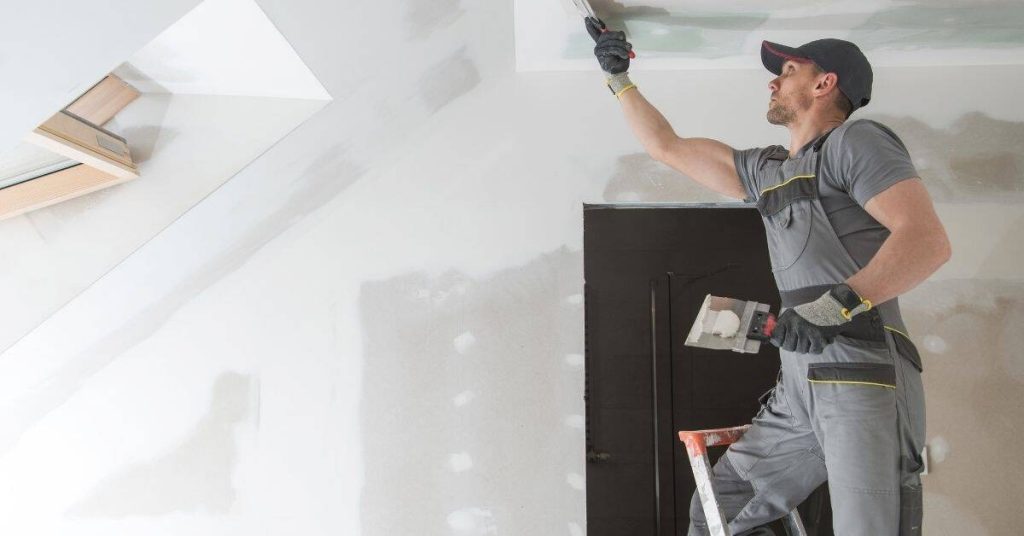
Man applying drywall compound on ceiling with putty knife

How to Sand Drywall — DIY Steps + Stop Points

Introduction

Sanding drywall is the process of smoothing taped joints and surface blemishes with abrasive paper to prepare for paint. Start by confirming the wall is clean and dry, then pick a light grit and work in gentle, even strokes. Avoid over-sanding or digging into joints, and stop based on texture, dust, and the look of the surface.

Work in light passes and wipe dust often to keep the surface visible. When you achieve a flat, uniform look with no ridges or gouges, pause and inspect the work. If you see torn paper or recessed areas, plan to re-tape or skim coat and re-sand after it dries.

Key takeaways

  • Protect the work area with plastic and seal dust containment before sanding.
  • Use a sanding block or pole sander for control; progress through grits thoughtfully.
  • Wear a respirator, safety glasses, and gloves; avoid indoor dust spread.
  • Watch for stop points: over-sanding joints, gouges, or swollen mud sections.
  • Avoid excessive water on mud; let joints cure and inspect before proceeding.
  • Clean up as you go; vacuum with a suitable filter and wipe surfaces clean.
Table of Contents

Overview: What Sanding Drywall Accomplishes and Key Stop Points

Sanding drywall removes surface imperfections and helps seams blend with the surrounding wall. It also targets high spots and ridges so the finish coat lays flat. The goal is a smooth, feathered transition with no visible fasteners.

Think of sanding as a multi-step process with checkpoints between coats. Stop points help you decide whether to add another coat, skim, or proceed to priming and finishing. Verify guidance on stop points from the product label, manufacturer instructions, or local rules before proceeding.

Why sanding matters for the final finish

Sanding drywall is crucial before painting. It ensures a smooth, uniform surface that’s ready for primer and paint.

Proper sanding helps with paint adhesion. A smooth surface lets paint stick better, reducing the risk of peeling or chipping.

It also evens out joints and repairs. Sanding feathers the edges of tape and compound, making seams less visible. It also smooths out any imperfections from patching holes.

Without sanding, your final finish will have visible bumps, ridges, or unevenness that paint can’t hide.

Where the common stop points are in the finishing process

Sanding drywall is a multi-step process with several stop points. These are decision points where you check your work and decide what’s next.

After applying each coat of compound, you’ll need to let it dry. Then, sand off any excess or high spots. This is your first stop point.

The second stop point comes after all coats of compound are applied and sanded smooth. Before priming, check for any missed spots or imperfections. Sand these out if needed.

Finally, before painting, do a light pass with fine-grit sandpaper to remove any dust or debris. This is your last stop point before applying primer.

Back to top ↑

Tools and Materials Checklist

Essentials include a sanding block or pole sander, a selection of grit abrasives, and a dust mask. Keep a brush or cloth handy to knock down dust between passes. A light, clean workspace helps you see imperfections clearly.

Optional upgrades include a powered sander for flat surfaces and specialized sanding screens for better dust control. Have spare sandpaper and drop cloths for cleanup, plus a reliable vacuum or shop vac for dust collection. Check label guidance and manufacturer recommendations to choose the right tools for your drywall type.

Essential tools for small- and large-scale jobs

Before you start sanding, make sure you have the right tools. Here’s a checklist to help you.

  • Handheld sanding blocks: For small areas and tight corners. They ensure even pressure for smooth results.
  • Sanding poles: Reach those high spots or hard-to-get-to places with these extendable tools.
  • Sandpaper (120-grit): Starter grit for initial drywall sanding. It removes major imperfections.
  • Sandpaper (150-grit): Follow-up grit to smooth out any remaining rough spots after using 120-grit.
  • Power sanders (orbital or palm sander): For large, flat areas. They speed up the job but require steady hands to avoid swirl marks.
  • Random orbital sander: Upgrade for larger jobs. It reduces swirl marks and offers better control.
  • Vacuum (wet-dry): Cleans up dust as you go, keeping your workspace tidy and reducing cleanup time.
  • Tack cloth: Removes fine dust particles left behind by sanding. It ensures a clean surface for painting or finishing.

Quick rule: Always have the right tool for the job. Using the wrong one can lead to uneven results, swirl marks, and wasted time.

Dust control and safety gear

Sanding drywall kicks up a lot of dust. Protect yourself and your workspace with these essentials.

  • Respirator: Protect your lungs from fine dust particles. Choose a NIOSH-rated N95 or P100 respirator for best results.
  • Goggles: Shield your eyes from dust and debris. Safety glasses aren’t enough – you need goggles that seal around your eyes.
  • Drop cloths: Cover the floor to contain dust and protect your flooring. Heavy-duty canvas or plastic sheeting works best.
  • Plastic sheeting: Seal off areas you don’t want to get dusty, like adjacent rooms or finished parts of your home.
  • HEPA vacuum: Clean up dust with a high-efficiency particulate air (HEPA) vacuum. It traps 99.97% of particles as small as 0.3 microns.
  • Sanding shroud (for power sanders): Attach this to your sander to contain dust at the source, reducing cleanup and protecting your lungs.

Quick rule: Don’t skimp on safety gear. Breathing in drywall dust can cause serious health issues, and proper containment keeps your job site clean and safe.

Back to top ↑

Sanding Techniques and Grit Progression (Conceptual)

Start with a more aggressive approach to address high spots and rough seams. The idea is to remove unevenness quickly without grinding too deep. Move toward finer abrasion as the surface becomes even and ready for finishing.

Use the concept of progressive smoothing rather than a fixed number. Always consult product labels or instructions for any grit recommendations. Adapt your technique based on how the surface responds and what the manufacturer suggests.

Feathering Seams and Blending Edges

The key to a smooth, seamless drywall finish is feathering your joint compound. This technique helps ease the compound edge into the drywall, making seams disappear without creating depressions.

Start by applying a thin layer of joint compound along the seam using a taping knife. Work the compound out from the center of the seam towards both sides, gradually reducing the amount of compound as you go. This creates a ‘feathered’ edge that blends smoothly into the drywall surface.

Pro Tip: Use a wider blade for your final coat to ensure a smooth, wide feathering effect.

Hand Sanding Versus Powered Sanding: Pros and Cons

When it comes to sanding drywall, you have two main options: hand sanding or powered sanding. Each method has its own set of advantages and disadvantages.

Pros of Hand Sanding

  • Better control for fine-tuning and blending edges.
  • Reduced risk of gouging the wall surface.
  • Less dust generation compared to powered sanders.
  • Ideal for small touch-ups or detailed work.

Cons of Hand Sanding

  • Time-consuming, especially for large areas.
  • Can cause fatigue and discomfort with prolonged use.
  • May not provide the same level of smoothness as powered sanders.
  • Requires more elbow grease to achieve desired results.

Powered sanding, on the other hand, is faster but offers less control. It’s ideal for large areas and initial sanding stages but may require follow-up with hand sanding for final smoothing. Choose based on job size and your skill level.

Dry Sanding Vs. Wet Sanding

Both dry sanding and wet sanding have their uses in the drywall finishing process. Understanding when to use each can help you achieve a better final result.

Dry Sanding: This method is typically used for initial sanding stages to remove excess compound and create a smooth surface. It’s faster and easier to do but generates more dust, which can be messy and potentially harmful if inhaled.

Wet Sanding or Damp-Sanding: For final smoothing, wet sanding or damp-sanding can be useful. This method involves lightly misting the wall with water before sanding. It helps control dust and allows you to see any remaining imperfections more clearly. However, it may require additional drying time for the drywall paper and can cause the paper to swell slightly if left too wet.

Pro Tip: Always test a small, hidden area first when using water to ensure it doesn’t cause any adverse reactions with your specific drywall paper.

Back to top ↑

Step-by-Step DIY Sanding Process

Begin with prepping the area: protect adjacent surfaces and remove loose material. Lightly test in a small area to gauge how the material responds. Keep the tool moving to avoid dug-in spots.

Proceed coat by coat with inspection after each pass. Gentle passes help you avoid tearing or hollow spots. If the surface looks uneven, consider the appropriate repair before moving on.

Step-by-Step Process

This section walks you through the DIY drywall sanding process, from preparation to final checks. Let’s dive right in.

  1. Preparation: Put on your safety gear and turn off HVAC systems to prevent dust circulation. Move furniture away from walls and cover floors with drop cloths.
  2. Inspect surfaces: Check for seams, screw dimples, and any imperfections. Mark them lightly with a pencil for reference.
  3. Main sanding: Start with 120-grit sandpaper on joints and screw dimples, using a sanding block for even pressure. Follow up with 150-grit to smooth out any remaining rough spots.
  4. Feather edges: Use a sanding sponge or folded sandpaper to blend seam edges into the surrounding wall surface.
  5. Final checks and cleanup: Inspect your work, making sure all seams are smooth and no screw dimples remain. Vacuum and wipe down surfaces before priming.

Prep: protecting the area and inspecting surfaces

Before you start sanding, prep your workspace to minimize damage and ensure a smooth process.

Mask off areas where dust could cause issues, like windows, doors, and baseboards. Use painter’s tape and plastic sheeting for best results.

Turn off HVAC systems to prevent dust from circulating throughout your home. Inspect surfaces carefully, looking for seams, screw dimples, and any other blemishes. Mark them lightly with a pencil so you know where to focus your sanding efforts.

Move furniture away from walls to give yourself ample space to work. Cover floors with drop cloths to protect them from dust and potential scratches.

Sanding sequence for seams, fastener spots, and repairs

When sanding drywall, it’s essential to approach joints, screw dimples, and patch areas with care to avoid over-sanding and preserve the wall’s profile.

Start by addressing joints. Use a joint knife or taping knife to ensure they’re fully set before sanding. Apply even pressure with your sanding block, working from one end of the seam to the other.

Next, tackle screw dimples. Use a sanding sponge or folded sandpaper to gently smooth out these areas. Be careful not to sand too aggressively and create divots.

For repairs, approach each patch carefully. Sand lightly, using circular motions to maintain the wall’s texture. Inspect your work frequently to ensure you’re not over-sanding or creating new imperfections.

Final pass and pre-primer checks

Before applying primer, perform visual and tactile checks to confirm a uniform surface. This step ensures you catch any missed spots or areas that need minor touch-ups.

Run your hand over the walls, feeling for any rough patches or raised seams. Sand these areas lightly with fine-grit sandpaper until smooth.

Inspect your work closely, looking for any remaining screw dimples, nail pops, or other imperfections. Address these issues with a light touch, using a sanding sponge or folded sandpaper to blend them into the surrounding surface.

Once satisfied with your drywall’s condition, vacuum and wipe down surfaces with a damp cloth to remove any residual dust. This step ensures a smooth, even primer application and helps prevent potential issues during painting.

Back to top ↑

Room with drywall panels and joint compound on seams
Shows drywall seams prepared with joint compound before corner bead installation

Stop Points — When to Pause, Repair, or Move on

Pause sanding when you see noticeable low areas, pinholes, or uneven texture. Decide whether to apply an additional coat or to skim the surface for levelness. Don’t push forward if the defect is clearly visible under light.

If a repair is needed, address it before continuing, then recheck the area. Only proceed to primer when the surface is uniformly smooth and consistent in appearance. Verify options with the instruction label or local guidelines when unsure.

Signs you need another coat of compound

Before you start sanding, inspect your drywall for any visible gaps or ridges. If you see these, it’s a sign that you need to apply another coat of joint compound.

Feathering out these imperfections with your sanding technique might not be enough. You’ll end up spending more time and effort on sanding than necessary.

Soft spots are another indicator. These occur when the compound hasn’t set properly or there’s a void underneath. Sanding won’t fix this; you need to apply more compound, let it dry, then sand again.

Signs you should stop sanding to avoid damage

Sanding too much can cause serious damage. Here are some signs to look out for:

  • Exposed paper: If you see the drywall paper, you’ve gone too far.
  • Visible gypsum: Seeing the white core of the drywall means you’re into the material itself.
  • Sudden depressions: These indicate you’ve sanded through to a void or weak spot.
  • Dust turning gray: This is a sign that you’re hitting the metal mesh inside the drywall.

If you notice any of these, stop sanding immediately. You’ll need to apply more compound and start over.

How to confirm readiness for primer

Before applying primer, make sure your drywall is ready. Here’s how:

Use angled light to inspect the surface. This helps you see any imperfections that might not be visible with the naked eye.

Perform a touch test. Run your hand over the surface. It should feel smooth and even, with no rough spots or soft areas.

Apply small primer test patches in different areas of the wall. This helps you see how the primer will look once applied. If it goes on smoothly and dries evenly, your drywall is ready for painting.

Back to top ↑

Common Problems and How to Fix Them

Dust and dulling can obscure defects and slow progress. Tackle issues by repairing first, then re-sanding to blend the repair with the surrounding area. Avoid chasing problems with more sanding than necessary.

Another frequent issue is gouges or feathered edges that appear after sanding. Fix by applying an appropriate skim or patch, then re-sand gently to blend. Always follow product directions or manufacturer guidance for repairs.

Fixing gouges, swirl marks, and over-sanded spots

When you spot deep gouges or swirl marks after sanding, don’t just keep sanding. You’ll create more damage.

For small defects: Use a joint compound to fill them in. Let it dry, then lightly sand with fine-grit paper (120-150) to smooth out any ridges.

For larger areas or deep spots: Apply a thin skim coat of compound, let it dry, then sand again. Repeat if needed until the area is smooth and even with the surrounding wall.

Dealing with stubborn texture or telegraphing joints

If you’re seeing seams through your drywall, it’s called ‘telegraphing’. Here’s how to fix it:

Light texture: Apply a thin skim coat of joint compound. Let it dry, then sand lightly with fine-grit paper.

Heavy texture or deep seams: Use a setting-type compound for better control and less shrinking. Apply a thin layer, let it dry, then sand. Repeat if needed until the seam is smooth.

Remember, feathering your compound application helps blend edges and avoid telegraphing.

Preventing dust-contaminated paint and finish issues

Dust left from sanding can ruin your paint job. Here’s how to avoid it:

Before painting: Wipe down walls with a damp cloth or use a tack cloth to remove all dust. Let them dry completely.

If you find dust in your finish: Lightly sand the affected area with fine-grit paper, then wipe it clean. Apply a fresh coat of paint.

Pro tip: Use a vacuum attachment on your sander to suck up dust as you go. This helps keep your workspace and walls cleaner.

Back to top ↑

Clean-Up, Inspection, and Tool Care After Sanding

Vacuum or wipe down surfaces to remove loose dust before it settles into joints or finishes. Inspect the area under good light to catch stray ridges or dents. Keep the workspace tidy to prevent dust from recontaminating fresh work.

Clean tools promptly to prolong life: wipe down blades and blocks, and store abrasives dry. Inspect equipment for wear and replace as needed, following the manufacturer’s care instructions. Verify any special post-sanding steps from product labels if required.

Effective dust removal and room preparation for primer

Before you prime your walls, follow this checklist to ensure a clean surface.

  • Vacuum with HEPA: Use a vacuum with a HEPA filter to remove most of the drywall dust. Skip this and dust mites can cause allergies.
  • Wipe walls with damp cloths: Wipe down walls with slightly damp cloths to capture remaining dust. Drywalls absorb moisture, so be careful not to oversaturate.
  • Use tack cloths for corners and edges: Tack cloths help remove fine dust from corners and edges where vacuums can’t reach.
  • Ventilate the room: Open windows or use fans to ventilate the room. Poor ventilation traps dust and affects paint adhesion.
  • Test for dust with a white sheet: Tape a white sheet to the wall, let it sit for 15 minutes, then check for dust transfer. If there’s none, you’re good to prime.
  • Remove drop cloths and tape: Remove any remaining drop cloths or painter’s tape from walls and floors.
  • Clean the floor: Vacuum and mop the floor to remove any dust or debris that could contaminate your primer.
  • Check for drafts: Ensure there are no open doors or windows that could let in dust while priming.

Quick rule: Always clean and prep the room before priming to ensure a smooth, dust-free finish.

Inspecting under proper lighting and taking photos

Before you sand, inspect your walls under the right light to catch any imperfections. Photos help too.

  • Use natural or angled light: Inspect walls in the morning or late afternoon when sunlight is at an angle. This helps reveal any missed spots or imperfections.
  • Check for gouges and swirl marks: Look for deep scratches, over-sanded areas, or circular marks from sanding pads. These need to be addressed before priming.
  • Inspect seams and joints: Check for any visible tape seams, low spots, or texture issues that need more compound or sanding.
  • Photograph walls: Take pictures of your walls from different angles. Photos can reveal imperfections missed with the naked eye.
  • Check corners and edges: Ensure corners are smooth and there’s no texture buildup or over-sanding at edges.
  • Inspect ceiling-wall junctions: Check for any texture issues, gaps, or low spots where the wall meets the ceiling.
  • Examine floor-wall junction: Ensure there are no texture buildups, gaps, or low spots at the bottom of walls.
  • Check for nail pops or screw holes: Look for any protruding nails or screws that need to be set and filled.

Quick rule: Always inspect your work under proper lighting and take photos to ensure a thorough job before moving on to the next step.

Storing materials and maintaining sandpaper and tools

After you’re done sanding, store your materials properly to maintain their quality for future use.

  • Store joint compound: If there’s leftover joint compound, mix it with a little water, then freeze it. Thaw and remix before using again.
  • Clean sandpaper: Remove dust from sandpaper by shaking it off or gently brushing it with a soft brush. This extends its life.
  • Store sandpaper properly: Keep sandpaper in a cool, dry place away from moisture and direct sunlight to prevent degradation.
  • Clean sanders: Remove dust from sanders by vacuuming or brushing it off. This prevents clogging and maintains tool performance.
  • Store sanders properly: Store sanders in a dry place, away from moisture to prevent rust and maintain their lifespan.
  • Clean and store vacuums: Empty vacuum bags or canisters, clean filters, and store vacuums in a cool, dry place to maintain suction power.
  • Store tools off the ground: Hang or store tools off the ground to prevent moisture buildup and keep them accessible for future use.
  • Label stored materials: Label and date any leftover materials so you know what you have and when it was opened.

Quick rule: Proper storage and maintenance of your tools and materials ensure they’re ready for use when you need them next.

Back to top ↑

Material Specs and Visual Checkpoints Explained

Understand how different compound types sand and form differently as they cure. Visual cues help you assess if material has been evenly distributed and properly feathered. Use light and shadow to confirm smooth transitions across joints.

Describe what you see with descriptive checkpoints such as uniform sheen and absence of tiny craters. Match your results to expected outcomes by comparing to reference visuals or instructions. When in doubt, check the product data sheet or manufacturer guidance for details.

Joint compound types and how they affect sanding decisions

Before you start sanding, know your compound. This checklist helps you decide when to use quick-set or drying compounds and how each affects your sanding approach.

  • Quick-set compound: Use for touch-ups or small repairs. Sand lightly after setting (about 30 minutes).
  • Drying compound: Ideal for large areas and multiple coats. Sand after full drying (24 hours min.).
  • Lightweight compound: Use for textured surfaces. Sand carefully to avoid removing texture.
  • Avoid sanding too early: Quick-set can crumble, drying can be uneven. Wait until fully set/dried.
  • Check product guidance: Some compounds require specific sanding techniques or grits.

Quick rule: Understand your compound’s type and drying time to avoid sanding issues.

Visual checkpoints for each finishing stage

Regularly inspect your work. Here are key milestones to ensure you’re on track and know when to stop sanding.

  • After first coat: Seams should be smooth, no gaps or high spots. Screw holes filled flush.
  • After second coat: Seams barely visible, slight texture remains. Screw holes slightly below surface.
  • Final sanding: Seams invisible, surface smooth as glass. No swirl marks or gouges.
  • Check corners: Ensure compound doesn’t build up or leave gaps at angles.
  • Inspect under light: Use a flashlight to check for any missed spots or texture.

Quick rule: Regularly inspect your work to catch issues early and avoid rework.

Back to top ↑

Conclusion

Getting drywall sanded right matters for safety, durability, and a smooth, ready-to-paint finish. When you respect the process and stop at the right points, you avoid costly mistakes and a rework-heavy job.

Do a quick surface check, test a small patch, set up good dust control, pick a grit progression and start with the roughest area, keep the sander light and flat, blend edges to surrounding drywall, wipe clean to reveal scratches, then recheck with good light and fix any low spots before final cleanup.

Common pitfalls to avoid are over-sanding or digging into the paper, using too aggressive a grit without protection, and skipping the recommended stop points. Wear a dust mask, eye protection, and use proper ventilation; keep movement steady, never press hard, and clean as you go to prevent buildup that hides work behind it.

If you notice persistent low spots, large defects, or a texture that won’t even out after multiple passes, it’s wise to bring in a pro instead of forcing a fix. Trust your assessment, stay safe, and you’ll finish with a solid, paint-ready surface you can be proud of.

Back to top ↑

FAQ

1. How can I tell I’m sanding too much and risking drywall damage?

Watch for faint gouges, visible gouges from the edge of the sanding pad, or thinning tape. If you see the paper near the joints or fasteners, pause and assess. Stop and recheck with a light angle and handheld mirror if needed.

2. What’s the safest way to control dust while sanding?

Keep the area well ventilated and use a vacuum-equipped sander if possible. Wear a dust mask or respirator designed for fine particulates and eye protection. Clean up frequently to prevent dust layers from hiding flaws.

3. What should I do right after finishing the final sanding pass?

Wipe down surfaces with a damp cloth to remove dust, then inspect with raking light for remaining imperfections. If you see ridges or gaps, address them before applying primer or paint. Do not rush to primer until the surface is truly smooth.

4. How can I fix common sanding mistakes before moving on to finishing?

Fill minor dips or gouges with setting-type compound and let it cure per label, then sand lightly. Recheck fastener heads and repair as needed. When in doubt, test in a small inconspicuous area first and follow manufacturer directions.

Back to top ↑