Introduction
Cutting drywall cleanly around outlets and switches means creating neat, square openings that fit the boxes without damaging the surrounding wall. You can do this with a sharp utility knife, a drywall blade, and a steady hand. Always start by turning off the circuit and marking the outline on the drywall around the box, then score the paper to guide your cut.
Cut along the lines, remove the drywall plug, and test fit the box. If the hole is tight, carefully clean the edge and trim until the face sits flush with the wall. Recheck power, and follow local rules for securing the box and mudding.
Key takeaways
- Power off at the breaker and test circuit before cutting drywall around boxes.
- Use a sharp drywall knife and keyhole saw for clean, precise cuts.
- Mark box outlines with a pencil, then double-check clearance for screws.
- Cut slightly inside the line and test fit before removing paper.
- Reinstall with backing tape or mesh, and finish with mud for edges.
- Power safety: unplug or switch off, cutting around live boxes requires caution.
Table of Contents
- Introduction
- Key takeaways
- Tools and Materials Checklist
- Preparing the Work Area and Marking Accurately
- Cutting Techniques for Clean Edges
- Working Around Different Box Types and Wall Situations
- Achieving Neat Finishes and Edge Reinforcement
- Troubleshooting Common Problems and Fixes
- Material Specs, Code Considerations, and Best Practices
- Visual Checkpoints and Step-by-Step Workflow
- Conclusion
- FAQ
Tools and Materials Checklist
Gather the basics first: a utility knife, drywall saw, and an oscillating or rotary tool for different cuts. Have straight edges, a tape measure, a pencil, and clamps handy for control. Include safety gear such as goggles, a dust mask, and gloves, plus a basic drill or driver and appropriate screws or anchors for reinstallation.
Set aside optional tools for tighter budgets or tougher jobs, like a nibbler or a multitool, and keep extra blades, sanding supplies, and joint compounds accessible. Don’t forget backing, corner beads, tape, and mud for finished edges, along with any patch materials for repair work. Always check product labels, manufacturer instructions, or local rules to confirm compatibility with your wall type and fastener choice.
Essential tools
Before you start cutting, make sure you have these must-have tools on hand. They’ll ensure your cuts are clean and precise.
- Drywall saw: Cuts through drywall quickly and easily. Without it, you’ll struggle with rough cuts.
- Rotary tool: For tight spaces where a saw can’t reach. It’s your best friend for intricate cuts.
- Utility knife: Scores the surface before cutting, preventing cracks. Don’t skip scoring; it makes a world of difference.
- Tape measure: Measures outlets and switches accurately. Inaccurate measurements lead to sloppy cuts.
- Level: Ensures your cuts are straight. Crooked cuts look unprofessional and can cause issues later on.
Quick rule: Always double-check your measurements before cutting to avoid mistakes.
Optional and specialized tools
These aren’t must-haves, but they sure make the job easier. Consider them for larger projects or when you want a pro finish.
- Oscillating tool: Cuts through drywall like butter. It’s faster than a saw and fits into tight spaces.
- Hole saws: Perfect for cutting large holes in drywall. They’re quick and leave a clean edge.
- Box templates: Trace around these to mark your cuts accurately. No more guessing or freehanding.
- Jab saw: For those hard-to-reach places where other tools won’t fit. It’s a lifesaver in tight corners.
Quick rule: The right tool for the job isn’t always the most expensive one. Sometimes, it’s just the one that fits best.
Materials and safety gear
Here’s what you’ll need to finish the job safely and efficiently. Don’t skimp on safety; it’s your most important tool.
- Drywall (gypsum board): Choose the right type for your needs – regular, moisture-resistant, or fire-rated.
- Outlet boxes: Ensure they’re the correct size and type. Too small, and you’ll struggle to fit wires; too large, and you’ll have gaps.
- Patching materials: Joint compound, tape, and drywall screws for finishing cuts neatly.
- Screws: Use the right size and type (drywall screws) to secure your outlet boxes. Wrong screws can strip or break.
- Goggles: Protect your eyes from dust and debris. Safety first, always.
- Dust mask: Keeps you breathing easy while cutting drywall. Don’t inhale that stuff; it’s not good for you.
- Work gloves: Protects hands from cuts and scrapes. No need to rough up your hands.
Quick rule: Safety gear isn’t just for big jobs. Wear it every time, no matter how small the task.
Preparing the Work Area and Marking Accurately
Power down at the breaker and verify there is no current where you’ll work. Protect surrounding surfaces with drop cloths or plastic and remove the faceplates carefully. Set up a strong light to clearly see your marking lines.
Measure twice and mark with a sharp pencil or appropriate layout tool. Use a square or straightedge to keep lines true and confirm the layout before any cut is made. If needed, verify details against the device or box manufacturer instructions or local electrical guidelines.
Power and Safety Preparation
First, locate the correct circuit for your outlet or switch. Use a non-contact voltage tester to ensure you’ve found the right one.
Always turn off power at the main panel. Test again to confirm power is off before proceeding.
Secure the area with warning tape or signs to prevent anyone from accidentally re-energizing the circuit while you’re working.
Measuring and Transferring Box Dimensions
Measure your outlet or switch box’s width, height, and depth. Most are standard sizes (e.g., 4″ x 2-1/8″ for single gang boxes).
Use a template or trace around the box onto the drywall to transfer its dimensions. Ensure you’re transferring the correct orientation, especially if your box is not square.
For non-standard sizes, measure and mark each corner individually, then connect the dots with a straight edge.
Aligning with Studs and Fixtures
Check for stud locations using a stud finder. Mark their centers on your drywall, as you’ll want to align your cut with them for support.
Ensure your box is mounted properly according to code. Typically, the center of the box should be 1-1/4″ from the ceiling and 12″ or 16″ on-center from adjacent studs.
Position your cut so that when you’re done, the faceplate will sit flush with the drywall. This usually means cutting about 3/8″ away from your marks to account for the faceplate’s thickness.
Cutting Techniques for Clean Edges
Start with scoring and snapping for straight, square openings: score along the line, then bend and snap the drywall cleanly. Clean up the edge with a sharp knife to remove any frayed paper. Watch for gentle, steady cuts rather than quick, jagged passes.
Use a jig saw, oscillating tool, or rotary tool for irregular cuts or tight corners, keeping the blade perpendicular to the surface. Make shallow passes and frequently test fit the device to prevent overcutting, referencing tool manufacturer guidance or local requirements when needed.
Score-and-snap method for thin or backer drywall
The score-and-snap method is ideal for thin or backer drywall where you want to avoid tearing the paper face. Here’s how:
First, mark your cutting line using a pencil and straightedge. Then, use a utility knife to score along this line. Press firmly but carefully to cut through the gypsum core without damaging the paper face.
Once scored, snap the drywall along the line. Start at one end and apply steady pressure as you move towards the other end. The drywall should break cleanly along the score.
Using saws and oscillating tools
Jigsaws and oscillating multi-tools are versatile for cutting drywall around outlets and switches. Here’s how to use them:
- Blade selection: Choose a fine-tooth blade (like T-shank or flush cut) for clean cuts. For jigsaws, consider blades with fewer teeth per inch (TPI).
- Plunge-cut technique: To start a cut in the middle of the drywall, first drill a pilot hole using an appropriate bit. Then, insert your blade into this hole and turn on the tool to make your cut.
- Control vibration: Apply steady pressure and keep the tool moving at a consistent speed to minimize vibrations and maintain straight edges.
- Jigsaw tips: Use the shoe (baseplate) to guide the blade along your marked line. Keep it flush against the drywall for best results.
- Oscillating tool tips: These tools are great for tight spaces and irregular shapes. Use a wood or metal cutting blade and follow the same technique as with jigsaws.
Precision with rotary tools and hole cutters
Rotary tools and hole cutters are perfect for fine cuts around irregular boxes or round device entries. Here’s how to use them:
- Rotary tool speed: Use a slow-to-medium speed (around 15,000-25,000 RPM) to avoid chipping and maintain control.
- Bit choices: For drywall, use a flush cut bit or a fine wood carving bit. Avoid using metal cutting bits as they can chip the gypsum.
- Hole cutters: These attachments create perfect circles for switch and outlet covers. Choose one that matches your desired hole size.
- Precision tips: Clamp your drywall securely to a workbench or support it with your non-dominant hand while cutting. Keep the tool moving at a steady speed.
Working Around Different Box Types and Wall Situations
For metal boxes, outline the opening and use a blade appropriate for metal or a nibbler to prevent tearing. For plastic boxes, a sharp utility knife or saw blade can work, but take care to stay on the line. Retrofit or remodel boxes may need extra length or backer support before cutting.
On tile or textured walls, score through the texture first or remove a small portion around the box, then work the cut to fit the box edges. Ensure your approach aligns with wall material specifics and follow any tile or texture installation notes from the manufacturer or local codes.
Plastic and shallow boxes
Shallow or protruding plastic boxes can be a challenge. Here’s how to handle them:
First, shave the drywall edge with a utility knife. This creates a thinner edge that fits better.
For notching, use your oscillating tool or jigsaw to cut out a small section around the box. Be careful not to damage the box itself.
Always ensure you maintain support for screws. Use drywall screws with larger heads if needed.
Metal boxes and conduits
Working around metal boxes or conduit requires some care:
When cutting, keep your blade away from the metal flange. Damaging it can cause grounding issues.
Also, maintain clearances. Don’t cut too close to the box or conduit. This ensures proper grounding and safety.
Use a sharp utility knife for scoring. A dull blade can slip and damage metal.
Retro-fit and old-work boxes
Installing retrofit or old-work boxes involves careful marking:
First, trace the box template onto the drywall. This ensures a precise cut.
Use your utility knife to score along the lines. Then, snap the drywall and finish with your oscillating tool or jigsaw.
Ensure you’ve got secure anchoring. Use the appropriate screws and washers for old-work boxes.

Achieving Neat Finishes and Edge Reinforcement
Finish cut edges with backing, metal corner bead, or drywall tape to stabilize the seam. Apply feathering compound smoothly to blend the edge into the surrounding wall. Allow proper drying time according to product instructions before sanding.
Sand lightly to a flush surface, then inspect for gaps that might reveal the opening. Patch any remaining voids and re-sand as needed, confirming a clean edge that looks professional and meets local finish standards.
Reinforcing cut edges
After cutting around outlets and switches, it’s crucial to reinforce those edges. This protects them from damage during the rest of your drywall installation and finishing process.
Adhesive mesh tape is a popular choice for reinforcing edges. Apply it over the cut edge, pressing firmly to ensure good adhesion. Use a joint compound that matches your wall’s finish to cover the tape.
For a more robust protection, consider using metal edge trim. It’s wider than mesh tape and provides extra support. Apply it in the same way as tape, but use screws or nails to secure it first before applying compound.
Another option is using backing strips, especially for corners. They provide a solid backing for your drywall, preventing future damage from minor impacts.
Mud, sanding, and feathering techniques
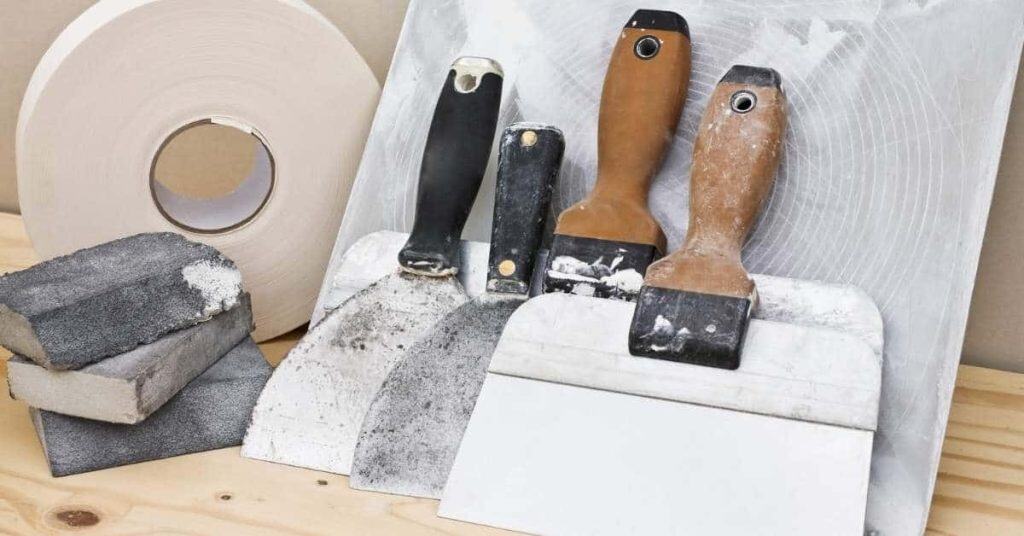
Once you’ve reinforced the cut edges, it’s time to apply joint compound. Start with a thin layer, called ‘mud’, over your tape or edge trim. Use a 6-inch taping knife for this.
Let it dry, then sand lightly using a sanding block and 120-grit sandpaper. Be careful not to sand too hard, as you don’t want to remove the compound or create divots in your wall.
For the final coat, use a wider knife (at least 12 inches) to apply a thin layer of compound. This time, feather the edges so they blend with the wall. This means tapering the compound’s thickness from thick at the seam to nothing at the edge.
Let it dry, then sand lightly again. Your goal is a smooth, seamless finish that’s ready for priming and painting.
Installing device and faceplates for a clean look
Before you install your electrical devices, make sure the boxes are seated properly. They should be flush with the wall or slightly recessed if you’re using deep boxes.
Use screws that are long enough to secure the device but not so long they poke through the drywall on the other side. Most devices come with appropriate screws, but double-check before drilling.
If your box is too shallow, you can use shims behind it to adjust its depth. Just make sure the device sits flush with the wall once installed.
Finally, install the faceplate. Center it over the device and secure it with screws. Make sure it’s level and flush with the wall for a clean, professional look.
Troubleshooting Common Problems and Fixes
If the hole is oversized, patch with a scrap drywall patch and a thin layer of joint compound, then re-sand for a flush finish. Ragged edges can be touched up with careful trimming and a fresh strip of tape over the seam. Misaligned boxes may require gentle shimming or adjustment before re-mudding and re-sanding.
Use patches or repair compounds to even out seams, and verify the box is properly secured before final finishes. Always reference product instructions or local guidance for patch thickness and curing times to avoid future failures.
Fixing an oversized opening
An oversized hole can happen, but don’t panic. Here’s how to fix it:
Option 1: Backing strips and shims. Use drywall backing strips to cover the excess space around the box. Then, apply cut-to-fit shims along the edges of the hole to fill in any gaps. Apply joint compound over these, let it dry, sand, and prime before painting.
Option 2: Replace the section. If the opening is too large, you might need to replace that section of drywall. Cut out a new piece to fit, secure it with screws, apply joint compound along the seams, let it dry, sand, and prime before painting.
Repairing torn paper and chipped gypsum
Torn paper or chipped gypsum can be easily repaired. Here’s how:
First, trim the ragged edges. Use a utility knife to carefully cut away any loose or damaged paper. Then, apply a thin layer of joint compound over the area, let it dry, and sand smooth.
Next, if needed, apply mesh tape. Cut the tape to size, press it into the compound using a taping knife, and let it dry. Apply another thin coat of compound over the tape, let it dry, and sand smooth.
Dealing with misaligned or recessed boxes
Misaligned or recessed boxes can be a pain, but there are ways to fix them:
Option 1: Shimming. If the box is slightly off, you can shim it out using thin pieces of drywall or cardboard. Place these behind the box and secure with screws before applying compound over the seams.
Option 2: Extension rings or box extenders. For deeper recesses, use extension rings or box extenders to bring the box flush with the wall surface. Secure these in place, apply compound over any seams, let it dry, and sand smooth.
Option 3: Remounting the box. If all else fails, you might need to remount the electrical box. Turn off power at the main panel, remove the old box, install a new one in the correct position, and connect the wires according to code.
Material Specs, Code Considerations, and Best Practices
Be mindful of box fill and depth requirements, checking with manufacturer instructions or local rules to ensure proper clearances. Drywall thickness choices should match existing walls and installed devices, with attention to any special requirements from code or inspectors. Plan for appropriate backing and support where needed.
Follow industry best practices for safe, durable installations, and verify any jurisdictional specifics with the authority having jurisdiction. When in doubt, consult the label and local guidelines to keep the work compliant and reliable.
Box fill and electrical clearances
Each electrical box has a specific fill capacity. You must respect this to ensure safety and code adherence.
Overfilling can cause heat buildup, leading to potential fire hazards. It also makes it hard for wires to breathe, which is crucial for their lifespan.
Check local codes for exact clearances needed around boxes. Generally, you’ll want at least 1/4″ clearance from the edge of the box to the cut drywall edge.
Pro tip: Before cutting, double-check the box’s fill rating and ensure it matches your wiring needs.
Choosing drywall thickness and types
The most common thicknesses are 1/2″ and 5/8″. Choose based on your wall’s needs:
– 1/2″: Standard for most residential walls. It’s lighter, easier to cut, and cheaper.
– 5/8″: Thicker, heavier, and more expensive. It’s fire-resistant and often used in ceilings or where extra durability is needed.
Specialty drywalls like moisture-resistant or curved wall types have their own considerations. Always check the specific product’s guidelines before cutting.
Long-term durability and maintenance tips
Proper installation is key to long-lasting drywall cuts:
– Fasten securely with screws, not nails. Nails can pop out over time.
– Don’t overtighten screws. This can cause the paper face to crack or tear.
Use durable faceplates to protect your work from damage. For touch-ups:
– Lightly sand any rough edges before painting.
– Use a primer before applying paint for better adhesion and coverage.
Visual Checkpoints and Step-by-Step Workflow
Prepare the area, power off, remove plates, outline the opening, and cut to fit with a test fit. Install and back the opening as needed, then apply mud and feather edges for a seamless look. Allow the finish to dry before final sanding and mounting the plates.
Check for square opening, clean edges, minimal tearing, and a consistent joint finish along the cut line. Use a quick visual checklist for inspectors or DIYers to confirm a clean, compliant result before sealing and painting.
Step-by-step sequence
Use this checklist before starting each workday to ensure efficiency and minimize rework. It’s crucial to follow these steps in order to maintain the integrity of your concrete project.
- Check weather forecast: Ensure no rain is expected within 24 hours after pouring. Concrete needs time to cure properly.
(What goes wrong if you skip this:) Rain can cause improper curing, leading to weak concrete and potential cracking. - Inspect forms: Check for any damage or leaks. Ensure they’re securely fastened and level.
(What goes wrong if you skip this:) Damaged forms can lead to uneven surfaces and leaks can cause excessive water loss, weakening the concrete. - Verify reinforcement placement: Make sure rebar is correctly placed and secured according to design specifications.
(What goes wrong if you skip this:) Incorrectly placed rebar can result in structural weaknesses and potential collapse. - Check aggregate size: Ensure the concrete mix has the correct aggregate size for your project. Too large or small can cause issues.
(What goes wrong if you skip this:) Incorrect aggregate size can lead to an uneven surface, reduced strength, and potential voids. - Confirm water-cement ratio: Check that the mix has the correct water-cement ratio (typically 0.45-0.6 by weight).
(What goes wrong if you skip this:) Incorrect ratio can result in weak concrete, excessive bleeding, or poor workability. - Test concrete slump: Ensure the concrete has the correct slump (typically 3-5 inches for most projects) for easy placement.
(What goes wrong if you skip this:) Incorrect slump can lead to difficult placement, excessive segregation, or weak concrete. - Inspect equipment: Check that all tools and machinery (e.g., mixer, pump, screed) are in good working order.
(What goes wrong if you skip this:) Faulty equipment can cause delays, improper mixing, or poor finishing. - Verify finish time: Ensure you have enough time to finish pouring and properly finish the concrete before it sets (typically 2-4 hours).
(What goes wrong if you skip this:) Rushing can lead to improper finishing, weak spots, or excessive cracking.
Quick rule: Always follow the manufacturer’s instructions for your specific concrete mix and equipment. Local rules and conditions may also apply.
Visual quality checklist
Before signing off on your concrete job, use this visual quality checklist to ensure everything meets the desired standards. Perform these checks after the final finish and any necessary curing.
- Square/Flush Edges: Check all edges are square and flush with the formwork. Use a straight edge or level to confirm they’re true.
- No Paper Tears: Inspect forms for any tears or holes that could cause leaks or weak spots in your concrete. Patch if necessary before pouring.
- Secure Device Mounting: Ensure all embedded items (rebar, anchors, etc.) are securely mounted and won’t move during pouring.
- Neat Compound Finish: Check the finish is smooth and even. Look for any rough spots or imperfections that need touching up.
- Consistent Color: Ensure the color is uniform throughout. Inconsistencies could indicate improper mixing or contamination.
- No Cracks: Inspect for any cracks, especially around edges and corners where they’re most common. Seal if necessary.
- Proper Slump: Check the concrete’s slump (workability) to ensure it’s within acceptable limits (usually 3-5 inches). Too little or too much can cause issues.
- No Air Pockets: Tap forms and listen for any hollow sounds, indicating air pockets. These should be eliminated before final finishing.
Quick rule: Always check your work from multiple angles and under different lighting conditions to catch any issues you might miss at first glance.
Conclusion
Cutting drywall cleanly around outlets and switches protects the finish, keeps wiring safe, and prevents costly rework. Focus on steady marks, correct blade depth, and treating every edge as a potential reveal that you want to look right and stay strong.
Follow this clean-cut workflow: verify the area is powered down and outlets are de-energized, double-check your markings, set the tool to the proper depth, cut along the line with controlled, short strokes, test a small scrap in a hidden spot before tackling the real opening, and reinforce the edge as needed for a tight, neat fit. If you doubt your fit, dry-fit first, then final-fit before sanding or finishing, and recheck for level and square at each box as you go.
Common mistakes to avoid are rushing the cut, using the wrong blade or depth, and neglecting to test on scrap or in a safe corner first. Always wear eye and hand protection, secure the drywall pull-away, and work with stable footing to prevent slips that chip edges or nick wires. Don’t skip de-energizing outlets and never force a cut if the line won’t follow the intended path.
If the box sits awkwardly, the wall is oddly framed, or you see exposed wiring or plaster that won’t take a clean edge, it’s time to call a pro. Otherwise, proceed with the plan, stay methodical, and you’ll finish with a professional-looking result you can be proud of.
FAQ
How do I determine the correct size of the drywall cutout around an outlet or switch?
Measure the front of the box and the surrounding edge. Use a sharp utility knife to score the drywall, then carefully remove the waste. If the box has a mud ring, account for its depth and remove only what’s needed to fit, not more.
What’s the safest way to cut around receptacles and switches?
Shut off power and remove the cover plate. Use a straight edge to mark the cut, then cut along the line with a sharp blade. If you need a deeper cut, switch to a drywall saw and work slowly to avoid damaging the box or wires.
How can I avoid nicking wires or damaging the box when cutting?
Inspect the wiring inside the stud cavity before you cut. Don’t cut too close to the box interior; leave a little wiggle room. If you’re unsure about wire depth, pause and re-check against the box instructions or manufacturer guidance.
What should I do if the box is recessed or flush with the wall?
Check for any mud rings or depth shims and plan your cut to clear them. You may need to trim the drywall slightly more around the edge or use a larger mud ring to bring the finished surface flush. Verify fit before setting screws or attaching covers.

