
Introduction
The timeline of building DIY concrete footings for pergolas is crucial to ensure a sturdy, long-lasting structure. Understanding the duration of each step helps you plan your project efficiently.
From digging to pouring and curing, let’s break down the process into a clear timeline so you can complete your footings in the right amount of time.
For the full guide, see DIY Concrete Footings for Pergolas: Sizing Basics, Rebar Cages, and Inspection Prep.
Step-by-Step Timeline for DIY Concrete Footings
The entire process of building concrete footings for pergolas can take around 7 to 10 days, depending on weather conditions and your availability. Here’s a step-by-step timeline:
- Day 1-2: Planning and Permits – Confirm permits, setback rules, and gather materials.
- Day 3: Site Preparation and Soil Assessment – Clear the site, assess soil conditions, and mark footing locations.
- Day 4: Excavation – Dig out footings using a shovel or mini-excavator (2-4 hours per footing).
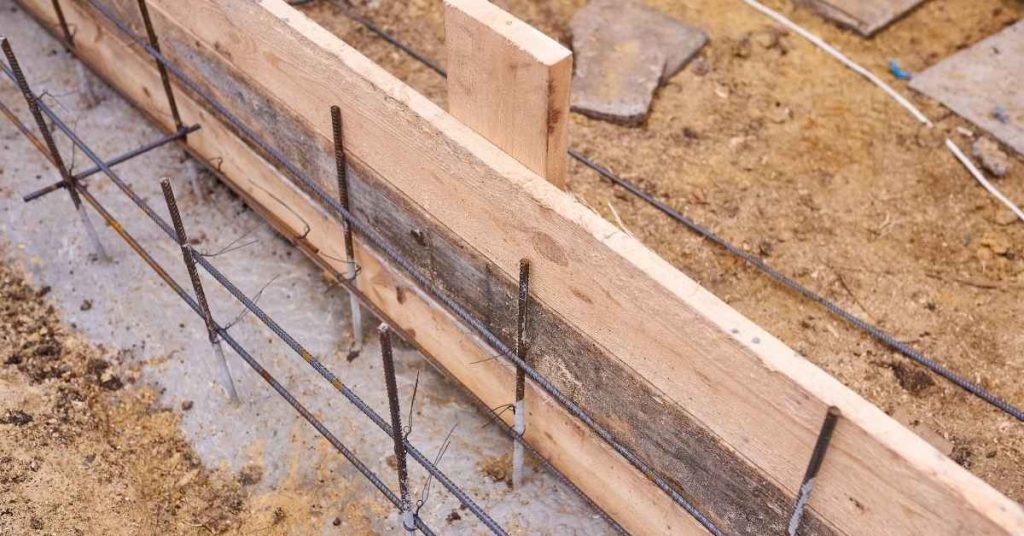
- Day 5: Form Setup – Build and secure forms, ensuring they’re level and square.
- Day 6: Rebar Cage Installation – Fabricate and place rebar cages, maintaining proper overlap and cover (1-2 hours per footing).
- Day 7: Concrete Pour – Mix and pour concrete into forms, ensuring a smooth surface and avoiding cold joints (2-4 hours per footing).
- Day 8-10: Curing and Inspection Prep – Keep footings moist and monitor curing progress. Prepare for inspection by setting anchor bolts accurately.
Key takeaways
The timeline of building DIY concrete footings for pergolas is crucial to ensure a sturdy, long-lasting structure. Understanding the duration of each step helps you plan your project efficiently.
- Confirm permits and setback rules before staking any footings and forms.
- Size footing to loads, soil bearing, and pergola post spacing per plan.
- Check frost depth and local codes; adjust depth and anchoring as required.
- Build square, centered rebar cages; maintain proper overlap and cover.
- Use clean concrete, proper pour sequence, wear PPE, and avoid cold joints.
- Inspect anchors and post bases before final pour; resolve gaps or corrosion risks.
Table of Contents
- Introduction
- Key takeaways
- Project Planning and Permits
- Understanding Loads and Sizing Basics
- Site and Soil Assessment
- Depth, Frost Line, and Setback Considerations
- Rebar Cage Design and Reinforcement Basics
- Forms, Concrete Mix, and Pouring Technique
- Anchors, Post Bases, and Connection Details
- Inspection Prep, Visual Checkpoints, and Troubleshooting
- Conclusion
- FAQ
Project Planning and Permits
Before you dig, confirm whether your city or county requires a permit and what drawings or information are needed for approval. Call your local utility-locate service to mark underground lines and check property lines so you don’t encroach on a neighbor’s land.
Review local building code requirements and any homeowners association rules that affect placement or appearance. If permit conditions, site constraints, or load assumptions are unclear, engage a licensed pro to avoid rework or failed inspections.
Permits and local code checks
Before you start digging, check your local building department for footing requirements. They’ll tell you the minimum size, depth, and reinforcement needed.
Building permits are usually required too. Your local government issues these. You’ll need to submit plans showing your pergola’s size, location, and footings.
Inspectors will expect detailed drawings, including dimensions, materials, and rebar placement. They might also want to see soil test results if you’re not using standard footing sizes.
Utility locate and site layout
Before digging, call 811 or your local utility service. They’ll mark where underground lines are buried for free.
Once marked, stake out your post locations. This helps avoid conflicts with utilities and ensures your pergola’s square.
Leave some space between your stakes and the utility marks. You don’t want to hit them while digging.
When to consult an engineer
For large spans, poor soil, or unusual loads, hire a structural engineer. They’ll design footings that can handle the weight and forces.
Provide them with details like pergola size, material type, snow load (if applicable), and any special considerations. They might need soil test results too.
Engineers can also help if you’re not sure about your site’s conditions or local codes. It’s better to be safe than sorry.
Understanding Loads and Sizing Basics
Footing size starts with the loads the pergola will impose: self-weight, wind uplift, and any applied live loads such as hanging fixtures or planters. Use conservative assumptions when you lack exact values and plan for the worst credible loading scenario for safety.
Confirm exact design loads and allowable bearing pressures from local code, span tables, or an engineer before finalizing footing dimensions. When you see differing guidance, follow the most stringent local requirement or ask a structural professional.
Vertical and Lateral Loads Explained
Pergolas impose two main types of loads on their footings: vertical and lateral.
Vertical loads are the weight of the pergola itself (dead load) plus any additional weight it might bear, like snow or people (live load). These push down on the footing.
Lateral loads come from wind forces. They push the pergola sideways and try to topple it. Understanding these loads is crucial for designing footings that can handle them safely.
Converting Loads to Footing Size
The first step in sizing your footings is to divide the total load (vertical plus lateral) by the soil’s bearing capacity. This gives you the minimum required footing area.
Soil bearing capacity varies, so it’s best to get a professional test done. If that’s not possible, use conservative default values from your local building code.
Here’s a simple formula: Footing Area = Total Load / Soil Bearing Capacity
Safe Sizing Ranges and Margin Guidance
When you’re unsure about load or soil conditions, it’s better to err on the side of caution. Choose a larger footing diameter and depth than calculated.
As a general rule, aim for a minimum footing depth of 12 inches below frost line. For diameter, start at around 16 inches and adjust based on load and soil conditions.
Always confirm your sizing with local code. Don’t rely solely on examples from this guide or others. Codes vary by location, so what works here might not work there.
Site and Soil Assessment
Walk the site and inspect surface conditions for signs of poor drainage, fill pockets, or soft spots that can undermine a footing. Perform simple field checks like probing with a rod or digging a test pit, and note high groundwater or organic layers that reduce bearing capacity.
If soil looks questionable or you need reliable bearing values, get a geotechnical report or a soil-bearing test. Follow the recommendations on any report or product data sheet when adjusting footing size or depth.
Visual soil indicators and simple tests
First, look at the surface. Clay soils are usually smooth and sticky. Silt feels gritty but not sandy. Sand is rough to touch. Organic soils have a dark color and may smell.
For hand tests, try these:
- Squeeze some soil in your fist. If it sticks together when you open your hand, it’s likely clay or silt.
- Drop a handful of soil from about 12 inches. If it falls apart quickly, it’s probably sand.
- Add water to the soil. Clay will turn into a plastic-like substance, while sand and silt will remain grainy.
When to order a soil report
You should get a geotechnical report when:
- The site is always wet or has standing water.
- The ground is filled in, especially if it’s not well-compacted.
- Your structure is large and heavy.
A soil report gives you these parameters for footing design: bearing capacity, compaction, moisture content, and soil classification.
Dealing with high water table and saturated soils
If your site is always wet or has a high water table, you’ve got a problem. Here’s what to do:
- Consider deeper footings. They can rest on drier soil.
- Add gravel drainage around the footing to help water move away.
- Consult local codes and an engineer for engineered solutions, like pile foundations or mat slabs.
Depth, Frost Line, and Setback Considerations
Footing depth must account for the frost line in your area, as well as any site setbacks, easements, or buried utilities that affect placement. Frost depths and setback requirements vary significantly by region, so check local code or building department guidance for the correct minimum depth and clearances.
If you can’t find local frost-depth info, use conservative practices such as digging deeper than surrounding disturbed soil and ensuring positive drainage away from the footing. When in doubt, get direction from the authority having jurisdiction or a licensed engineer.
How frost depth affects footing depth
The frost line, also known as the freeze-thaw line, is where the ground freezes and thaws each year. It varies by region – from 12 inches in warmer areas to 6 feet or more in colder zones.
Footings must extend below this line to prevent ‘frost heave’. When water freezes, it expands. If there’s no stable layer beneath your footing, the expanding ice can lift and shift your concrete, damaging your structure.
Check municipal frost-depth maps or consult local building codes to determine your area’s frost line. It’s crucial to follow these guidelines to ensure your footings are deep enough.
Sloped sites and setbacks from structures
On sloped sites, footings need to be deeper on the downhill side to prevent erosion. The steeper the slope, the more critical this becomes.
Also, footings should be set back a certain distance from existing foundations to avoid undermining them. This distance varies but is typically around 10 feet for most residential structures.
Erosion control measures like retaining walls or drainage systems may also be necessary on sloped sites. Always consider these factors when planning your footings.
Safe depth ranges and verification steps
As a general rule, footings should extend at least 12 inches below the frost line. In colder regions or for heavier structures, this could be as much as 4 feet.
However, these are just guidelines. Always verify exact requirements with your local building authority. They can provide specific depth ranges based on your location and structure type.
Once you’ve determined the required depth, mark it clearly at each footing location before excavation begins. This ensures everyone involved in the project is aware of the necessary depth.

Rebar Cage Design and Reinforcement Basics
Rebar cages control cracking and provide tensile capacity for footings; their layout should reflect the expected bending and shear demands rather than aesthetics. Principles include placing reinforcement where tensile stresses occur, maintaining clear cover, and tying bars to form a stable cage before pouring.
Do not invent bar sizes or spacing—refer to code tables, an engineer’s details, or manufacturer guidance for the correct schedule. If you have conflicting recommendations, default to the more conservative option or consult a structural engineer for clarification.
Rebar types, sizes, and bending basics
The rebar you’ll need is typically #4 or #5, with #4 being the most common for small structures like pergolas. Rebar size markings look like this: #4 means it’s 1/2 inch in diameter. You’ll see ‘R’ after the number; that’s the grade (strength).
Bend rebar using a rebar bender, not by hand. Follow manufacturer or code guidelines for bend radii to maintain strength.
Pro tip: Buy more than you need. It’s cheaper and easier than running out mid-project.
Cage geometry: spacing, laps, and clearances
Space rebar in your cage about 6 to 12 inches apart. This provides enough strength without using too much steel.
Lap splices should be at least twice the bar diameter plus 4 inches for proper overlap. Concrete cover (distance fr