

Introduction
Crisp plaster inside corners means clean, sharp lines created with careful prep and steady hand tools. Prepare the surface well and set up guides or corner beads to define the corner. Keep tools clean and work from a stable edge to minimize feathering and gaps.
Use the right plaster mix and apply in even coats, watching the corner as you go to avoid pulling or cracking. If you use corner beads or metal supports, install them per manufacturer instructions and embed them as you smooth the first coat. Always check local rules and product labels for any limits and cure times, and plan your steps before you start.
Key takeaways
- Ensure crisp corners by pre-wetting surfaces and chamfering edges before plastering.
- Use corner beads or metal supports to maintain straight, true inside corners.
- Apply initial thin coat with consistent fillet to prevent cracking at joints.
- Align tapes properly and feather edges to minimize visible lines.
- Prepare surfaces by cleaning, repairing cracks, drying substrates, and wearing PPE.
- Plan sequence and environment: temp, humidity, and curing conditions affect finish.
Table of Contents
- Introduction
- Key takeaways
- Why Crisp Inside Corners Matter and Common Causes of Cracking
- Tools and Materials Checklist
- Best Compounds and Tape Types for Inside Corners
- Hand Techniques for Creating Crisp Inside Corners
- Prefabricated Inside Corner Systems Vs Hand Finishing
- Taping, Layering, and Application Sequence to Prevent Cracking
- Finishing, Sanding, and Painting for Long-Lasting Corners
- Common Mistakes, Troubleshooting, Planning, Environmental and Safety Considerations
- Conclusion
- FAQ
Why Crisp Inside Corners Matter and Common Causes of Cracking
Crisp inside corners create clean, sharp lines that read as craftsmanship and help paint coverage stay even at the edge. A precise corner also resists chipping and edge wear that can show on finishing coats. Sharp edges can reduce stress concentrations that contribute to cracking over time.
Cracking usually starts from movement and improper bedding. Plan for the main causes: taping or bedding errors, inadequate compound depth or feathering, framing movement, drywall shrinkage, and moisture-related swelling. The goal is a bonded, flexible joint that tolerates minor movement without hairline cracks or delamination.
Structural vs. finish-related causes
Cracks in your plaster corners can be caused by two main categories: structural issues and finish technique problems.
Structural cracks are usually due to framing movement or drywall shrinkage. If your studs aren’t square, or the boards aren’t properly aligned, you’ll see cracks at the corners. These need immediate attention as they can worsen over time.
Finish-related cracks, on the other hand, happen because of improper taping, insufficient compound depth, or not feathering out the compound enough at the corner. These can often be repaired with better technique and careful planning.
How moisture and temperature affect corners
Moisture, humidity, and temperature play a significant role in how your plaster corners cure and perform over time. Too much or too little of any can lead to cracking.
High humidity during application can cause the compound to dry too slowly, leading to cracks as it finally sets. Conversely, low humidity speeds up drying, causing the compound to shrink and crack.
Temperature swings are another culprit. Sudden changes from hot to cold (or vice versa) can cause the compound to expand and contract, leading to hairline cracks over time. Keep your environment as stable as possible during application and curing.
Tools and Materials Checklist
Inside-corner trowels and corner beads or pre-formed inside corners help you maintain a true angle without feathering. Have a selection of corner knives or floats to keep edges crisp as you work.
Choose mud options wisely: all-purpose or setting-type compounds, and decide whether premixed or powder with a mixer fits your scope. Include mud pans, hawks, mixing buckets, and a range of taping knives to control thickness and clean edges.
Essential hand and finishing tools
Before you start mixing concrete, ensure you have all the necessary tools to achieve a smooth, professional finish. Use this checklist to double-check your inventory.
- Knives (straight & bullnose): Check for sharp edges and no bends. Dull knives cause uneven cuts.
- Corner trowels: Ensure they’re the right size for your job (typically 4″ to 12″). Too small makes finishing slow, too large can be unwieldy.
- Small hawks: Verify they’re clean and undamaged. A good hawk prevents concrete from sticking and ensures even spreading.
- Joint knives (various widths): Check for straight edges and no nicks. Narrow knives create fine joints, wider ones create broader ones.
- Sanding blocks: Ensure they’re in good condition and the right grit (usually 120 or 150) to avoid scratching the finish.
- Corner-specific tools (e.g., corner trowels, edgers): Confirm they match your job’s requirements. Wrong tools create ragged edges.
- Measuring tape: Have one that’s long enough for your largest pour to ensure accurate leveling and finishing.
- Level: Check it works properly. A bad level causes uneven surfaces, leading to costly rework.
Quick rule: Always inspect tools before starting work. Damaged or wrong tools lead to poor finishes and wasted effort.
Tapes, beads, and corner systems to stock
Before you start your drywall installation, use this checklist to ensure you have the right tapes, beads, and corner systems on hand. This will help you avoid common mistakes and rework.
- Paper Tape (1-1/4″ or 2″): Check width for joint size. Confirm it’s crepe-paper style for easy sanding later.
- Fiberglass Mesh Tape (2″): Ensure it’s wide enough to cover entire joint. Verify it has a strong adhesive backing.
- Self-Adhesive Corner Bead (90° or 135°): Check angle for your corner type. Confirm it’s long enough for all corners.
- Prefabricated Inside Corner System: Verify it fits your corner dimensions. Ensure it has a strong, secure backing.
- Bead Tape (for outside corners): Check width matches your wall thickness. Confirm it’s flexible for easy application.
- Primer/Sealer: Make sure it’s compatible with your tape and joint compound. Check if it’s already mixed or needs mixing.
- Joint Compound (Lightweight, All-Purpose): Verify it’s the right consistency for taping and bedding. Check expiration date.
- Setting-Type Compound: Confirm it’s fast-setting for final coats. Check if it requires mixing or is pre-mixed.
Quick rule: Always use the right tape for the job – paper for joints, fiberglass for problem areas, and corner bead for outside corners. This ensures a strong, durable finish that’s easy to sand later.
Prep and safety gear
Before you start mixing concrete or applying finishes, make sure you have all the necessary prep and safety gear. Use this checklist to ensure you’re ready for a safe and successful job.
- Dust mask: Check it’s rated for concrete dust (e.g., N95). Try it on to ensure a proper fit.
- Safety glasses: Ensure they protect against both debris and chemical splash. Wear them during prep, mixing, and application.
- Gloves: Choose concrete-mixing gloves that provide protection without sacrificing dexterity. Try them on to ensure a good fit.
- Ear protection: If using power tools near the work area, pack earplugs or earmuffs.
- Concrete cleaner: Check you have a suitable cleaner for your surface type (e.g., acidic cleaners for concrete). Read and follow manufacturer’s instructions.
- Primer: Ensure it’s compatible with your chosen finish. Check the label to confirm it’s suitable for your specific project (e.g., interior/exterior use).
- Tarp or drop cloths: Measure and cut to protect surrounding areas from spills and splashes.
- Plastic sheeting: For windy conditions, ensure it’s heavy-duty enough to stay in place. Check for any tears before use.
Quick rule: Always prioritize safety first. If you’re unsure about any gear or materials, consult the manufacturer’s instructions or a local concrete professional.
Best Compounds and Tape Types for Inside Corners
Joint compound families differ in work time and how they shrink. Ready-mixed options offer ease, while setting-type products tend to cure firmer and can resist movement better in tight corners. Each choice affects shrinkage and final hardness in sharp inside corners.
Tape options vary from paper to fiberglass/mesh, with corner-specific tapes as an option. Adhesion, edge creep, and compatibility with your chosen compound all matter for a clean, crack-resistant corner.
When to use setting vs pre-mixed compounds
Setting compounds, like hot-mix, are ideal for tight inside corners where low shrinkage and quick strength gain are crucial. They’re perfect for new builds or extensive repairs.
Pros: Low shrinkage, fast drying, high final hardness.
Cons: Shorter work time, less forgiving with feathering edges.
Pre-mixed compounds, like all-purpose or lightweight, offer more flexibility for touch-ups and smaller repairs. They’re great for renovations where matching existing finishes is important.
Paper tape vs fiberglass vs self-adhesive corner tape
Paper tape, standard or self-adhesive, provides a smooth finish and is easy to apply. It’s great for new builds or when you want a crisp, seamless look.
Pros: Smooth finish, easy application, cheap.
Cons: Less durable, can tear or wrinkle if not applied properly.
Fiberglass tape is more durable and resistant to moisture. It’s ideal for areas with high humidity or where durability is a concern, like bathrooms or kitchens.
Pros: Durable, moisture-resistant.
Cons: More expensive, less flexible for tight corners.
Self-adhesive tape combines the benefits of paper and fiberglass. It’s easy to apply and provides a durable finish. It’s great for quick repairs or when you want a one-step solution.
Hand Techniques for Creating Crisp Inside Corners
Start with a clean, damp surface and a guiding line to establish a true edge. Set up your tools and grip so you can maintain a constant angle as you work toward the apex. A true edge begins with proper substrate prep and layout.
Use the right sequence and steady pressure: base fill, back-buttering, and thin successive layers. Aim for uniform depth toward the corner apex and keep feathering narrow to avoid ridges.
Knife-and-tape workflow for tight corners
Start by embedding your tape neatly into the corner. Use a straight edge to press it firmly against both walls, ensuring no gaps or wrinkles.
Trim excess tape with a sharp utility knife, holding it at a 45-degree angle to avoid tearing the paper.
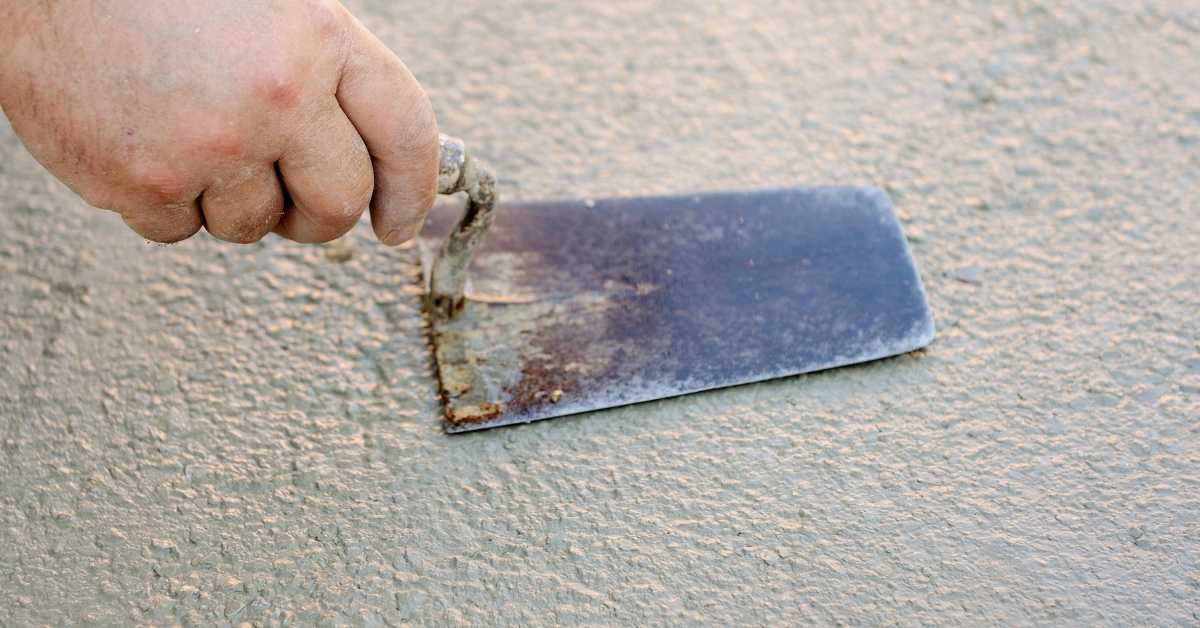
Strike off compound onto your hawk using your plaster trowel. Apply a thin layer of compound over the tape using your corner trowel or inside corner tool. Work from both sides towards the center, maintaining a clean initial edge.
Building and feathering layers without rounding the edge
Start with a narrow knife (e.g., 6-inch) for your first layer. Apply compound to both sides of the corner, working from top to bottom.
Minimize overlap between passes to avoid building up excess material that could round the edge. Use a light touch and consistent pressure.
For subsequent layers, increase knife width (e.g., 10-inch or 12-inch) to feather out towards the walls. Maintain an even depth as you approach the apex, avoiding hollows or ridges.
Final touch and sharpening techniques
Before sanding, make your final pass with a clean corner trowel or inside corner tool. Work from both sides towards the center, applying minimal pressure.
Refine the edge by running your tool along the apex, removing any ridges or excess compound. Check for hollows and fill them if necessary.
Use a damp sponge to wipe away any remaining compound from the walls around the corner. Allow it to dry before sanding lightly with fine-grit sandpaper (e.g., 120-grit) to smooth out any imperfections.
Prefabricated Inside Corner Systems Vs Hand Finishing
Prefabricated inside corners offer a one-piece or add-on solution versus traditional mud and tape. They can speed installation and produce a consistently sharp edge when used correctly. Consider how these systems handle edge definition and durability in your space.
Assess finish quality and failure modes for both methods. Prefab systems can reduce edge variability but may require compatible substrates and care at joints. Hand finishing relies on technique and may be more adaptable for irregular walls and repairs.
Types of prefabricated inside corner products
Prefabricated corners come in various types, each suited to different situations. Here are the common ones:
Rigid Inserts: These are stiff, one-piece corners made from materials like plastic or metal. They’re ideal for tight tolerances and high-volume work where consistency is key.
Flexible PVC/Rubber Corners: These bendable corners are great for irregular walls or when you need some flexibility in fitting. They’re easy to install but may require additional support to maintain their shape.
Factory-Taped Corner Pieces: Pre-taped corners save time and labor. They’re perfect for DIYers who want a quick, consistent finish. However, they might limit repair access compared to traditional methods.
Choosing between hand and prefab: cost, time, and quality trade-offs
The choice between hand-finishing and prefabricated corners depends on several factors. Let’s break them down:
Cost: Prefab corners often have a higher upfront material cost but can save labor time. Hand-finishing, while cheaper initially, may take longer to complete.
Time: Prefabricated corners can significantly speed up installation times. However, they might not be as flexible with irregular walls or tight angles.
Quality and Repair Access: Hand-finished corners often provide a more refined finish but may take longer to achieve. They also offer easier access for repairs if needed. Prefab corners provide consistent results quickly but might limit repair options.
When deciding, compare the material cost of prefabricated corners against your estimated labor time for hand-finishing. Consider the specific needs and constraints of your project.
Taping, Layering, and Application Sequence to Prevent Cracking
Outline the flow from prep to final coat, focusing on taping, embedding, and progressing coats. Keep air traps minimal and manage layer separation to prevent cracks. Don’t rush between steps; observe proper setup cues instead of fixed times.
Choose the right tape and embedding method to avoid wrinkles or air pockets. Apply the first coat as a solid base with full tape embedding, then plan additional coats with careful feathering to blend edges without ridges.
Embedding tape and avoiding trapped air
Avoiding bubbles, voids, and wrinkles when embedding tape is crucial for a smooth finish. Here’s how:
- Press firmly: Use firm pressure to press the tape into the compound. This ensures full contact and no air pockets.
- Use workable compound: The compound should be spreadable but not runny. Too thick, it won’t embed; too thin, it’ll pull away from the tape.
- Avoid over-working: Overworking the compound can cause it to lose its stickiness and pull away from the tape.
- Embed immediately: Embed the tape as soon as you’ve applied the compound. Waiting allows air to get trapped under the tape.
Remember, embedding is about firm, quick action with a workable compound to avoid trapped air.
Layer strategy and curing considerations
The key to preventing cracks lies in thin, fully cured layers. Thick fills can crack as they dry due to shrinkage.
Instead of relying on fixed times, monitor the compound’s drying cues:
Tinkling sound: When you hear a tinkling or cracking sound, it means the surface is starting to set.
Skin formation: A skin forms as the top layer dries.
Tack-free touch: The compound feels dry and doesn’t stick to your finger.
Only apply the next coat when these cues indicate the previous one is fully cured. This ensures each layer has a solid bond with the last, reducing the risk of cracks.
Finishing, Sanding, and Painting for Long-Lasting Corners
Preserve a crisp edge during finishing by using skim coats and controlled trowel pressure at the inside corner. Feather edges gradually to avoid rounding the corner beyond the edge itself. Keep the apex clean as you finish.
Plan the sanding and priming steps to seal porous edges and minimize future cracking. Choose paints and primers that suit plaster or concrete surfaces, and use precise cutting-in to protect the corner seam.
Sanding without rounding the corner
Start with a coarse grit (e.g., 120) to remove any ridges. Use a narrow, square sanding block for straight edges and controlled pressure.
Never sand beyond the edge or you’ll blunt the corner profile. Work in one direction only – perpendicular to the edge.
Progressively move to finer grits (e.g., 150, 220) for a smooth finish. Always wet-sand to minimize dust and prevent clogging.
Primer, paint, and sealing tips to reduce cracking
Use a porch and floor primer or one designed for concrete surfaces. It seals porous edges and improves paint adhesion.
Apply two coats of paint – the first as a sealer, the second for color. Choose a 100% acrylic latex paint with some flexibility to minimize stress at joints.
Consider using a flexible finish or elastomeric paint for high-movement areas. Apply according to manufacturer’s instructions. This helps prevent future cracking by allowing for minor shifts in the substrate.
Common Mistakes, Troubleshooting, Planning, Environmental and Safety Considerations
Identify typical missteps like inconsistent mix, overworking the mud, or insufficient bonding. These mistakes can lead to cracking or a poor edge appearance. Check that backing and support are solid before proceeding.
Use a quick troubleshooting flow to verify prep quality, bond coat integrity, and cure cues. Consider environmental factors and safety basics, including ventilation and fall protection, when planning repairs or rework.
Common mistakes and quick fixes
To ensure crisp inside corners, avoid these common pitfalls.
- Overly wet compound: Too much water weakens the plaster. Avoid adding extra water; use a stiffer mix instead.
- Insufficient tape embedment: Inadequate embedding leaves air pockets that cause cracks. Press tape firmly into the compound, ensuring no gaps.
- Premature sanding: Sanding too early removes still-curing material, weakening the corner. Wait until the plaster is fully cured before sanding.
- Improper backing/support: Insufficient support behind the tape allows it to shift, leading to cracks. Ensure a solid, even surface behind the tape.
Address these issues promptly to prevent rework and maintain crisp corners.
Planning, environmental factors, cost considerations and maintenance
Proper planning and environmental control are crucial for successful inside corner plastering. Maintain temperatures between 50-70°F (10-21°C) and humidity below 60% to prevent cracking.
Consider the trade-offs: prefabricated corners save time but may lack customization, while hand-finished corners offer more control but take longer. Choose based on your skills, budget, and project timeline.
Maintain corners over time by sealing joints with paintable caulk every 2-3 years, monitoring for cracks, and addressing any issues promptly to prevent further damage.
Safety, dust control, and quality checkpoints
Before painting, perform these checks to ensure a crisp, durable corner:
- Compound adhesion: Gently tap the corner; it should feel solid with no hollow sounds.
- Cracking: Inspect for hairline cracks or separations at the tape edges.
- Sanding marks: Check for sanding lines or rough spots that need smoothing.
- Moisture content: Ensure the corner is dry to the touch before painting; excess moisture can cause bubbling or peeling.
- Tape edges: Feel for any raised tape edges that need sanding down.
- Compound thickness: Check that the compound is evenly applied and not too thin or thick in spots.
Quick rule: Always wear a dust mask when sanding, and use proper ladder safety to prevent falls.
Conclusion
Crafting crisp inside corners is not optional vanity; it’s about safety, durability, and clean appearance. When done right, you’ll see fewer cracks, less maintenance, and a finish that lasts through time and use.
First, match the corner type with the right tape or prefabricated system, prep the surface thoroughly, dry-fit to check gaps, apply the compound in controlled layers with proper curing between steps, finish evenly, and inspect for any hairline cracks or bond failures before you paint. Keep the work area ventilated, protect adjacent surfaces, and test a small area first to confirm the system behaves as expected in your room conditions.
Common mistakes to avoid are overloading corners with compound, skipping step-by-step layering, and rushing curing or sanding. Don’t skip priming or moisture control, and don’t work when the climate is unfavorable for setting compounds. Use the right safety gear, work in a clean space, and respect cure times to prevent weak spots that lead to cracks.
If you’re unsure about the corner type, the right prefabricated system, or persistent cracking after a careful pass, consider bringing in a pro rather than forcing a DIY fix. Stay patient, follow the sequence, and you’ll finish with corners that stay crisp and true for years to come.
FAQ
How can I maintain crisp plaster inside corners during application?
Back the corner with a firm, straight edge and keep consistent pressure as you apply and feather the plaster. Work in short passes and check the edge with a clean, dry finger or a purpose-built corner trowel to catch any loss of sharpness early.
Should I use corner beads or metal supports for inside corners?
Corner beads or metal supports can help keep the angle true. If you choose them, follow the manufacturer’s instructions for embedding and mudding over them, and ensure the bead sits flush before it sets.
How do I prep surfaces before plastering to prevent cracking?
Clean and dry the surface, knock down loose paint or wallpaper, and repair major damage first. A good key or bonding agent may be needed on very smooth or dusty surfaces; check the product label for prep steps and cure times.
What finishing steps should I follow after plaster dries to keep corners crisp?
Inspect for any hairline gaps and fill them with a compatible compound before final sanding. Lightly sand with a fine grit and clean off dust before painting or sealing; avoid over-sanding to prevent softening the edge. If cracking appears, reassess substrate and bonding before re-coating.