
Introduction
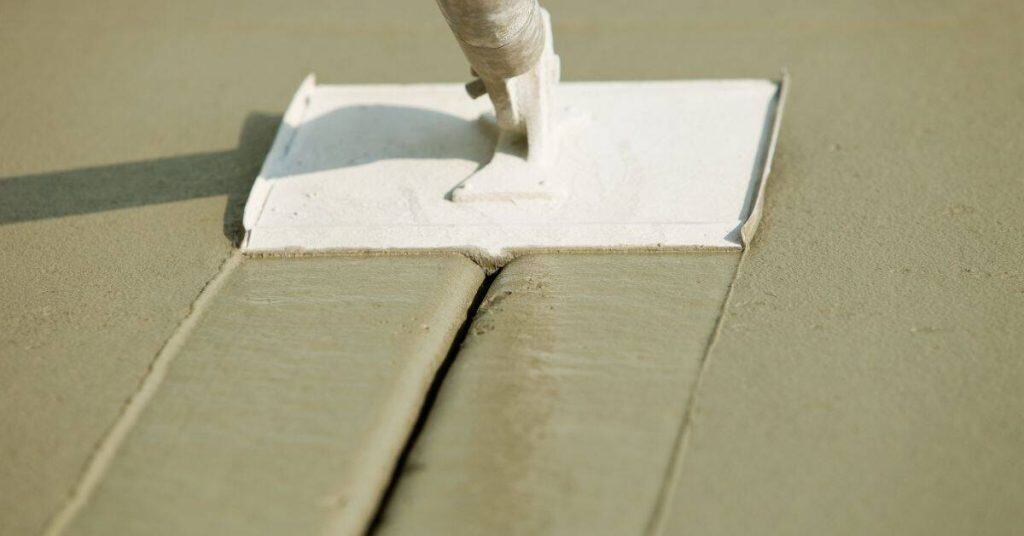
Concrete joint failures happen when control joints are missing, too shallow, or cut too late, allowing random cracking and edge spalling instead of directing where the slab will split. In plain jobsite terms: if you don’t plan joint locations, don’t cut them deep enough, or wait too long, the slab will crack where it wants to and repairs get ugly and expensive. Check product instructions and local guidance for proper timing and depth—I’ll point out safe options and what to look for.
Good DIY practice is to lay out joint locations before you pour, cut at the time interval recommended by the concrete supplier or manufacturer, and use a method that reaches the needed depth into the slab. For maintenance, keep joints clear of debris and seal them if the manufacturer suggests it, and if you’re unsure about timing or depth, check the concrete mix instructions or ask a pro.
Key takeaways
- Timing matters: plan and cut joints after initial set begins, before hardening completes.
- Location matters: place joints at stress lines and align with expected movement.
- Depth and method: cut joints with proper depth and straight, clean cuts for proper relief.
- Timing of cutting: best practice is to cut soon after pour when surface can support.
- Missing/too shallow/late: recognize consequences include random cracking and costly repairs.
- Preventative maintenance and repair: seal joints, re-cut after earth movement, schedule inspections.
- Safety and planning: follow protective gear, avoid disturbing moist cures, and budget for contingencies.
Table of Contents
- Introduction
- Key takeaways
- Why Control Joints Matter and How Failures Develop
- Timing — When to Plan, Pour, and Cut Control Joints
- Location and Spacing — Putting Joints in the Right Places
- Depth and Method — Cutting Technique That Controls Cracking
- What Goes Wrong: Missing, Too Shallow, or Late-Cut Joints — Detailed Consequences
- Preventative Maintenance and Repair Strategies
- Safety, Cost Impacts, and Project Planning Implications
- Conclusion
- FAQ
Why Control Joints Matter and How Failures Develop
Control joints are intentional weak planes that manage drying shrinkage, thermal movement, and where cracks form so the slab keeps a usable surface. They transfer and concentrate stresses so cracks occur where planned instead of across visible panels or at vulnerable edges.
When joints are missing, too shallow, or cut at the wrong time the mechanics change: restrained shrinkage and temperature swings create tensile forces that the slab must release somehow. Inspect a slab by checking joint presence, depth, alignment, spacing, joint type, and sealant condition, and watch for hairline cracks, edge distress, or debonding that often signal underlying timing, mix, placement, or curing problems.
Types of joint-related failures to recognize
Control joints are designed to manage concrete’s natural movement. When they’re not done right, you’ll see different kinds of failures. Here’s what to look for:
Random cracking: These are unpredictable cracks that pop up anywhere on the slab. They’re a sign your joints are too far apart or missing.
Map cracking: This looks like a map, with cracks forming a grid pattern. It happens when joints are spaced incorrectly or not deep enough.
Spalling: Chunks of concrete breaking off. This often happens at the edges where joints aren’t cut properly or at all.
Corner breaks: Cracks starting from corners. This is usually due to late or improper saw-cut timing, or not cutting joints at all.
Joint raveling: The joint material comes out or crumbles. This happens when joints aren’t sealed or filled properly.
How joints relieve stress (shrinkage, temperature, loads)
Concrete shrinks as it dries and expands with heat. Without proper joints, these movements cause stress that can lead to cracks. Here’s how joints help:
When concrete shrinks, joints allow it to pull apart slightly without cracking. If there are no joints, the slab can’t move freely and cracks form.
With changes in temperature, joints let the slab expand and contract. Without them, these movements cause stress that leads to cracks.
Under heavy loads, joints help distribute the weight evenly across the slab. They prevent localized stress from causing cracks.
Timing — When to Plan, Pour, and Cut Control Joints
Planning before the pour means laying out joint lines to match slab geometry, thickness, and expected drying behavior and confirming environmental conditions and the concrete mix to estimate set time. On site, coordinate who marks, who cuts, and have saws, blades, and sealant ready so you can act within the appropriate cutting window for initial set and cure rate.
Weather and curing methods change the window: hot weather speeds setting and cold slows it, and coverings or misting alter the schedule, so adjust accordingly. Cutting too early risks raveling and ragged edges; cutting too late loses control of crack location—if timing slips, consult the product label or data sheet and follow troubleshooting steps like careful re-cutting or adding relief joints.
Planning before the Pour and Layout Preparation
Before you pour, plan your joint layout. This means deciding where joints go, how far apart they are, and their depth.
Consider slab thickness and expected moisture levels. Mark these lines clearly so everyone knows where to form the joints.
Coordinate with contractors and finishers. Make sure they know joint locations too. This ensures joints are formed where needed.
The Practical Cutting Window and Signs You’re Late
The ideal time to cut control joints depends on your mix, weather, and finishing. It’s usually within the first few hours of pouring.
Watch for signs you’re cutting too late. If the surface is hard but still slightly ‘green’, it might be too early. If it’s fully hardened, it’s probably too late.
Check with your mix supplier or an engineer if you’re unsure about exact timing. Cutting too late risks surface damage and reduces controlled cracking.
Location and Spacing — Putting Joints in the Right Places
Slab geometry and panel sizing drive the basic grid: larger panels need more frequent joints, and proximity to walls, corners, and changes in thickness dictates placement to reduce restraint and curling. Anticipate loads—pedestrian, light vehicle, or heavy traffic—and tighten spacing or add reinforcement in areas that will see concentrated use.
Edge conditions and transitions require special treatment: position joints to avoid unintended corner breaks and align control joints with construction or step-down joints to prevent stress concentrations. Consider appearance too—uniform spacing and consistent joint type (saw-cut vs. tooled) simplify maintenance; use a checklist to confirm panel size, joint alignment, spacing, and accessibility for future sealing.
Factors that influence spacing and layout patterns
Planning your joint layout starts with understanding your slab’s unique characteristics. Here are the key factors to consider:
Slab Thickness: Thicker slabs need wider joints to control cracking. As a rule of thumb, increase joint spacing by 1 inch for every additional inch of thickness over 4 inches.
Length-to-Width Ratios and Concentrated Loads: Longer, narrower slabs need more frequent joints due to increased shrinkage stresses. Also, place joints closer where heavy loads or equipment will sit.
Openings and Adjacent Restraints: Joints should be placed near openings like doors and windows to prevent unwanted cracking. If your slab is adjacent to a rigid structure, consider saw-cutting control joints into the restraint to manage stress transfer.
Common layout mistakes and visual checkpoints
Before you pour, double-check your joint layout with this simple checklist. It’s easier to fix issues now than later.
- Too few joints: Count the number of joints in both directions. Too few can lead to excessive cracking.
- Irregular spacing: Measure between joints. Inconsistencies can cause stress concentrations and unwanted cracks.
- Missing joints near walls or edges: Joints should be within 18 inches of all edges, including walls, to control cracking. Missed joints here can lead to unsightly random cracks.
- No joints at changes in thickness: Step-downs and dropped pours need joints to prevent cracking due to differential shrinkage.
- Ignoring high-traffic zones: Place more frequent joints where heavy foot or vehicle traffic is expected.
- Not aligning control joints with structural/construction joints: Misaligned joints can cause stress concentrations and increased risk of cracking.
- Overlooking saw-cut vs. tooled joint decisions: Saw-cut joints are deeper and narrower, while tooled joints are wider and shallower. Choose based on your desired appearance and maintenance needs.
- Disregarding color/finish considerations: Joints can affect the final finish. Ensure they’re placed to minimize cosmetic issues.
Quick rule: Always walk around your layout before pouring, visualizing potential stress points and checking for any missed or misplaced joints.
Depth and Method — Cutting Technique That Controls Cracking
Joint depth should be set relative to slab thickness and adjusted for slab type and exposure; typical practice targets a cut that is a significant fraction of the slab depth to encourage cracking at the joint rather than through the panel. Verify the target depth and method against the project spec or manufacturer guidance before cutting.
Use consistent straight cuts with the correct blade type and appropriate wet or dry cutting technique, controlling dust and cooling per equipment instructions. Measure depth at multiple points to confirm compliance, and if cuts were too shallow or poorly placed, plan for re-cutting or additional joints following the applicable standards and site safety procedures.
Depth guidance and how to verify proper depth
The general rule of thumb for control joint depth is one-fourth to one-third of the slab thickness. But remember, this can vary based on your specific project.
For instance, exposed surfaces might need deeper cuts to prevent scaling. And heavily loaded slabs could require shallower cuts to avoid overstressing the concrete.
Always verify with local codes and project specs. Consult your structural engineer or manufacturer guidance for precise depth recommendations.
To check if you’ve cut deep enough, use a depth gauge. Measure at multiple locations along each joint. Compare readings to your target depth. If it’s off by more than 1/8 inch, re-cut or add additional joints as needed.
Cutting method, straight-line accuracy, and tool selection
Control joints can be created using either grooving tools or saw-cutting machines. Grooving is faster but may not cut as deep. Sawing takes longer but provides deeper cuts.
- Grooving tool: Uses a blade to score the surface. Best for early-stage, shallow cuts. Rentable for around $50-$100 per day.
- Hand saw: Manual, slow process. Useful for small areas or tight spaces. Inexpensive but labor-intensive.
- Walk-behind saw: Motorized, efficient for large slabs. Cuts deeper and faster than hand tools. Rental costs around $150-$250 per day.
- Blade type: Use a diamond blade. They last longer and cut cleaner than standard blades.
- Water or dry cutting: Water helps cool the blade and reduces dust. But it can also weaken concrete if not allowed to dry properly. Dry cutting is faster but produces more dust.

What Goes Wrong: Missing, Too Shallow, or Late-Cut Joints — Detailed Consequences
Missing joints let shrinkage and thermal stresses crack the slab unpredictably, producing random map cracking and concentrated breaks near restraints; too-shallow joints often show hairline cracks that widen because the intended crack plane wasn’t established. Late-cut joints can blow out—ragged edges, exposed aggregate, and spalled pockets—because the concrete has already bonded beyond the saw line.
These failures follow a progression from immediate surface distress under load or temperature swings to mid-term joint opening or edge deterioration and long-term moisture ingress, freeze–thaw damage, or reinforcement corrosion. Field checks should compare intended versus actual joint depth and spacing, note timing relative to the pour, and record visual signs and moisture staining to prioritize sealing, re-cutting, or more extensive repair.
Consequences of missing joints
Missing control joints leave concrete slabs free to crack randomly as they shrink and move. This is like having a big, solid block of concrete with no give.
You’ll see map cracking patterns, where cracks form in a grid or pattern across the slab. These can be ugly and compromise your slab’s appearance.
Structurally, missing joints mean your slab can’t move freely. This could lead to increased stress on the concrete and reinforcement, potentially causing more serious damage over time.
Missing joints also let water sit on the surface. This can cause freeze-thaw damage in colder climates, where water expands when it freezes, weakening the concrete’s surface.
Consequences of joints that are too shallow
Joints that are cut too shallow don’t let the slab move and shrink freely. This causes cracks to form above the joint line, not below where they should be.
These cracks start narrow but can widen over time. You’ll see them at the joints, looking like hairline cracks that get bigger as time goes on.
Surface spalling is another issue with shallow joints. As the slab moves and cracks above the joint line, pieces of concrete can break off, leaving ragged edges.
Shallow joints also don’t do a great job of keeping water out. This can lead to moisture ingress and eventual freeze-thaw damage or corrosion of reinforcement.
Consequences of cutting joints too late
Cutting joints too late means the concrete has already started to set and shrink. This makes it harder for the joint to control where cracks form.
Late-cut joints often result in uncontrolled cracking. You might see cracks that don’t line up with your intended joint pattern, or even cracks that run through your joints.
The cutting process itself is tougher on late concrete. It creates more dust and can cause surface damage as the saw struggles to cut through the harder material.
Late-cut joints also reduce the effectiveness of jointing. They don’t do a great job of controlling where cracks form, so you might still see random cracking and other issues.
Preventative Maintenance and Repair Strategies
Put a simple inspection cadence in place: regular visual checks for cracking, spalling, displacement, and moisture intrusion, with photos and notes to track changes over time. Routine tasks include cleaning joint debris, removing vegetation, and reapplying or replacing sealant where needed to keep joints functioning.
For repairs, distinguish DIY fixes—cleaning, filling cosmetic cracks, re-sealing—from more involved work like re-cutting joints or resurfacing, and follow the product instructions or specs when choosing materials. Use a maintenance calendar and decision tree to guide when to seal, re-cut, or call a pro, and document safety precautions and tool lists for each task.
Inspection schedule and visual checkpoints
Regular inspections help catch issues early. Use this checklist every 6 months.
- Cracking: Look for new or widening cracks. Hairline cracks are normal, but wider ones need attention.
- Joint degradation: Check joints for signs of deterioration like crumbling, missing pieces, or excessive spalling.
- Edge breaks: Inspect edges where slabs meet walls or other structures for any separation or cracking.
- Moisture intrusion: Look for water stains, efflorescence (white powdery deposits), or dampness around joints and edges.
- Displacement: Check if the slab has moved out of level or alignment with nearby structures.
- Debris: Remove any dirt, gravel, or other debris that could clog joints or cause damage.
- Sealant condition: Inspect sealants for signs of wear, cracking, or peeling. Reapply if necessary.
- Surface wear: Check for excessive wear from foot traffic or equipment, which can lead to slab failure over time.
Quick rule: If you notice any of these issues worsening between inspections, act promptly to prevent further damage.
Repair and retrofit options for failed or missing joints
If you find failing joints, don’t wait. Here are your repair choices:
Routing and sealing: This involves cutting a new joint where needed, routing out the old joint to remove damaged material, then filling it with a new sealant.
Saw-cut retrofits: For late-cut joints or those cut too shallow, saw-cutting creates a deeper, wider joint. This should be done by a professional to avoid further damage.
Epoxy injection: For hairline cracks or small voids, epoxy injection can fill and seal them. It’s best for early-stage cracking.
Partial slab replacement: In severe cases, the affected area may need to be cut out and replaced with new concrete. This is a last resort due to its invasive nature.
If you’re unsure about any repair, consult a professional. They can assess the damage and recommend the best course of action.
Safety, Cost Impacts, and Project Planning Implications
On-site safety is non-negotiable: use PPE, control dust, manage live edges, and follow tool safety procedures before cutting or sealing joints to prevent injury and exposure. Improper jointing increases risks during repairs—unexpected cracks, trip hazards, and additional cutting work raise the chance of incidents if controls aren’t in place.
Poor joint design also raises lifecycle costs by increasing maintenance frequency and accelerating repair or replacement needs, so plan joint spacing, timing, and materials up front and coordinate sequencing with other trades. Build QA/QC checklists, schedule milestones for inspection, and include contingency buffers in budgets to limit costly surprises and document decisions for future owners or contractors.
Safety best practices for cutting and maintenance
Wear appropriate PPE: hard hat, safety glasses, steel-toed boots, and gloves. Use respirators or dust masks to protect against silica dust.
Ensure fall protection when working at heights. Keep live edges safe by barricading or warning signs.
Maintain tool safety: use saws and grinders with proper guards, and keep blades sharp for cleaner cuts. Regularly inspect equipment before use.
Train operators on emergency procedures, including first aid and fire response. Always have a first aid kit on-site.
Cost implications and budgeting for proper joints
Proper joint design reduces long-term repair costs. Premature cracking can lead to expensive repairs or replacements.
Obtain professional quotes that include joint materials, cutting, and sealing. Compare lifecycle costs with DIY options.
Budget for contingencies: unexpected delays, material price fluctuations, or additional maintenance needs can increase costs.
Consider long-term liability costs. Proper jointing reduces the risk of structural damage and lawsuits due to cracking or failure.
Conclusion
Plan, place, and cut joints correctly and you protect safety, durability, and the look of the finished slab. This work pays back with fewer cracks, less repair cost, and less chance of damage to surrounding work—all of which matters on a DIY project.
First, map out joints in the right places, confirm spacing that fits the slab size, verify the correct depth and cutting method, then time the cut to the concrete’s age and weather. Mark the joints, prepare for curing, choose the right tool, cut or saw at the proper depth, and test a small area first before committing to the whole pour.
Common mistakes to avoid are missing joints, making joints too shallow, and cutting too late. Safety rules are simple: wear eye protection and proper footwear, keep blades cool, don’t rush cuts, and never work on setups that look unstable or unsafely anchored. If you’re unsure about joint depth, timing, or exact spacing for your concrete, test a small panel and consult a pro before proceeding.
When in doubt, call a professional for joint planning or a difficult cut, especially on large slabs or complex layouts. Stay methodical, respect safety, and you’ll finish with a strong, crack-resistant surface you can be proud of. You’ve got this, and the long run will thank you for it.
FAQ
When is the best time to cut control joints in a freshly poured concrete slab?
Cut the joints after the slab has stiffened enough to bear light traffic but before the concrete starts to shrink too much. Don’t cut when the surface is still too soft or when rain or heat will move quickly. Always check the manufacturer instructions or product label for timing guidance.
How do I decide where to place joints in a slab?
Place joints where they’ll interrupt the natural cracking pattern—think long, straight lines that run with the slab’s stress points. Run lines near walls or along expected stress directions, and use a simple grid plan if the space is open. Check any local guidance or manufacturer notes if you’re unsure.
What’s the right cutting method and depth for control joints?
Use a concrete saw with a straight blade to make clean, continuous cuts. Cut shallow enough to relieve stress but deep enough to segment the slab—follow the depth recommended by the blade supplier or manufacturer instructions. Keep the blade cool and avoid rough, ragged cuts that chisel instead of cut.
What are common mistakes, and how do I prevent maintenance problems later?
Common mistakes are missing joints, cutting too shallow, or cutting too late. Fill joints with an appropriate sealant after cutting, and keep them clean to prevent debris buildup. Inspect joints after weather changes and perform basic maintenance as needed, following the sealant maker’s guidelines.