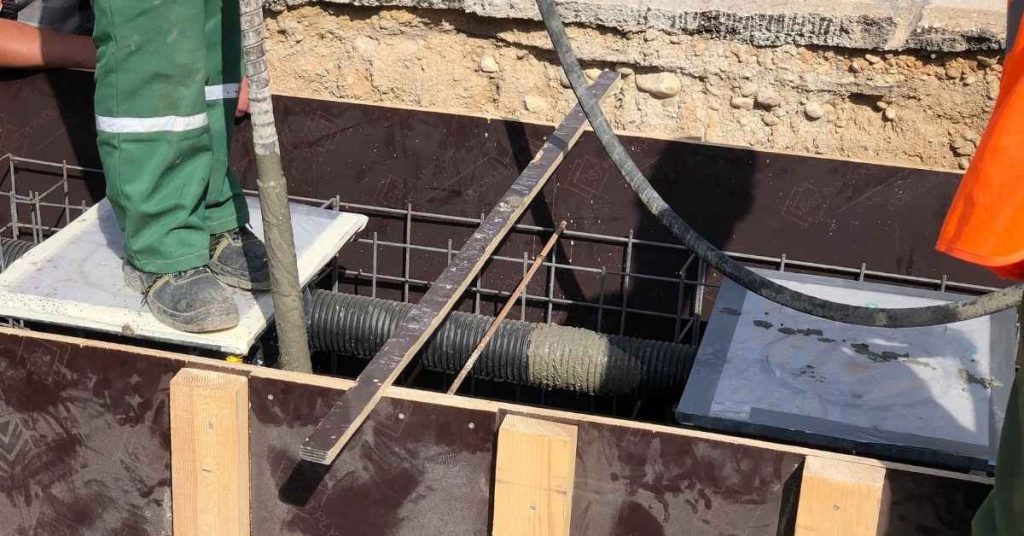
Worker standing on concrete formwork pouring concrete

Concrete Spalling Without Rebar: How deep to remove and how to feather the repair

Introduction

Spalling without rebar happens when the surface concrete flakes away, leaving a damaged area that needs patching. You’ll want to remove enough material to reach sound concrete and to create a gradual feathered edge for the new mix to blend in. Check the extent by probing the edge and looking for underlying cracking or softness before you cut back.

Surface preparation is key: clean and roughen the area to remove dust and loose concrete, then remove any unsound material around the edges. Decide on a bonding method based on what you have available and follow the product instructions, keeping moisture under control during cure. If you’re unsure, verify requirements with the product label or manufacturer guidelines and plan for proper drying and protection while the repair sets.

Key takeaways

  • Assess if repair is necessary by moisture signs, depth, and continued cracking.
  • Clean and roughen affected surface to improve bonding before any removal.
  • Choose mechanical or chemical bonding based on surface texture and substrate condition.
  • Control moisture during repair with weather-safe curing conditions and blotting if needed.
  • Feather edges smoothly to blend repair with surrounding concrete and prevent peaks.
  • Follow safety: wear gloves, eye protection, and respirator when dust or chemicals are involved.
Table of Contents

What Is Spalling When There Is no Rebar and Why It Matters

Spalling is the flaking, chipping, or hollowing of concrete from the surface inward. It looks different from simple surface cracks or scaling and often leaves a rough, uneven patch beneath the surface. In DIY projects, you might notice small pits, hollow sounds when you tap, or exposed aggregate where the surface has failed.

Spalling without embedded rebar happens through several mechanisms, including freeze-thaw cycles, moisture ingress, inadequate curing or finishing, surface wear, chemical attack, and debonding from the substrate. Understanding these pathways helps you decide if a repair is cosmetic or structural. Use simple tests and a visual review to assess risk near joints or load paths, then plan the appropriate fix or replacement.

Types and visual signs of spalling

Spalling is a concrete deterioration process where chunks or layers break off from the surface. Unlike surface cracks or scaling, it goes deeper into the concrete. Here’s what to look for:

Scaling: Small flakes or pieces breaking off, often resembling alligator skin.

Flaking: Larger pieces peeling off in layers, like paint chips.

Honeycombing: Hollow areas with a Swiss cheese-like appearance, indicating deeper damage.

Why absence of rebar changes the approach

When there’s no rebar, spalling behaves differently. Here’s why:

Without reinforcement, concrete can’t resist tensile forces as well. Spalls may form due to surface wear or moisture ingress rather than corrosion.

Bonding repairs is more critical without rebar. A strong bond prevents new spalls from forming at the repair edge.

Repair priorities shift too. With no rebar, focus on preventing further deterioration and maintaining structural integrity, not just fixing cosmetic issues.

Back to top ↑

Diagnosing Unsound Concrete and Deciding How Deep to Remove

Sound concrete generally reads firm and solid when tapped, with no hollow or dulled tones. Delaminated or cracked areas may sound dull or hollow, indicating separation from the underlying material. Use a combination of visual checks and taps to establish a baseline before planning removal.

If tests indicate sound material, you can plan surface prep and bonding for a patch. If the concrete seems unsound, remove to a stable edge with a feathered transition rather than aiming for a fixed depth. Consider the surrounding conditions and how the repair will perform under use and exposure.

Quick soundness checks (visual, tap/sounding, probing)

Before you start chipping away, do some quick field checks to identify loose or delaminated material. These simple tests help you understand what you’re dealing with and where to begin.

Visual Inspection: Look for cracks, chips, or flaking. If the surface looks powdery or crumbles easily, it’s unsound.

Tap/Sounding Test: Gently tap the concrete with a hammer. A dull thud indicates sound concrete; a hollow sound means it’s delaminated and needs to go.

Probing: Use a cold chisel to probe for loose or blistered areas. If it goes in easily, that section must be removed.

Criteria for “remove back to sound concrete”

“Sound” concrete is cohesive, doesn’t crumble, and has a well-adhered matrix. Here’s how to tell if you’ve reached it:

After removing unsound material, tap the surface with a hammer. If it sounds solid, you’re likely at stable concrete. If unsure, consult product datasheets or contact manufacturer tech support.

If doubts persist, consider getting an opinion from a structural engineer. They can provide expert guidance tailored to your specific situation.

When removal becomes replacement

Sometimes, repair isn’t the best option. Here are signs that indicate full replacement might be necessary:

Widespread movement: If large areas are moving or settling, it’s a sign of extensive damage that may require replacement.

Deep structural cracking: Cracks wider than 1/4 inch (6 mm) or running deep into the concrete could indicate serious issues that can’t be patched.

Persistent contamination: If moisture or other contaminants keep returning, it might be better to start fresh with new concrete.

Back to top ↑

Tools, Materials, and Safety Checklist

Essential removal tools include a chipping hammer or hammer drill with a chisel, a pry bar, and a scraper. For feathering edges, have trowels, grinders, sanding discs, and dust-collection shrouds ready. Include both handheld and powered options to handle different patch sizes.

Gather materials like bonding agents or epoxy, cementitious patch material, bonding primers, and compatible additives. Verify substrate compatibility before use and run a small test area for bond first. Always prioritize PPE, dust control, and tool guards, and ensure safe work practices are in place.

Tools for removal and profiling

Before you start, make sure you have the right tools to remove spalls safely and efficiently.

  • Chipping hammer: For heavy-duty removal of large spalls. Use a cold chisel for controlled cuts.
  • Hammer drill with chisel: For smaller, more precise removal. Use a point chisel to create clean edges.
  • Pry bar: To lift and remove loose chunks after initial chipping.
  • Scraper: To clear remaining debris and prepare for feathering.
  • Grinders (angle grinder, die grinder): For profiling edges and creating a smooth transition. Use metal bond or diamond blades.
  • Needle scalers: For tight spaces where grinders can’t reach. They’re also useful for initial probing to check soundness.
  • Abrasive blast equipment (optional): For large areas, this can speed up removal and create a better surface for bonding.
  • Dust-collection shrouds: To minimize dust when using power tools. Connect to a vacuum or dust extractor.

Quick rule: Always use the right tool for the job. A chipping hammer isn’t as precise as a hammer drill, but it’s faster at heavy removal.

Repair materials and bonding aids

Choose the right repair materials to ensure your patch lasts as long as the original concrete.

  • Cementitious repair mortars: These are typically fast-setting, high-strength mixes. Check the manufacturer’s recommended uses and application limits.
  • Polymer-modified repair mortars: These have added polymers for increased flexibility and durability. Again, check the datasheet before use.
  • Bonding agents/primers: To improve adhesion between the new patch and the existing concrete. Always test a small area first to ensure bonding.
  • Curing compounds: To protect the patch from moisture loss during curing. Follow manufacturer’s instructions for application.
  • Aggregate/adhesive compatible additives: These can improve the bond between the repair material and the existing concrete surface. Check compatibility with your chosen mortar.

Quick rule: Always follow the manufacturer’s guidelines. The wrong mix or application method can lead to failed repairs.

PPE and site safety

Safety is paramount when working with concrete. Here’s what you need to protect yourself and your work area.

  • Safety glasses/goggles: To protect your eyes from debris and dust.
  • NIOSH respirator: For protection against silica dust, which can cause serious lung diseases. Use a P100 filter or higher.
  • Hearing protection: To safeguard your hearing from power tool noise.
  • Gloves: To protect your hands from cuts and abrasions. Choose gloves that fit well and allow good grip.
  • Hard hat: To protect against falling debris or impacts to the head.
  • Lockout/tagout: To ensure no live power tools are left unattended, preventing accidents.
  • Cord management: Keep cords out of walkways and away from moving parts to prevent trips and tangles.
  • Dust extraction and ventilation: Use a vacuum or dust extractor with HEPA filters to control silica dust. Ventilate the area if possible.
  • Tool guards: Ensure all power tools have their guards in place to prevent injuries.

Quick rule: Never compromise on safety. Always use the right PPE and follow safe tool operation practices.

Back to top ↑

Removal and Surface-Preparation Techniques

Plan the removal by marking all spalled zones and identifying the transition to sound concrete. Describe the intended removal depth and note any embedded reinforcement that could affect feathering and edge definition. Keep notes for reference during the repair.

Choose surface-prep methods that remove loose material without over-scarifying the surrounding concrete. Compare grinding, scarifying, chipping, and light abrasive blasting to find the least aggressive method that achieves a clean, receptive surface. Ensure the prepared surface is ready for bonding and patching.

Mechanical removal methods

Start by identifying all visibly spalled areas. Mark the transition to sound concrete with a marker or chalk.

Use chisels and jackhammers to remove delaminated patches. Work carefully to avoid damaging adjacent sound concrete. Use a cold chisel for precise cuts, then follow up with a jackhammer to break off large chunks.

Grinders can help smooth out rough edges and prepare the surface for bonding. Use a diamond blade or cup wheel to grind away loose material and create a uniform surface profile.

Abrasive blasting and pressure methods

For larger areas, consider abrasive blasting or shotblasting. These methods can remove loose material quickly and efficiently. Use a low-pressure setting to avoid over-scarifying the surface.

Contain the blast area with plastic sheeting or tarps to control dust and debris. Wear appropriate PPE, including a respirator, safety glasses, and hearing protection.

Pressure washing can also be used to clean the surface, but it’s less aggressive than blasting methods. It’s best for removing dirt, mud, and other loose contaminants. Use a wide-angle nozzle and keep the pressure below 1200 PSI to avoid damaging the concrete.

Cleaning contaminants and achieving a clean, dry surface

Remove or treat any oil, organic stains, salts, and laitance before repairing. These contaminants can impede adhesion and weaken the repair.

For oil stains, use a degreaser or concrete cleaner to break down the oil, then rinse thoroughly with water. For salt deposits, use a muriatic acid solution (1 part acid to 5 parts water) to dissolve the salts, then rinse well.

To check if the surface is clean and dry, perform a simple tack test. Apply a small amount of repair material to the surface and let it sit for a few minutes. If it sticks, the surface is ready for repair. If not, you may need to clean or treat the surface further.

Back to top ↑

Concrete beams with exposed rebar on construction site

Bonding Strategies: Mechanical Vs. Chemical Adhesion

Mechanical keying creates a physical interlock, while chemical adhesion relies on bonding agents to fuse with the substrate. Depending on spall depth, moisture, and surface texture, one method may be preferable, or a combination may be needed for larger repairs or high-traffic areas.

Prepare the surface appropriately for either approach: profile the concrete through appropriate exposure or grinding, clean off laitance and dust, and ensure the surface is within the moisture tolerance of the adhesive system. Plan compatibility checks and pre-tests to avoid surprises during bonding.

Creating mechanical keys and profiles

To get a strong bond in your patch, you need to create a rough surface with undercuts. This gives the new concrete something to grip onto.

First, clean and prep the area: Remove any loose material, dirt, or contaminants. Use a wire brush if needed. Check manufacturer instructions for cleaning agents.

Next, create undercuts: You can do this by chipping away at the existing concrete with a cold chisel and hammer, or use a rotary hammer with a suitable bit. Aim for undercuts around 1/4″ to 3/8″. Be careful not to overdo it; you don’t want to weaken the base.

Lastly, check base compaction: Before patching, make sure the base is well-compacted. Use a vibrating plate compactor if necessary. This ensures your patch has a solid foundation to bond with.

Using bonding agents and primers

Bonding agents and primers are like a matchmaker for your concrete surfaces. They help different materials stick together real good.

Epoxies, polymer slurries, or cementitious primers – these are the main players here. Epoxies are tough as nails, polymers are flexible, and cementitious primers just make everything play nice together.

Now, applying them is a dance, not a sprint. First, check base compaction. You want your surface solid, no soft spots. Then, clean it up real good – no dirt, no grease, no frost. Apply the primer or slurry, let it cure as per the label’s instructions.

Biggest mistake I see? Applying when it’s too cold or to a dirty surface. Both are like saying “I do” with your hands tied behind your back – ain’t gonna work out. So, check the temp, make sure it’s above freezing, and keep that surface clean.

Back to top ↑

Wetting, Placement, Finishing, and Curing Best Practices

Moisture management involves pre-wetting the area to aid bonding without oversaturation. Test for optimal moisture and use the right method to pre-wet, avoiding standing water. This helps create a better bond for the patch material.

Discuss placement depth, proper compaction, and feathered-edge finishing. Use the appropriate bonding agents and ensure the surface is prepared for the chosen patch material. Follow curing practices that protect strength development and minimize shrinkage.

When and how to pre-wet or not

Pre-wetting the repair area is crucial for a strong bond. It prevents suction that could draw moisture from your fresh concrete, weakening it.

Do not soak the substrate as standing water can cause delamination and weaken the final product.

Moisten the surface lightly until it’s damp to the touch. Follow your repair material’s guidelines for optimal moisture content.

Placement, consolidation, and finishing for feathered repairs

Apply thin layers of concrete, feathering the edges to blend with existing surfaces. Use a scratch coat first to create mechanical bond.

Trowel finish the surface smooth. Be careful not to introduce shrinkage or bond gaps. Compact each layer well to minimize voids.

Use a groover to maintain consistent joint spacing and depth for future control joints.

Curing methods and timing considerations

Curing is vital for concrete’s strength development. Moist cure your repair, keeping it consistently wet for the first 7 days.

Apply curing compounds or use plastic sheeting to retain moisture. Follow product datasheets for specific curing times – typically 3 to 7 days at 70°F (21°C).

Maintain a humid environment, ideally around 95% relative humidity, to prevent rapid drying and cracking.

Back to top ↑

Feathering Techniques for a Seamless, Durable Repair

Define the target feather-depth and taper profile to blend into the surrounding concrete while preserving load paths. Ensure cavity edges are sound and mechanically keyed to prevent premature feather-edge failure. Proper preparation reduces visible seams and strengthens the transition.

Follow a step-by-step method for feathering: remove backer material, create bevels, and apply the patch material in stages. Choose patch materials and bonding methods based on conditions, and finish with curing practices that yield a durable, nearly invisible repair.

Edge preparation and taper geometry

First things first, never leave your repair edges sharp. They’re just asking for trouble.

Here’s how to prep edges and build a proper taper:

Check your patch material’s mix design. It should match the existing concrete’s strength and appearance.

– Use a grinder or chisel to roughen up the edge of the repair area. This gives the new concrete something to grip onto.

– For tapering, you’ve got options: use a tapered trowel, a piece of plywood with a beveled edge, or even a 2×4 with a slanted cut. The key is to create a smooth, gradual transition from the existing concrete to your patch.

– Start at the bottom of your repair and work upwards. This helps prevent lifting and ensures a solid bond between old and new.

Layering, scratch coats, and feathering mixes

When repairing concrete, you might need to use multiple lifts or a scratch coat for a seamless, durable finish. Here’s how:

Use a scratch coat when you’ve got a deep hole to fill. It’s like building up layers of cake – each one supports the next. First, prep your edge with a good taper (you learned about that earlier). Then, mix and pour your first layer thin, letting it cure a bit before you scrape the surface with a broom or trowel to create texture for the next lift.

For feathering success, match your mix to the surrounding concrete. Check the label or manufacturer’s instructions to get it right. If you’re unsure, start with a medium-weight mix (around 3000 psi) and adjust as needed. Apply each lift thin, spreading it out from the center towards the edges. This helps blend your repair seamlessly.

Remember, patience is key. Let each layer cure before you move on to the next one. Rushing can lead to cracks and weak spots. And for goodness’ sake, don’t mix up some crazy strong concoction thinking it’ll make your repair last longer. You’re not making concrete soup – stick to the recommended ranges.

Visual checkpoints and acceptance criteria

Before applying the final finish, use this checklist to ensure your feathered repair is ready. Perform these checks after each layer of the feathering process.

  • Check edge preparation: Ensure all edges are clean, sharp, and free from debris. This prevents weak points that can lead to cracking or delamination.
  • Inspect taper geometry: Verify the taper is smooth and gradually reduces in thickness towards the original surface. A sudden change in thickness can cause stress points.
  • Examine scratch coat: Ensure the scratch coat is well-adhered, with no visible voids or dry spots. This layer provides the bond for subsequent coats.
  • Check feathering mix: Confirm the consistency of the feathering mix is similar to the original surface. Too thick or thin can result in an uneven finish.
  • Adhesion test: Gently scrape a corner with a screwdriver or coin. The repair should not peel off, indicating good adhesion.
  • Tactile check (hollow sound): Tap the repaired area with a hammer or knuckle. A solid sound indicates a well-compacted, dense repair. A hollow sound suggests voids or weak spots that need attention.
  • Surface smoothness: Run your hand over the surface to feel for any rough patches or sudden changes in texture. These could indicate areas where more feathering is needed.
  • Color match (if applicable): If using a colored patch, compare it to the surrounding area under natural light. Adjust the mix if necessary to achieve a close match.

Quick rule: Always perform these checks after each layer of the feathering process. Skipping this can lead to costly rework and an unsatisfactory finish.

Back to top ↑

Testing, Common Mistakes, and Planning Costs/Time

After patching, verify performance through pull-off tests, surface profiling checks, and cure-time observations. Consider moisture and vapor transmission as part of the overall assessment for service readiness. Use practical checks to ensure the repair will hold under expected loads.

Common mistakes include undercutting too little, skipping feathering or tapering, using incompatible patch materials, and neglecting surface prep. Plan pre-repair assessments and factor in materials, labor, equipment, and weather into a realistic schedule and budget. Collect documentation such as photos and measurements for quotes and future reference.

Post-repair tests and monitoring

After patching, it’s crucial to verify your repair’s performance. Here’s how:

Tap Test: Gently tap the repaired area with a hammer. A clear, ringing sound indicates good bonding.

Probe: Use a screwdriver or probe to check for any soft spots or delamination.

Regularly inspect your repair over time. Check for signs of cracking, spalling, or other deterioration. Schedule follow-up reviews every 3-6 months for the first year, then annually thereafter.

Common repair mistakes and how to avoid them

Here are some common mistakes in spalling repairs without rebar:

  • Insufficient removal: Not removing enough damaged concrete can lead to premature failure. Always remove all loose, cracked, or crumbling material.
  • Poor cleaning: Contaminants hinder bonding. Ensure the surface is clean and free of debris before applying any patch material.
  • Incorrect bonding agent use: Using the wrong bonding agent can compromise your repair. Always follow manufacturer’s guidelines for proper application and compatibility with your chosen patch material.
  • Inadequate curing: Improper curing can lead to weak, brittle concrete. Keep your repair moist and covered during the initial cure period as directed by the manufacturer.

Regularly inspect your work throughout the repair process to catch any issues early.

Time and cost drivers to estimate and communicate

The size, depth, and complexity of the repair are key factors in determining labor and material costs:

Area: Larger repairs take more time and materials.

Depth: Deeper repairs require more removal, patching, and may involve additional steps like rebar replacement or structural reinforcement.

Access: Repairs in hard-to-reach areas may require specialized equipment or techniques, increasing labor costs.

Gather multiple quotes to compare prices. Check local codes or structural requirements to ensure your repair meets all necessary standards. Always include a contingency buffer in your estimate for unexpected issues that may arise during the repair process.

Back to top ↑

Conclusion

Spalling without rebar can be repaired, but the payoff depends on getting depth, surface prep, and bonding right for safety, durability, and a good look.

First, assess the damage, then remove in measured steps to the correct depth, clean the surface, establish a solid bond with proper wetting and placement, feather the repair to blend in, and cure properly before testing adhesion and final finish. Work in small, repeatable stages and verify each step before moving on.

Common mistakes to avoid: don’t cut too deep or leave loose, unsound material behind; don’t skip surface cleaning or roughening where needed; don’t rush curing or skip protective care; and never mix or apply bonding methods outside the tested recommendations. Always wear eye and skin protection, test a small patch first, and keep the work area well ventilated and dry.

If moisture is present, cracks are unusually wide, you’re unsure about the depth, or the repair would cross a structural or climate-affected area, call a professional. Otherwise, follow the steps, stay disciplined, and you’ll finish with a repair that lasts and looks solid.

Back to top ↑

FAQ

Do I really need to repair spalling, and how do I know if a repair is necessary?

If you can poke out loose material and the surface crumbles easily, or you see deep loss beyond the top layer, a repair is needed. If moisture shows through or you hear a hollow sound when you tap, treat it as a sign of weakness. If in doubt, test a small area and follow the product instructions to decide.

What surface preparation steps are essential before bonding the repair material?

Remove all loose and deteriorated concrete from the area. Clean and dry the surface, then roughen it to give the new material something to grab onto. Make sure there are no coatings, dust, or contaminants left that could block adhesion.

Should I bond with mechanical methods or chemical adhesives, and how do I choose?

Mechanical bonding means creating keys or anchors in the old concrete for the new material to grab. Chemical bonding uses epoxy or polyurethane adhesives to grab onto the surface. Check the product label and manufacturer instructions to see which method and surface conditions they require, and match it to your repair scope.

How do I control moisture and verify the bond during and after the repair?

Keep the area dry during bonding and curing. Follow the product’s guidance on temperature and humidity; don’t rush cure times. After the repair, test a small section by tapping or lightly loading to check for a solid, uniform bond and watch for any damp spots that appear through the new material.

Back to top ↑