
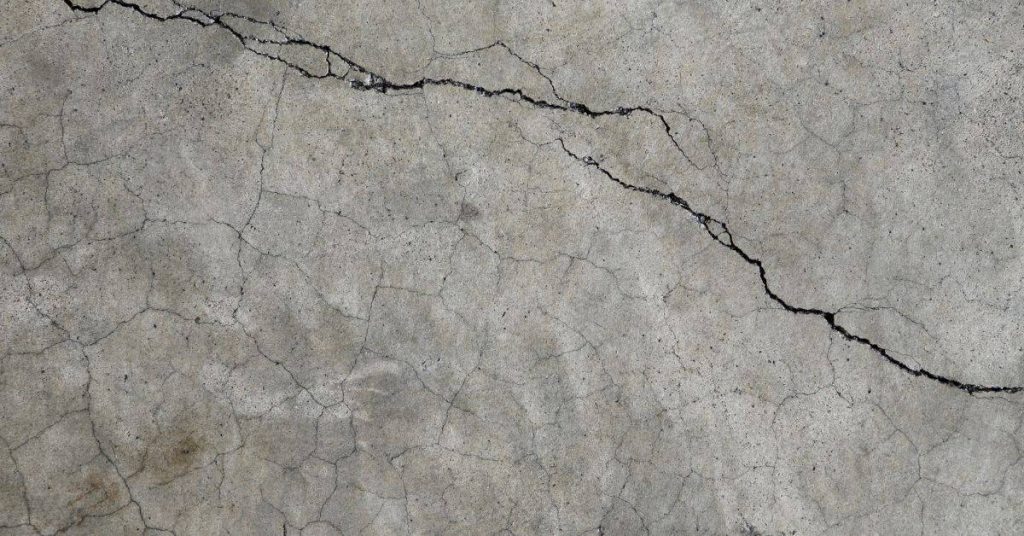
Choose the material family from the repair itself—not from the broad name on the bag. A concrete patch, repair mortar, grout, overlay, or coating may all sound plausible for a chipped step or damaged slab edge, but the appropriate candidate depends on actual depth, permitted placement thickness, edge shape, orientation, movement, moisture, exposure, traffic, reinforcement, and finish requirements. Compressive-strength claims alone do not establish bond durability, volume stability, movement tolerance, or suitability for a particular repair shape.
Several Bags Say “Concrete Repair”—Not Every One Fits
Consider an exterior step with a broken front corner. A store shelf may offer a patching compound, a vertical repair mortar, a bag of high-strength concrete, non-shrink grout, a resurfacer, and a protective coating. Each package may use words such as “concrete,” “repair,” or “durable.” Those labels do not make the materials interchangeable.
Record these observations before comparing products:
- the repair’s measured depth and its widest and narrowest areas;
- the candidate product’s stated minimum, maximum, and lift-thickness limits;
- whether the boundary can be square-cut or must transition into sound concrete;
- horizontal, vertical, overhead, open-face, formed, or confined placement;
- whether movement is absent, dormant, active, or unknown;
- the substrate moisture condition and any active water entry or pressure;
- weather, salts, abrasion, foot or vehicle traffic, and chemical exposure; and
- the condition of embedded steel and the intended final finish.
A front label can identify a broad material family. The current technical data sheet (TDS) and installation instructions establish the product’s stated placement scope and limits. Assessment still determines whether that product scope fits the actual repair.
Scope-and-Safety Gate: Stop Before Choosing a Cosmetic or Bonded Repair
Pause material selection and assess the cause first if concrete is loose, hollow-sounding, deep, widespread, or continuing to deteriorate. Do the same where reinforcing steel is exposed or visibly corroding, where a load-bearing member is affected, or where the defect may reflect settlement, impact, ongoing leakage, or another active cause. A bonded repair material cannot make an unsound, contaminated, or actively moving substrate sound.
Do not treat an active crack, a functioning joint, ongoing displacement, or water under pressure as an ordinary rigid-patch problem. First determine whether the work is intended to restore a local surface profile, protect a sound surface, fill a confined void, accommodate movement, or form part of a designed repair. A cosmetic patch is not a substitute for evaluating structural significance, corrosion, or water pressure. ACI repair guidance treats assessment, removal of unsound concrete, substrate and reinforcement preparation, material selection, placement, and protection as connected parts of the repair process.
Wet cementitious materials can injure skin and eyes. Cutting, drilling, grinding, and demolition can create respirable silica dust. Use dust controls; use respiratory protection and eye protection, gloves, and other PPE appropriate to the work and applicable requirements. Do not dry-grind concrete casually in an enclosed or occupied area.
Choose by the Repair, Not the Bag Label
Concrete Repair Material Selection Matrix
Use this matrix to narrow the material family. It is not an installation specification. Measure the repair, then compare every condition with the current TDS for the exact product and placement configuration.
| Observed defect or repair geometry | Repair depth and minimum/maximum placement-thickness check | Edge condition | Orientation | Movement status | Moisture or water-pressure condition | Exposure and traffic level | Reinforcement condition | Suitable material family | Material families to avoid | Required substrate preparation and curing check |
|---|---|---|---|---|---|---|---|---|---|---|
| Localized, sound horizontal spall with a definable perimeter | Compare measured depth with stated minimum, maximum, and lift range. | Usually square-cut to sound concrete. | Horizontal. | None or dormant only. | Substrate condition must match instructions; no unresolved water source. | Match exterior, salt, and traffic requirements. | No unresolved corrosion. | Horizontal repair mortar or repair concrete documented for the depth. | Thin resurfacer for deep loss; coating as filler; grout unless the void is confined and supported. | Remove unsound concrete, create the required profile, clean, moisture-condition or prime as directed, and cure as specified. |
| Broad shallow wear, scaling, or profile correction on otherwise sound concrete | Verify thin-placement and total-overlay limits. | Transitions require a product permitted for that edge profile. | Large horizontal field. | None or dormant only. | No unresolved vapor or water-pressure condition. | Check abrasion, exterior cycling, and traffic documentation. | No active corrosion-related spalling. | Bonded overlay system, resurfacer, or thin patching/skim repair mortar. | Deep repair concrete used as a skim; coating used to restore missing profile. | Repair isolated breakouts first; prepare the full surface and follow joint-treatment and curing requirements. |
| Deep horizontal removal or localized loss of section | Check full-depth capability, lift limits, and whether approved aggregate extension is allowed. | Sound square-cut perimeter. | Horizontal. | Stable substrate required. | Confirm allowed substrate moisture condition. | Consider loading, abrasion, weather, and chemical exposure. | Assess embedded steel where present. | Repair concrete, pre-extended horizontal material, or high-build horizontal repair mortar. | Thin patchers or overlays beyond their limits; arbitrary added aggregate. | Use stated preparation, consolidation, finishing, and curing methods; do not assume deep placement is allowed in one lift. |
| Vertical face, riser, wall, beam edge, or overhead loss | Confirm vertical or overhead thickness and lift limits separately from horizontal limits. | Open face; formed edges may be needed. | Vertical or overhead. | None or dormant only. | No active water pressure behind the repair. | Check weather and service exposure. | Investigate corroding reinforcement. | High-build repair mortar or orientation-specific vertical/overhead repair mortar. | Flowing grout; ordinary horizontal repair concrete; thin material that cannot remain in place. | Profile and clean thoroughly; follow manufacturer requirements for bonding, support, lifts, and curing. |
| Narrow formed or confined void that must flow around supported surfaces | Compare void dimensions with aggregate size, flow needs, head pressure, and placement limits. | Confined or formed, not an exposed shaped patch face. | Usually formed or enclosed. | Movement and assembly function must be understood. | Water condition must meet grout-system instructions. | Often associated with bearing or base applications; assess loads. | Confirm steel condition where relevant to the assembly. | Non-shrink grout or a form-and-pour/self-consolidating repair material. | Trowel patch mortar for a flow-required void; coating; unformed open-face grout placement. | Confirm form tightness, surface preparation, placement method, venting where needed, and cure conditions. |
| Active crack, working joint, displacement, or unknown movement | Thickness is not the deciding issue until movement and function are understood. | May be a joint or crack, not a missing-concrete cavity. | Any. | Active or unknown. | Active water or pressure requires separate diagnosis. | Exposure may govern a joint- or crack-sealing system. | Assess where steel or structural distress is suspected. | Stop and investigate; select a documented movement-compatible system only after classification. | Rigid cementitious patch across the moving line; coating as a cure-all. | Identify cause and joint/crack function first. See how movement and water change crack-repair choices. |
| Damp area, active leak, or water pressure behind damaged concrete | Permitted substrate moisture does not prove resistance to water pressure. | Any edge profile. | Any. | Determine whether movement accompanies the water pathway. | Distinguish damp concrete from water entering or pushing from behind. | Freeze-thaw and salt exposure may compound moisture damage. | Check for corrosion where moisture reaches reinforcement. | Stop and investigate water source; use a documented repair/protection system only after conditions are controlled or designed for. | Ordinary bonded patch or coating selected merely because it says “water resistant.” | Address the water pathway, substrate condition, and system compatibility before preparation and cure planning. |
| Exposed or corroding reinforcement with surrounding spalls | Depth must include removal to sound concrete and access required by the repair design. | Often square-cut or formed after removal of unsound material. | Often vertical, overhead, or edge geometry. | Investigate possible movement or cracking cause. | Moisture and salts may be feeding corrosion. | Match service exposure to the repair system. | Steel loss and deterioration extent are central. | Stop and investigate; use a specified repair system where assessment supports it. | Cosmetic skim, coating over rust, or surface patching without addressing unsound concrete. | Determine steel and adjacent-concrete condition; follow repair-design, preparation, and curing requirements. |
| Finish-only weathering on sound, intact concrete | No missing section to fill; check coating-film or renewal-system thickness limits. | Existing profile and finish goal matter. | Usually horizontal or vertical surface treatment. | No active cracking or movement to conceal. | Confirm dryness, vapor, and water-entry requirements. | Match UV, traffic, chemical, and weather exposure to documentation. | No corrosion-related deterioration. | Protective coating or compatible surface treatment; possibly a thin bonded renewal system. | Coating over spalls, active cracks, low spots, or unsound concrete. | Clean and prepare to system requirements; confirm cure, recoat, and service-return windows. |
Not interchangeable: coatings are protective finish systems, not fillers for missing concrete. Grout is not automatically a trowel patch. A thin resurfacer is not automatically a deep-spall repair. Rigid cementitious materials are not automatic fillers for working joints.
Read the Geometry Before Comparing Material Families
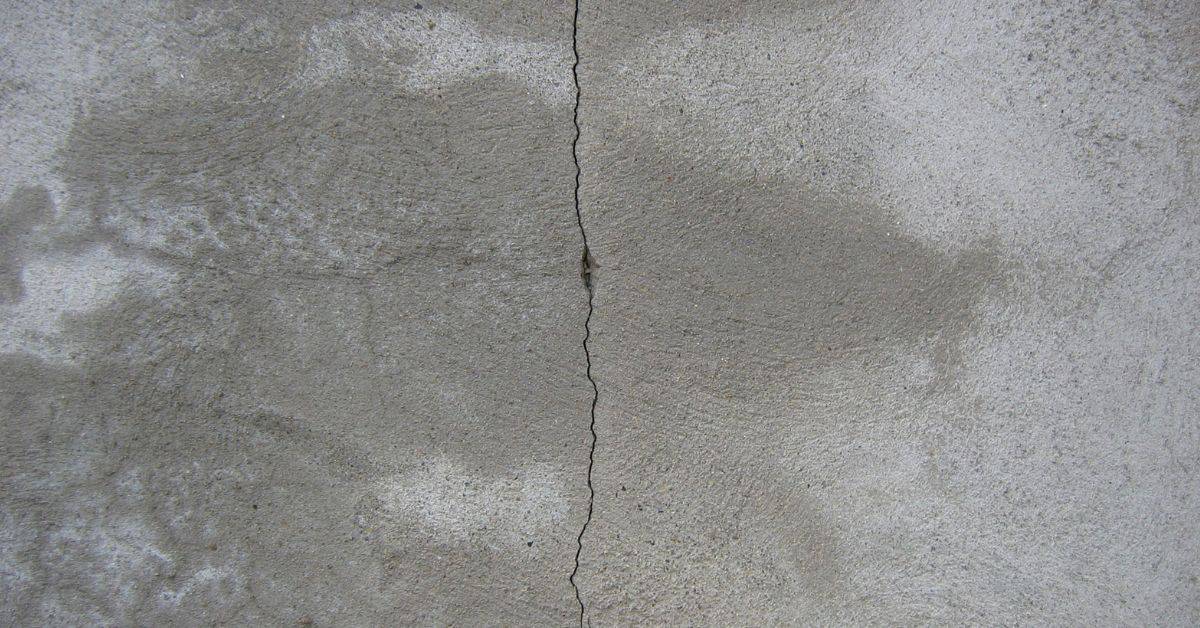
Depth and width describe different problems. A wide shallow worn area calls for uniform thin-placement performance over a large field. A small but deep spall needs a material that can be placed at that depth without excessive shrinkage, poor consolidation, or an unapproved lift. A narrow void behind a form may need flow, while an open broken corner needs shape retention and finishing control.
Edge geometry is equally important. A feathered edge may look like the least disruptive choice, but it is a material-selection issue. If a TDS does not permit feathering, the repair boundary generally needs to be cut back to a sound, supportable edge or the candidate material needs to change. Do not assume a patch can be rubbed to zero thickness simply because it can be troweled.
Orientation removes more candidates. A horizontal product may not cling to a vertical face. A vertical mortar may not be approved overhead. A flowable material may work inside forms yet slump from an open corner. For focused guidance after selecting an orientation-rated family, see Patching Vertical Surfaces Overhead: Mixes, Bonding, and Sag Control.
“Repair mortar” and “repair concrete” are not synonyms. Aggregate grading, flow, and stated placement range affect where a packaged material can be used. ASTM C928/C928M distinguishes classes of cementitious repair products that harden rapidly, reinforcing why aggregate cla