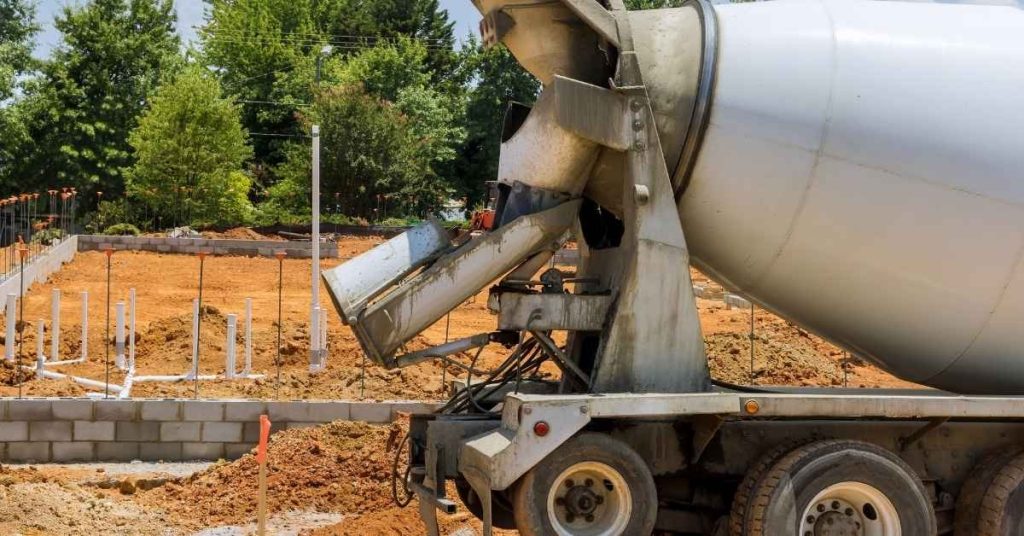
Concrete truck pouring foundation at construction site

Concrete Footing Keyway: When It Helps and When It Creates Weak Spots

Introduction

A concrete footing keyway is a groove or notch cut or formed in the edge of the footing to help lock in the wall and resist sliding. For DIY projects, it helps the wall transfer lateral pressure into the footing when it’s formed and poured correctly. Before you pour, check that the keyway follows local practices and that the forms are square and level.

A shallow or poorly placed keyway can create weak points and crack paths in the concrete. Keep joints clean, reinforced per design, and finish the surface to avoid trapping water or creating gaps that trap moisture. Use the right tools and always check manufacturer instructions or local rules for depth, spacing, and curing guidance.

Key takeaways

  • Know what a concrete footing keyway is and how it engages footing and wall.
  • Keyways help transfer loads and reduce differential settlement when designed and placed correctly.
  • Plan forms early, align with layout, check soil, and choose appropriate keyway depth.
  • Formwork, pouring, and curing steps must stay clean and stable to avoid leaks.
  • Common mistakes: skipping rough-in, under or over-digging, or inadequate reinforcement.
  • Tools & Resources: reference formwork materials and local code guides from 2–3 major brands.
  • Always wear PPE, secure forms, and monitor curing to prevent sudden form failure.
Table of Contents

What Is a Concrete Footing Keyway?

A footing keyway is a formed groove or notch that helps join the footing to the wall or to a subsequent concrete pour. It serves to improve shear transfer and alignment between components in a foundation. On site, learn to read drawings for where the keyway sits and how it interacts with forms, joints, and reinforcing, then verify that these details match local codes and inspection requirements.

Basic geometry includes where the groove or notch appears, how it runs along the footing edge, and whether it’s part of a monolithic pour or a separate interface. It differs from control joints, expansion joints, and straight shear keys in purpose and placement. Always follow the exact dimensions and tolerances shown on structural drawings and confirm with the responsible inspector or engineer before proceeding.

Definition and purpose

A concrete footing keyway is a groove or notch cut into the top of a footing. It serves two main purposes:

1. Load Transfer: Keyways help transfer loads from one section of the foundation to another, preventing slippage.

2. Pour Alignment: They also act as registration points for successive pours, ensuring proper alignment and a strong bond between sections.

Typical forms and where they appear

Keyways come in different shapes:

1. Recess: A groove cut into the top of the footing.

2. Projection: A small ridge on top of the footing that fits into a recess in the next pour.

3. Shear Key: A stepped or angled keyway designed to resist shear forces.

They’re typically found at these parts of foundations:

– Between columns and footings.

– At the base of walls where they meet the footing.

– Along the edges of footings for monolithic pours.

Back to top ↑

Why and When to Use Keyways in Foundations

Keyways in foundations serve two main purposes: structural continuity for load transfer and movement control, and alignment or finish control for formwork accuracy. They engage with the footing and wall interface to reduce settlement paths and improve joint integrity where loads concentrate. For project-specific justification, consult the structural engineer and use project data to support the recommendation.

Identify scenarios that warrant a keyway versus those where it’s optional. High bearing loads, seismic considerations, tall or heavy walls, or questionable soil continuity may justify a keyway, while other cases may rely on alignment or finish control instead. Plan how the keyway will integrate with reinforcement and bond across the joint, and be mindful of potential drawbacks from improper bonding or sealing that could compromise performance.

Structural benefits and load transfer

A keyway’s primary purpose is to improve structural continuity between the footing and wall. It does this by allowing loads to be transferred evenly across the joint.

Keyways help prevent settlement paths, reducing the risk of cracks or movement in your foundation. They also improve joint integrity where loads concentrate, like at the base of a tall wall.

Proper detailing is crucial for maximum benefit. Rebar and dowels should intersect or bridge the keyway to maintain continuous support.

Construction and sequencing advantages

Keyways serve as a locating tool for successive pours, ensuring accurate alignment of forms. This results in a more precise wall position and improved surface finish.

They also help control formwork, making it easier to set up and maintain during construction. This can save time and labor costs.

Staged construction is simplified with keyways. They allow for controlled pours, reducing the risk of cold joints or other construction issues.

Back to top ↑

Design Principles and Planning Guidelines

Define the core design objective for the footing keyway within the project’s structural requirements, including load paths, frost protection, and soil bearing considerations. Outline acceptable tolerances and inspection points that must be verified in the field. Always align with project specifications and codes to avoid surprise revisions later.

Plan placement and alignment relative to the footing perimeter and adjacent concrete elements, specifying depth, width, chamfering, and how the key interacts with dowels or rebar. Address reinforcement interaction, detailing how vertical and horizontal bars cross the key, their spacing, anchorage, and cover to prevent a weak plane. Maintain site conditions and material specs that influence performance, such as moisture control and exterior exposure, and develop a clear formwork and constructability plan to prevent gaps or misalignment.

Keyway sizing, placement, and alignment

The keyway’s size, depth, and width depend on the footing’s dimensions and load requirements. Typically, it’s about 1/4 to 1/3 of the footing’s thickness and extends along its full length or width.

Place the keyway centrally within the footing for even load distribution. It should align with the foundation wall above, ensuring a continuous load path. Verify these details against your engineered plans.

Chamfers at the keyway’s edges help prevent stress concentrations and make forming easier. They’re usually 1/4 to 1/3 of the keyway’s width.

Reinforcement detailing and continuity

Rebar should pass through the keyway smoothly, maintaining its cover on both sides. Use bend radii to prevent stress concentrations at rebar ends.

Horizontal rebar can be lapped or coupled within the keyway. Laps need adequate overlap (usually 40-50 times bar diameter) and proper spacing. Couplers must be compatible with your concrete mix and meet code requirements.

Vertical rebar should pass through the keyway without interruption, maintaining its alignment and cover. Use dowels to connect footing and foundation wall reinforcement securely.

Coordination with joints, waterproofing, and finishes

Keyways should align with expansion or control joints in the slab above to allow for proper movement. Misalignment can cause cracking.

If waterproofing is required, coordinate with your waterproofer to ensure membranes extend into the keyway and are properly sealed at the footing-slab interface.

Slab finishes should be coordinated with the keyway’s location. If the keyway is visible, consider a decorative finish or cover it with a matching material. Early coordination among trades ensures a smooth installation process.

Back to top ↑

Construction Process: Forming, Pouring, and Curing Keyways

Start with pre-formwork setup and substrate prep to confirm soil bearing, grade, and a clean base. Establish precise alignment with the existing footing and plan temporary supports to hold formwork during pours. Define tolerances and prepare for inspection checks as you go.

Describe keyway geometry and placement, including width and depth, and plan transitions where future slabs will intersect. Choose appropriate form materials and apply release agents, then secure joints and waterproofing as needed to protect the surface. Coordinate reinforcement notches and sleeves that intersect the keyway and ensure clean embedment and debris control throughout the pour.

Formwork, Bracing, and Alignment Checks

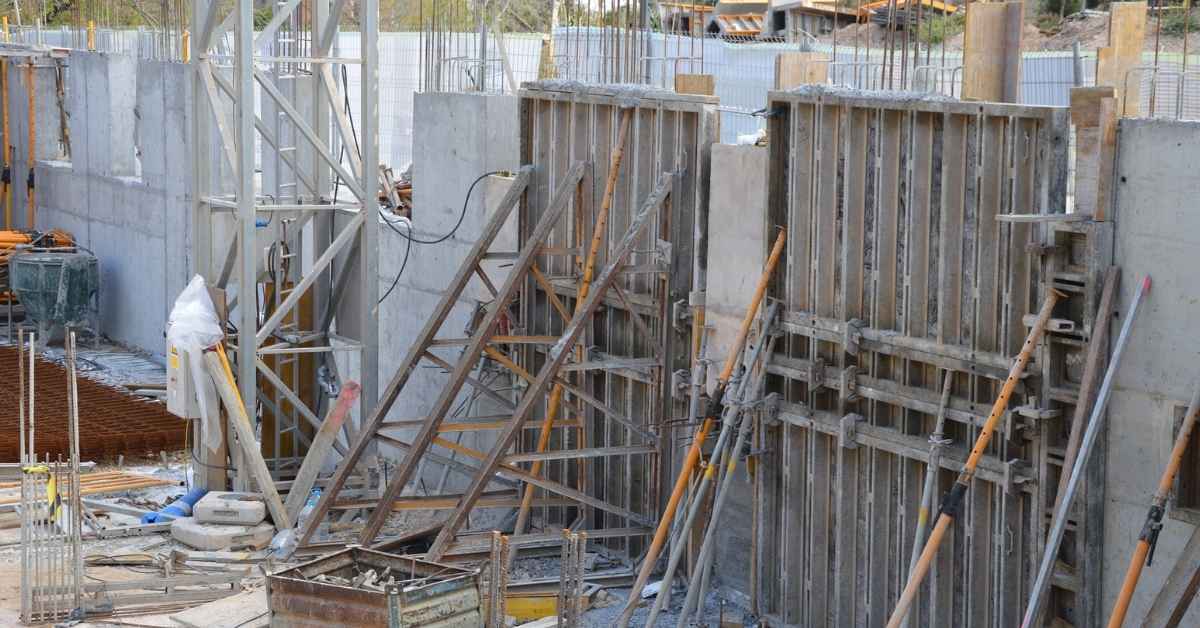
Start by setting up your formwork for the keyway. Use straight, sturdy materials – wood, steel, or composite forms – to maintain the desired width and depth.

Brace the forms securely with temporary supports and braces. This keeps them in place during pouring and prevents movement that could ruin the keyway’s shape.

Ensure your formwork is precisely aligned with existing footings. Use a laser level or string line to maintain consistent alignment throughout the pour. Check this at multiple points along the formwork to avoid any misalignment.

Pouring Technique and Cold-Joint Management

When pouring concrete into your keyway, start at one end and work your way along. This helps to eliminate air pockets and ensures a solid pour.

Use a consistent slump – around 4-6 inches – for your concrete mix. This will help maintain the keyway’s shape and prevent weak points from forming.

For cold joints – where one pour meets another –prepare the surface before pouring the next batch. Clean it, remove any laitance (the weak, cement-rich layer), and wet it down to promote better bonding between the two pours.

Curing and Joint Preparation for Subsequent Pours

After pouring, cure the keyway properly. This involves keeping it moist and at a consistent temperature until it reaches its designed strength. Follow your engineer’s instructions for curing times.

Before pouring the next batch of concrete into the main footing or any subsequent pours, prepare the surface again. Remove any form release agents, clean off any dust or debris, and wet the surface to promote better bonding with the new pour.

If you’re using waterproofing membranes or other finishes, apply them now before the next pour to ensure a strong bond between the keyway and the rest of your footing.
Back to top ↑

Concrete wall formwork with metal braces on construction site

Common Issues and Construction Mistakes That Create Weak Spots

Identify typical on-site errors such as incorrect keyway dimensions, misalignment with the footing edge, and poor integration with surrounding concrete. These missteps can create weak planes if not caught early. Plan pre-pour checks to catch alignment and depth issues before concrete is placed.

Address placement and consolidation pitfalls like improper sequencing, inadequate compaction, honeycombing, and vibration issues that leave voids near the key. Cover reinforcement failures such as incorrect development length or mislocated chairs, and be mindful of joint management to prevent cold joints and water intrusion. Use checklists and photo records to verify correct setup and maintenance of the bond at the key surface.

Improper depth, location, or misalignment

A keyway’s effectiveness relies on its proper dimensions and placement. Incorrect depths, widths, or misalignments with the footing edge can concentrate stress, reducing effective load paths.

Too shallow: A keyway that’s too shallow won’t engage the footing properly, leading to weak shear transfer.

Misaligned: If the keyway isn’t centered or aligned with the footing edge, it can create stress concentrations and uneven load distribution.

Regularly check dimensions during formwork setup. Use alignment tools and ensure forms are level and plumb to prevent misalignment.

Poor concrete consolidation and cold joints

Proper vibration and timely pours are crucial for keyway strength. Insufficient vibration or delayed pours can lead to honeycombing, weak joint planes (cold joints), and reduced bond.

Inadequate vibration: Honeycombed concrete has weak zones due to trapped air pockets, reducing the keyway’s structural integrity.

Premature or delayed pours: Cold joints between different pours can weaken the structure. Ensure proper surface preparation and timely pouring to minimize cold joints.

Use vibration equipment effectively, following manufacturer guidelines. Inspect the concrete’s surface during and after pouring for any signs of honeycombing or weak spots.

Inadequate reinforcement or detailing gaps

The keyway’s reinforcement is vital for transferring loads. Missing dowels, interrupted bars, or poor anchorage can create discontinuities and potential failure points.

Missing dowels: Dowels that don’t extend the full length of the keyway won’t provide proper load transfer between the footing and stem wall.

Interrupted bars: Bars that stop short or aren’t properly lapped can lead to weak points under stress.

Poor anchorage: Inadequate connection between keyway and footing reinforcement can result in slippage and reduced load transfer.

Inspect reinforcement before pouring. Ensure dowels are cut to length, bars are properly lapped, and all reinforcement is securely anchored.

Back to top ↑

Effect on Structural Integrity and Failure Modes

Analyze how a keyway affects shear transfer between footing and wall, and how key depth, width, and shape influence bending continuity and crack patterns. Note that a properly sized key can improve performance, while a mis-sized or misaligned key may act as a hinge point. Refer to project tolerances and code guidance when evaluating the design.

Identify potential failure modes such as shear failure along the key, pry-out under lateral loads, and cracking emanating from key edges. Consider spalling at the toe and long-term issues from improper curing or freeze–thaw cycles. Use field checks to verify depth and width, ensure clean contact, and confirm continuity of reinforcement if present.

How keyways change load paths

A concrete footing keyway can alter how loads are transferred through your structure. It’s like a bridge between the footing and wall, helping them work together.

Keyways can concentrate shear stresses at their edges. This is why proper sizing is crucial – too narrow or shallow, and they become weak points.

On the flip side, keyways also help redistribute tensile stresses evenly across a wider area. This reduces stress concentrations that could otherwise cause cracking.

Think of it like this: without a keyway, loads would be transferred over a narrow line. With one, they’re spread out, making the transfer more efficient and robust.

Typical failure mechanisms related to keyways

Keyways can fail in several ways if not designed or constructed properly. Here are some common issues:

Slip along the joint: This happens when shear stresses exceed the bond strength between the footing and wall. You might see diagonal cracks at the keyway edges.

Shear failure: If a keyway is too narrow or shallow, it can’t handle the shear forces, leading to sudden failure along the key interface.

Localized cracking: Inadequate concrete cover over reinforcement or poor bonding between the key and surrounding concrete can cause micro-cracks to form and propagate, leading to spalling or delamination at the toe of the keyway.

Back to top ↑

Alternatives and Comparative Analysis

Define and describe alternatives to a keyway, such as continuous casting, dowels, shear keys, and engineered construction joints, and indicate typical uses in footing work. Keep the explanation practical and relate each option to typical DIY scenarios without overstepping project specifics.

Provide a straightforward comparison of strength, constructability, cost, and schedule impact. Discuss form setup, curing implications, and precision needs for each approach. End with a simple decision checklist that considers site constraints, with a recommendation to consult a structural engineer when in doubt.

Continuous Pour vs. Staged Pours with Keyways

A continuous pour avoids joint weakness by keeping the concrete one piece. It’s ideal for small, simple projects or when using self-consolidating concrete.

Staged pours with keyways are more practical for larger projects or complex shapes. They allow better control over curing and reduce the risk of cold joints. Keyways help lock poured sections together, but they can create weak spots if not done right.

Key takeaway: Choose continuous pours for simplicity and small projects; opt for staged pours with keyways for larger jobs to maintain strength and control curing.

Use of Dowels, Shear Connectors, and Mechanical Splices

Dowels, shear connectors, and mechanical splices provide positive load transfer without relying on a recessed interlock. They’re useful when you can’t achieve proper keyway alignment or need extra reinforcement.

Dowels are simple steel bars inserted into drilled holes. Shear connectors are headed studs welded to rebar. Mechanical splices use couplers to join reinforcing bars. Each has its own installation requirements and costs.

Key takeaway: Use these alternatives when keyways aren’t feasible or for extra reinforcement, but be prepared for additional labor and material costs.

Cost, Schedule, and Labor Trade-offs

Continuous casting is often cheaper upfront due to reduced formwork needs. However, it may increase labor costs if pours are large or complex.

Keyways, dowels, shear keys, and mechanical splices add material and installation costs. But they can reduce long-term risk by improving structural integrity and minimizing rework.

Schedule-wise, continuous casting might speed up construction. However, staged pouring with keyways allows better control over curing and may prevent delays due to cold joints or improper consolidation.

Key takeaway: Consider both short- and long-term costs when choosing an approach. Higher upfront expense for connectors may reduce long-term risk.

Back to top ↑

Practical Next Steps and Trusted Sources

Provide a practical tools and materials checklist focused on categories rather than exact dimensions, and emphasize quality checks over specified sizes. Include PPE, basic hand tools, measurement and leveling gear, forms, and temporary shielding. Verify that checks align with project documents rather than guesswork.

List codes and standards to consult, such as local concrete codes and general guidance from recognized organizations, while always referencing project documents for exact requirements. Include calculation and inspection aids, field checklists, and guidance on when to use calculator-based tools. Document workflows, approvals, and maintain a running bibliography of trusted sources for quick reference.

Tools and materials checklist

Before you start working on keyways, make sure you have all the necessary tools and materials. Here’s a quick checklist to ensure you’re well-prepared.

  • Personal Protective Equipment (PPE): Helmet, gloves, safety glasses, and boots.
  • Basic hand tools: Tape measure, level, shovel, and wheelbarrow.
  • Measurement and leveling gear: Laser level or water level, string line, and measuring tape.
  • Forms: Formboard, stakes, and ties to hold forms in place.
  • Temporary shielding: Tarps or other materials to protect keyways from rain or sun.
  • Concrete vibrator: To consolidate concrete and remove air pockets.
  • Bonding agent: To improve the bond between old and new concrete.
  • Non-dimensioned quality checks: Air entrainment meter, slump cone, and temperature gauge.

Quick rule: Always double-check your tools and materials before starting work to avoid delays or mistakes.

Material specs and standards to reference

The right materials and their proper use are crucial for a strong, durable keyway. Here’s what you need to know about the standards and specifications.

  • Concrete strength: Look for concrete with a compressive strength of at least 3000 psi (pounds per square inch). Use ACI 318 or local concrete codes for guidance.
  • Joint treatment: Use a proper joint filler and sealer to prevent water intrusion. Follow ASTM C881 for joint filler specifications.
  • Reinforcement detailing: Ensure reinforcement is properly detailed and placed according to ACI 318 or local codes. Use engineer-approved templates if available.
  • Geotechnical/soil standards: Consult local soil standards to ensure your keyway is deep enough to avoid frost heave or other soil-related issues.
  • Jurisdictional amendments: Always check for and follow any local building codes or amendments that may apply to your project.

Quick rule: Using the wrong materials can lead to cracking, staining, weak bond, and other issues. Always consult the relevant standards and specifications.

Visual checkpoints and simple calculation aids

Before pouring concrete, perform a visual inspection to ensure everything is in order. Here’s a checklist of things to verify.

  • Alignment: Check that forms are properly aligned with the existing structure using a laser level or water level.
  • Cover: Ensure reinforcement is properly covered with concrete to protect it from corrosion. Use a tape measure to check.
  • Consolidation: Use a vibrator to consolidate concrete and remove air pockets. Check for proper consolidation by lifting the vibrator out of the concrete; if there’s no void left behind, it’s properly consolidated.
  • Keyway dimensions: Double-check that keyways are the correct size according to project documents or engineer-supplied calculations.
  • Reinforcement placement: Ensure reinforcement is placed correctly and in accordance with approved drawings.

Quick rule: Always use engineer-approved calculations or templates for sizing. If you’re unsure, consult your project manager or the building department.

Back to top ↑

Conclusion

Keyway work matters for safety, durability, and a clean look. When done right, it helps the footing resist movement and cracks; when done wrong, it creates a hidden weak spot that shows up as settling or failure later.

First, assess the plan and the site: confirm enough space for the keyway, check the footing depth and width against the load, and confirm forms are square and secure before pouring. Then proceed in a steady sequence: prepare the trench or forms, place reinforcement as required, install the keyway if it’s part of the design, pour in stages with proper concreting and vibration, and cure with protection from weather and rapid drying. Verify alignment, level, and edge finish as you go, and test a small area or a trial pour if you’re unsure.

Two or three common mistakes to avoid are skipping the keyway where it’s advised, compromising form stability, and rushing the pour or cure. Always keep forms solid, avoid over-compacting near the key, and follow a controlled cure schedule. Maintain a clear work area, wear eye and skin protection, and check that the concrete mix and timing fit the plan before starting. If in doubt, slow down, recheck the design, and don’t push through unsafe conditions.

When the project reaches a point where the design is unclear, or the foundation layout involves complex loads, call a professional rather than guessing. Otherwise, you can proceed with cautious, measured steps and conservative tests in a small area first. Stay focused on safety, verify each step against the plan, and you’ll finish with a solid, durable footing that lasts. Safety first, and steady progress will get you there.

Back to top ↑

FAQ

What are the main types of concrete footings used in residential foundations?

The common options are shallow footings, continuous footings, and column footings. Each type sits at a different depth and carries loads differently, so choose based on your layout and soil conditions. If you’re unsure, check the foundation plans or ask a pro to confirm the right type for your project.

What materials are required for footing construction and how do I verify quality on site?

You’ll need concrete or grout mix, forms, rebar or mesh, and proper drainage materials. Verify bag labels or supplier sheets for mix type, and inspect forming and reinforcement before pour. If the spec isn’t clear, get guidance from the manufacturer instructions or local rules.

How should a foundation footing be designed and planned for my site?

Plan for load paths, soil bearing, and edge distances. Review the layout and ensure accurate measurements and square corners in the forms. If there’s any doubt, compare with the project drawings and materials labels before proceeding.

What should DIY homeowners double-check before pouring a footing to prevent weak spots?

Check form alignment, cure time, and reinforcement spacing. Make sure the soil is prepped and compacted as required, and that forms are clean and secure. If you spot any uncertainty, pause and verify with the plan, manufacturer instructions, or local guidance.

Back to top ↑

More about this topic