
Introduction
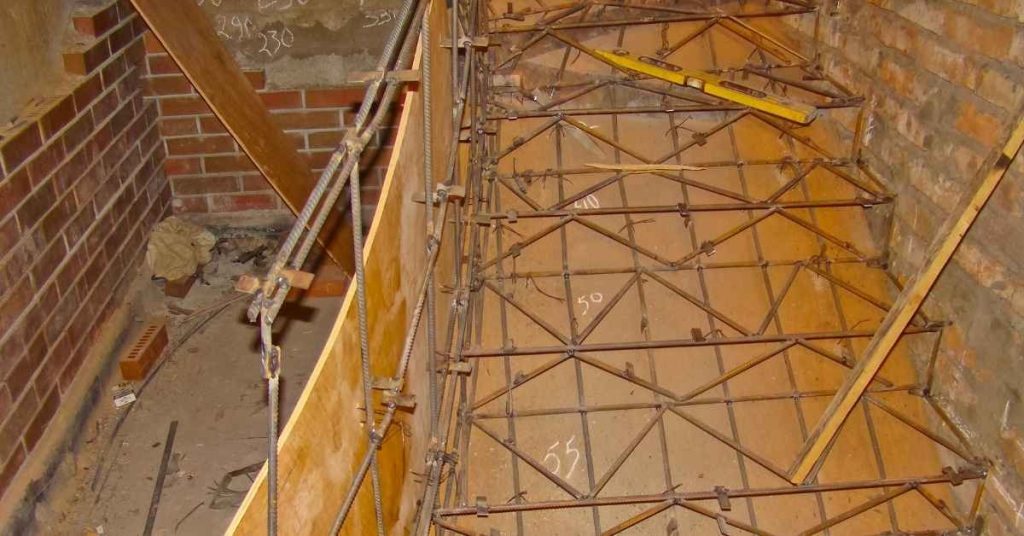
Basalt rebar is a non-metal reinforcement made from basalt rock fibers that can replace traditional steel in concrete. It’s designed to resist corrosion in coastal and marine settings. This introduction covers what basalt rebar is and how it fits into marine-zone detailing.
In marine zones, basalt rebar helps reduce rusting and long-term maintenance compared to steel. When detailing, you need to follow manufacturer guidance on spacing, cover, and curing methods. For a DIY project, check local rules and read product labels to choose appropriate materials and approaches.
Key takeaways
- Basalt rebar is non-corrosive, lightweight, and suitable for coastal environments.
- Review compatibility with bend radii and concrete cover to avoid cracking.
- In marine zones, basalts resist chloride attack but verify coatings and specs.
- Consider sourcing and storage—keep dry and away from salts to prevent contamination.
- Performance in marine zones improves durability, reducing long-term maintenance needs.
- Follow PPE and coating safety guidelines; check local standards for detailing.
Table of Contents
- Introduction
- Key takeaways
- What Is Basalt Rebar and How It Works
- Key Benefits of Basalt Rebar (with Marine Relevance Emphasized)
- Where Basalt Rebar Makes Practical Sense (Use-Case Guidance)
- Basalt Rebar Performance in Marine Zones: Corrosion, Durability, and Long-Term Behavior
- Detailing and Installation Techniques for Marine Use
- Comparison with Other Reinforcement Options (Technical and Economic)
- Standards, Specifications, Testing, and Regulatory Considerations
- Costs, Risks, Safety, Environmental Impact, and Common Installation Mistakes
- Conclusion
- FAQ
What Is Basalt Rebar and How It Works
Basalt rebar is a fiber-reinforced material made from natural basalt rock. It differs from traditional steel by its composition and microstructure, which affects how it bonds with concrete. Reading manufacturer datasheets helps you understand its limits and allowances for a given product.
From basalt extraction to turning fibers into rebar, the production steps influence performance in concrete. Curing practices and resin or matrix systems can change strength, creep resistance, and chemical stability. Look for certifications, coating details, and exposure class notes to gauge suitability for marine zones.
Composition and manufacturing process
Basalt rebar is made from natural basalt rock. It’s melted, then spun into fibers. These fibers are bundled together, pulled through a resin bath, and shaped into bars – that’s pultrusion.
The resin or matrix holds the fibers together. It also gives the bar its final size and rib geometry. This process creates strong, lightweight rebar with good bond strength to concrete.
Mechanical and physical properties
Basalt rebar has high tensile strength – around 1200 MPa. It’s stiffer than steel, with a modulus of about 90 GPa. It’s also lighter, at roughly 2.6 g/cm³.
Thermally, basalt rebar expands less than steel and doesn’t conduct heat or electricity like metal. This makes it great for marine environments where corrosion is a concern.
Density and thermal properties can vary based on the specific matrix used in production.
How basalt rebar differs from steel and other FRP options
Basalt rebar is less ductile than steel, meaning it breaks suddenly rather than bending. This is similar to other Fiber Reinforced Polymers (FRPs) like GFRP and CFRP.
It’s non-conductive, unlike steel. This can be an advantage in marine zones where stray currents cause corrosion. It also doesn’t corrode like steel, making it more durable in harsh environments.
Basalt rebar is compatible with concrete due to its alkaline resistance and similar thermal expansion properties. However, it’s important to check specific performance trade-offs with the manufacturer’s datasheets.
Key Benefits of Basalt Rebar (with Marine Relevance Emphasized)
Basalt rebar offers corrosion resistance in chloride-rich environments because of its inorganic matrix and non-metallic nature. Compare this with steel and traditional FRP using independent test data to confirm claimed gains. Verify what the data actually covers before relying on it in design.
Its non-conductivity affects electrical interactions in marine structures, influencing detailing and stray-current considerations. Handling, weight, and installation can be more productive in marine settings due to lighter weight and easier transport, but check that workflows align with project constraints and local codes.
Corrosion Resistance and Chemical Durability
Basalt rebar’s primary advantage in marine zones is its exceptional corrosion resistance. Unlike steel, basalt doesn’t rust or corrode when exposed to chlorides.
Chloride penetration is a common issue with steel reinforcement in marine environments. Basalt, however, remains unaffected due to its non-metallic nature and low permeability. This means it won’t suffer from the same level of deterioration over time.
Basalt’s resistance also extends to other environmental agents like sulfates and acids commonly found in marine conditions. Always check project-specific conditions for any additional agents that might impact your choice of reinforcement material.
Structural and Serviceability Benefits
Basalt rebar’s mechanical properties offer several structural advantages. Its stiffness is comparable to steel, providing similar strength-to-weight ratios. This means it can handle loads effectively without adding excessive weight to your structure.
In terms of creep behavior, basalt shows minimal time-dependent deformation under sustained loads. This reduces the risk of long-term cracking and deflection compared to some FRP options. When designing with basalt, you’ll need to consider its bond characteristics, which may differ from steel.
Bond strength affects how well reinforcement resists slippage within the concrete. Basalt’s bond behavior is generally good but can vary based on surface treatment and concrete mix design. Always consult relevant standards and guidelines for specific design considerations.
Environmental and Lifecycle Advantages
Basalt rebar’s environmental impact is another key benefit. Its production process generates less CO2 than steel, contributing to a lower embodied carbon footprint. Plus, basalt is 100% recyclable at the end of its service life, making disposal easier and more environmentally friendly.
In terms of lifecycle maintenance, basalt’s resistance to corrosion means it won’t require the same level of regular inspections or repairs as steel. This can lead to significant long-term savings by reducing maintenance costs and downtime.
However, upfront material costs for basalt rebar are typically higher than steel. You’ll need to weigh these initial expenses against expected maintenance intervals and potential long-term savings. Always verify claimed benefits with independent test data and certifications relevant to marine codes.
Where Basalt Rebar Makes Practical Sense (Use-Case Guidance)
Basalt rebar is often a strong candidate for seawalls, piers, offshore elements, and precast components exposed to chlorides. In some projects, traditional rebar or other FRP options may still be appropriate depending on structural demands. Always cross-check with project specifications and engineer guidance.
Consider exposure classes, splash zones, and sustained humidity when evaluating performance. Practical decision criteria include load type, required cover, and compatibility with marine codes. Do not rely on assumptions without engineer-approved detailing.
Ideal applications, including marine-specific examples
Basalt rebar shines where durability and low maintenance are crucial. In marine environments, consider it for:
Seawalls: Basalt’s resistance to chloride-induced corrosion makes it ideal for splash zones and tidal areas.
Piers & Offshore Structures: Its high strength-to-weight ratio reduces dead loads, crucial in offshore applications. Plus, it won’t corrode like steel in these harsh environments.
Precast Elements: Basalt’s dimensional stability and resistance to freeze-thaw cycles make it perfect for precasting marine structures.
Limitations and situations to avoid
While basalt rebar has many benefits, there are scenarios where it may not be suitable:
- High Temperatures: Basalt’s strength drops above 175°C. Avoid in applications exposed to high heat.
- Significant Plastic Deformation
- Welding Requirements: Unlike steel, basalt can’t be welded. If welding is needed, consider other materials.
- Long-Term Durability Data Gaps: While promising, long-term durability data is still being gathered for some applications.
Always consult with a structural engineer if you’re unsure about the suitability of basalt rebar in your specific situation.
Design implications and structural considerations
When detailing with basalt rebar, consider these factors:
Modulus of Elasticity: Basalt’s lower modulus (28-30 GPa) compared to steel (200 GPa) means it may require more reinforcement for certain applications.
Allowable Strain: Basalt has a lower allowable strain than steel. Design for this reduced ductility, especially in flexural elements.
Bond Behavior: Basalt’s bond behavior with concrete is different from steel. Ensure adequate anchorage and splice methods are used to prevent slippage.
Concrete Cover: Due to its lower modulus, basalt may require more concrete cover to control cracking. Check local codes or consult an engineer for specific requirements.
Basalt Rebar Performance in Marine Zones: Corrosion, Durability, and Long-Term Behavior
Marine environments introduce chlorides and salinity that interact with reinforcement differently than in dry conditions. Basalt rebar can exhibit distinct corrosion and passivation behaviors compared with steel, but understand how this translates to service life under your specific conditions. Look for long-term data and project-specific testing guidance.
Durability targets translate into cover, mix design, and curing choices. Monitoring strategies and non-destructive evaluations help track performance over time. Detail the exact recommendations from supplier guides and relevant marine standards when planning implementations.
Corrosion mechanisms and resistance under marine exposure
Basalt rebar’s corrosion resistance in marine zones is due to its non-metallic nature. Unlike steel, it doesn’t suffer from electrochemical corrosion caused by electrical currents flowing through seawater.
Pitting, a common issue with steel in chloride-rich environments, is significantly reduced. Basalt’s amorphous silica content creates a protective layer when exposed to seawater, further enhancing resistance. However, abrasion and physical degradation from marine cycles can still occur.
Basalt rebar doesn’t passivate like steel. Instead, it maintains its inherent alkalinity, which helps prevent corrosion even in aggressive marine environments. But remember, while basalt’s resistance is impressive, it’s not immune to all degradation mechanisms.
Long-term durability studies and monitoring strategies
Several long-term studies have shown promising results for basalt rebar in marine zones. A 10-year study in Denmark found minimal corrosion and maintained strength. Another, in Japan, reported no significant degradation after 25 years.
For your project, consider these monitoring strategies: visual inspections, chloride profiling to track chloride ingress, and nondestructive testing like half-cell potential or electrical resistance measurements. These help assess long-term performance and detect any issues early.
Remember, while existing data is encouraging, more research is needed for full confidence in basalt rebar’s long-term behavior. Always consider project-specific testing for critical structures.
Performance in different marine subzones (splash, tidal, immersed)
The severity of exposure varies across splash, tidal, and permanently submerged zones. Splash zones have lower chloride concentrations but frequent wetting-drying cycles can accelerate degradation. Basalt’s resistance to these cycles is a key advantage.
Tidal zones face intermediate exposure. Here, detailing should focus on limiting chloride and moisture ingress at joints and transitions. Concrete cover and mix design are crucial for durability.
Immersed zones have the highest exposure. While basalt’s corrosion resistance is impressive, aggressive exposure simulators may be needed to assess long-term performance under these conditions. Always consider project-specific testing for critical structures in high-exposure areas.
Detailing and Installation Techniques for Marine Use
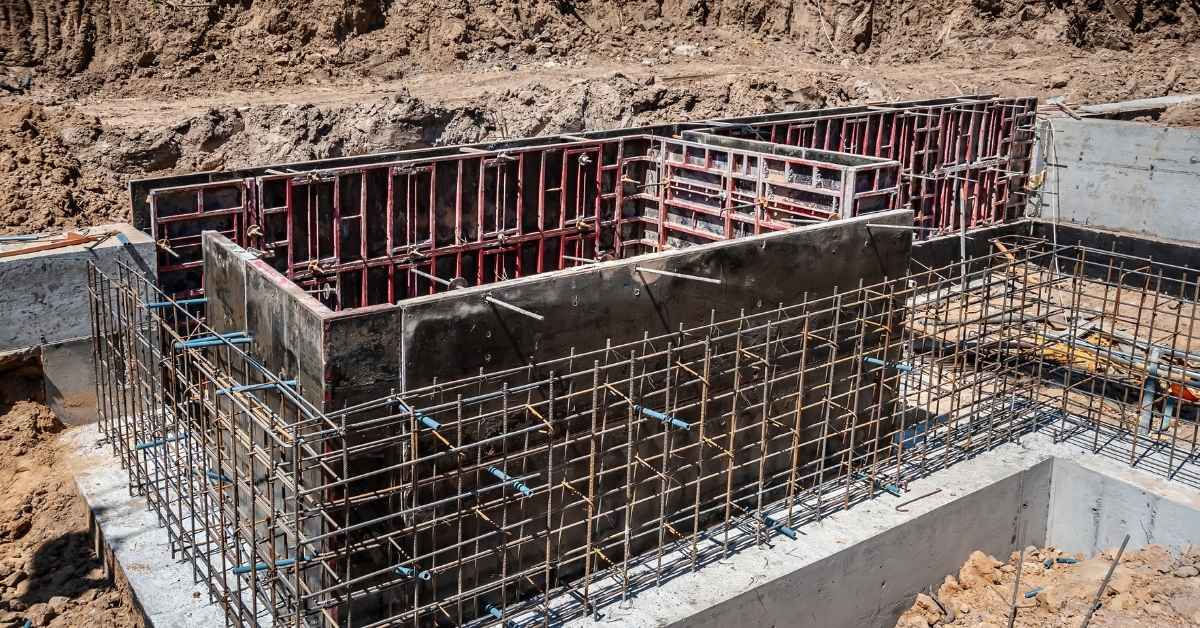
Concrete cover and detailing rules should account for chloride ingress in tidal zones, with guidance from supplier documents. Define minimum clear cover and protection schemes based on exposure. Verify these requirements against project specifications and codes.
Anchorage, splices, and bonding with marine-grade components need careful selection of methods and materials. Handling, storage, and site safety practices protect basalt fibers from moisture uptake or contamination before placement. Cross-check with supplier guidelines for specifics.
Concrete Cover, Placement, and Layout for Marine Exposure
In marine environments, protecting basalt rebar from chloride ingress and mechanical damage is crucial. Here’s how to detail your concrete:
Cover Depth: Minimum clear cover should be 2 inches (50 mm) to mitigate chloride penetration. Check with local codes for specific requirements.
Placement: Use tremie or bottom-up placement methods in immersed zones to prevent voids and ensure proper consolidation. In splash and tidal zones, use formwork to control concrete surface finish and protect rebar.
Surface Treatments: Apply marine-grade protective coatings or use exposed aggregate finishes to further safeguard the concrete surface from harsh marine conditions.
Splicing, Couplers, and Anchorage Methods
Proper splicing and anchorage ensure the strength and durability of basalt rebar in marine structures.
Lap Splices: Use Class B or C lap splices for basalt rebar. The splice length should be at least 40 times the bar diameter. Follow ACI 318-19 provisions for lap splice design.
Mechanical Couplers: Prefer mechanical couplers over lap splices when possible, especially in high-stress areas or where access is limited. Use stainless steel or marine-grade epoxy-coated couplers to prevent corrosion.
Anchorage: For anchorages, use expansion anchors or undercut anchors designed for basalt rebar. Ensure proper embedment and follow supplier guidelines for installation.
Handling, Cutting, Bonding, and On-Site Best Practices
Proper handling, cutting, and bonding of basalt rebar are essential to maintain its strength and durability.
Handling: Store rebar in a dry place, away from moisture and contaminants. Handle with care to prevent damage to basalt fibers. Follow supplier guidelines for storage and handling.
Cutting and Drilling: Use diamond blades or core bits when cutting or drilling basalt rebar. Keep the blade cool with water to prevent overheating and fiber damage. Always wear appropriate PPE.
Bonding/Epoxy: When using epoxy for bonding or coupling, follow manufacturer’s guidelines strictly. Ensure surfaces are clean, dry, and free of contaminants before application. Use marine-grade epoxy compatible with basalt rebar.
Comparison with Other Reinforcement Options (Technical and Economic)
Present a clear framework that compares basalt rebar with steel, stainless steel, GFRP, and CFRP in marine exposure. Focus on durability, mechanical properties, and long-term performance, and note where basalt performs best. Use a consistent scoring approach rather than vague impressions.
Assess construction impact, including available sizes, splicing methods, and coatings required. Build a simple ownership view that captures material, labor, and maintenance implications, then consider project-specific risk and coverage for marine conditions.
Basalt versus carbon and stainless steel
When it comes to durability in marine environments, basalt rebar holds its own against carbon and stainless steel. Basalt’s resistance to chloride ingress makes it a strong contender in splash, tidal, and immersed zones.
Initial material cost: Carbon steel is typically the cheapest upfront, followed by basalt and then stainless steel. But remember, initial costs aren’t everything.
Maintenance expectations are lower with basalt due to its corrosion resistance. While carbon steel needs regular maintenance and stainless requires occasional cleaning, basalt’s low maintenance makes it a long-term winner.
Structurally, basalt’s design strength is similar to carbon steel but lower than stainless. However, its high modulus ensures good concrete-steel composite action.
Basalt versus other FRP types (GFRP, CFRP)
Basalt’s stiffness is higher than GFRP but lower than CFRP. This means it provides better composite action with concrete compared to GFRP but falls short of CFRP.
Tensile capacity-wise, basalt sits between GFRP and CFRP. It offers a good balance, providing high strength without the premium price tag of CFRP.
UV resistance is a concern for all FRP types, including basalt. While it’s not as sensitive as GFRP, it’s still important to consider UV protection in exposed areas.
Cost and availability vary among FRP families. Basalt is generally more affordable than CFRP but pricier than GFRP. Availability can also be a factor, so check local markets.
Lifecycle cost and value engineering considerations
When comparing whole-life costs, consider initial material and labor costs, maintenance and inspection needs, expected service life, and risk contingencies.
Initial costs: Basalt’s upfront cost is typically higher than carbon steel but lower than stainless or FRP types. However, its long-term benefits often outweigh the initial investment.
Maintenance and inspection: Basalt’s low maintenance needs reduce these costs over time. While initial inspections might be similar to other materials, long-term monitoring is less frequent with basalt.
Expected service life: Basalt’s durability in marine environments gives it a long expected service life, comparable to or even exceeding stainless steel and FRP types. This longevity reduces the need for early replacements and repairs.
Risk contingencies: By minimizing corrosion risks, basalt can reduce unexpected failures and associated costs. It’s particularly valuable in high-risk projects where downtime or repairs could be costly.
Standards, Specifications, Testing, and Regulatory Considerations
List the standards and references that govern basalt rebar specification, and note regional variances in acceptance. Include FRP basalts, general marine exposure classifications, and guidance from authorities as applicable. Always check local requirements before relying on a given standard.
Define required tests and QA criteria for marine use, covering mechanical properties, bond to concrete, and durability under alkali exposure. Documentation and inspection checklists aid in project milestones and regulatory review, with deviations clearly tracked.
Relevant standards, test methods, and performance criteria
When specifying basalt rebar for marine zones, reference these key standards:
Material Specifications: ASTM D7035/D7035M – Standard Specification for Basalt Fiber Reinforcement (BFRP) Bars. Check for regional variances like AASHTO H21-09 in the US.
Bond Tests: ASTM D4862 – Standard Test Method for Pullout Strength of Fiber-Reinforced Polymer (FRP) Reinforcement from Concrete. Ensure suppliers provide results meeting required bond strengths.
Durability Tests: ISO 15359 – Fibre-reinforced polymer (FRP) reinforcement – Determination of resistance to alkaline environments. Insist on tests simulating marine exposure, like alkali/fluoride attack and freeze-thaw cycling.
Spec writing tips and procurement checkpoints
Use this checklist when writing specs to ensure consistent basalt rebar quality:
- Material Certificate: Require a certificate for each batch, confirming it meets ASTM D7035.
- Mill Test Reports (MTR): Insist on MTRs showing mechanical properties (tensile strength, modulus) and chemical composition meet specs.
- Sample Testing: Demand samples for lab testing to confirm performance in your specific marine subzone.
- Inspection Checklist: Include a detailed checklist for fabrication and on-site placement inspection.
- Coating/Finish Specs: Detail required coatings or finishes to protect basalt rebar from marine environments.
- Splicing Methods: Specify acceptable splice methods, like mechanical couplers or overlap splicing, following ASTM D7035 guidelines.
- Cover Requirements: Define minimum concrete cover based on marine exposure classification to protect basalt rebar from corrosion.
- Compatibility with Concrete Mixes: Ensure basalt rebar is compatible with chosen concrete mixes, checking for any adverse effects on bond or durability.
- Curing Practices: Specify appropriate curing practices to maintain concrete quality and protect basalt rebar.
- Documentation of Deviations: Require documentation of any deviations from the specified standards for regulatory review.
Quick rule: Regularly update specs based on new test results or changes in marine exposure conditions to maintain optimal performance.
Quality assurance, certification, and traceability
To ensure compliance with standards, follow these QA steps:
Supplier Qualification: Verify suppliers are certified to ASTM D7035 or equivalent. Check their quality management systems and manufacturing processes.
Batch Traceability: Demand batch traceability records from suppliers, linking each delivery to a specific production run with known properties.
On-Site QA/Inspection: Conduct regular inspections during fabrication and on-site placement. Check for proper handling, cutting, bonding, and curing practices. Ensure basalt rebar is protected from damage before concrete pouring.
Certification and Documentation: Verify material certificates, MTRs, and inspection reports accompany each delivery. Keep these records on file for regulatory review or future reference.
Costs, Risks, Safety, Environmental Impact, and Common Installation Mistakes
Identify cost drivers and total ownership factors, including material, fabrication, shipping, installation, and long-term maintenance considerations. Compare against traditional rebar to understand relative value in marine projects. Gather local data to support budgeting decisions.
Address marine-specific risks, safety requirements, and proper PPE for handling non-metallic reinforcement. Consider environmental impact, including sourcing and end-of-life considerations, and document common installation mistakes to prevent recurring issues on site.
Cost drivers and economic risk factors
The cost of basalt rebar isn’t just about the material itself. Here’s what drives your project budget:
Material availability: Basalt rebar might not be as common as steel, so check local supply before planning.
Fabrication and couplers: Unlike steel, basalt needs special cutting and bending. Consider these extra costs in your budget.
Labor learning curve: Workers may need training to handle non-metallic reinforcement. Factor in this initial slowdown.
Common mistakes and how to avoid them
Basalt rebar’s unique properties mean some common mistakes can happen. Here are four to watch out for:
- Insufficient cover: Basalt needs more concrete cover than steel to protect it from corrosion. At least 2 inches.
- Improper splices: Use couplers designed for basalt rebar, and follow manufacturer’s guidelines for splice lengths.
- Poor handling: Basalt is brittle. Handle with care to avoid damage that weakens the reinforcement.
- Neglecting joint details: Marine joints need proper sealing and expansion provisions to prevent water intrusion.
Learn from these mistakes, plan ahead, and you’ll save time and money in the long run.
Safety, handling, and environmental considerations
Worker safety: Wear appropriate PPE when cutting or handling basalt rebar. Follow fall protection guidelines in marine environments.
Waste handling: Minimize waste during installation. Recycle cutoffs if possible.
Environmental impact: Consider embodied energy and end-of-life options. Basalt has a lower embodied energy than steel, but it’s not biodegradable. Plan for disposal or recycling at the end of its useful life.
Conclusion
Basalt rebar offers real durability gains in marine zones, but it only pays off when you install and detail it right. Prioritize safety, verify materials meet local standards, and test a small area first to prevent costly failures or visible damage later.
Start with a quick, practical check: confirm the rebar type and coating match your project needs, plan the embedment and cover from the design, inspect anchors and forms for clean geometry, and then proceed in a steady, well-lit sequence from setup to pour. Keep the work area dry, use proper personal protective gear, and document what you test so you can repeat the good steps on the full project.
Common mistakes to avoid are cutting corners on preparation, mixing incompatible materials, and neglecting proper cover and detailing in marine zones. Don’t skip surface prep, don’t expose basalt fibers to harsh cleaners or solvents, and never assume the first pour will hide mistakes. Follow the standards and testing guidance, check for any regulatory requirements, and keep corrosion control and drainage in mind during every step.
When the project hits uncertain terrain—complex marine exposures, novel shapes, or unclear code requirements—call in a qualified professional to verify details and oversight. With careful planning, measured work, and a strict safety mindset, you’ll get stronger, longer-lasting results without drama or costly rework.
FAQ
What is basalt rebar and what should I know about its basic properties?
Basalt rebar is a fiber-reinforced reinforcement made from volcanic rock fibers. It’s non-corrosive, non-conductive, and designed to work with concrete the same way steel rebar does. Look for the manufacturer’s datasheet to confirm tensile strength and bend radius.
Why consider basalt rebar in marine zones over traditional steel?
In marine settings, basalt rebar can resist chloride attack better than plain steel in many cases. It tends to be lighter and doesn’t rust, which helps reduce maintenance over time. Always verify performance claims with the product label and instructions for your specific environment.
What specs should I check before buying basalt rebar?
Check the label or datasheet for allowable uses, bending limits, and coating or protective treatment if required. Review manufacturer installation instructions and any local guidance to ensure compatibility with your project. If you’re unsure, compare notes across several reputable products and ask for practical advice from the supplier.
How do I install basalt rebar in coastal or marine environments?
Follow standard concrete placement and curing practices, with attention to adequate cover over the reinforcement. Use the correct spacers and supports so the rebar stays in place during pour and curing. If you’re unsure about a detail, check the manufacturer instructions and local rules before proceeding.