
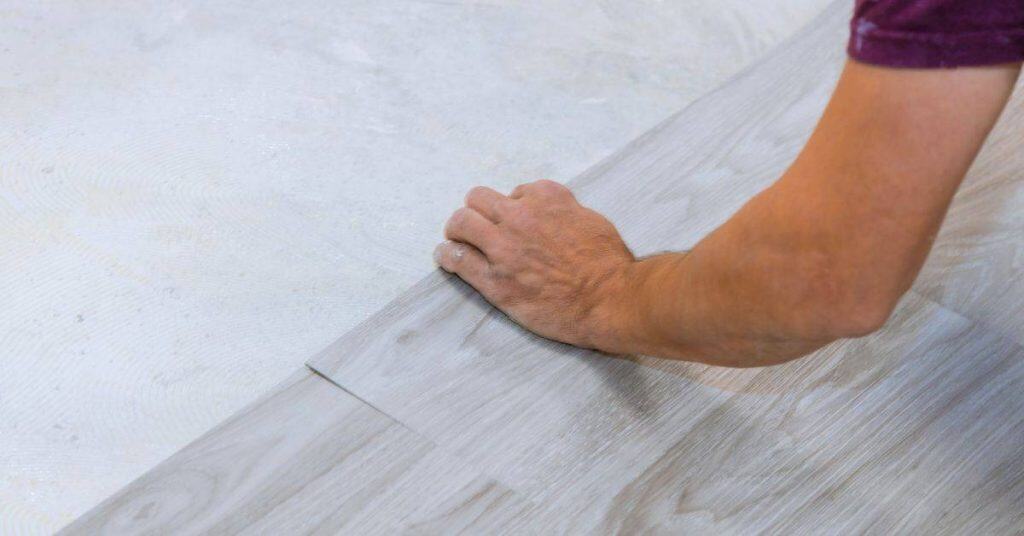
Introduction
Common flooring installation mistakes are the missteps that lead to gaps, squeaks, and floors that don’t stay flat.
They happen when you rush tasks, skip prep, or ignore material conditioning. This article lays out practical, hands-on checks to prevent or fix those issues.
Key trouble spots to watch include subfloor prep, acclimation, fastener choices, and expansion gaps.
Before you lay anything, make sure the subfloor is clean, level, and solid, and that you allow materials to come to ambient conditions.
Choose fasteners and spacing according to the product instructions and local rules, and leave proper perimeter gaps to accommodate movement.
Key takeaways
- Verify subfloor is clean, level, and stable before starting any flooring to prevent future issues.
- Allow materials to acclimate to room conditions to reduce movement after installation.
- Choose fasteners appropriate for the material and follow manufacturer guidance.
- Maintain expansion gaps and perimeter clearance to accommodate moisture-related dimensional changes.
- Prepare a solid substrate, perfection in leveling saves future repairs and headaches.
- Safety: wear eye protection and gloves when cutting or fastening; follow site rules.
Table of Contents
- Introduction
- Key takeaways
- Why Installation Quality Matters — Consequences and Costs
- Moisture Control and Acclimation Mistakes
- Subfloor Preparation and Leveling Errors
- Fasteners, Grain Orientation, and Mechanical Stability
- Adhesive, Underlayment, and Sealant Mistakes
- Expansion Gaps, Perimeter Clearance, and Layout Problems
- Common Failure Diagnoses and Repair Fixes
- Tools, Standards, Safety, and a DIY Pre-Install Checklist
- Conclusion
- FAQ
Why Installation Quality Matters — Consequences and Costs
Poor installation is more than a cosmetic flaw. It can create trip hazards, floor instability, and early wear that shortens the life of the floor. Subtle misjoins may not fail immediately, but they invite moisture intrusion, delamination, and ongoing maintenance needs. The result is a cycle of repairs, replacements, and lost utility that costs more over time than proper prep and careful execution.
This section links concrete, plywood, tile, and other substrates to adhesive performance and long-term durability. You will learn how subset mistakes ripple into higher repair bills and earlier replacements. It also highlights the most common errors to prevent, like skipping substrate prep, improper moisture management, and insufficient curing. Practical checks using straightedges, moisture meters, and a simple flatness gauge help you document progress and avoid warranty disputes. If you spot signs of subfloor flaws or environmental conditions that are outside specs, consider bringing in a professional sooner rather than later.
Typical failure outcomes to watch for
Poor installation can lead to a range of issues that reduce your flooring’s service life and increase costs. Here are some common results:
Squeaks indicate loose or improperly secured boards, which can worsen over time.
Buckling or delamination occur when moisture gets trapped under the flooring, causing it to lift or separate. This accelerates wear and tear, leading to early replacement.
Accelerated wear is another outcome, as improperly installed flooring can’t withstand daily use as intended.
When to hire a professional vs. DIY
Knowing when to tackle a project yourself and when to hire a pro is crucial. Consider these factors:
Project complexity: If the job involves intricate patterns, large areas, or multiple types of flooring, it might be best left to professionals.
Access to tools/measurements: If you lack essential tools like moisture meters or laser levels, or if precise measurements are critical, consider hiring an expert.
Risk tolerance: If the thought of making a costly mistake keeps you up at night, it might be wise to hire someone with experience.
Additionally, check warranty requirements. Some manufacturers insist on professional installation for their products to remain valid.
Moisture Control and Acclimation Mistakes
Moisture is usually the root cause of flooring failures. Ambient humidity and substrate moisture each drive adhesive failures and curing stresses, and they can lead to warping or moisture-related delamination if ignored. Understanding the role of moisture helps you set the stage for a successful install rather than chasing problems after the fact.
Acclimation and subfloor moisture control start long before you lay a plank. Bring materials to room conditions and verify stable temperature and humidity before you start. Test the substrate with simple moisture checks and know when to use professional tools like MVER or in-situ RH readings. Plan for a realistic timeline that includes acclimation days and moisture cure windows, and recognize red flags that mean you should delay installation or adjust materials.
Proper acclimation practices
Acclimating your flooring materials is crucial. It’s about bringing them to the same temperature and humidity as your room.
Follow manufacturer guidelines. They know their product best. Check local climate considerations too.
Monitor room conditions daily. Keep HVAC running normally during acclimation. Aim for a stable environment before installation.
Detecting and measuring hidden moisture
Moisture hides in slabs, causing big problems later. Find it early with these methods:
Visual inspection: Look for discoloration, warping, or musty smells.
Moisture meters: Use a pinless meter for concrete slabs. Readings under 4% are usually safe for most flooring types.
Relative humidity tests: For wood subfloors, aim for RH below 12%. If readings are high, delay installation until conditions improve.
Subfloor Preparation and Leveling Errors
A clean, flat, dry, and structurally sound subfloor is the foundation of a durable finish. Debris or uneven spots transfer through the floor and create bonding problems, while moisture and deflection can cause squeaks and edge lifting. Without a stable base, even the best adhesive and plank won’t deliver lasting results.
Keep the subfloor free of loose grit, dust, old adhesive, paint, and wax. Use roughening or patching where needed, then verify plane and rigidity with straightedges or a laser level. Check moisture with the appropriate tests and lay down a moisture barrier if required. For wood substrates, secure loose boards and address gaps or squeaks before proceeding.
Cleaning, repair, and surface prep
A clean subfloor is key for a strong bond. Remove all contaminants like dust, old adhesive, paint, or wax.
Sweep: Start with a broom to remove loose grit and debris. Vacuum afterwards to catch any remaining dust.
Scrape: Use a putty knife or floor scraper to remove tough residues like old adhesive, sealants, or dried paint. Be thorough; any residue left behind can hinder bonding.
Flatness and level checkpoints
Before installing your flooring, ensure the subfloor is flat and level. This prevents edge lifting, squeaks, and uneven finishes.
- Coarse straightedge: Check for major high/low spots using a 10′ straight piece of lumber or drywall. Place it across joists and check for gaps at both ends.
- Fine straightedge: Use a smaller, 4′ straightedge to check for minor inconsistencies in between joists.
- Laser level (optional): If available, use one to precisely measure the subfloor’s plane. Target tolerances vary by flooring type; consult product guidance.
- Spot checks: Check high-traffic areas and corners for any missed spots or localized issues.
Quick rule: If you find high/low spots, use a leveling compound to fill lows and shim highs before proceeding.
Fasteners, Grain Orientation, and Mechanical Stability
Wrong fasteners and poor spacing are common culprits for squeaks, panel lift, and uneven load distribution. Mismatched screws, wrong corrosion resistance, or incorrect length can compromise the entire system. Correct fastener selection and patterning support long-term adhesion and structural stability.
Pay attention to grain orientation and panel direction when installing plywood or engineered boards. Align panels to minimize gaps and avoid misaligned edges that concentrate stress. Verify substrate compatibility and surface prep requirements, including moisture tests and sealants, to prevent fastener failures and ensure a solid, quiet floor underfoot.
Choosing and placing fasteners correctly
Selecting the right fasteners is crucial for a solid floor. Use screws rated for your flooring type – check manufacturer specs.
Length matters: Fasteners should reach joists or subfloor’s bottom layer without overdriving, which can cause squeaks and structural issues.
Avoid wrong gauges: Too small, and they won’t hold; too large, they’ll split the wood. Follow manufacturer’s gauge recommendations.
Grain direction and panel layout best practices
Panel grain should run perpendicular to joists for maximum stiffness and even load distribution. This minimizes sag and bounce underfoot.
Plan ahead: Before installing, lay out panels on the floor to ensure proper grain orientation relative to joist direction.
For engineered boards with visible grain patterns, maintain consistent directionality across the entire floor for a uniform look.
Adhesive, Underlayment, and Sealant Mistakes
Adhesive choice must match the concrete porosity, moisture emission rate, and traffic expectations. Using the wrong combination with the wrong underlayment or sealant sets you up for bond failure and edge telegraphing. Always confirm compatibility across all components before you commit to a product line.
Underlayment selection, thickness, and barriers matter as much as the flooring itself. Verify that the underlayment works with your concrete code, is compatible with the adhesive, and provides the right moisture/vapor barrier where needed. Surface prep is critical: clean, dry, and level surfaces prevent bonding issues and future disappointments.
Selecting adhesives and underlayments that match materials
The right adhesive and underlayment can make your job easier and ensure a durable, attractive finish. Here’s what you need to know:
- Type N Mortar: Used for laying bricks or blocks. Look for strength class N (medium). It’s cheap but avoid if using lightweight aggregates as it won’t bond well.
- Thinset Mortar: Ideal for ceramic and stone tiles. Check compatibility with your tile type. Cheap homeowner drill is fine to mix, but follow manufacturer instructions.
- Epoxy Adhesive: High strength, ideal for heavy stones or metal. Look for high bond strength. Hire or rent a proper mixing paddle for best results.
- Cement-Bonded Underlayment: Used before tiling to level surfaces. Check it’s compatible with your adhesive and tile type. Avoid if using large format tiles as it may crack.
- Uncoupling Membrane: Prevents cracks from substrate transferring to tile surface. Use with large format tiles or heated floors. It’s a bit pricey but worth it for peace of mind.
- Expansion Joint Filler: Used to fill control joints in concrete. Look for a flexible, non-shrinking compound. Avoid cheap silicone sealants as they won’t last.
Pro tip: Always check product labels and manufacturer instructions before buying. Store materials properly to maintain their quality and safety. Mix only what you need to avoid waste and ensure a strong bond.
Sealing edges and undersides
Raw edges and underside cuts on concrete slabs are like open wounds. They suck up moisture like a sponge, which can lead to delamination – that’s when your slab peels off from the base like a sunburnt scab.
Seal ’em up, and you’ll keep moisture out, prevent delamination, and extend your slab’s lifespan. Here’s how:
Use a concrete sealant designed for edges and undersides. It’s not just paint – it needs to penetrate deep and form a barrier. Check the product label to ensure it’s suitable for your climate and slab type.
Apply two coats, allowing proper cure time between each. Brush or roll it on, making sure to cover all exposed edges and undersides. Don’t be stingy – you want a nice, even coat.
Expansion Gaps, Perimeter Clearance, and Layout Problems
Expansion gaps around room perimeters and fixed objects are essential because flooring expands with temperature and humidity changes. Skipping gaps or misplacing them leads to buckling, stressed joints, and unattractive seams. Plan for these movement zones from day one to avoid costly fixes later.
Concrete floors demand concrete-specific guidance on gap sizes and weather-influenced movement. Consider room dimensions, wide or irregular spaces, and transitions around baseboards or door jambs. A careful layout that leaves space for expansion and aligns with fixed objects helps keep edges neat and minimizes visible seams.
Planning and maintaining expansion space
Expansion gaps are crucial around room perimeters and obstacles to accommodate flooring movement due to temperature/humidity swings and HVAC cycles. Follow product-specified perimeter clearance guidelines.
Use spacers during installation, especially in wide or irregular rooms where gaps may need to be increased. Account for seasonal humidity changes by adjusting gap sizes accordingly.
Pro tip: Mark expansion zones before install to ensure consistent spacing and prevent future buckling.
Plank staggering and joint layout strategies
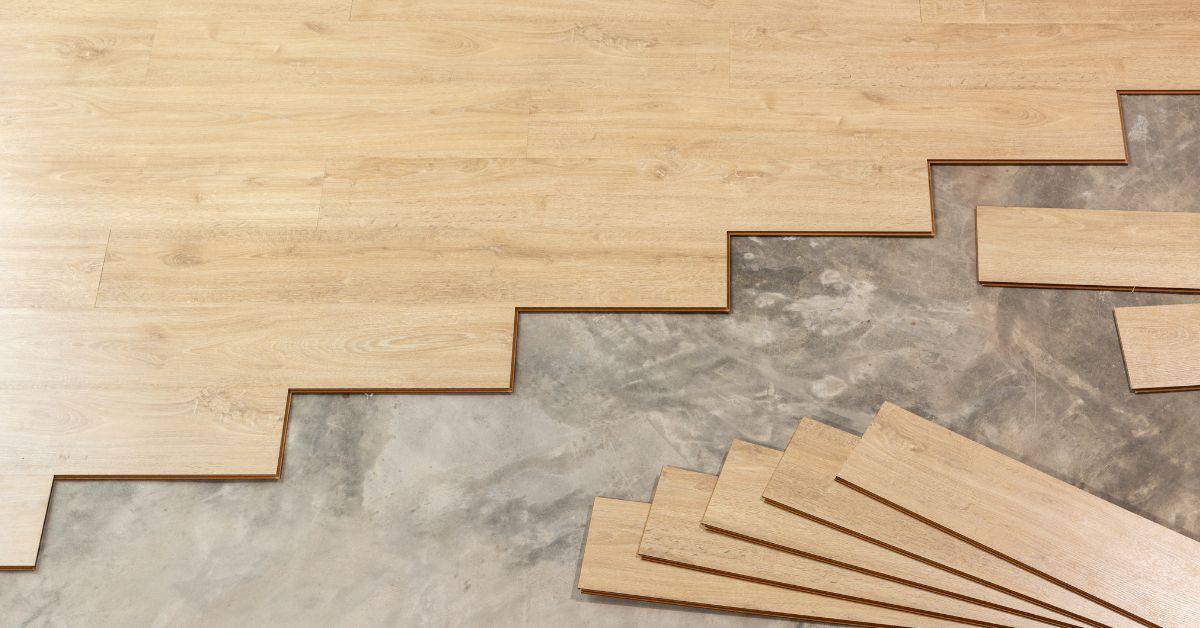
A uniform plank layout can lead to visible seams and an unnatural appearance. Stagger joints by offsetting rows, aiming for a 1/3 or 1/2 overlap from the previous row’s end.
This strategy improves stability and reduces concentrated end-joint lines. It also helps minimize visible seams and uneven edges, creating a more natural look.
Tip: Plan your layout around fixed objects like vents, pipes, or columns to maintain staggered patterns and avoid awkward cuts.
Common Failure Diagnoses and Repair Fixes
When failures appear, start with a quick diagnostic workflow. Observe surface symptoms, test for moisture and substrate hardness, and document crack patterns to determine whether the issue stems from concrete shrinkage, settlement, or adhesive failure. Clear notes speed up repair decisions.
Cover the typical failure modes and practical fixes: from temporary patches to permanent repairs like crack injection or resurfacing. Include safety notes and compatibility checks for primers, adhesives, and toppings. A prioritized plan helps minimize downtime and guides you toward preventive measures such as proper curing or installing control joints.
Fixing squeaks, loose panels, and bounce
Squeaky floors are often caused by loose subfloor nails or screws. Here’s how to fix it:
Step 1: Locate the source of the squeak by placing a flat object like a piece of plywood on the floor and pressing down while someone else moves around above, listening for the noise.
Step 2: Once you’ve found the spot, drive a new screw or nail into the subfloor next to the existing one. This should tighten up the connection and stop the squeak.
If the floor still squeaks, try using a construction adhesive to bond the subfloor to the joist below. Apply the adhesive along the length of the joist, then drive screws or nails into it.
Remediating buckling, cupping, and warping
Buckling, cupping, and warping are signs of moisture or installation issues. Here’s how to diagnose and fix these problems:
Step 1: Diagnose the cause. Check for excessive moisture using a moisture meter. Also, look at the grain direction of the flooring – if it runs perpendicular to the warp, it’s likely an installation issue (grain should run parallel to the longest wall).
Step 2: Address moisture issues. If moisture is the culprit, install a vapor barrier and ensure proper ventilation. Allow the floor to acclimate to the room’s conditions before installing or replacing planks.
Step 3: Fix installation issues. If the grain direction is incorrect, you may need to replace the affected planks. Always follow manufacturer guidelines for installation and acclimation.
Addressing adhesive and sealant failures
Adhesive and sealant failures can lead to delamination, gaps, or leaks. Here’s how to identify and fix these issues:
Step 1: Identify the failure. Look for gaps, bubbles, or discoloration in the adhesive or sealant. If the flooring is lifting, it’s a sign of adhesive failure.
Step 2: Remove contaminated materials. Use a putty knife or chisel to carefully remove any failed adhesive or sealant. Ensure the surface is clean and dry before proceeding.
Step 3: Select compatible products. When re-bonding or resealing, always use products that are compatible with your flooring material and subfloor. Follow manufacturer guidelines for application and curing times.
Tools, Standards, Safety, and a DIY Pre-Install Checklist
Assemble a practical tool kit that fits the job: hand tools, power tools, layout devices, moisture meters, and gauges for flatness. Include task-specific items like trowels, floats, and edging tools for concrete surfaces. Having the right tools reduces install time and mistakes.
Know the standards and verify substrate readiness before you start. Check slab flatness, moisture content, pH, curing compound presence, and the required primers or adhesives. Practice safety with PPE, ventilation, proper lifting techniques, and fall protection as needed, and complete a pre-install site check to ensure your plan is complete and ready to execute.
Essential tools and measurement devices
Before you start, ensure you have the right tools for a smooth installation.
- Moisture meter: Check slab moisture content. Too much can ruin your flooring.
- Level: Ensure your surface is flat and even.
- Chalk line: Snap lines for accurate cutting.
- Tape measure: Accurate measurements prevent waste.
- Circular saw: For cutting flooring to size.
- Jigsaw: For intricate cuts and edges.
- Tapping block/pull bar: Tap down panels for a tight fit.
- Gauge/rip calculator: Ensure your cuts are precise.
Quick rule: Always check tool suitability for your chosen flooring system.
Material specs, standards, and visual checkpoints
Inspect your materials to ensure they meet standards and are in good condition.
- Slab flatness: Check for dips or high spots. ASTM F710 recommends no more than 3/16″ per 10ft.
- Moisture content: Check with a moisture meter. Too much can cause problems later.
- pH level: Concrete should be between 5.5 and 9.5 for good adhesion.
- Curing compound: Ensure it’s present if required by your flooring system.
- Adhesive/primer: Check compatibility with your chosen flooring.
- Manufacturer tolerances: Know the allowed variations in size and color.
- Warranty conditions: Understand what’s covered and for how long.
- Substrate compatibility: Ensure your flooring can be installed on concrete.
Quick rule: Always visually inspect materials upon delivery.
Safety practices and pre-install checklist
Safety first! Here’s a checklist to ensure you’re ready to install.
- PPE: Wear eye/ear protection, gloves, and a respirator when mixing adhesives.
- Ventilation: Ensure adequate airflow in your work area.
- Lifting safety: Use proper lifting techniques to prevent injury.
- Fall protection: Secure elevated areas to prevent falls.
- Site inspection: Check for cracks, movement, or other issues in the substrate.
- Substrate cleanliness: Ensure your surface is clean and dry before installing.
- Tool calibration: Verify tools are working correctly.
- Manufacturer instructions: Follow them closely for best results.
Quick rule: Always prioritize safety and follow manufacturer guidelines.
Conclusion
What matters most is doing the job right so the floor is safe, durable, and looks good for years. Take control now by focusing on moisture management, solid subfloor prep, proper fasteners and spacing, and careful layout so you don’t trap issues beneath the surface.
Next, run a simple check: verify moisture conditions and acclimation for the material, confirm the subfloor is flat and clean, verify fastener choices and spacing align with the product and site, ensure the grain orientation and layout follow the plan, and seal and insulate where required. Do these steps in sequence: confirm moisture readings, level the surface, install underlayment if needed, lay out expansion gaps, and finally secure everything with correct fasteners and adhesive as specified. Test a small area first, then proceed in stages, stopping if you see any soft spots, changed moisture, or unexpected gaps.
Common mistakes to avoid are trying to push installation with poor moisture control, skipping acclimation, or forcing panels into an uneven subfloor. Always keep safety gear on, work in a dry, well‑ventilated area, and never crowbar or force boards to fit. A simple safety rule: if something won’t seat flat without forcing, pause and check the substrate, moisture, and layout again to prevent costly damage.
If the project area has complex moisture dynamics, warped subfloors, or you’re unsure about adhesive, underlayment, or perimeter clearances, it’s wise to call a professional. When doubt arises, stop and verify with a trusted guide or contractor. Stay methodical, stay safe, and you’ll finish with a floor that performs and looks right.
FAQ
1. How does improper subfloor preparation derail a flooring install, and how do I fix it?
Unclean, damp, or uneven subfloors reflect through the finish and can cause squeaks or bounce. Clean thoroughly, dry out any moisture, and fix visible high/low spots before you lay anything down. If you’re unsure, check the subfloor’s surface for flatness and follow the flooring manufacturer’s guidance.
2. Why is neglecting acclimation a problem, and what should I do about it?
Materials left in a hot, cold, or dry environment too long will move after install. Let the flooring sit in the room where it will be installed and follow the label’s acclimation instructions. If conditions are extreme, delay install until they’re close to ambient room conditions.
3. How do I choose the right fasteners and where should I place them?
Use the fastener type and spacing recommended for your flooring and subfloor. Don’t improvise—wrong fasteners or too many can cause dimples, looseness, or splitting. Always check the product instructions or label for the exact pattern.
4. What’s the right way to handle expansion gaps and perimeter clearance?
Floors move with moisture and temperature; you must leave proper gaps at walls and fixed objects. Don’t jam boards or tiles tight to the perimeter. Follow the manufacturer’s guidance on gap size and use spacers during installation if needed.
5. How important is grain orientation, and what should I verify?
Sheet products must align with joists and with each other to avoid misalignment and edge lifts. Verify that plywood or underlayment edges are staggered and that edges meet per the plan. If in doubt, review the layout and guidelines from the sheet manufacturer and the flooring installer instructions.