
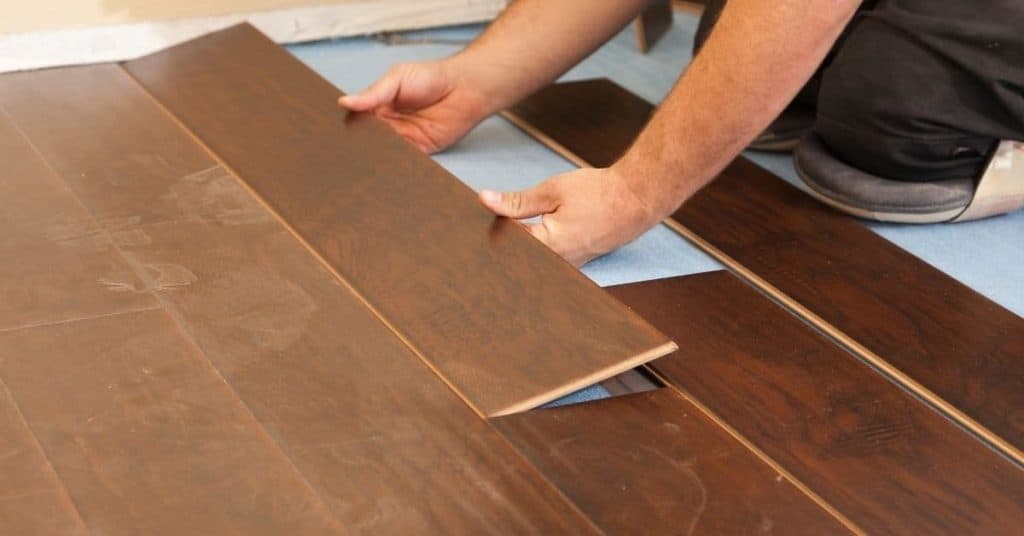
Introduction
Acclimating flooring means letting the material adjust to the room conditions before installation. This isn’t a one-size-fits-all rule; temperature and humidity matter, but accuracy comes from checking the product labels and your actual home conditions. Rushed or misreading the room can lead to gaps, warping, or squeaks after install.
To avoid the “False Acclimation” trap, verify that the flooring is allowed to sit in the actual room for a realistic period and monitor the conditions. Make sure the subfloor is clean, dry, and properly sealed per product instructions before laying anything. If in doubt, consult the manufacturer’s guidelines and your local rules to determine what to check and for how long.
Key takeaways
- Ensure subfloor is clean, dry, and sealed per manufacturer before acclimation.
- Bring flooring and accessories to room conditions before installation starts.
- Avoid false acclimation by verifying actual subfloor moisture and material conditioning.
- Monitor temperature and humidity during acclimation with calibrated instruments, document readings.
- Follow sealing methods for subfloors to prevent moisture migration and instability.
- Include basic safety: wear PPE, avoid trip hazards, ventilate and observe heat sources.
Table of Contents
- Introduction
- Key takeaways
- Why Proper Acclimation Matters
- Pre-Install Planning and Climate Control
- Step-by-Step: Proper Acclimation Process
- The “False Acclimation” Trap — How It Happens and How to Avoid It
- Temperature and Humidity Targets by Floor Type
- Testing, Monitoring, and Visual Checkpoints
- Tools, Materials Checklist and Safety Precautions
- Cost Implications, Planning Ahead, and Long-Term Maintenance
- Conclusion
- FAQ
Why Proper Acclimation Matters
Wood and engineered floors react to moisture and temperature by changing size and shape, so check the material moisture content and room readings before you bring boards into the install area. Measure the subfloor moisture, read the product label or technical sheet for target moisture ranges, and keep a log of those values.
Getting acclimation right prevents visible failures like gaps, cupping, or crowning and reduces the chance of early finish or adhesive problems that cost time and money. If you skip or fake acclimation, expect callbacks, warranty headaches, and replacement work that’s avoidable with straightforward checks and stable storage.
How wood and natural materials respond to moisture and temperature
Material choices greatly affect how flooring responds to moisture and temperature.
- Wood: Expands in humidity, contracts when dry. Hygroscopic – absorbs/desorbs water. Seasonal changes matter.
- Bamboo: Similar to wood but more stable due to manufacturing process. Still expands/contracts with moisture.
- Cork: Expands and contracts less than wood/bamboo due to closed-cell structure. Still affected by humidity.
- Laminate: Stable in size but can delaminate or warp if exposed to excessive moisture. Avoid high-humidity areas without underlayment.
- Tile: Minimal expansion/contraction, but can crack if subfloor moves excessively due to moisture changes.
Typical installation failures from poor acclimation
Improper acclimation leads to various installation failures:
Gapping: Floors shrink due to dry conditions, leaving gaps between planks.
Cupping: Boards curl upwards at the edges due to uneven moisture distribution. Can cause tripping hazards and weak points for damage.
Buckling: Boards lift off the subfloor due to excessive moisture underneath, leading to a wavy appearance and potential structural issues.
These failures can void warranties and lead to costly repairs or reinstallation. Always follow manufacturer guidelines for acclimation.
Pre-Install Planning and Climate Control
Set stable indoor conditions and a clear schedule before materials arrive; plan HVAC run times, where to place dehumidifiers or heaters, and how you’ll monitor temperature and humidity during the whole acclimation window. Walk the rooms to seal drafts, locate power for equipment, and note any moisture sources or cold floors that need fixing first.
A predictable environment keeps readings honest and prevents last-minute rushes that force shortcuts you’ll regret. Relying on a quick snapshot or turning on a heater for an hour can mask problems and lead to failed installs, so document your plan and stick to it.
Set target temperature and RH — what to aim for
The ideal indoor conditions for acclimating flooring typically fall within a range of 35-55% relative humidity (RH) and a temperature band between 60-80°F (15-27°C). However, always check with the manufacturer first, as product-specific limits may vary.
To maintain these conditions during acclimation and curing, you’ll need to control both temperature and humidity. This might involve using heating or cooling systems, along with dehumidifiers or humidifiers.
Remember: Flooring materials are sensitive to extreme temperatures and high humidity levels. Keeping them within the recommended ranges ensures they acclimate properly and reduces the risk of installation failures.
Prepare the room and equipment (HVAC, dehumidifiers, hygrometers)
Before starting acclimation, ensure your room is ready with the right equipment to monitor and control conditions.
- HVAC system: Use your home’s heating, ventilation, and air conditioning system to maintain a stable temperature. Set it to run continuously at the target temperature during acclimation.
- Portable dehumidifiers/humidifiers: If needed, use these to control humidity levels. Rentals are available for around $30-$50 per day.
- Hygrometers (moisture meters): Purchase or rent multiple hygrometers ($10-$20 each) to monitor RH at different locations in the room.
- Thermometers: Use these to verify temperature readings from your HVAC system and ensure consistency throughout the room.
- Tape measure: Measure your room’s dimensions accurately to calculate how many square feet of flooring you’ll need, helping you order the right amount.
Scheduling and staging deliveries
Timing delivery is crucial for proper acclimation. Have your flooring delivered a few days before installation to allow it to adjust to the indoor conditions.
Stage boxes: Arrange them in a single layer, evenly spaced, and away from walls or other obstacles that could trap heat or moisture. Keep them off direct sunlight to prevent temperature fluctuations.
Consider your room’s layout and traffic patterns when staging deliveries. Ensure boxes don’t block walkways or doorways, making it difficult for you or installers to move around safely.
Weather protection: If outdoor conditions are extreme (e.g., heavy rain, snow, or high temperatures), consider having the flooring delivered directly into the room where it will be installed. This minimizes its exposure to harsh weather conditions that could affect acclimation.
Step-by-Step: Proper Acclimation Process
Follow a repeatable workflow from delivery to sign-off: inspect cartons at arrival, confirm product type and visible condition, stage bundles by room, and only start acclimation when the install room is at target conditions noted on the product data sheet. Use a hygrometer and thermometer to log readings, and a moisture meter where the manufacturer requires it.
Doing the steps in order — staged delivery, unopened storage until the clock starts, periodic checks, and a final stabilization reading — gives you objective pass/fail results. Skipping rotation, ignoring mid-point checks, or installing before readings stabilize invites dimensional failure and lost warranty coverage.
Step-by-Step Process
Follow this clear, numbered sequence to properly acclimate your flooring from start to finish. This ensures dimensional stability and a successful installation.
- Inspect packaging for moisture protection and check product type, width, thickness, and subfloor condition before bringing materials indoors.
- Keep materials in their packaging until the acclimation period starts. Group by room or zone and avoid stacking beyond recommended heights to promote uniform air exposure.
- Establish a standard timeline (e.g., 48–72 hours for many products) and rotate bundles or open packaging as specified by the manufacturer.
- Monitor temperature and relative humidity using a thermometer/hygrometer, and check moisture content with a calibrated meter where applicable. Document initial readings and set acceptable fluctuation limits.
- Perform mid-point checks and final verification only after readings stabilize within targets. Confirm sustained environmental conditions for a defined period before installation.
Unbox, Cross-Stack and Provide Airflow
Safely unbox your flooring materials to allow for proper air circulation around the planks. This helps them acclimate evenly to the room’s environment.
Cross-stack pallets or boxes by alternating their direction to create spaces between layers. This promotes airflow and prevents moisture buildup.
Do not leave boxes sealed in a conditioned space, as this can lead to false acclimation and moisture-related issues during installation.
Measure Moisture Content and Compare to Subfloor
Use a calibrated moisture meter or manufacturer-specified tests to confirm that the boards’ moisture content is within acceptable limits compared to the subfloor or ambient conditions.
Check both the flooring materials and the subfloor to ensure they are compatible in terms of moisture content. This helps prevent installation failures due to excessive moisture differences.
Note: Some products may require specific testing methods, such as the ASTM F2170 standard for wood flooring. Always follow manufacturer guidelines.
Criteria for Ending Acclimation and Starting Install
Determine when acclimation is complete by considering stable readings over time, manufacturer tolerances, and practical signs that the materials have adapted to the environment.
Readings should remain within acceptable fluctuation limits (e.g., ±2–3% RH) for a specified duration. Consult the manufacturer’s guidelines for specific tolerances.
Practical signs of completed acclimation include consistent readings, no visible moisture on the materials’ surface, and no warping or cupping of the planks.
The “False Acclimation” Trap — How It Happens and How to Avoid It
False acclimation looks like a stable room but hides problems: short-term HVAC runs, a single hygrometer in the wrong spot, or opening just a few cartons while leaving the rest in a cold garage. Verify material moisture content, run repeated readings in different spots, and compare subfloor tests to the product’s required range.
Trusting a one-time reading or visual cues often leads to swelling, adhesive issues, or boards that move after install. If readings or the feel of boards don’t match expectations, pause, re-measure, and follow a documented checklist before continuing.
Examples of false acclimation practices
DIY homeowners often fall into the ‘false acclimation’ trap by taking shortcuts. Here are some examples:
Leaving sealed boxes in conditioned warehouses: Just because it’s climate-controlled doesn’t mean your flooring is acclimating properly. It needs airflow.
Short 24-hour ‘acclimation’ in uncontrolled spaces: A day isn’t enough, especially if the room temperature and humidity fluctuate.
Staging near a heat source: Heat can dry out flooring too quickly, leading to warping. Keep your materials away from direct heat sources.
Verification steps to prove true acclimation
To ensure your flooring is truly acclimated, follow these objective checks:
Repeated moisture readings: Check the moisture content of your flooring and subfloor at least twice a day. Consistency is key.
Room RH stability: Use a hygrometer to monitor relative humidity. It should stay within the target range (30-50% for most woods) for 72 hours straight.
Observed dimensional stability of sample boards: Lay out some boards and watch them. If they warp, cup, or twist, they’re not ready yet.
Temperature and Humidity Targets by Floor Type
Different floor types react differently; solid wood is the most sensitive, engineered less so, and waterproof-core products behave yet d