

Introduction
Tile cutting tools are devices used to score, snap, or trim ceramic, porcelain, and stone tiles. In a DIY setting, pick the tool that matches the tile type and the cut you need, and always test on scrap first.
Common mistakes include rushing cuts or skipping a dry fit, which can crack tiles. Fixes are to measure twice, mark clearly, use a proper guard, and go slow on tough cuts; if a tool isn’t giving clean edges, check the blade type, the score line, and the manufacturer instructions.
Key takeaways
- Choose tool type based on tile material, thickness, and cut precision needs.
- Manual nibblers and score-and-snap methods require steady hands and protective gear.
- Wet saws reduce chipping but require water supply and blade maintenance.
- Spark-safety: check blade guards and wear goggles when plugin cutters.
- Measure twice, mark clearly, and verify tile orientation before cutting.
- Store blades properly to prevent rust and ensure safe transport between jobs.
Table of Contents
- Introduction
- Key takeaways
- Why the Right Tile Cutting Tool Matters
- Common Tile Cutting Tools — Overview and Proper Uses
- Frequent Mistakes When Cutting Tiles (and Why They Happen)
- Better Fixes and Correct Techniques
- Tools and Materials Checklist for Common Projects
- Safety and Maintenance to Prevent Problems
- Troubleshooting Chart — Problems, Causes, and Quick Fixes
- Cost Vs. Quality: Choosing Tools Wisely
- Conclusion
- FAQ
Why the Right Tile Cutting Tool Matters
Choosing the right tool affects cut quality, safety, and how efficiently you work. It also influences the overall cost of the project when you factor in waste and rework.
Using the wrong tool for a tile type can lead to chipping, uneven edges, or blade binding. Always check the tile material and the tool label or manufacturer instructions before you start.
Match tool to tile material and thickness
The right tool makes all the difference. Here’s what you need for different tiles:
- Ceramic & Porcelain: Standard wet saws with diamond blades work best. Thinner tiles (<6mm) may require a water-cooled, low-speed blade to prevent chipping.
- Natural Stone (Marble, Granite): Use a wet saw with a resin-bonded diamond blade. Thicker tiles (>20mm) need a powerful saw and maybe a router for deep cuts.
- Large-Format Tiles: Consider renting a large tile cutter or using a snap cutter for straight lines, then finish with a wet saw.
- Mosaics & Small Tiles: Use a manual mosaic nipping tool or a small wet saw. Thinner tiles may need a low-speed blade.
- Quarry/Handmade Tiles: These vary, so test your tools first. You might need a combination of saws and nippers.
Impact on installation time and finish quality
The tool you choose affects your work speed and the final look. Here’s how:
Edge Chipping: Using the wrong blade or method can cause chipped edges, ruining your tile’s appearance. Always match your tool to your tile material.
Straightness & Precision: A good quality tool ensures straight cuts and clean lines. Cheap tools or incorrect use can lead to crooked tiles and wasted materials.
Speed: The right tool for the job gets it done faster. Using a manual cutter where a wet saw is needed will slow you down, while trying to cut thick stone with a weak saw wastes time and effort.
Common Tile Cutting Tools — Overview and Proper Uses
Manual cutters, tile saws, and wet saws each have identifying strengths. Nippers and scoring tools are ideal for small, precise adjustments and curved cuts.
Angle grinders with the right blade handle rough, thick, or irregular cuts. Review the intended use for hole saws and specialty bits and match them to your project needs.
Manual tile cutters and scoring tools
For small jobs or where power tools aren’t feasible, manual tile cutters and scoring tools are your best bet. They’re cheap, portable, and easy to use.
Best-use scenarios: These tools shine when you need to make a few cuts here and there, like trimming tiles for borders or cutting small pieces at the end of rows. They’re also great for scoring large tiles before snapping them with a tile nippers.
Typical limitations: Manual cutters aren’t designed for heavy-duty use. They struggle with thick tiles and can’t handle many cuts in quick succession. Plus, they require some elbow grease to operate effectively.
Avoid common scoring errors:
- Don’t press too hard; it can cause the tile to crack or break prematurely.
- Score both sides of the tile for a clean break. One side might not be enough, especially with thicker tiles.
- After scoring, use tile nippers to snap the tile along the scored line. Don’t try to bend or twist the tile; it’ll likely break unevenly.
Wet saws and electric tile saws
Alright, listen up. You’ve got two main options here: wet saws and dry cutters. Let’s talk about when to use each.
Wet Saws: These are your best bet for larger tiles or complex cuts. They use water to keep dust down and cool the blade. But remember, you’re dealing with water here, so keep it away from electrical outlets and make sure your work area is safe.
Water management is key. You’ll need a way to collect and dispose of the water. Check your tile’s label or manufacturer instructions – some tiles might not like being submerged in water. And always wear safety glasses, even with all that water splashing around.
Angle grinders, nippers, and specialty bits
For shaping tiles, notching, or drilling holes, you’ll need these power tools. Here’s how to use ’em right.
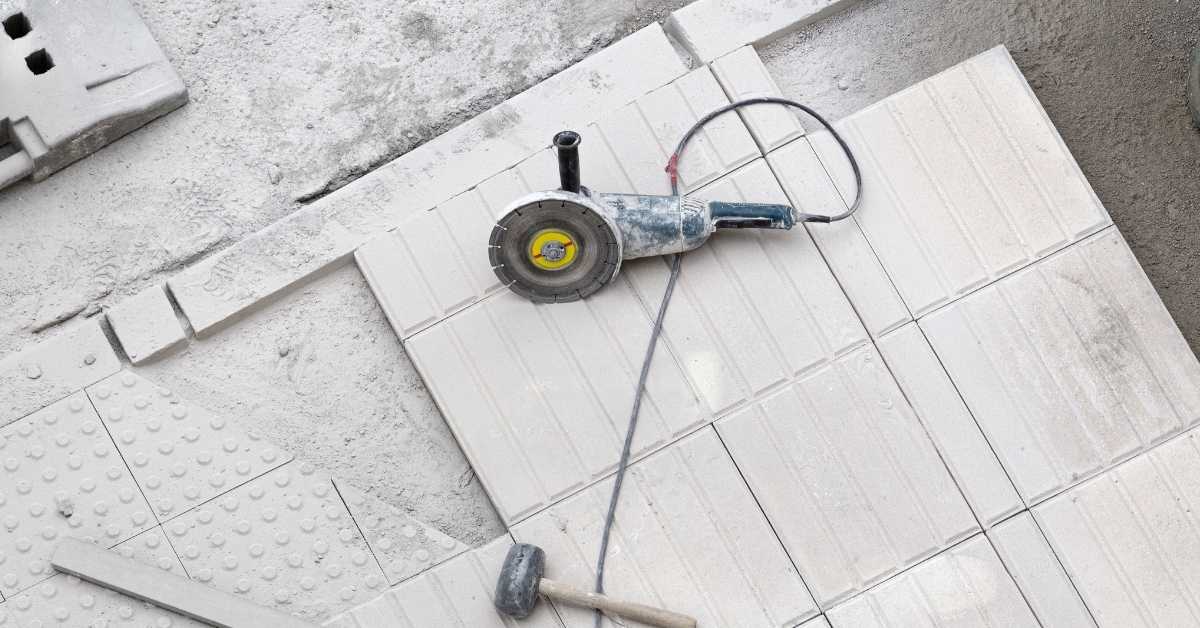
Angle Grinders: These are your go-to for cutting curves and making notches. Use a diamond blade (check label) for ceramic, porcelain, or natural stone tiles. For metal lath backing, use a masonry blade. Always wear safety glasses and gloves.
Tile Nippers: These hand tools are great for scoring and breaking small tiles or making notches in larger ones. They’re easy to control but take longer than power tools. Use them when precision is key, like around plumbing fixtures.
Specialty Bits: For drilling holes in tiles, use a diamond hole saw (check bit size) for ceramic or porcelain. For natural stone, use a masonry drill bit. Always lubricate the bit with water to keep it cool and prevent cracking. Drill slowly and steadily.
Frequent Mistakes When Cutting Tiles (and Why They Happen)
The top errors include using an incompatible blade, poor support, and bad measurements. These mistakes often come from rushing or skipping checks during setup.
Other common causes are incorrect feed rate and inadequate cooling, which can overheat or wear the blade unevenly. Understanding the root causes helps you prevent repeat problems.
Using the Wrong Blade or Bit
The right blade makes all the difference. Using one that’s not suited for your tile can cause chipping, damage the glaze, and wear out your tool faster.
For ceramic and porcelain tiles, use a diamond blade with fine grit (around 100-200). Coarser grits (400+) are for softer materials like marble or stone.
Blade type matters too. For straight cuts, use a continuous rim blade. For plunge cuts, opt for a segmented one.
Poor Setup and Support
A stable work surface is crucial to prevent vibration and breakage. Here’s what to avoid:
- Inadequate clamping: Secure your tile firmly with clamps or a vise.
- Tile overhang: Ensure the tile doesn’t extend beyond the saw’s table. This causes instability.
- Lack of backer board: Use a backer board under thin tiles to prevent them from breaking when pressure is applied.
Proper setup keeps your cuts accurate and safe.
Speed and Pressure Errors
Pushing too hard or cutting too fast can lead to overheating, chipping, and inaccurate cuts. Here’s how to avoid these mistakes:
- Too much pressure: Let the blade do the work. Applying too much force can cause breakage.
- Cutting too fast: Go slow and steady. Rushing through a cut can lead to inaccuracies and overheating.
- Not letting the blade cool: Between cuts, let your blade cool down to prevent warping or damaging the tile.
- Not using water (for wet saws): Water keeps the blade cool and prevents dust. Always use it with a wet saw.
Remember, patience is key when cutting tiles. Take your time for better results.
Better Fixes and Correct Techniques
Start with selecting a blade that matches the tile type and the cut you need. Set up proper support to keep the tile flat and prevent breakout during cutting.
Measure twice, mark clearly, and make steady, steady passes without forcing the blade. Use the manufacturer instructions or product label as your primary reference for settings and speeds.
Correct cutting angles and feed rates
When cutting tiles, slow and steady wins the race. Rushing through cuts can lead to chipping, cracking, or even breaking your tile.
For straight cuts, use a slow, steady feed rate. Start with a light pass using the scoring wheel to create a line for the blade to follow. This helps prevent the blade from wandering and ensures a clean cut.
For curved or plunge cuts, take your time. Make small, careful passes, following your marked line. If you’re unsure, practice on scrap tiles first.
Proper cooling and dust control
Keeping your blade cool and managing dust is crucial for a long blade life and a healthy workspace. Wet cutting is the best way to keep your blade cool, especially when using a wet saw or an angle grinder with a water attachment.
If you’re using a dry cutter like a manual tile cutter or electric tile saw, use a vacuum or dust collection system to manage the dust. This keeps your workspace clean and prevents inhalation of silica dust, which can be harmful to your health.
Regularly clean and lubricate your blade with water or cutting oil (for diamond blades) to maintain its performance and longevity.
Measuring, marking, and test cuts
Accurate measuring and marking are key to preventing miscuts. Use a reliable tape measure or laser level for precise measurements. Mark your cutting line clearly with a pencil or marker.
Before making your final cut, always do a test cut on scrap tile. This helps you check your blade’s condition, ensure your setup is correct, and gives you a chance to adjust if needed.
For large tiles or complex cuts, consider using a template made from cardstock or thin wood. Trace your pattern onto the tile, then use this as your guide for cutting.
Tools and Materials Checklist for Common Projects
For a backsplash or wall project, assemble a basic set of scoring tools, a suitable blade, and spacers. Keep extra blades and a damp cloth for cleaning residue on hand.
Floor, shower, and mosaic jobs demand different blade types, a reliable ruler or square, and appropriate sealant consumables. Verify each item’s suitability on the product data sheet or label before purchasing.
Small backsplash or countertop repairs
When working on small areas like backsplashes or countertops, you’ll need compact tools and consumables to navigate tight spaces and thin tiles.
- Manual tile cutter: For scoring and breaking small tiles.
- Nippers: To trim small pieces precisely.
- Scoring tool: For creating clean, straight lines on thin tiles.
- Angle grinder with diamond blade (4.5″ or smaller): For cutting small holes and intricate shapes.
- Tile nippers: To trim and shape small pieces.
- Thinset mortar: For adhering thin tiles to walls.
- Notched trowel (1/8″ or 3/16″): For applying thinset evenly on small areas.
- Sponge: To remove excess thinset and ensure smooth grout lines.
Quick rule: Always double-check your measurements to avoid wasting tiles in tight spaces.
Large floor or shower installations
When tackling large areas like floors or showers, you’ll need heavy-duty tools, safety gear, and the right blades for large-format or thick tiles.
- Wet saw with diamond blade (48-70 teeth): For cutting large format tiles cleanly.
- Angle grinder with diamond blade (4.5″ or larger): For cutting curves and small pieces on-site.
- Safety glasses: To protect your eyes from debris.
- Work gloves: For handling tiles safely.
- Knee pads: For comfortable working on hard surfaces.
- Thinset mortar (Type N or Type S): For adhering large tiles