

Introduction
Stucco patch blending is the process of making a new patch texture match the existing wall so it doesn’t flash in sunlight.
Keep the goal simple: blend edges, lay color or texture subtly, and avoid obvious patches. Work in small, incremental steps and compare under the sun as you go.
Check the patch material and finish method against what’s on the wall, and follow the manufacturer or local rules. Test a small area first, feather the edges, and let cure before judging the result. If a patch still stands out, adjust texture with the proper tools and rework the surface until it blends.
Key takeaways
- Assess sun exposure during patching to predict flash and texture contrast.
- Prep and prime the area thoroughly to improve blendable adhesion and finish.
- Practice texture matching on a dedicated test panel before applying.
- Use light circular stroking to blend new stucco into surrounding surfaces.
- Color adjust with compatible stains or finish coats as needed after curing.
- Wear eye protection and masks; handle lath, wire, and cement cautiously.
- Tackle blended edges gradually; avoid thick patches that flash in sun.
Table of Contents
- Introduction
- Key takeaways
- Why Stucco Patches Flash in Sunlight
- Diagnosing the Patch Before You Start
- Surface Preparation and Priming for Blendable Adhesion
- Texture-Matching Techniques — Replicating Common Finishes
- Color and Finish Blending to Reduce Flash
- Tools and Materials Checklist
- Step-by-Step Workflow for a Seamless Patch
- Visual Checkpoints, Troubleshooting, and When to Call a Pro
- Conclusion
- FAQ
Why Stucco Patches Flash in Sunlight
Under direct sunlight, patches can reveal differences in texture, sheen, and porosity that aren’t obvious in shade. These factors influence how light reflects off the surface, making repairs look out of place. Focus on the texture and surface absorption rather than color alone when diagnosing flash.
If a patch looks different in bright sun, it may be because the patch products, drying rates, or substrate porosity aren’t matching the surrounding material. Texture variation and moisture content can exaggerate the glare. Always consider the interaction of light with the surface you created.
How light and viewing angle reveal mismatches
When sunlight hits your stucco at an angle, it’s like a spotlight. It exaggerates every bump, dip, and seam.
The same goes for viewing angles. If you look at the patch from different spots, you might see it flash in the light. This is because your eyes are picking up on tiny differences that blend together when viewed straight-on.
Think of it like looking at a smooth wall from an angle. You can suddenly see every little imperfection. That’s what happens with stucco patches and sunlight.
Common causes of visible patches
Patches flash in sunlight for a few reasons. First off, if the aggregate size in your patch mix is different from the original stucco, it’s gonna show.
Application methods can also cause issues. If you applied the patch too thick or thin compared to the surrounding stucco, it’ll stand out under direct light.
Curing differences are another culprit. If the patch didn’t cure at the same rate as the original stucco, it might have a different sheen or porosity, making it visible in sunlight.
Lastly, incompatible finishes can cause patches to flash. If you used a different type of finish on your patch than what’s on the rest of your stucco, it’ll likely show up under direct light.
Diagnosing the Patch Before You Start
Begin with a close visual inspection of texture and edge feathering. Gently press to test adhesion at the patch border and listen for hollow sounds where the patch may be loose. Check the substrate for cracks, damp spots, or powdery dust that signals a prep issue.
Observe how the patch reads at different times of day or lighting angles to gauge how noticeable the flash is. Note any areas that appear to stand out due to texture or sheen. Use this quick routine to decide if additional prep is needed before proceeding.
Visual and Tactile Checks
The first step is to get a good look at your patch. You’re checking for texture depth, roughness, and sheen.
Texture Depth: Look at the patch from different angles. Notice how deep the grooves are compared to the surrounding stucco.
Roughness: Run your fingers over both the patch and the existing stucco. Feel for any differences in coarseness.
Sheen: Check if there’s a shine or gloss on the patch that isn’t present elsewhere. This could be due to different finishes or moisture content.
Assessing Substrate and Adhesion
Before you start texturing, check the condition of your substrate – that’s the surface underneath your stucco.
Loose Material: Gently tap on the patch. If it sounds hollow or feels loose, there might be a problem with adhesion. You’ll need to scrape off the loose material and start again.
Previous Coatings: Check for any old paint or coatings that could interfere with your new texture. Scrape these off if necessary.
Lath or Masonry Repair: If your patch is over lath or masonry, check for any damage. You might need to repair this before texturing.
Surface Preparation and Priming for Blendable Adhesion
Clean the area to remove dirt, loose material, and any peeling coating. Remove loose stucco and feather the edges so the new patch can blend smoothly. A thorough wipe with an appropriate cleaner helps the patch adhere evenly.
Choose a primer or bonding agent that suits the existing substrate and patch material. Look for products that promote uniform absorption and adhesion across the repaired area. Follow the manufacturer’s instructions for application and drying times.
Cleaning and feathering techniques
Before you start patching, you need to clean the area and prepare the edges. This ensures your new stucco blends smoothly with the old.
Cleaning: Use a wire brush or scraper to remove any loose material, dirt, or debris from the surface. Be careful not to damage the existing stucco.
Feathering: To create a smooth transition between new and old stucco, you’ll need to ‘feather’ the edges of your repair. This involves tapering the edge of the patch so it blends into the surrounding surface. Use a trowel or scraper to gradually reduce the thickness of the stucco at the perimeter of your patch.
Primer and bonding options
Using the right primer or bonding agent is crucial for a successful patch job. It promotes uniform absorption and adhesion, helping your new stucco blend seamlessly with the old.
When to use: Apply a primer or bonding agent when you’re working on porous surfaces like concrete or masonry, or when you want to improve the adhesion of your stucco patch. Always follow manufacturer instructions for compatibility and application.
Some common options include:
– Masonry primers: These are designed to prepare masonry surfaces for painting or plastering. They can also help improve the bond between new and old stucco.
– Bonding agents: These are specifically designed to improve adhesion between different materials. They’re often used in multi-step repair processes, like when patching stucco.
Texture-Matching Techniques — Replicating Common Finishes
For a smooth float or troweled finish, work the patch with steady, consistent motions and keep the edges feathered. Dash textures can be achieved by a controlled throwing motion or light stippling, depending on the existing surface. Knockdown textures require a brief texture imparting pass followed by a light smoothing pass.
Choose the technique that matches the surrounding finish and your patch size. Practice on a scrap board or inconspicuous area if possible. The goal is to mimic the texture depth and graduation into the adjacent wall.
Recreating aggregate and mix consistency
Matching the existing stucco’s texture starts with replicating its aggregate size and distribution. Don’t worry about exact proportions; focus on visual similarity.
First, identify the aggregate type: sand, pea gravel, or larger stones. Then, match it as closely as possible for your patch.
Next, consider the sand grading. Fine sand gives a smoother finish; coarser sand creates more texture. Visually inspect and mimic the existing grading.
Finally, ensure your mix has consistent consistency. Too wet or too dry will affect how it applies and cures, altering the final texture. Practice mixing small batches until you match the existing stucco’s consistency.
Application methods and tools for each texture
Each stucco finish requires specific application techniques and tools. Practice on scrap lumber or a test wall before tackling the patch.
- Smooth Float: Use a float trowel (around $15-$20) to spread and level the mix. Hold it flat, apply even pressure, and work quickly.
- Trowel Texture: After floating, use a trowel ($5-$10) to create grooves. Angle it 45 degrees, press lightly, and pull towards you.
- Dash Texture: Apply the mix with a hopper (around $30-$50 for rental), then use a dash brush ($10-$20) to create texture. Hold it at a 45-degree angle and press firmly.
- Knockdown Texture: First, apply with a float trowel. Then, use a knockdown tool (around $15-$25) to create the knockdown effect. Hold it at a 45-degree angle and press firmly.
- Other Textures: For more complex textures like skip trowel or comb, you’ll need specialized tools. Consider renting or buying combo kits (around $30-$60) that include multiple tools.
Feathering and micro-blend techniques
Blending the patch edge into surrounding stucco is crucial to avoid a visible seam. Here are some techniques to create a natural flow across the seam.
Feathering: At the patch’s edge, thin out the mix with water until it’s almost like paint. Apply this ‘feather’ onto the existing stucco, blending the two together. Work quickly before it dries.
Micro-blend: After applying the patch and letting it set for a few minutes (but not dry), use a sponge or soft-bristle brush to gently blend the edge. Dip it in water, then lightly dab or stroke the seam. This helps break up any harsh lines.
For best results, combine these techniques. Feather first, let it set briefly, then micro-blend. Practice on a test wall to get the feel for it before tackling the patch.
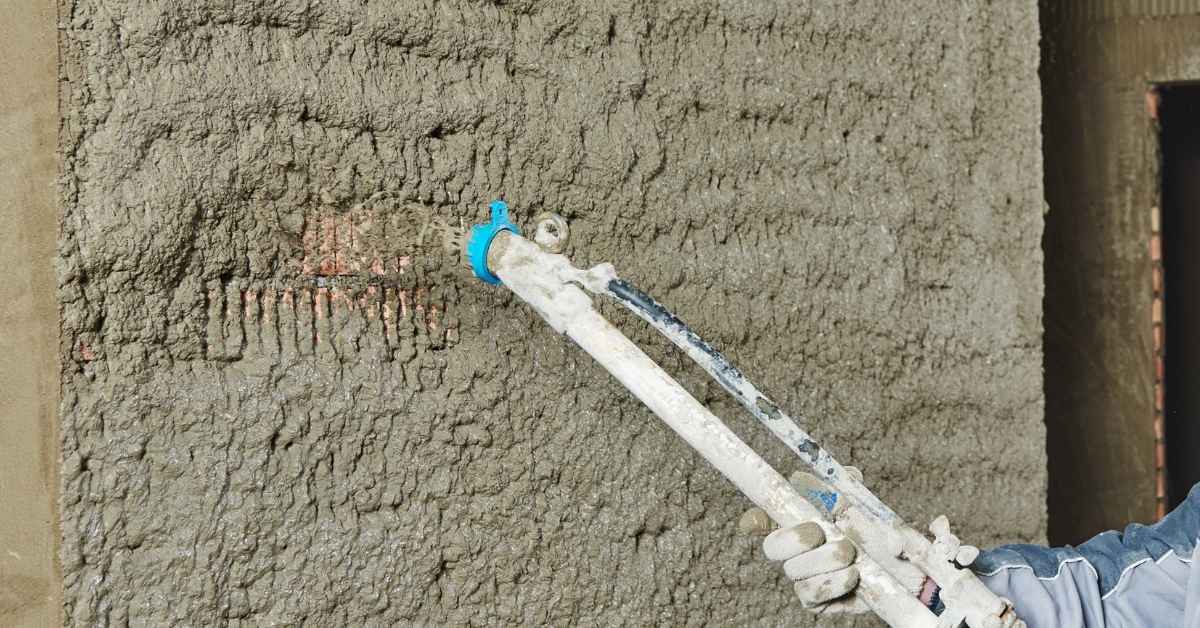
Color and Finish Blending to Reduce Flash
Color matching starts with matching the base tone to the nearby surface, but curing and moisture levels can alter appearance after application. Be mindful that the finish can look different as it dries and ages. Plan for subtle changes rather than perfect instant color parity.
Use blending techniques that minimize sheen and tonal differences, such as avoiding over-watering and maintaining uniform texture. Adjust any glaze or sheen control methods per the product data sheet and local guidelines. Verify results with the environment in mind before final curing.
Matching base color and anticipating cure changes
Freshly applied stucco can look different from the existing surface due to moisture content. Before you start patching, mix up a small test batch of your repair material and apply it in an inconspicuous area.
Let this trial patch cure under the same conditions as your main work area. This way, you’ll see how the color changes once it’s fully dried out. Make adjustments to your mix as needed.
Pro tip: Keep records of your mix ratios for future reference. Stucco can change color slightly with each batch due to variations in aggregates and pigments.
Managing surface sheen and finish uniformity
The final finish treatment – whether it’s brushing, sanding, or sealing – plays a big role in the overall sheen of your stucco. To minimize flash, you need to match this sheen as closely as possible.
First, observe the surrounding surface. Is it matte, semi-gloss, or high-gloss? Match this with your final finish treatment on the patch. If you’re unsure, take a photo and compare it to paint samples at your local hardware store.
Remember, sheen can also be affected by the angle of light. Check your work from different angles throughout the day to ensure consistent reflection.
Tools and Materials Checklist
Assemble a basic set of hand tools for mixing, applying, and shaping the patch, plus a clean work area and protective coverings. Include a brush or sponge for cleaning, a trowel or float for texture work, and a mixing container. Have a margin that’s wide enough to feather edges smoothly.
Keep safety gear handy, such as eye protection, gloves, and a dust mask. Have the chosen primer or bonding agent and patching material ready, and review the product instructions for surface prep and curing notes. Check local requirements and label directions for any additional items.
Essential tools and specialized equipment
Before you start mixing or pouring concrete, ensure you have the right tools on hand. This checklist will help you verify your tools and equipment to prevent costly mistakes.
- Floats (Finishing trowels): Check for straight edges and smooth surfaces. Confirm they’re the right size for your project by measuring them against the area you’ll be finishing.
- Trowels (Margins trowels): Ensure they have sharp, clean edges to create crisp lines. They should be slightly smaller than your floats.
- Concrete brush: Inspect for stiff bristles and a sturdy handle. This tool helps remove excess water and smooth the surface.
- Mixing tools (Shovels, rakes): Check for strong, secure handles and undamaged heads. They should be suitable for the volume of concrete you’ll be mixing.
- Wheelbarrow: Ensure it’s in good condition with no cracks or leaks. It should be large enough to handle your mix volume efficiently.
- Concrete mixer (Optional): If using, check that it’s the right size for your project and is in working order. Follow manufacturer instructions for proper operation.
- Spray hopper or texture gun: For replicated finishes, these tools help apply toppings and textures evenly. Check they’re clean, undamaged, and suitable for your desired finish. Refer to the product label or manufacturer instructions for specific requirements.
- Safety gear (Gloves, safety glasses): Inspect for any damage or wear. Ensure they provide adequate protection during mixing, pouring, and finishing processes.
Quick rule: Always check your tools before starting work to avoid delays and rework due to damaged or unsuitable equipment.
Materials, mixes, and compatible substitutes
Use this checklist before starting your stucco project to ensure you have the right materials. Check everything on site to avoid costly mistakes.
- Base Coat: Check product label for “Base Coat” or “Scratch Coat”. Ensure it’s compatible with your chosen finish coat and bond agent.
- Finish Coat: Confirm it’s a “Finish Coat” on the label. Match it with your base coat and bond agent for compatibility.
- Bond Agent: Ensure it’s a “Bond Agent” or “Stucco Bond”. Check it works with both your base and finish coats.
- Sand (Base Coat): Verify sand is clean, dry, and within 1/8″ to 3/8″ size range for proper mix consistency.
- Portland Cement: Check it’s Type I or II for stucco. Ensure it’s fresh; use within six months of manufacture.
- Water: Use clean, drinkable water. Avoid using water with high mineral content or contaminants.
- Stucco Mix Ratio: Follow manufacturer’s directions for base and finish coats. Common ratios are 6:1 (sand to cement) for base, 4:1 for finish.
- Additives (optional): If using additives like accelerators or retarding agents, ensure they’re compatible with your mix and follow manufacturer’s guidelines.
Quick rule: Always check product labels and follow manufacturer’s mixing instructions to avoid compatibility issues and ensure a strong, durable stucco finish.
Safety and access equipment
Before starting any concrete work, ensure you have the right safety gear and access equipment. Use this checklist to double-check everything.
- Dust mask or respirator: Check it fits well and covers your nose and mouth. Breathe through it to ensure airflow.
- Safety glasses or goggles: Ensure they protect your eyes from debris and have side shields for full coverage.
- Gloves: Check they’re tough enough to protect your hands but flexible enough for working. Try on different sizes if needed.
- Steel-toed boots: Verify they fit well, provide ankle support, and have non-slip soles.
- Hard hat: Ensure it fits securely and is in good condition with no cracks or damage.
- Ladders or scaffolding: Inspect for stability, secure footing, and proper height. Check manufacturer’s guidelines if unsure.
- Work area safety: Remove tripping hazards, secure loose materials, and ensure stable working conditions.
- Emergency plan: Know where first aid kits are located and who to call in case of an emergency. Check local rules for reporting serious incidents.
Quick rule: Always prioritize safety over speed. Skipping safety checks can lead to injuries, rework, or even project delays.
Step-by-Step Workflow for a Seamless Patch
Start with proper surface prep, cleaning, and edge feathering to create a foundation for uniform adhesion. Apply primer or bonding agent as specified, then coat or set the patch material to blend with the surrounding texture. Work from the edges toward the center to minimize ridges.
Texture the patch to match the existing finish, then perform a brief initial cure check under normal lighting. Observe the surface for any flashing or sheen and adjust technique if needed. Follow the product guidance for final curing and inspection before accepting the repair.
Step-by-Step Process
This step-by-step workflow guides you through preparing, patching, and checking your stucco repair for a seamless finish.
- Preparation: Inspect the damaged area. Gather tools like trowels, hawk, joint compound, primer, and safety gear (gloves, goggles).
- Safety Checks: Ensure no live electrical wires or other hazards behind the stucco. Wear appropriate PPE.
- Main Work: Remove loose material. Apply primer to seal the area. Mix and apply joint compound using your chosen texture-matching technique.
- Feathering & Blending: Use micro-blend techniques to feather the edges of the patch into the existing texture. Check for uniformity with a level or straight edge.
- Cure Checks: Let it cure as per manufacturer’s instructions. Inspect for any flashing or inconsistencies before applying final finish.
Small Patch Workflow
For localized repairs, efficiency is key. Here’s a streamlined process focusing on feathering and staged curing checks.
First, prepare the area as described in the main workflow. Then, apply a thin layer of joint compound, replicating the existing texture. Let it cure slightly before applying another thin layer, feathering the edges.
Important: Do not apply too much material at once to avoid shrinking and cracking. Inspect regularly during curing to ensure no inconsistencies develop.
Large Area or Retexturing Workflow
For larger repairs or full-area retexturing, planning and consistency are crucial. Here’s how to approach these projects.
Divide the work into sections. Start from one corner and work your way across, ensuring each section is consistent with the last. Blend multiple patches by overlapping slightly and feathering the edges.
Regularly check for consistency in texture, sheen, and finish. If you’re retexturing a large area, consider hiring a pro to ensure uniformity and avoid common DIY pitfalls like inconsistent application or missed spots.
Visual Checkpoints, Troubleshooting, and When to Call a Pro
Evaluate the patch under various lighting conditions to detect flash and texture mismatches. Look for edge halos, inconsistent texture, or noticeable sheen that draws the eye. If the patch looks flat or brittle, reassess adhesion and surface preparation steps.
When the job exceeds your tools or experience, or if the substrate shows structural issues, consider seeking a pro. If special coatings, weather exposure, or code requirements apply, verify with manufacturer instructions or local rules before proceeding.
Inspecting in different lights and seasons
Before you call it a day, check your patch under various lighting conditions to ensure it blends seamlessly.
- Raking light: Inspect late afternoon or early morning. This light can highlight any imperfections.
- Midday sun: Check around noon. Direct sunlight can reveal color discrepancies.
- After full cure: Wait a few days, then recheck. Curing can change the appearance slightly.
- Different seasons: Inspect in spring and fall for any subtle shifts in color or texture due to weather changes.
Quick rule: If it looks good under all these conditions, you’re on the right track.
Common problems and on-the-spot fixes
Don’t let minor issues turn into major ones. Catch them early with this checklist.
- High spots: Feel for any raised areas. Sand down if necessary to avoid shadows.
- Visible seams: Look for lines where old and new meet. Lightly retexture or apply a thin skim coat.
- Color shifts: Compare the patch to surrounding stucco. Adjust your mix if needed to match.
Quick rule: The sooner you catch these, the easier they are to fix.
Signs you should hire a professional
Some jobs are best left to the pros. Here’s when to call one.
- Extensive structural damage: If your patch reveals underlying issues, it’s time to bring in an expert.
- Matching complex historical textures: Replicating intricate patterns may require specialized skills and tools.
- Need for specialized spray equipment: For large areas or specific finishes, pros have the right gear.
Quick rule: If you’re unsure about any aspect of the job, it’s better to be safe and call a pro.
Conclusion
Keep the patch durable and the finish seamless by sticking to clean prep, careful texture matching, and gradual curing. When you control the work area and test in small spots, you reduce the risk of sun-induced flashing and costly mistakes.
Check the patch area, confirm the substrate is sound, prime for blendable adhesion, match the texture with the selected technique, test a small sample, apply in thin, controlled coats, observe curing conditions, and then compare color and sheen in different light before finalizing the blend. This is your practical, step-by-step loop: prep, prime, texture-match, color adjust, cure, recheck, and repeat only where needed.
Common mistakes to dodge include rushing the texture or color steps, skipping a proper prime, and applying thick coats that hide underlying flaws. Always wear basic eye and skin protection, work in good lighting, and keep a damp edge to prevent feathering. If the sun is harsh or the patch sits on a high-visibility wall, recheck under the same lighting after each stage and avoid over-drying blends that crack or flash.
If you run into stubborn texture differences, unpredictable color shifts, or you’re patching in a high-traffic area or above openings, it may be time to call a pro rather than pushing on. Stay safe, stay methodical, and you’ll get a durable, nearly invisible repair with minimal risk and downtime.
FAQ
How do I know if my texture patch will flash in sun after I blend it?
Texture and shadow can reveal differences. Check the patch in full sun at the same time of day as your other stucco to compare relief and roughness. If it reads differently, you’ll need another pass to blend the texture more evenly.
What should I do if the patch looks different under bright sunlight?
Re-evaluate the texture fall and the edges around the patch. Lightly rework the surface with your trowel or brush to even out the texture, then let it set before rechecking in sun. Don’t overwork it; you can always recoat once it’s dry.
How can I avoid problems with curing or cracking when I’m blending outdoors?
Follow the product’s instructions for cure time and avoid applying in extreme heat or direct wind. If conditions are right, keep the patch damp as needed per the product label and work in small, consistent passes. Check local rules and the manufacturer guide if you’re unsure about drying times.
When is the color/finish blend ready for painting after patching?
Wait for the patch to dry and cure per the product instructions, then test color in a small area illuminated by daylight. If the texture and color look consistent with nearby stucco, you’re typically ready to paint. If not, you may need an additional pass to even out texture or color.