Search Results for: weep

Precast concrete wall panels stored outdoors under cloudy sky

Concrete dust respirator habits: storage, filter changes, and staying protected on off-and-on tasks

Introduction Concrete dust respirator habits are the routines you follow to store, maintain, and use your respirator so you stay protected when working with dusty concrete. Store it in a clean, dry place and inspect seals and straps before each use. Check manufacturer instructions for any care steps and avoid exposing the respirator to extreme […]


Concrete dust respirator habits: storage, filter changes, and staying protected on off-and-on tasks Read More »

Close up of overlapping black flexible industrial vacuum hoses

Tool maintenance for winter on concrete and stucco jobsites: hoses, sprayers, and batteries that hate freezing

Introduction Winter tool maintenance for hoses on concrete jobsites means prepping and protecting hoses so they won’t crack or leak in freezing weather. Inspect hoses for wear, drain any residual water, and store them where they won’t freeze. Always check the manufacturer guidance on storage and use. Winter care for sprayers on stucco jobsites involves

Tool maintenance for winter on concrete and stucco jobsites: hoses, sprayers, and batteries that hate freezing Read More »

Electric mixer blending cement in a bucket

Cleaning concrete and mortar mixers and paddles: preventing rust flakes and stuck cement rings

Introduction Cleaning concrete and mortar mixers and paddles involves removing cement residue, grime, and surface rust to ensure smooth operation and prevent rust flakes or cement rings from forming. This routine maintenance extends equipment life and maintains consistent mixing results. Use simple steps and ordinary shop tools for this hands-on task. Select cleaning methods and

Cleaning concrete and mortar mixers and paddles: preventing rust flakes and stuck cement rings Read More »

Hands smoothing wet concrete with trowels on outdoor slab

Breaking in a new concrete trowel: edge prep so you don’t leave tracks everywhere

Introduction Edge prep for a new concrete trowel means ensuring the blade edge is clean and true so your finish tracks are minimal. Keep metal free of nicks and burrs, and verify the edge sits straight against the handle. If the edge isn’t true, check the manufacturer’s guidance on bevels and sharpening before proceeding. Begin

Breaking in a new concrete trowel: edge prep so you don’t leave tracks everywhere Read More »

Close-up of drill bit drilling into concrete wall

Fixing loose cap blocks: why they pop and a reset method that survives winter

Introduction Fixing loose cap blocks means resetting and securing the caps so they stay in place through freeze-thaw cycles. Loose caps can pop off from settling, wind, or vibration, and winter conditions make the problem worse. A safe reset method is essential to keep the cap aligned and prevent water intrusion. To reset, clean the

Fixing loose cap blocks: why they pop and a reset method that survives winter Read More »

Close-up of rough cut limestone blocks arranged in a wall

Backfilling timing for block retaining walls: when the wall is ready and how to avoid bowing it

Introduction Backfilling timing for block retaining walls means starting to fill behind the wall only after the wall is stable and set. Check that the wall is properly tallied with the foundation, that acceptable drainage components are in place, and follow manufacturer or local guidelines before proceeding. Use small lifts and follow recommended guidance to

Backfilling timing for block retaining walls: when the wall is ready and how to avoid bowing it Read More »

Worker wearing yellow helmet drilling into wall with power drill

Adding drainage to an existing block retaining wall: surface fixes vs partial rebuilds

Introduction Adding drainage to an existing block retaining wall involves improving water handling to prevent pressure buildup behind the wall. It covers surface fixes and partial rebuild options for managing run-off and seepage. This guide stays practical and aims to help you assess signs of drainage problems and choose safe approaches. You’ll start by identifying

Adding drainage to an existing block retaining wall: surface fixes vs partial rebuilds Read More »

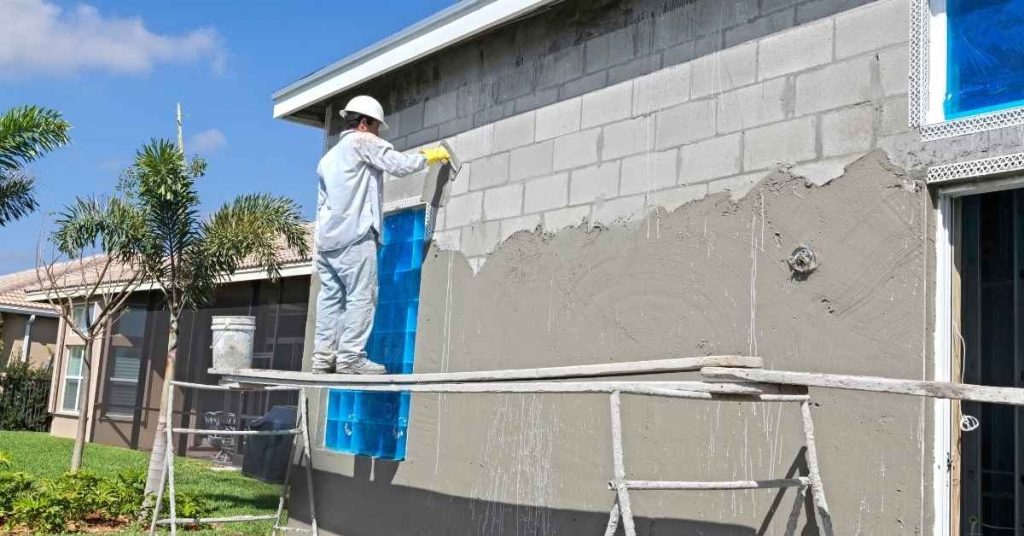
Worker applying stucco on cinder block wall outdoors

Parging vs stucco on block: prep, bonding, and avoiding delamination

Introduction Parging and stucco are two surface finishes for block walls, with parging being a thin cement-based coating and stucco a thicker, textured layer. Both aim to prevent moisture intrusion and create a smooth or textured exterior. The article compares prep, bonding, and how to avoid delamination in each method. Surface prep should start with

Parging vs stucco on block: prep, bonding, and avoiding delamination Read More »

Person cutting white foam insulation board on table saw

Interior moisture management on block walls: furring, insulation, and vapor strategy that won’t trap water

Introduction Interior moisture management on block walls is the practice of keeping the wall assembly dry by separating the concrete from finishes with furring, insulation, and a controlled vapor path. This hands‑on approach focuses on airflow, condensation control, and dry finishes rather than relying on the concrete to act as a wet surface. Work with

Interior moisture management on block walls: furring, insulation, and vapor strategy that won’t trap water Read More »