Search Results for: rebar

Hammer screwdriver orange level on wooden surface

Hammer Sounding vs Chain Drag: Locating Delamination and Hollow Areas the Right Way

Introduction Hammer sounding and chain drag are practical field tests to locate delaminations and hollow areas in concrete. You tap or drag along the surface and listen for changes in tone and feel. These methods help you decide where to drill, patch, or reinforce without guesswork. Hammer sounding uses a light tapping with a hammer […]

Hammer Sounding vs Chain Drag: Locating Delamination and Hollow Areas the Right Way Read More »

Four rectangular concrete slabs with handwritten markings

Chloride Ion Testing in Old Slabs: When Salt Exposure Is the Real Problem

Introduction Chloride ion testing in old slabs is a way to find out whether salt exposure is the real problem behind concrete issues. It helps separate chloride-related damage from other moisture or subfloor failures. In plain terms, it’s part of diagnosing why a floor isn’t performing as you’d expect. Many times, moisture problems drive cracking,

Chloride Ion Testing in Old Slabs: When Salt Exposure Is the Real Problem Read More »

Heavy soil drilling rig on grassy field near fence

Half-Cell Potential Testing: Quick Field Check for Corrosion Risk (and Common Misreads)

Introduction Half-cell potential testing is a quick field check that estimates the likelihood of corrosion on embedded steel by measuring electrical potential at the surface. It’s a screening tool, not a crystal ball, and results should be used with other observations. Always follow the device instructions and local rules when you perform it. To perform

Half-Cell Potential Testing: Quick Field Check for Corrosion Risk (and Common Misreads) Read More »

Stacked hollow core concrete slabs outdoors

Recycled Concrete Aggregate (RCA) for Slabs: Gradation, Water Demand, and Pop-Out Risk

Introduction RCA for slabs is crushed concrete from demolished pavement or structures that you reuse as aggregate. You’ll typically screen and wash it to remove fines before it finds a place in a slab mix. Use it where the mix and compaction are appropriate and check local rules. Gradation and water demand depend on how

Recycled Concrete Aggregate (RCA) for Slabs: Gradation, Water Demand, and Pop-Out Risk Read More »

Trowel mixing wet cement mortar in a large container

Shrinkage-Compensating Cement: Where It Shines, Detailing Rules, and DIY Reality

Introduction Shrinkage-compensating cement is a concrete mix designed to offset shrinkage as it cures. In DIY projects, it helps reduce cracking on slabs and pads. Use it when you expect movement or large flat surfaces; check product instructions for mixing and cure guidance. For rules and specifications, follow the manufacturer’s directions and any local rules.

Shrinkage-Compensating Cement: Where It Shines, Detailing Rules, and DIY Reality Read More »

Close-up of concrete beams and columns on building exterior

Petrographic Analysis for Concrete Problems: When It’s Worth Sending a Sample

Introduction Petrographic analysis is identifying what’s inside concrete by examining thin sections under a microscope to diagnose problems. Sending a sample is worth it when surface tests don’t tell you the cause, or when you need to confirm suspicion of reactions or cracking. It’s a straight‑forward way to separate chemical reactions from physical wear. A

Petrographic Analysis for Concrete Problems: When It’s Worth Sending a Sample Read More »

Stacked precast concrete hollow core slabs outdoors

Chloride Penetration in Concrete: Why Coastal Slabs Fail and How to Slow It Down

Introduction Chloride penetration in concrete is the inward movement of chloride ions from the environment into the concrete and reinforcement area. In coastal areas, salt spray, moisture, and wet-dry cycles push chlorides into the concrete matrix. This can lead to corrosion of reinforcing steel and reduce the structure’s long-term durability. To slow chlorides down, choose

Chloride Penetration in Concrete: Why Coastal Slabs Fail and How to Slow It Down Read More »

concrete compression test cube inside testing machine

DIY Slump Test: How to Make a Slump Cone and Read the Results

Introduction A slump test measures the workability of fresh concrete by using a cone and watching how much it settles. Key takeaways Understand the slump test measures concrete consistency by observing cone collapse height. Check tools: slump cone, trowel, sampling scoop, and clean curing surface. Follow a step-by-step procedure to ensure consistent results and repeatability.

DIY Slump Test: How to Make a Slump Cone and Read the Results Read More »

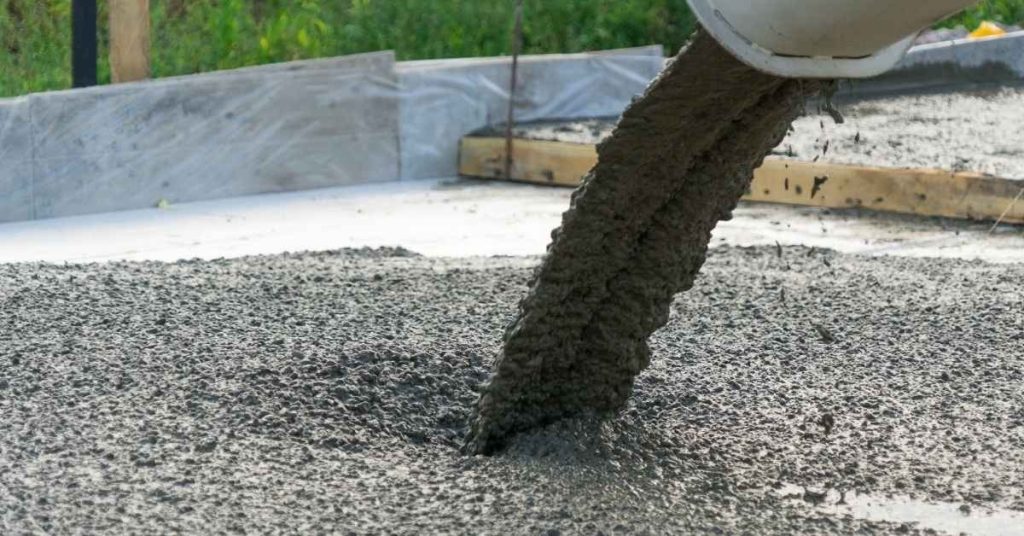
Fresh gray concrete being poured onto surface

Evaporation Reducer for Concrete: When to Spray, How Much to Use, and What It Fixes

Introduction An evaporation reducer for concrete is a chemical spray or treatment that slows water loss from fresh concrete. Use it when drying conditions are hot, windy, or dry to help finish quality and reduce surface crazing. Always read the product label and follow local rules to determine if it’s appropriate for your mix and

Evaporation Reducer for Concrete: When to Spray, How Much to Use, and What It Fixes Read More »