Search Results for: control joint stucco

Red concrete formwork braces supporting structure

Concrete That Turns Dark When Wet: Diagnosing porosity and finishing issues

Introduction Concrete that turns dark when wet indicates moisture affecting the surface, usually tied to porosity and finishing issues. In plain DIY terms, that color change is your cue that water is soaking in or being held near the finish. It’s a practical clue to start diagnosing what went wrong during pour, finishing, or sealing. […]

Concrete That Turns Dark When Wet: Diagnosing porosity and finishing issues Read More »

Man and woman painting white wall with green paint rollers

Painting Masonry Without Trapping Moisture: Breathability and prep that matter

Introduction Breathing masonry means choosing paints and prep that let moisture escape rather than trap it inside. That often means a breathable primer and coating, plus surface prep that removes loose material without sealing in dampness. Keep good airflow while you work and check for any damp spots before you start painting. Start with a

Painting Masonry Without Trapping Moisture: Breathability and prep that matter Read More »

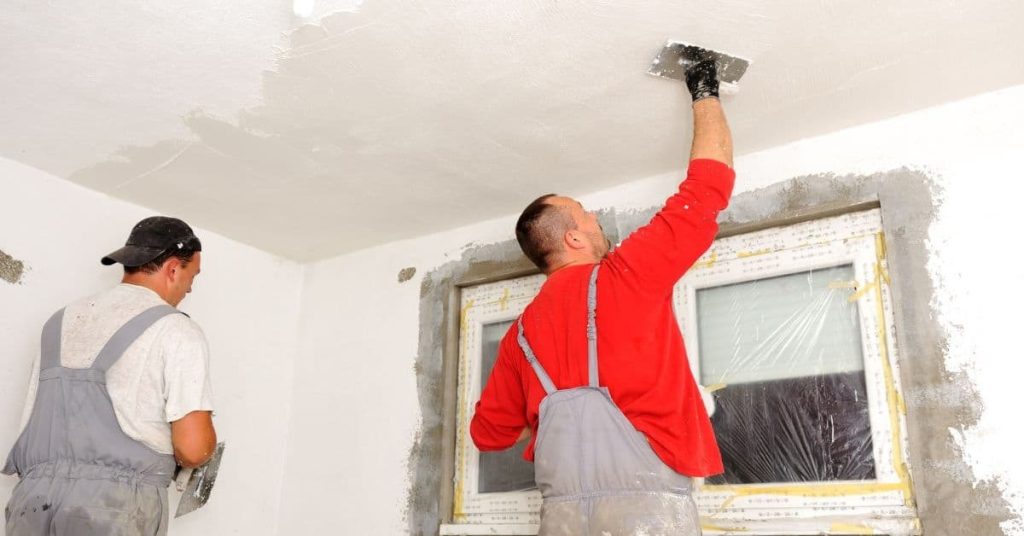
Two men applying plaster to a ceiling and wall near a window

Stopping Water Stain Bleed: Fixing the cause and sealing the ceiling

Introduction Stopping water stain bleed means fixing the moisture source and sealing the ceiling so stains don’t reappear. It’s a hands-on job that starts with finding where the water is coming from and drying the area thoroughly. Then you seal the surface to block any future bleed-through. You’ll see practical tips for locating the leak,

Stopping Water Stain Bleed: Fixing the cause and sealing the ceiling Read More »

Paint roller applying white paint on bathroom ceiling

Bathroom Ceiling Paint: Mold resistance without high gloss

Introduction Mold-resistant bathroom ceiling paint with a low-gloss finish resists mold without creating glare. Choose a product labeled for bathroom use and mold resistance, and prep the ceiling first. Always verify the manufacturer’s instructions and local rules for surface prep and drying times. Prepare the ceiling by cleaning, repairing cracks, and letting it dry before

Bathroom Ceiling Paint: Mold resistance without high gloss Read More »

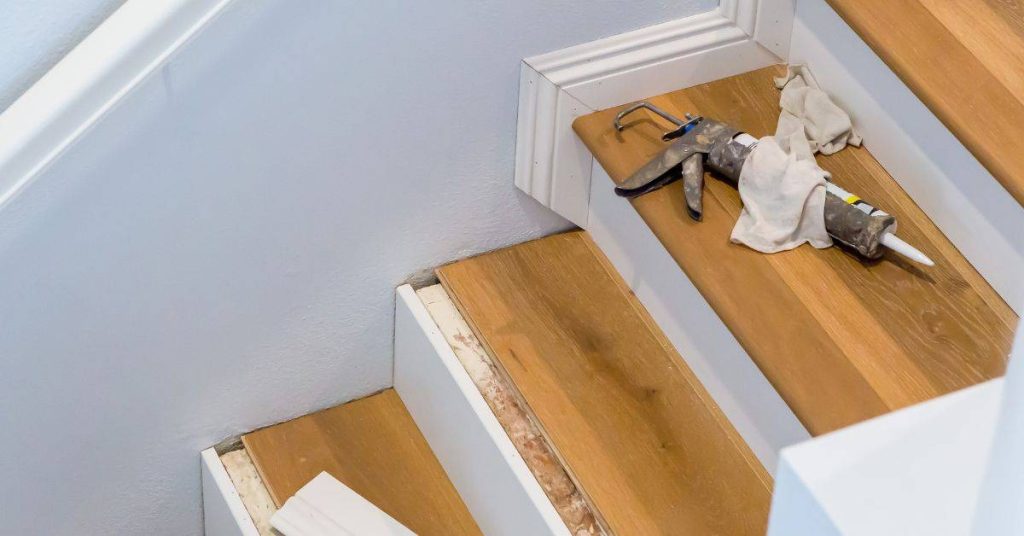
Caulking gun and cloth on wooden stairs next to white baseboards

Caulking Baseboards: Which Caulk to Use and How to Avoid Cracks

Introduction Use a flexible, paintable caulk designed for interior trim to seal baseboards. It should cure cleanly and move with seasonal expansion to prevent cracking. Check that the label says wood or drywall, and look for low VOC if you care. Key takeaways Select a paintable, flexible caulk compatible with both baseboards and walls. Wear

Caulking Baseboards: Which Caulk to Use and How to Avoid Cracks Read More »

Interior wall with patched drywall and blue ladder

Vapor Retarders in Walls: Where They Go (and When They Cause Mold)

Introduction A vapor retarder is a material in walls that slows moisture moving through the wall. Where it goes depends on the wall design and climate, so check the product guidance and local rules. If you’re unsure, use the simplest, approved option and follow the manufacturer’s directions. They can contribute to mold if moisture gets

Vapor Retarders in Walls: Where They Go (and When They Cause Mold) Read More »

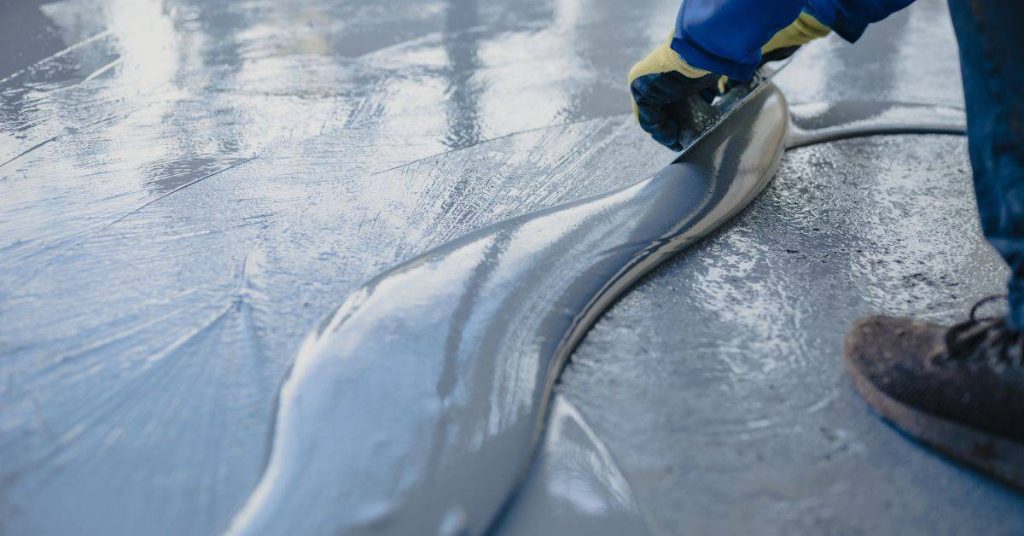
Worker applying grey epoxy floor coating with gloved hand

Primer for Overlays: Acrylic vs Epoxy (Choosing the Right System)

Introduction Acrylic and epoxy primers are two common options for preparing concrete overlays, each with distinct behavior and work styles. Acrylic primer typically dries faster and tolerates some movement, while epoxy primer tends to offer greater adhesion and chemical resistance. Look at the label for cure times, substrate compatibility, and any recommendations for overlays to

Primer for Overlays: Acrylic vs Epoxy (Choosing the Right System) Read More »

Rusty rebar grid and foam insulation panels in concrete form

Concrete Cover Requirements: What “Cover” Means and How to Measure It

Introduction Concrete cover is the distance from the outer surface of the concrete to the embedded steel or other reinforcement. In DIY terms, it protects steel from moisture and corrosion and helps the structure resist fire. Check the manufacturer’s instructions or local rules for any minimums. To measure cover, use a tape, ruler, or a

Concrete Cover Requirements: What “Cover” Means and How to Measure It Read More »