

Introduction
Salt-and-pepper polished concrete is a finish created by exposing a small, random mix of aggregate to produce a speckled, even look. The goal is to achieve a consistent exposure across the slab without carving too deep at edges. This approach keeps the surface looking uniform and practical for DIY applications.
Edge finishing matters because over-grinding edges can create inconsistent exposure. Choose a grinding and polishing plan that preserves edge detail and uses gradual steps, while checking labels and instructions for recommended pad grades and pressure. If in doubt, verify local rules and manufacturer guidance, and adjust your technique to keep the surface uniform without overworking any one area.
Key takeaways
- Choose salt-and-pepper finish for controlled exposure without gritty edges on slabs.
- Plan mock-ups and test panels to tune exposure before full grinding.
- Use a staged grinding strategy to keep edges from over-exposing.
- Edge finishing requires careful feathering to avoid grinding into face slab.
- Densification and polishing must be staged with diagnostics for uniform clarity.
- Wear PPE and eye protection; pause if grinding dust spikes or visibility drops.
Table of Contents
- Introduction
- Key takeaways
- What Is a Salt-and-Pepper Polished Concrete Finish?
- Pre-Project Planning: Slab, Mix, and Mock-Ups
- Controlled Grinding Strategy to Reach Consistent Exposure
- Edge Finishing Techniques That Avoid over-Grinding
- Grouting and Surface Repairs to Ensure Uniform Appearance
- Densification and Final Polishing: Durability and Clarity Controls
- Common Problems, Diagnostics, and Corrective Actions
- Tools, Safety, Cost Drivers, and DIY Vs Professional Decision Guide
- Conclusion
- FAQ
What Is a Salt-and-Pepper Polished Concrete Finish?
A salt-and-pepper finish, also known as Class B exposure, is defined by a speckled look created during grinding by the native aggregate particles. The look results from how the aggregate size and distribution interact with the polishing sequence.
Visually, you’ll notice a peppered texture that differs from cream finishes, which read lighter and more uniform, and from rock-cut finishes, which show larger, more pronounced aggregates. Typical use-cases span residential spaces with modern interiors and commercial areas like warehouses or showrooms where a durable, low-maintenance surface is desired. Practical considerations include edge detailing to preserve exposure consistency and slight adjustments in tooling to control how aggregates are revealed over time.
Visual characteristics and exposure level
A salt-and-pepper polished concrete finish is known for its unique, textured appearance. Here’s what you can expect:
The amount and size of exposed aggregate vary based on the mix design and finishing process. You’ll see small to medium-sized stones (typically 3/8″ to 1/2″) scattered throughout the surface, resembling a ‘salt-and-pepper’ effect.
The surface texture is smooth but not shiny. It’s like a fine-grit sandpaper feel under your fingers. Under natural light, the concrete has a matte appearance with the aggregate standing out slightly. In artificial lighting, especially at night, the aggregate can reflect light, giving an illusion of depth.
Pro tip: Before you start, check the aggregate size and type in your mix to ensure it matches what you want. Also, check base compaction – poor compaction leads to weak concrete with more visible voids.
When to choose salt-and-pepper vs cream or rock-cut
The finish you pick depends on your project’s goals and the slab’s quality. Here’s when each works best:
Salt-and-Pepper is great for high-traffic areas like garages, workshops, or driveways. It hides minor imperfections and wears well over time. If you’re after a rugged, industrial look and durability, this is your pick.
On the other hand, Cream or Rock-Cut finishes are more suited for indoor spaces like living rooms, kitchens, or offices. They show off the concrete’s natural beauty and provide a sleek, modern look. But they’re not as forgiving with slab quality issues.
Before you decide, check your slab’s quality. Salt-and-pepper can hide minor flaws, but cream or rock-cut will expose them. Also, consider the space’s function and the look you want to achieve. Each finish has its place, so choose wisely.
Pre-Project Planning: Slab, Mix, and Mock-Ups
Define target performance and constraints early, including the intended exposure and traffic conditions, to guide aggregate choice and the grind/polish sequence. Clarify gloss expectations and chemical exposure to set realistic boundaries.
Address slab flatness, leveling, and substrate prep with attention to moisture control and vapor barriers. Plan joint layouts to prevent edge spalling and uneven exposure when the floor is finished.
Aggregate selection and mix considerations
When it comes to aggregates for your concrete mix, you’ve got options. But remember, each type affects the final look of your slab.
Check with your supplier or specifier about aggregate types – natural, crushed, or recycled. Natural and crushed give a smooth, uniform finish. Recycled can have variations but is eco-friendly.
The size distribution matters too. Smaller aggregates (like pea gravel) pack tighter, giving a smoother surface. Larger ones (like 3/4″ or 1″) leave more exposed aggregate, adding texture and strength.
Trowel finish and flatness impact
The way you finish your concrete slab and control its flatness is crucial for a uniform look. It’s what makes or breaks that smooth, seamless appearance you’re after.
First, check base compaction. A solid base means less settling later. Then, when pouring, keep the concrete level. Use screeds and straight edges to get it right first time.
Now, troweling. Start with a bull float for initial leveling. Then, use a finishing trowel for that smooth, flat surface. But be careful not to over-trowel. That can leave marks and make the slab too smooth, leading to dusting later on.
For flatness, follow your architect’s or engineer’s specs. Generally, you’re aiming for a 3/16″ variance across 10′ spans. Use a straight edge and level to check as you go. Remember, it’s easier to fix issues while the concrete is still wet.
Sample panels and approval process
Before you pour your entire slab, make some sample panels. This way, you can check exposure, edge blending, and the final look. It’s like a dress rehearsal for your concrete.
Here’s how to do it:
Check base compaction. Make sure your base is solid before pouring. You don’t want any surprises when you pour your slab.
Pour a few small slabs, about 4′ x 4′, using the same mix and techniques as your main pour. Let them cure for at least three days to see how they look.
Check exposure. Make sure the aggregate exposure is what you want. If it’s too much or too little, adjust your mix accordingly.
Check edge blending. Look at the edges of your sample slabs. They should blend nicely with the formwork. If not, adjust your edging technique.
Once you’re happy with your samples, it’s time for approval. Get everyone involved – homeowner, architect, inspector – to sign off on the samples. This way, there are no surprises later.
Controlled Grinding Strategy to Reach Consistent Exposure
State the objective for even aggregate exposure and establish clear criteria to avoid edge over-grinding and transition cratering. Emphasize consistency across the floor through disciplined passes.
Outline a staged cutting-to-polish sequence from coarser to finer grits, with guidance on how many passes are appropriate per area. Include when to switch tooling and how to protect edges during near-wall work.
First-cut approach and even material removal
The first cut is crucial for a consistent finish. Your tool’s aggressiveness should match your slab’s strength.
- Use: Coarse diamond blades (60-80 grit).
- Spec: Look for high-quality, durable blades with good bond.
- Avoid: Blades with low grit count or poor bond can cause cracking and uneven removal.
- Tip: Follow manufacturer’s guidelines for feed rate and speed to prevent over-cutting.
- Wrong material: Soft blades on hard slabs lead to inconsistent exposure.
Honing and polishing progression
Progressively finer tools refine the surface and stabilize aggregate reveal. Match tooling to your slab’s hardness.
Start: With medium diamond pads (100-200 grit) for aggressive honing.
Transition: To fine pads (300-600 grit) for polishing and aggregate stabilization.
Finish: With extra-fine pads (800-1500 grit) for final polish and gloss.
Grid patterns, cross-hatching, and inspection checkpoints
Use this checklist after each pass to ensure consistent exposure across the slab.
- Check: Exposure pattern for uniformity post-cut.
- Confirm: Even aggregate reveal with no over-exposure or under-exposure.
- Check: Surface profile for flatness and smoothness post-hone.
- Confirm: No scratches, gouges, or inconsistent gloss.
- Check: Friction/gloss levels pre-polish.
- Confirm: Consistent friction across the slab for safety.
- Check: Edges and corners for over-grinding or under-exposure.
- Confirm: Even exposure along boundaries with no cratering at transitions.
- Quick rule: Inspect frequently to catch issues early and avoid rework.
Edge Finishing Techniques That Avoid over-Grinding
Set goals for edge exposure parity by blending perimeter exposure with the field without creating deeper cuts or thinning the edges. Prioritize controlled edge work to maintain uniformity.
Use dedicated edge tooling and smaller-diameter segments with staggered passes toward the boundary. Implement guarding or masking to keep grinders from extending beyond the intended area.
Feathering, hand-grinder methods, and small-head tooling
For a smooth transition from field to edge, use feathering techniques with hand tools and small-head grinders. This minimizes over-cutting and maintains consistent exposure.
- Hand-held angle grinder: Use a 4-1/2″ or smaller disc at low speed (around 5000 RPM) to control depth. Tip: Keep the tool perpendicular to the surface for even cuts.
- Small-head floor grinder: Rent a machine with a 16″ or 24″ head, and use it at low pressure (around 5-10 PSI) near edges. Price: Around $75-$150 per day.
- Feathering motion: Work in overlapping circular motions, gradually reducing the overlap towards the edge to blend exposure.
- Dedicated feathering tool: Use a specialized feathering head with diamond segments for controlled depth reduction. Price: Around $200-$400 each.
- Staggered passes: Make multiple light passes, adjusting the tool’s angle slightly each time to avoid aggressive material removal.
When to use edge treatments or contrasting borders
Blending edges can be challenging. In such cases, consider alternative methods to define or protect edges.
Liquid edge treatment: Apply a liquid polymer-based sealer along the perimeter after grinding. This creates a subtle contrast and protects the edge from wear. Price: Around $30-$50 per gallon.
Transition strips: Install narrow strips of contrasting material (e.g., wood, metal) at the edge to define it visually. This works well when blending is impractical or unwanted.
Micro-coatings: Apply a thin layer of epoxy or other micro-coating along the perimeter. This can create a distinct border and protect the edge from damage. Price: Around $50-$100 per gallon, plus labor.
Grouting and Surface Repairs to Ensure Uniform Appearance
Plan when grouting and repairs occur in the workflow to prevent voids from showing after polishing. Align timing with the chosen exposure and polishing sequence.
Identify common defect types and select repair materials compatible with the densifiers and sealers used. Prepare the surface properly and test color-matching and aggregate compatibility to maintain uniformity post-polish.
Selecting compatible repair and grout materials
The right repair materials ensure a uniform, durable finish. Wrong ones crack or stain.
- Epoxy Grouts: Use for voids, pinholes. Look for high solids content (min 85%). Avoid low-solids, they’re weak.
- Cementitious Grouts: For blowouts. Choose fast-setting types. Avoid slow ones, they sag.
- Resin Repair Mortars: Use for deep voids. Look for high strength (min 30 MPa). Avoid low-strength, they crack.
- Cement-Based Repair Mortars: For edge blowouts. Choose quick-setting types. Avoid slow ones, they stain edges.
- Micro-Patching Compounds: Use for tiny voids. Look for easy application, no sanding needed. Avoid hard-to-apply ones, they gouge.
Repair timing and inspection before final polishing
Before densification, check repairs to avoid high spots or weak areas.
- Cure Time: Allow 72 hours for epoxy, 48 for cementitious. Check manufacturer’s recommendations.
- Moisture Content: Test repaired areas with a moisture meter (min 15% MC). Too low causes cracking.
- Soundness: Tap repairs. Hollow sound? Re-check and repair.
- Levelness: Check with a straight edge. High spots? Grind them down.
- Edge Blowouts: Inspect edges. Fill any gaps before polishing.
- Color Matching: Ensure grout and repairs match aggregate color. Use tintable grouts if needed.
- Wipe Test: Wipe repaired areas with a damp cloth. Check for staining or discoloration.
- Moisture Check (again): Re-test moisture content after all prep work. Too high? Allow more drying time.
Quick rule: Always re-check repairs before densification and polishing to avoid costly mistakes.
Densification and Final Polishing: Durability and Clarity Controls
Coordinate timing and surface moisture levels to optimize densification without blotchy results. Prepare the floor appropriately before densifying to encourage even penetration.
Summarize how different densifiers interact with polishing grits and diamonds. Explain how final polishing steps influence gloss and the apparent clarity of the salt-and-pepper exposure, along with practical verification steps.
Densifier types, application timing, and expected effects
Choosing the right densifier is crucial for your salt-and-pepper polished concrete. Here’s what you need to know:
Silicate-based densifiers are common and effective. They react with calcium in the cement paste to form a hard, durable surface. Apply them after exposure grinding but before final polishing.
Lithium/sodium-based densifiers work similarly but have faster reaction times. They’re great for tight schedules. Use them as directed by the manufacturer, usually immediately after exposure grinding.
Professional-grade options often combine silicate and lithium/sodium technologies. Follow their specific application guidelines. Densification changes your surface:
- Hardness increases, making it more resistant to wear and tear.
- Abrasion resistance improves, needing fewer polishing passes for high gloss.
- Salt-and-pepper exposure becomes clearer and more defined.
Measuring final gloss and clarity (quality checkpoints)
Before you start the final polishing, use this checklist to ensure your surface is ready:
- Gloss meter reading: Check it’s within your desired range. Too low? You might need more polishing passes.
- Surface sheen: Look for a consistent, even sheen across the entire floor. Patchy sheen? Recheck your densification and polishing sequence.
- Distinctness of Image (DOI): Use a DOI gauge or compare reflections in adjacent areas. Blurry or unclear reflections? You might need to adjust your polishing grits.
- Edge/transition checks: Ensure edges and transitions are well-polished, matching the main floor’s gloss and clarity.
- Grouts and repairs: Check they’re level with the surrounding concrete and match in color and sheen.
- Salt-and-pepper exposure: Ensure it’s clear and consistent across the entire floor. Inconsistencies? Recheck your grinding and polishing sequence.
- Grit residue: Wipe with a damp cloth to check for any remaining grit. Residue? You’ll need more honing and polishing passes.
- Moisture content: Check it’s within acceptable limits to prevent issues during final polishing.
Quick rule: If anything fails these checks, don’t rush into final polishing. Address the issue first to avoid rework later.
Common Problems, Diagnostics, and Corrective Actions
Describe frequent issues such as edge over-grinding, shadowing, and patch visibility, with quick diagnostic checks for each. Provide practical steps to identify the root cause.
Outline immediate corrective actions like re-grinding edges or re-applying densifier, and discuss preventive measures to sustain even gloss and exposure. Include a concise action plan for recurring problems and a quick-reference checklist for field use.
Recognizing and repairing over-grinding and blowouts
Over-grinding leaves deep grooves, exposing too much aggregate or even hitting the base. Blowouts are missing aggregate patches. Feel for depth and smoothness.
For over-grinding: stop immediately, fill with matching grout, let it cure, then re-profile. Blend edges to match.
For blowouts: patch with concrete mix, let it cure, then grind smooth. Use a small-diameter tool for precision.
Preventing perimeter differential and haloing
Perimeter dish or ‘halo’ effects happen when edges are over-cut, leaving a lighter band. Visualize the final look before grinding.
Prevent: Use staged blending – start with coarser grits in the middle, gradually refining towards edges. Make conservative edge cuts. Protect edges during processing.
Maintain a consistent exposure level across the whole slab. Regularly inspect and adjust your process.
Tools, Safety, Cost Drivers, and DIY Vs Professional Decision Guide
List essential equipment categories, noting which items are more suitable for DIY use and which require professional-grade setups. Emphasize control measures and safe operation on site.
Highlight PPE, dust-control practices, and key cost factors that influence budgeting. Provide a practical framework to decide between DIY and hiring pros, considering project scope, expertise, and risk tolerance.
Tools and materials checklist plus maintenance tips
Before starting your salt-and-pepper polished concrete project, ensure you have the right tools and materials. Use this checklist to prepare for a consistent finish.
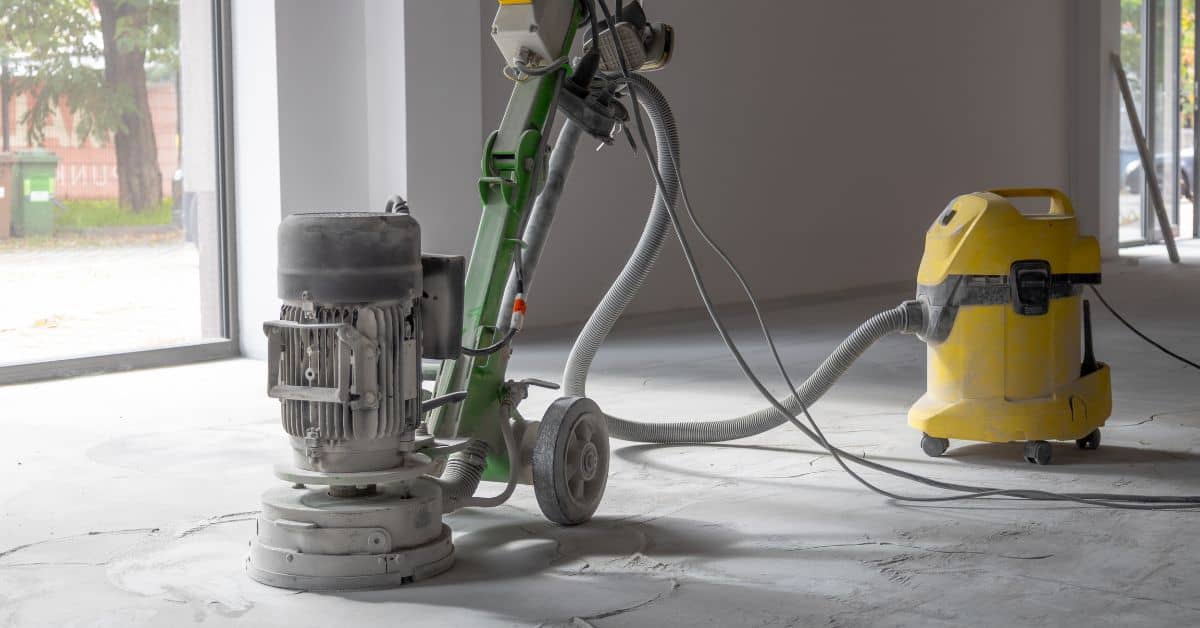
- Grinders: Planetary or single-disc grinders (200-400mm) for different stages of polishing.
- Tooling: Diamond tooling sets (coarse, medium, fine, and super-fine pads) for grinding and polishing.
- Densifiers: Choose a lithium-based densifier for optimal results. Have enough for at least two coats.
- Sealers: Select a suitable sealer (gloss or matte) based on your desired finish.
- Edge tooling: Small-head tools and hand grinders for edge work.
- Dust control: HEPA vacuums or dust shrouds to minimize airborne particulates.
- Inspection tools: Gloss meter, clarity checker, and a white light source for quality checks.
- Repair materials: Compatible grouts and repair products to fix any imperfections before polishing.
Quick rule: Always inspect your tools and materials before starting. Faulty equipment can lead to inconsistent results or even damage to the slab.
Safety, dust control, and chemical precautions
Proper safety measures and dust control are crucial when working with concrete. Follow these guidelines to protect yourself and your workspace.
Respirators: Use a NIOSH-approved respirator or P100 filter mask to protect against silica dust.
Wet grinding or using HEPA vacuums can help minimize dust. Ensure proper ventilation in the work area, and use containment methods like dust shrouds around grinders.
Chemical precautions: Always follow manufacturer guidelines when handling densifiers and sealers. Wear gloves, eye protection, and long sleeves to prevent skin contact. Keep chemicals away from heat sources and open flames.
Cost drivers and when to hire a pro
Several factors influence the cost of your salt-and-pepper polished concrete project. Consider these aspects when planning your budget.
Slab condition: Poor slab conditions may require additional repairs, increasing costs.
Access: Limited access to the work area can increase labor time and equipment rental costs.
Labor skill: Complex slabs or high-expectation finishes may warrant hiring experienced professionals. They can ensure consistent edge exposure and minimize rework.
When to hire a pro: If your project involves large areas, complex layouts, or tight deadlines, consider hiring experienced contractors. They have the tools, skills, and manpower to deliver high-quality results efficiently.
Conclusion
Polished concrete with a salt-and-pepper look comes down to controlled grinding, careful edge work, and solid testing before you commit to the whole slab. Do the prep work, verify your mix and slab condition in a mock-up, and keep the grind progression tight and repeatable so you don’t chase irreversible mistakes or dull the clarity you want.
Start with a simple, practical check: confirm the slab is sound and dry, run a small mock-up to dial in the exposure, plan your grit sequence and edge approach, test edge finishing on a scrap area, then grout and repair as needed, apply densifier and polish in controlled passes, and finally inspect for uniform exposure and even gloss before sealing. If you’ve done that and the area still looks off, stop and reassess rather than forcing an extra pass; slow, deliberate steps save you from costly fixes.
Common mistakes to avoid are grinding too aggressively at the edges, skipping the mock-up and field testing, and rushing densification or polishing without verifying uniform exposure across the room. Safety rules are simple: wear eye and respiratory protection, dust control is essential, test every new technique on a small area first, and never mix products without checking compatibility and guidance from the manufacturers. If moisture in the slab, complex edge geometry, or a large space makes consistency unlikely, consider bringing in a pro instead of pushing through.
If the project scope is large, the edges are tricky, or you’re unsure about slab conditions, a professional can save time and money by preventing mistakes that are hard to correct later. Stay methodical, respect the materials, and you’ll finish with a durable, even, salt-and-pepper look you can be proud of.
FAQ
What are the different polished concrete finishes and where does salt-and-pepper fit in?
Cream, salt-and-pepper, and rock-cut are distinct looks. Salt-and-pepper uses small, uniformly exposed aggregates for a consistent speckled appearance. It sits between cream and rock-cut in terms of texture and exposure.
How do I choose aggregates and exposure levels for a salt-and-pepper finish?
Pick aggregates that are small and evenly distributed. Decide how much exposure you want and test with mock-ups or sample slabs. Check the product label or manufacturer guidance for approved exposure ranges and compatibility with your polishing schedule.
What grinding and polishing steps help keep edges consistent without over-grinding?
Work with a steady pass count and maintain the grinder angle near the edge. Use edging tools properly and avoid dragging the machine off the edge for long stretches. If you see edge exposure changing, pause and re-check your plan against your mock-ups.
How does densifying affect gloss and durability, and how do I test readiness?
Densifying boosts gloss and surface hardness, but follow the product instructions closely. After application, wipe and cure as directed and test the surface for uniform hardness before proceeding to final polish. If in doubt, consult the densifier manufacturer or the slab supplier for approved cure times and compatibility.