
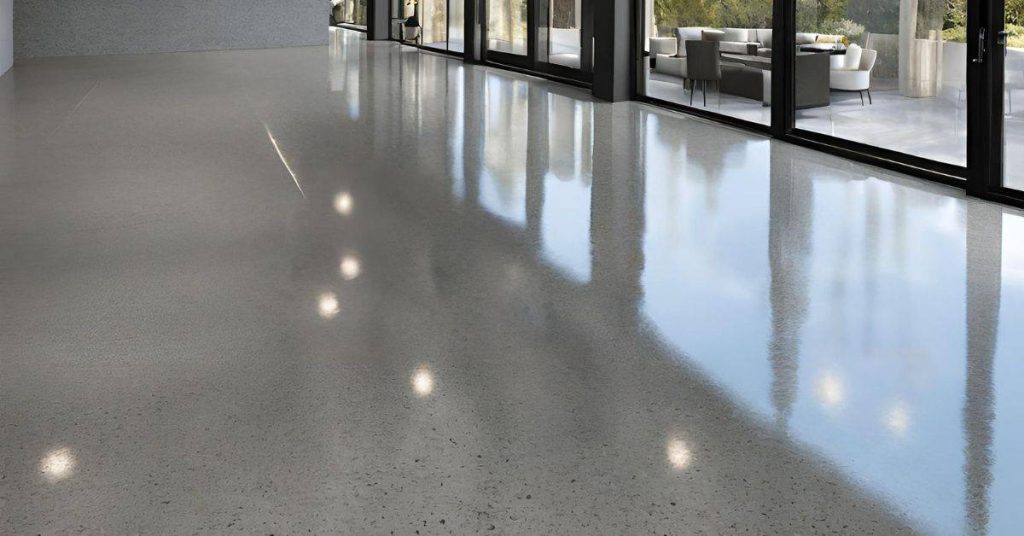
Introduction
Repairing Etched or Dull Polished Concrete: Densifier Reapplication vs Re-Polish is about choosing between reapplying a densifier to revitalize the surface or running a light re-polish to restore gloss. The decision hinges on whether the dullness comes from chemical etching, wear, or a dull film on the surface. Plan based on what the surface needs and what you can safely do with basic tools.
First check for etches or stains by looking at how the finish responds to cleaning and light abrasion. Use careful cleaning to remove surface contaminants, then assess if the look improves with a gentle buff or if deeper polishing is required. If you go with buffing, use a soft pad and light pressure, and stop if you see changing texture, color, or an unexpected haze, then follow the manufacturer’s instructions or local rules for proceed or re-application.
Key takeaways
- Understand etching versus staining to target repair approach correctly.
- Assess floor to decide densifier reapplication or re-polish based on wear.
- Cleaning and preparation: remove contaminants before repair work begins.
- Densifier reapplication requires manufacturer instructions and surface checks.
- Spot re-polishing methods for localized dull areas without full floor overhaul.
- Safety warning: wear eye and respiratory protection; follow label directions during work.
Table of Contents
- Introduction
- Key takeaways
- Understand Etching Vs Staining
- Assessing the Floor: When to Reapply Densifier Vs Re-Polish
- Preparing the Surface for Repair
- Densifier Reapplication: When and How
- Spot Re-Polishing Methods
- Re-Sealing and Protective Finishes After Repair
- Cost, Time, and Project Planning
- Safety, Common Mistakes, and Long-Term Maintenance
- Conclusion
- FAQ
Understand Etching Vs Staining
Etching is a surface texture change caused by material removal or chemical attack. It often feels rough or dull where the surface has been worn. Staining involves color changes or residue that sit on top of the concrete, not necessarily changing texture.
Depth and permanence matter for repair choice. Shallow etching with uniform dullness may respond to re-polish or a densifier touch-up, while deeper texture changes or widespread dulling can require more aggressive polishing or a new densifier application followed by stain mitigation. Use a quick diagnostic: feel the floor, observe visual cues, check moisture history, and see if the defect follows the existing polish layer. If the issue penetrates deeper, plan for abraid-rebuild steps rather than a simple surface clean.
Visual and Tactile Indicators
Etching and staining can look different on your polished concrete floor. Here’s what to look for:
Etching: You might see dull, matte patches where the gloss is gone. The surface could feel rougher or have a texture change. Sometimes, there’s a white halo around the affected area.
Staining: Discoloration is the main sign here. Stains can be dark or light, depending on what caused them. They might not change the texture but will definitely affect the color.
To check, run your hand over the area. Etching feels rougher, while stains usually don’t change the smoothness. Also, try a simple water test: if the water beads up and doesn’t soak in, it’s likely staining; if it soaks in quickly, it could be etching.
Common Causes and Damage Depth
Etching and staining happen due to different reasons:
Etching: Usually caused by acids, like lemon juice or battery acid spills. Abrasion from heavy foot traffic or wear can also cause etching over time.
Staining: This happens when something leaves a color residue on the surface. Coffee, wine, oil, or even dirt tracked in can stain your floor.
Now, let’s talk depth:
– Superficial: These are minor issues that only affect the top layer of sealant. They’re usually easy to fix.
– Surface-deep: These go a bit deeper into the concrete itself but haven’t penetrated too far yet. They might need some grinding or polishing to remove.
– Penetrative: These are serious issues where the damage goes deep into the concrete. They’re harder to fix and may require professional help.
Assessing the Floor: When to Reapply Densifier Vs Re-Polish
Define failure criteria by comparing mild dulling or light etch marks to deeper surface degradation. Determine if issues are widespread or localized to guide your approach. Quick, practical tests help separate densifier needs from polish removal needs.
Consider area size, traffic patterns, and the expected service life after treatment. Gloss level, scratch depth, porosity, and uniformity inform the decision between densifier reapplication and spot or full re-polish. Use a simple decision framework to weigh durability, maintenance, and budget against performance goals.
Decision checklist
Before choosing between densifier reapplication and re-polishing, follow this checklist to confirm the correct repair path.
- Clean and test: Clean a small area and perform quick tests (alkaline/acid reaction spot, water absorption, micro-scrub test) to gauge densifier penetration vs polish removal needs. Skipping this may lead to incorrect treatment.
- Moisture check: Ensure the floor is dry before testing or treating. Moisture can skew test results and hinder treatment effectiveness.
- Small test patch: Apply densifier to a small, hidden area first. If it improves appearance and performance, reapplication may be sufficient. If not, consider re-polishing.
- Measure wear patterns: Assess the extent of dulling or etching. Light to moderate issues might respond well to densifier reapplication, while severe damage may require re-polishing.
- Check gloss level: Use a gloss meter to measure sheen loss. Mild dulling (below 30%) might be improved by densifier, while severe dullness (above 50%) could need re-polishing.
- Inspect scratches: Light scratches may be removed or minimized with densifier, but deep gouges will likely require re-polishing and touch-up.
- Evaluate uniformity: Check if the entire floor is affected uniformly. If not, consider spot repairs or localized treatment before full re-polishing.
- Assess traffic patterns: High-traffic areas may need more frequent maintenance, regardless of chosen repair method.
Quick rule: Always clean and test first to avoid wasting time and money on incorrect treatments.
Spot repair vs full-area intervention
Deciding between spot repairs and full re-polishing depends on the severity, extent, and nature of damage. Here’s how to determine which approach is best:
For spot repairs: Consider if issues are localized (e.g., isolated scratches or dull patches). Spot repairs can be cost-effective when dealing with minor, scattered problems. Feather edges of spot repairs to blend them seamlessly into the surrounding floor.
However, if you find yourself patching multiple spots, it might indicate that a full re-polish is more cost-effective. Re-polishing ensures uniform appearance and performance across the entire floor, preventing future spot-repair cycles.
If damage is widespread or severe, full re-polishing is usually the better choice. It restores the floor’s uniformity, gloss level, and overall aesthetics more effectively than multiple spot repairs.
Performance and longevity expectations
Understanding what each method realistically restores and their expected lifespans helps you make an informed decision:
Densifier reapplication: This method improves hardness, stain resistance, and enhances sheen by 5-10%. It’s ideal for light to moderate dulling. Longevity depends on traffic: expect 2-3 years in low-traffic areas, 1-2 years in high-traffic zones.
Re-polishing: This restores the floor’s original gloss level (70-90%) and improves stain resistance significantly. It’s suitable for severe dullness or etched/scratch areas. Longevity is typically 3-5 years in low-traffic areas, 2-3 years in high-traffic zones, depending on maintenance.
Both methods maintain slip resistance when done correctly, but regular cleaning and occasional touch-ups may be needed to preserve aesthetics and performance over time. Always follow a recommended maintenance regime for best results.
Preparing the Surface for Repair
Start with a thorough cleaning to remove oils, dust, and residues that hinder densifier penetration or sealer bonding. Avoid leaving surface contaminants that can trap moisture or interfere with polish.
Confirm dryness with a simple test method or moisture meter and set acceptable thresholds before proceeding. Do a small-area test patch first, applying the chosen product and evaluating adhesion, lustre, and porosity uniformity before full-scale repair. Follow a clear surface prep checklist so the floor offers consistent porosity for even results.
Cleaning techniques and products
The first step in preparing your polished concrete for repair is thorough cleaning. Use neutral cleaners to remove dirt, dust, and general grime.
For oil stains: Apply a degreaser, let it sit, then scrub and rinse. Follow product labels for exact instructions.
Stubborn stains: Try poultices. Mix, apply, let dry, remove, and vacuum. Rinse and neutralize with clean water afterwards.
Visual checkpoints and moisture testing
Before densifier reapplication or repolishing, ensure your concrete is ready. Use this checklist:
- No residue: Wipe with a damp cloth. If it’s clean, you’re good.
- Uniform dryness: Check for any wet spots. They can ruin your repair.
- Moisture test (pin test): Stick a pin in the concrete. If it doesn’t show moisture, proceed.
- Calcium chloride test: Apply the powder, wait 72 hours. No more than a 3-pound increase per 100 sq ft is acceptable.
- In-situ meters: Use them to measure moisture content. Aim for less than 4 lbs/1000 sq ft.
Quick rule: Always test before you densify or polish. Moisture ruins repairs.
Tools and materials checklist
Before starting, gather your tools and consumables for a smooth repair:
- Neutral cleaner: To remove dirt and dust.
- Degreaser: For oil stains. Always follow product labels.
- Poultice: For stubborn stains.
- Grinder/polisher: With appropriate pads for your repair type.
- Densifier or polish sealer: Match the one you’ll be using for the repair.
- PPE (Personal Protective Equipment): Safety glasses, gloves, ear protection, and a respirator.
Quick rule: Always match your pads to your grinder/polisher. Wrong pads can ruin your floor.
Densifier Reapplication: When and How
Reapplying a densifier is appropriate when the surface shows sufficient porosity, dullness persists, or the previous densifier underperformed. Assess whether chemical hardening will benefit the specific concrete mix and conditions. Use results from a test patch to guide the decision.
Explain what a densifier does, including chemical hardening and reduced porosity, and how these effects influence subsequent polishing or topcoats. Emphasize essential prep: clean surface, correct moisture, appropriate temperature, and a uniform application pattern to maximize penetration. Follow manufacturer instructions for dwell times and recoat windows, and avoid pooling or over-saturation.
Types of densifiers and what to check
Before you start, understand the different types of densifiers and their requirements. This checklist helps ensure you’re using the right product for your floor.
- Chemistry: Check if it’s a silane, siloxane, or other type. Each has its own benefits and limitations.
- Surface condition: Ensure the recommended surface condition matches yours (e.g., new, old, lightly soiled).
- Application method: Verify if it’s a spray, roll-on, or wipe-on to match your equipment.
- Coverage guidance: Know how much product you’ll need per square foot.
- Cure indicators: Understand when the densifier is ready for subsequent steps (e.g., touch-dry, fully cured).
- Recommended temperature: Check if your floor’s temp matches the product’s ideal range.
- Moisture content: Ensure your slab’s moisture level is within acceptable limits.
- Compatibility: Confirm it works with your sealer or polish. Some densifiers can affect their performance.
- Safety warnings: Read and follow all safety instructions, including PPE and ventilation requirements.
Quick rule: Always read the product label first to avoid common mistakes.
Application steps and troubleshooting
Follow these steps for a successful densifier application. If you encounter issues, don’t worry – we’ve got solutions.
First, clean your floor thoroughly using the methods mentioned earlier. The surface must be free of dirt, dust, and contaminants. Next, apply the densifier evenly across the entire area using your chosen method (spray, roll-on, or wipe-on). Ensure you cover every inch to achieve consistent results.
Allow the densifier to dwell on the surface for the time recommended by the manufacturer. This allows it to fully react with the concrete and penetrate deeply. After the dwell time, remove any excess product using a clean, damp cloth or mop