
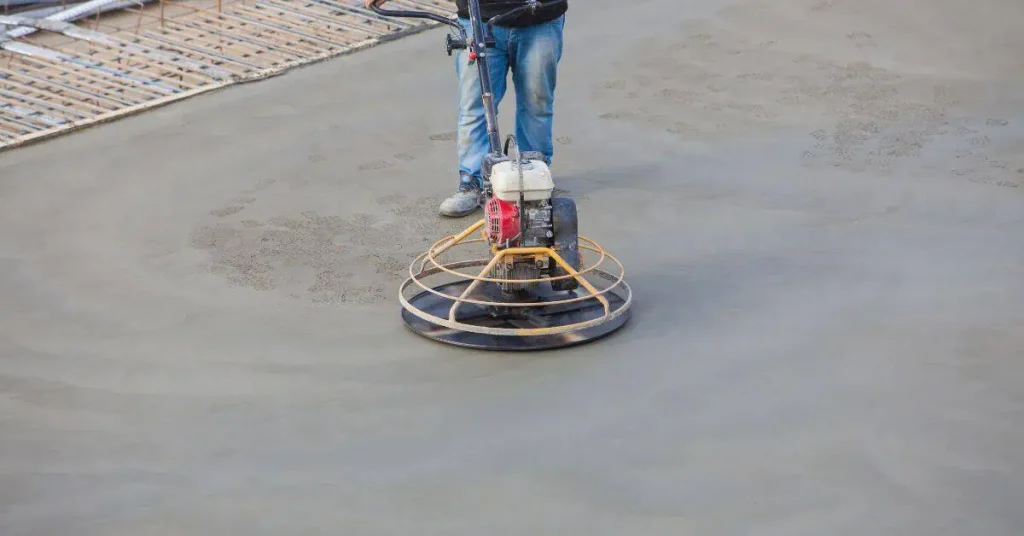
Rain exposure does not automatically ruin fresh concrete; the result depends on the concrete’s stage, whether water is merely falling or flowing across the work, and whether excess water is worked into the surface.
The urgent question is not simply whether it rained. Look at what the water is doing: Is it only dampening the surface, leaving puddles, or flowing across the concrete and carrying paste away? The answer determines whether you cover and wait, carefully manage standing water, or stop and plan for a later assessment.
For a structural slab, foundation, reinforced work, or any pour governed by drawings, inspection requirements, or a specified architectural finish, contact the person responsible for the work before making a decision that changes the placement sequence or finish. This guide is practical on-site damage control, not a substitute for the project specifications.
Key Takeaways
- Stop troweling, floating, brooming, edging, stamping, and other finishing as soon as rainwater appears on the concrete.
- Vertical rain is often less damaging than runoff flowing across the slab, which can wash away cement paste and fine material.
- Use a supported, tent-like cover whenever possible. Do not drop plastic directly onto an unfinished surface.
- Do not scatter dry cement, bag mix, or other dry material over rainwater to “soak it up.” That can create a weak, inconsistent surface layer.
- Standing water should not be stirred, troweled, broomed, or swept into the concrete. Whether it can be removed depends on the slab’s firmness and the risk of disturbing the paste.
- Resume finishing based on the actual surface condition and planned finish, not on a guessed waiting time after the rain stops.
- Document runoff, paste loss, soft areas, disrupted placement, and affected locations so they can be evaluated after curing if needed.
ToC
- What to Do the Moment Rain Starts
- Rain-on-Fresh-Concrete Decision Tree: Cover, Wait, Remove Water, or Stop
- Diagnose the Surface Before Touching It
- How to Cover Fresh Concrete Without Ruining the Finish
- After the Rain Stops: Wait, Remove Water, and Resume Only When the Surface Is Ready
- When to Stop and Get the Slab Evaluated Later
- Avoidable Mistakes During a Rain-Interrupted Pour
What to Do the Moment Rain Starts
Act in order of importance. The first few minutes matter because the most avoidable damage comes from trying to keep the finish moving while the surface is wet.
- Stop surface-finishing work. Put down the trowel, fresno, float, broom, edger, groover, stamp, or texture tool. Do not make another pass through a wet sheen or puddles. Finishing rainwater into the top of the slab raises the water content in that thin surface zone and can leave it weaker and less wear-resistant than the concrete below.
- Control the water path. Check the high side of the site, nearby roofs, chutes, wheelbarrow routes, and form edges. If water can be diverted safely outside the forms, do that. A small berm, temporary drain path, or protected diversion may prevent the more serious problem: moving water crossing the fresh concrete.
- Protect the slab if the rain is more than a brief sprinkle. Prepare a raised cover that sheds water without contacting the fresh surface. Secure it so wind cannot collapse it onto the concrete.
- Keep people and tools off the protected surface. Extra footprints, dragged covers, and attempts to “fix” rain marks can cause more damage than a short rain event.
- Decide whether placement can continue safely. If concrete is still being discharged or screeded, protect the completed portion first. Continue only if the crew can keep water under control, maintain safe footing and visibility, and preserve the intended placement sequence. Do not force a rushed, poorly consolidated placement just to beat the weather.
Never throw dry cement, dry concrete mix, or a dry-shake material not specified for the finish onto rainwater. It may seem to firm up the surface, but it does not restore the original mix proportions or produce a reliable wearing layer. Likewise, do not add water to nearby concrete to make it easier to catch up after the interruption. See how to mix concrete basics for the reason measured water matters so much to fresh-concrete consistency.
Rain-on-Fresh-Concrete Decision Tree: Cover, Wait, Remove Water, or Stop
Start with one question: Is the rain only dampening the surface, creating standing water, or flowing across the concrete? Then consider the work stage. A rain-speckled slab that has not been touched is different from a puddled slab being power-troweled, and both are different from a slab where runoff has cut channels through fresh paste.
Branch 1: Light rain or a brief sprinkle, with no sheen or pooling
Stop finishing and shield the work if you can do so without touching the slab. Wait for the rain to stop and inspect the surface. If there is no visible water layer, no runoff crossed the concrete, and no finishing was done through rainwater, the event may have little effect. Resume only when the surface again behaves as it should for the next planned operation.
Branch 2: Rain creates a visible sheen or puddles, but water is not flowing across the slab
Cover the slab and wait. Do not try to trowel through the water or work it into the surface. Once rainfall and runoff are controlled, assess whether the water has cleared on its own and whether the concrete is firm enough to avoid disturbing paste.
In some conditions, standing water can be removed gently, but there is no one method that is safe for every slab. The right approach depends on the depth of water, the concrete’s set, the type of finish, and whether any tool will drag or remove cement paste. If removal would sweep water across the slab, gouge the surface, or disturb a soft top layer, wait or get qualified direction instead.
Branch 3: Water is flowing across the slab or visibly washing material away
Stop finishing immediately. Control or redirect the incoming water if it can be done safely, protect the concrete, and photograph the affected areas. Milky runoff, exposed coarse aggregate, washed-out edges, channels, or displaced color are warning signs that the surface has been eroded rather than merely wetted. A badly affected area may need evaluation after curing, especially on a driveway, structural slab, foundation, or specified decorative finish.
Branch 4: Rain starts during troweling or final finishing
Stop at once. The risk here is not rain alone; it is continuing to close, densify, smooth, or texture the surface while excess water is present. That can trap or mix water into the top layer. Trying to erase the rain marks with extra trowel passes can make the eventual surface weakness worse.
Branch 5: Rain starts during placement or screeding
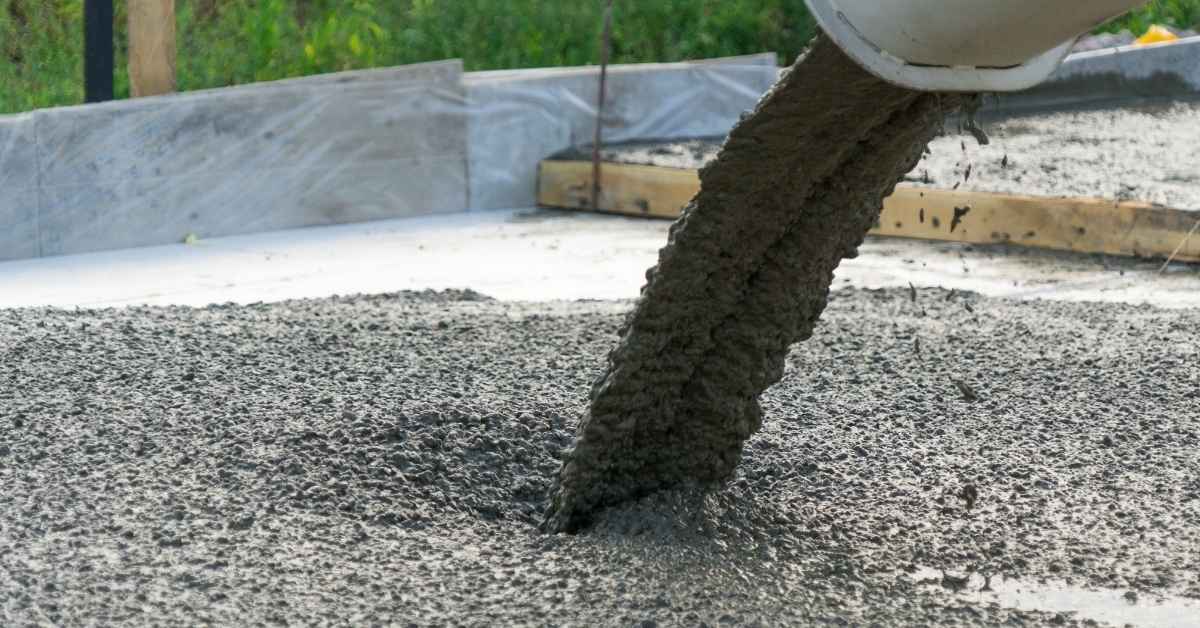
Keep the placed area protected and make a deliberate call. If the crew has enough control to keep runoff out, consolidate properly, strike off the concrete as planned, and continue safely, uninterrupted placement may still be possible. If not, pause and obtain project-specific direction before creating a compromised transition. Do not assume an interruption joint is acceptable; whether it becomes a cold joint and how it must be handled depends on the plans, location, reinforcement, and specifications.
| Observed condition | Immediate action | Do not do this | Next check |
|---|---|---|---|
| Brief sprinkle; no sheen or pooling | Stop finishing; shield if practical | Keep troweling to “get ahead” | Confirm no runoff or paste loss before resuming |
| Visible sheen or isolated puddles | Cover; wait; protect edges from runoff | Broom, trowel, or sweep water into the surface | Check surface firmness and water condition |
| Water flowing across concrete | Stop work; divert water; document damage | Finish over eroded or milky areas | Inspect for paste loss, channels, and exposed aggregate |
| Rain during final finish or texture work | Stop finishing and cover without contact | Make extra passes to hide marks | Wait for a finishable surface condition |
| Rain during placement or screeding | Maintain sequence only if water and safety are controlled | Rush placement or improvise a joint without direction | Confirm the planned placement can still be preserved |
Diagnose the Surface Before Touching It
After the rain slows or stops, look before you touch the slab. A normal-looking wet surface is not proof that nothing happened, but neither is a rain event proof that the slab has failed. Separate the observations that suggest a limited surface interruption from those that deserve follow-up.
Less-concerning signs include rain that stopped quickly, no water entering from the high side, no runoff crossing the slab, no milky material leaving the surface, and no finishing performed while water was present. If the surface was simply dampened and then protected, the main task may be waiting for the right finishing window.
Warning signs include persistent puddles, milky or paste-rich runoff, coarse aggregate exposed where it should be covered, wash channels, torn edges, a soft or soupy-looking top layer, unusual surface texture, or color and fines moved toward a low point. Flowing water deserves more attention than vertical rain because it can carry cement paste and fine aggregate away. That is material loss, not just extra moisture.
Surface water matters because it can change the local water-to-cement relationship at the very top of the slab if it is mixed in by tools. The bulk concrete below may not have the same problem, but the exposed wearing surface is where dusting, scaling, flaking, poor abrasion resistance, or delamination can later become apparent. The duration of rain or a rough rainfall total alone cannot tell you how much strength, if any, was affected.
Take photos before covering, after uncovering, and after any corrective action. Record the time rain began, whether it was vertical rain or runoff, the locations affected, the point reached in placement or finishing, and what was done. Mark affected zones on a simple sketch. Keep delivery tickets and mix information. This record is useful if a contractor, ready-mix supplier, inspector, or qualified concrete professional needs to compare later symptoms with the event.
For a shed pad or simple patio, a local surface blemish may ultimately be cosmetic. For a footing, foundation, reinforced slab, loading area, or slab with a specified finish or performance requirement, do not make that call from appearance alone. Follow the applicable plans and project authority.
How to Cover Fresh Concrete Without Ruining the Finish
A cover protects concrete only if it keeps water off without transferring water, debris, wrinkles, or pressure marks onto the fresh surface. The basic idea is a supported canopy, not a sheet laid on the slab.
Before a pour with any rain risk, stage clean plastic sheeting or another suitable weather cover, along with lumber or other stable supports, clamps or edge weights, runoff-control materials, clean hand tools, lighting for dim conditions, and appropriate personal protective equipment. The exact cover system should suit the size of the pour, wind exposure, access around the forms, and the planned finish.
- Set supports outside the fresh-concrete area where feasible, creating enough height and slope for water to shed.
- Secure the cover at the form perimeter or other stable points so wind cannot lift it, pool it, or collapse it onto the slab.
- Keep cover runoff directed away from the forms. Water collected on plastic can spill onto the concrete when the cover is moved.
- Protect edges, vertical faces, and decorative details from contact. Direct plastic contact can leave marks that are especially objectionable on stamped, colored, hard-troweled, or architectural work.
- When the cover comes off, lift it clear. Do not drag it over the slab, and do not dump pooled water onto the concrete.
A cover is not permission to continue finishing through rainwater or to trap standing water beneath it. It is a way to stop additional rain exposure while the surface settles. If lightning, high wind, slippery ground, poor visibility, or unstable temporary framing makes the cover operation unsafe, keep people safe first and do not attempt a risky improvised canopy.
Decorative systems need extra caution. Color hardeners, dry-shake products, stamps, surface retarders, release agents, and specialty sealers can have weather limits and sequencing requirements that differ from plain concrete. Follow the applicable product data sheet and obtain direction from an experienced installer when the finish is specified or difficult to replace.
After the Rain Stops: Wait, Remove Water, and Resume Only When the Surface Is Ready
The common error after a shower is rushing back onto the slab. Concrete does not return to a finishable condition simply because the rain stopped. Use this recovery sequence instead.
- Confirm the rain source is controlled. Do not uncover or restart while roof runoff, slope runoff, or dripping cover edges can still send water onto the concrete.
- Inspect without working the surface. Look for puddles, cover marks, washed paste, rough spots, exposed aggregate, and damaged edges. Photograph anything questionable.