

Introduction
Orange peel after rolling is a textured, dimpled finish that happens when paint or concrete topping doesn’t level out before it skins over. It’s usually caused by wrong material viscosity, working too slowly, rolling with an unsuitable nap or roller technique, or environmental factors like temperature and humidity. A quick jobsite fix is to re-wet and lightly re-roll while the surface is still workable or sand and touch up once cured, but check product instructions for recoat and cure times.
This is a hands-on problem you can often correct without tearing the whole project out, but be realistic about effort and finish expectations. If conditions or material properties are poor, spraying can give a more uniform finish and save time—confirm spray equipment compatibility and follow manufacturer guidance and any local rules before switching methods.
Key takeaways
- Inspect surface for texture, dust, or contamination before any touch-up or recoat.
- Rollers and primer can influence orange peel; match sheen and method.
- Lightly tip or back-roll after spraying to blend edges safely.
- Avoid overworking the coating; keep consistent distance and motion during touch-ups.
- When resealing or reapplying, follow manufacturer guidance and local codes.
- Safety: ventilate area, wear respirator, and protect occupants during spray work.
Table of Contents
- Introduction
- Key takeaways
- What Is Orange Peel and Why Rolling Can Cause It
- Diagnosing Orange Peel After Rolling
- Quick Fixes You Can Do Without Full Respray
- When a Partial Recoat or Full Resurfacing Is Needed
- Tools, Materials, and Visual Checkpoints Checklist
- Prevention: Rolling Techniques and Prep to Avoid Orange Peel
- Conclusion
- FAQ
What Is Orange Peel and Why Rolling Can Cause It
Orange peel is a dimpled, uneven surface that resembles the skin of an orange rather than a smooth painted film. It happens when the paint film fails to level before it cures, leaving peaks and valleys instead of flowing out flat.
Rolling can produce this texture because of factors that interfere with paint flow and leveling: roller nap, paint viscosity, film thickness, and drying speed all interact to lock in the roller’s micro-texture. Check the product label or data sheet for recommended roller type, spreading rates, and environmental limits to see which variable may have been out of range.
Surface tension, film build, and paint flow
Orange peel happens when paint doesn’t level out smoothly after application. This is due to the interplay of surface tension, film build, and paint flow.
Surface tension is like a skin that forms on the paint’s surface as it dries. It pulls the liquid together, trying to minimize its surface area. If this happens too quickly or if there’s not enough time for the paint to level out, you get dimples – orange peel.
Film build refers to how thick the paint layer is. Too thin, and the surface tension can’t form properly; too thick, and it forms too quickly. Both can lead to orange peel.
Paint flow is about how easily the paint moves across the surface. If it’s too thick or too thin, or if there are any obstacles like dust or imperfections, the paint won’t flow smoothly, leading to texture issues.
How rolling differs from spraying in finish formation
Rollers and sprayers apply paint differently, which affects the final finish.
Rolling pushes paint onto the surface. This can lead to over-application, causing the paint to sit on top rather than soaking in. The excess paint then has to level out, but if it does so too quickly due to high humidity or low temperatures, you get orange peel.
Spraying, on the other hand, misting the paint onto the surface. This allows for better control over film build and gives the paint more time to level out before the surface tension forms. It’s less prone to texture issues but requires a steadier hand and proper technique.
That’s why rolling can sometimes cause orange peel – it’s pushing too much paint onto the surface at once, not giving it enough time or space to level out properly.
Paint types and finishes most affected
Not all paints are created equal when it comes to orange peel. Certain types and sheens are more prone to texture issues.
High-gloss and semi-gloss paints are the worst offenders. They have a higher ratio of solids to liquids, which means they form surface tension faster. This gives them less time to level out, leading to orange peel.
Water-based paints can also be problematic if they’re not allowed to dry slowly enough. The quick drying time can cause the surface tension to form too quickly, trapping any imperfections under the film.
Low-quality or poorly formulated paints are also more likely to show orange peel. They may have poor flow properties or improper pigment distribution, leading to texture issues as they dry.
Diagnosing Orange Peel After Rolling
Start with a visual scan from different lighting angles to map where the texture is worst and note whether it’s continuous or isolated to edges, corners, or panels. Run your hand lightly over the surface to confirm tactile roughness and compare problem areas to a nearby acceptable area to gauge severity.
Next, test substrate and paint clues: look for runs, sags, missed pickups, or sheen differences and inspect nearby surfaces for overspray or improper tool marks. If you need hard specs to interpret causes, consult the paint manufacturer instructions or technical data sheet for drying times and film build guidance.
Visual checkpoints and tactile tests
Use this checklist when you first notice orange peel after rolling. It helps assess the severity and extent of the texture.
- Check lighting: Inspect walls at different angles to see how light reflects off the surface. Orange peel will appear more pronounced from certain angles.
- Fingerprint test: Gently run your fingertip over the affected area. Feel for deep, widespread texture. If it’s too severe, you might need to sand and repaint.
- Spread assessment: Check how far the orange peel extends. If it covers a large area, you may have a significant issue with your rolling technique or paint.
- Consistency check: Look for consistent texture across the wall. Inconsistent orange peel could indicate multiple issues at play.
- Edge inspection: Check edges and corners. Orange peel often appears more pronounced here due to reduced roller coverage.
- Sheen variation: Inspect sheen variation. Orange peel can cause areas of higher or lower sheen, making it stand out more.
- Dry vs. wet: Compare dry and wet texture. If it’s worse when wet, you might have a film build issue.
- Pattern recognition: Look for repeating patterns in the orange peel. This can help identify the root cause.
Quick rule: The more severe and widespread the orange peel, the more likely you’ll need to correct the problem.
Common root causes checklist
Use this checklist when you’ve identified orange peel. It helps pinpoint common causes.
- Wrong roller: Check if you’re using the right roller for your paint type and surface. Using a roller with the wrong nap length can cause orange peel.
- Paint viscosity: Test paint viscosity. If it’s too thick or thin, it won’t roll out evenly, leading to texture.
- Substrate problems: Inspect the surface for defects like sanding scratches, drywall compound issues, or previous paint failures that could cause orange peel.
- Environmental factors: Check if temperature and humidity are within recommended ranges. Extreme conditions can affect paint performance.
- Roller technique: Assess your rolling technique. Rolling too fast, applying too much or too little paint, or not maintaining a ‘W’ or ‘M’ pattern can cause orange peel.
- Paint type and finish: Ensure you’re using the right paint for your surface and desired finish. Some paints and finishes are more prone to orange peel than others.
- Primer issues: If applicable, check if the primer is at fault. Inadequate priming can lead to orange peel when painting over it.
- Contaminants: Look for contaminants on the surface that could be causing texture.
Quick rule: The more root causes you can eliminate, the closer you’ll get to solving your orange peel problem.
When orange peel is acceptable vs. a defect
Orange peel isn’t always a defect. It depends on the surface, paint type, and desired finish.
Acceptable: Orange peel is often acceptable on textured surfaces like popcorn ceilings or heavily textured walls. It’s also common in some industrial or exterior applications where a slight texture is expected.
Defect: On smooth surfaces, especially with high-gloss paints or in critical areas like trim work, orange peel is typically considered a defect. It can make the surface look uneven and unprofessional.
Corrective action: If orange peel is unacceptable for your project, you’ll likely need to sand, prime, and repaint the affected area. In some cases, switching to spraying may be necessary.
Quick Fixes You Can Do Without Full Respray
If orange peel is light and localized, wet-sanding with fine abrasive followed by touch-up with thin, brushed or rolled finish can soften the texture without stripping. Feather the repair into surrounding paint and use compatible primer or glaze where needed to match sheen and absorption.
For slightly larger areas, consider light skim-coating with a thin, paintable filler or quick skim primer-surfacer, then sand and recoat the patch with the same product system. Verify compatibility and drying behavior from the product label before applying any corrective coatings.
Light sanding and blending techniques
First, let’s assess the orange peel. If it’s light, we can sand it out without causing more damage.
Use a fine-grit sandpaper, like 220 or 320, to gently sand the affected areas. Work in small sections and use smooth, even strokes. Be careful not to press too hard – you don’t want to create valleys.
After sanding, dust off the surface with a damp cloth. Then, use a foam roller to apply a thin coat of touch-up paint, feathering it out at the edges to blend with the surrounding finish.
Re-rolling and touch-up approaches
For larger orange peel areas or when sanding isn’t enough, you’ll need to re-roll. Start by lightly sanding the area with fine-grit sandpaper, just enough to scuff up the surface.
Load your roller with paint, then roll it back and forth on a spare piece of cardboard until the paint is evenly distributed. This helps prevent overloading the roller and creating more orange peel.
Now, apply the paint to the wall in small sections, working from one side to the other in even strokes. Make sure to blend the edges into the existing finish to avoid lap marks. Let it dry, then inspect your work. You might need to repeat this process a few times for best results.
Using skim coats and glazing to even the surface
When orange peel is stubborn or widespread, you might need a heavier-duty solution. A thin skim coat or glaze can help fill in texture and create a smooth surface.
Mix your skim coat or glaze according to the manufacturer’s instructions. Using a wide putty knife, apply it evenly over the affected area. Work in small sections and feather out the edges to avoid creating lines.
Let it dry, then lightly sand with fine-grit sandpaper. Wipe off any dust, then prime and paint as usual. This should give you a smooth, even finish.
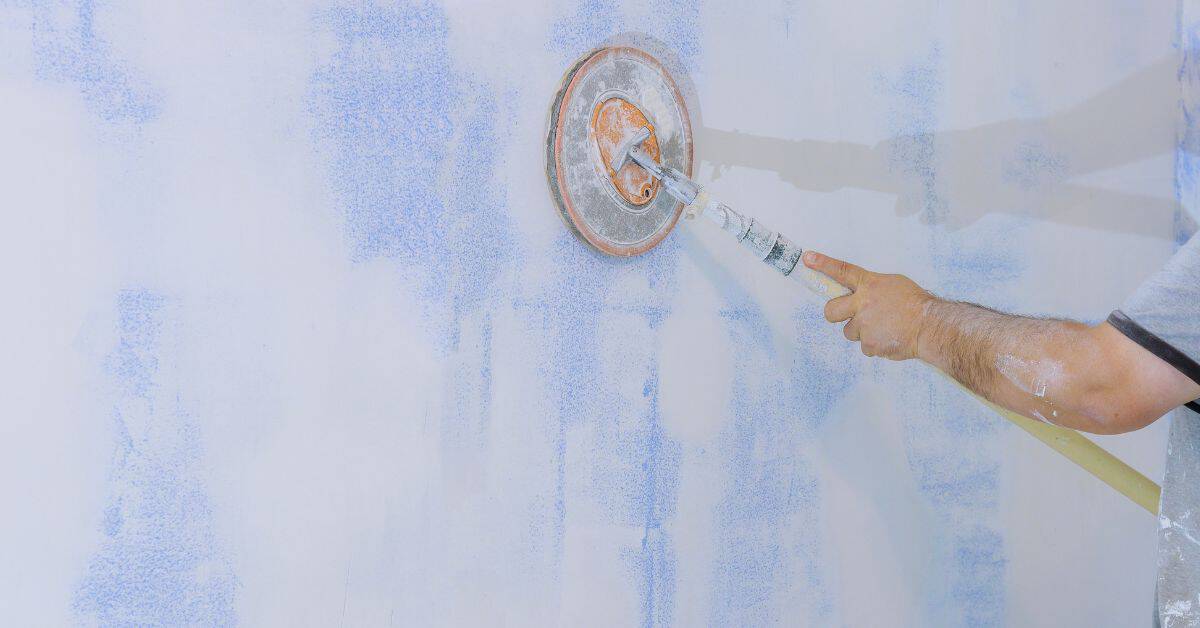
When a Partial Recoat or Full Resurfacing Is Needed
Decide by area, visibility, and root cause: isolated, shallow orange peel can often be spot-recoated after sanding, while widespread texture, adhesion failure, or substrate issues usually require a full recoat or resurfacing. Also factor in sheen match and whether previous paint is compatible with repair products.
If the paint is failing to adhere, bubbling, or the texture recurs after fixes, plan for stripping to bare substrate or using a surfacer recommended by the manufacturer. Check product data sheets and local regulations for acceptable surface preparation and disposal steps if removal is needed.
Spot-priming, feathering, and partial recoat guidance
When orange peel is localized to small areas, spot-priming and feather-coating can restore a uniform finish. This technique involves applying a thin layer of primer or paint around the affected area, gradually increasing the coverage until it blends seamlessly with the surrounding surface.
Spot-priming works best when orange peel is due to minor imperfections like dust or light sanding marks. It’s quick and easy but may not hide deep texture or severe defects.
Feathering involves applying paint in a tapering pattern, starting thin at the edge of the defect and building up coverage towards the center. This technique requires practice to avoid visible lines where the new coat meets the old one.
Partial recoats can be effective when orange peel is widespread but not severe. However, they won’t fix deep texture or extensive damage. If the underlying surface is sound, a partial recoat might be all you need. But if the orange peel is due to serious issues like poor adhesion or incompatible layers, a full recoat or professional stripping may be necessary.
Applying a surfacer or skim coat before finish coats
A surfacer or skim coat is a thick, high-build primer designed to fill minor imperfections and create a smooth base for topcoats. It’s often used to eliminate light orange peel texture.
Surfacers are typically applied with a roller or trowel and can be sanded after drying to further improve the surface. They’re ideal when you need to build up a layer to hide minor defects but don’t want to apply a full skim coat.
A skim coat, on the other hand, is a thin layer of joint compound applied over drywall or plaster to create a smooth, even surface. It’s often used in new construction or extensive repairs before painting. Both surfacers and skim coats can help eliminate light orange peel when applied correctly.
However, they won’t fix severe texture or deep defects. If the underlying surface is too rough, applying a surfacer or skim coat may just trap the imperfections under a thin layer of material, leading to more problems down the line.
Signs you should plan for full recoat or professional stripping
Sometimes, spot repairs and surfacers just aren’t enough. If you notice any of the following signs, it’s time to consider a full recoat or even professional stripping:
Widespread texture: If orange peel covers large areas of the surface, a partial recoat may not be sufficient. A full recoat can ensure consistent coverage and eliminate texture throughout.
Adhesion problems: If paint is peeling or lifting from the surface, it’s a sign that the existing finish has poor adhesion. This issue won’t be resolved by spot repairs or surfacers. A full recoat or professional stripping may be necessary to remove the old paint and start fresh.
Incompatible layers: If you’re dealing with multiple layers of incompatible materials (like oil-based paint over latex), they may need to be completely removed before applying new coats. This often requires professional stripping to ensure all old material is eliminated.
Always remember, it’s better to address these issues upfront than to end up with a surface that continues to peel, crack, or show texture no matter how many times you try to repair it.
Tools, Materials, and Visual Checkpoints Checklist
Gather sanding blocks of varying grits, good-quality rollers and covers matched to the paint, brushes for tips, patching compounds, tack cloths, and masking supplies. Include a light source for angled inspections and a hygrometer or thermometer to measure jobsite conditions if you suspect environment-related problems.
Visual checkpoints should include sheen consistency, edge definition, roller stipple patterns, and film defects like fisheyes or orange peel; note them before starting so you can confirm repair success. When in doubt about a material’s suitability, consult the product label or manufacturer guidance for compatibility and application limits.
Essential tools and consumables for fixes
Before you start fixing orange peel, make sure you have the right tools and materials. Here’s a checklist to help you.
- Sandpaper (120-220 grit): For light sanding and smoothing out imperfections.
- Sanding block or pole sander: To ensure even pressure while sanding.
- Tack cloth: To remove dust after sanding.
- Paint roller covers (9-18 inches): For reapplying paint or skim coats. Choose the right size for your project.
- Paint brushes (1-2.5 inches): For cutting in edges and touch-ups.
- Safety glasses: To protect your eyes from dust and debris.
- Dust mask: To protect your lungs while sanding.
- Gloves: To protect your hands from paint and chemicals.
- Drop cloths or plastic sheets: To cover the floor and protect it from paint spills.
Quick rule: Having the right tools makes the job easier. Don’t skip this checklist to avoid rework later.
Paint, primer, and material matching tips
Matching paint color and sheen is crucial for a seamless repair. Here’s how to do it right.
- Color match: Use a small sample of the existing paint or take a photo to your hardware store for color matching.
- Sheen match: Match the sheen (gloss, semi-gloss, etc.) of the surrounding area. Check the label or ask the salesperson if unsure.
- Primer selection: Choose a primer that’s compatible with your paint type and surface. Read the manufacturer’s guidelines.
- Label check: Always check the label for application instructions, drying times, and safety precautions.
- Test patch: Before painting, do a test patch in an inconspicuous area to ensure color and sheen match.
Quick rule: Taking the time to match paint correctly prevents visible repairs and ensures a professional finish.
Visual checkpoints to verify progress
Regularly inspect your work to ensure you’re achieving a smooth, uniform surface. Here’s what to look for at each stage.
- Lighting: Inspect the surface in natural light or use a flashlight with a consistent light source to see imperfections clearly.
- Viewing angle: Check the surface from different angles, including straight on and 45 degrees, to spot any remaining orange peel.
- Tactile check (dry): Run your hand over the surface when it’s dry. You should feel no bumps or rough spots.
- Wet check: Inspect the surface while it’s still wet to ensure even coverage and no missed spots.
- Dry check (after sanding): After light sanding, wipe off dust and inspect for any remaining imperfections before proceeding.
Quick rule: Regular visual checks help you catch issues early, saving time and effort in the long run.
Prevention: Rolling Techniques and Prep to Avoid Orange Peel
Prep thoroughly: fill and sand defects, prime porous areas, and remove dust and contaminants so the paint can form an even film. Use the roller nap recommended on the paint label and avoid overloading or underloading the roller to minimize stipple transfer.
Work in suitable temperature and humidity, keep a wet edge, and apply uniform, overlapping passes with consistent pressure so the paint can level before it sets. If you’re unsure about drying times or thinning, check the manufacturer instructions for acceptable thinning methods and environmental limits.
Surface preparation and environmental control
The first step to prevent orange peel is a clean, smooth surface. Use a degreaser to remove any dirt, grease, or grime.
Fill in any holes or cracks with spackling compound. Sand lightly after drying to ensure a smooth finish.
Control temperature and humidity. Paint dries best between 65-85°F (18-29°C) with relative humidity below 70%.
If it’s too cold or humid, paint may not flow evenly, leading to orange peel.
Roller selection, loading, and application technique
Choose a roller cover with the right nap length for your paint. Longer naps are better for thicker paints or textured surfaces.
Load your roller evenly by dipping it into the paint tray, then rolling off the excess on the ribbed section of the tray. This helps prevent overloading and dripping.
Apply paint in ‘W’ or ‘M’ patterns. Start at one corner, roll out a 3-foot wide band, then overlap this band with another 3-foot wide band, forming an ‘M’ or ‘W’. This ensures even coverage.
Don’t press too hard. Let the roller do the work. Too much pressure can cause orange peel.
Mixing, thinning, and following manufacturer guidance
Before you start, mix your paint thoroughly to ensure consistency. Stir it gently with a paddle attachment on a drill.
Check the manufacturer’s instructions for thinning guidelines. Too thick paint can lead to orange peel. Too thin, and you won’t get good coverage.
Follow drying times. Rushing the process by applying too many coats too quickly can cause orange peel.
Always let your paint dry according to the manufacturer’s instructions before applying another coat.
Conclusion
Fixing orange peel after rolling comes down to controlled steps, careful testing, and keeping damage from spreading. When you respect safety and work methodically, you protect the surface, the finish, and your wallet.
First, check the area with good lighting, ensure the surface is clean and dry, and test a small patch to confirm the approach. Then plan thin coats, set up the right tools, and follow a simple sequence: sand or rework the high spots if needed, apply a precise, light coat or partial recoat, let it cure, and recheck the texture. Move in slow, even passes and keep a clean edge to avoid chasing texture across the whole panel.
Two common mistakes to avoid are rushing the process and skipping prep. Don’t skip masking and surface prepping, don’t apply heavy coats or spray from too close, and don’t ignore humidity or temperature that can ruin the finish. A quick safety rule is to test in a small area first, wear eye and skin protection, and keep ventilation open to avoid fumes and dust buildup.
If you’re already close to failure, or the surface is soft, peeling, or highly crosshatched, it makes sense to bring in a pro rather than pushing on. Otherwise, use the steps above as a clear, simple plan, stay patient, and you’ll end with a durable, even finish that looks professional. Stay practical, stay careful, and keep moving forward.
FAQ
When is spraying easier than another rolling or recoating option?
Spraying tends to be easier when the surface is large, flat, and you’re trying to minimize texture changes. If the existing finish has heavy orange peel or you’re aiming for a very smooth coat, spraying can help. Check manufacturer instructions and local rules before switching methods.
What prep steps make spraying more likely to succeed?
Clean, dry, dust-free surfaces matter most. Mask nearby surfaces and use the right reducer or solvent as per the product label. Follow environmental and ventilation guidelines and test spray on a small area first.
What common mistakes should I avoid when attempting a spray fix?
Don’t spray over unstable or dirty coatings. Don’t rush the coverage or over-wet to prevent drips and sagging. Always check product directions for spray technique, distances, and ventilation requirements.
What should I look for if I’m hiring a pro to spray or resurface?
Ask for a written plan: prep steps, primer or sealer needs, number of coats, and cure times. Ensure they follow the product label and any local guidance. Get a clear cost estimate and a realistic timeline before work starts.