Introduction
Rolling a wall without orange peel or stipple means applying drywall mud with a roller to a smooth, even finish.
It uses a light touch, proper mud consistency, and the right roller to avoid texture. You’ll work in small sections and feather the edges as you go.
Choose a short-nap roller or a compatible roller cover and follow the mud’s curing and re-coat guidelines. Keep the roller moving with steady, light passes and avoid overworking the surface to minimize texture. If anything looks off, check the product label, manufacturer instructions, or local rules before adjusting your method.
Key takeaways
- Use a premium roller cover and nap consistent with wall texture.
- Maintain wet edge and work in short sections to prevent lines.
- Feather edges with overlapping passes, avoiding re-rolling dry patches on spots.
- Prime properly and seal porous surfaces to reduce suction and texture.
- Control room temperature and humidity as much as possible during rolling.
- Inspect for orange peel or stipple during drying and touch up accordingly.
- Wear eye protection and a simple mask when handling primers and solvents.
Table of Contents
- Introduction
- Key takeaways
- Why Walls Get Orange Peel and Stipple When Rolling
- Tools and Materials Checklist for a Smooth Rolled Finish
- Surface Preparation and Priming to Minimize Texture
- Step-by-Step Rolling Technique for a Smooth Finish
- Environmental Controls and Timing for Best Leveling
- Troubleshooting and Correction Methods
- Visual Checkpoints and Quality Inspection Before Declaring the Job Done
- Time- and Cost-Saving Tips for Diyers and Pros
- Conclusion
- FAQ
Why Walls Get Orange Peel and Stipple When Rolling
The texture happens when the paint flow isn’t leveling out smoothly as it dries. Viscosity, roller nap, and technique all play a part in leaving a subtle skin rather than a flat coat. Surface texture from the wall itself can also show through the finish if edges aren’t softened during rolling.
Common culprits include a paint that’s too thick or too thin for the roller being used. A nap that’s wrong for the surface will drag or skip, creating ridges. Drying conditions that are too fast or too slow can set the texture in place before it has a chance to level out.
Paint formulation and viscosity
The viscosity of your paint plays a big role in whether you’ll end up with orange peel or stipple. High-viscosity paints are thicker and can leave behind unwanted texture.
Check the label on your paint can. If it’s labeled ‘high build’ or ‘heavy body’, it’s likely to be high viscosity. Contractor datasheets will also list the recommended thinning ratio if needed.
If you’re using a high-viscosity paint, consider thinning it according to the manufacturer’s recommendations. This can help prevent orange peel and stipple. But remember, too much thinning can lead to poor coverage and other issues.
Roller nap, material, and roller condition
The type of roller you use can significantly impact the final finish. The nap length, material, and condition all play a part.
- Nap Length: Longer naps (3/4″ to 1″) are great for textured surfaces or high-viscosity paints. Shorter naps (1/2″ to 3/8″) are better for smooth surfaces and low-viscosity paints.
- Material: Synthetic rollers are generally smoother, while natural fiber rollers can leave behind a slight texture. For the smoothest finish, choose a synthetic roller with a short nap.
- Condition: A new, clean roller will give you the best results. Worn or dirty rollers can leave behind lint and other debris, causing orange peel.
- Overloading: Don’t overload your roller. Too much paint can drip and create unwanted texture.
- Worn Out Rollers: If a roller is too worn out, it won’t hold the paint evenly, leading to stipple.
Application technique and environmental factors
The way you apply the paint and the conditions in which you’re working can both contribute to orange peel or stipple.
Technique: Apply even pressure, work in a ‘W’ or ‘M’ pattern, and overlap each stroke by about half. This helps ensure an even coat and prevents streaks.
Environmental Factors: Temperature and humidity can affect how the paint dries. Ideal conditions are between 60-85°F (15-29°C) with low humidity. Too much heat or humidity can cause the paint to dry too quickly, leading to orange peel.
Also, avoid rolling when it’s windy. The breeze can disrupt the even flow of paint and create unwanted texture.
Tools and Materials Checklist for a Smooth Rolled Finish
Grab a high-quality roller with an appropriate nap for your wall texture, and a sturdy frame for consistent loading. Extension poles help reach high areas without creating extra texture from awkward positions. Have a smooth tray and a couple of small tools for edge work within arm’s reach.
Stock your paints and any thinners or retarders as recommended by the manufacturer, plus a good mask and clean rags. A bright inspection light will help you spot texture issues early. Include a brush for cutting in and a refillable tray liner to reduce cleanup time.
Recommended roller types and nap lengths
Use this checklist to choose the right roller for your wall’s texture.
- Smooth walls: 6-10 inch roller with 3/8″ or 1/2″ nap. Too short a nap can cause streaks, too long can leave ridges.
- Light texture: 9-12 inch roller with 3/4″ or 1″ nap. Inadequate nap length may not fill the texture properly.
- Medium texture: 18 inch roller with 1.5″ or 2″ nap. Too short a nap can cause skips, too long can lead to drips.
- Woven vs knit rollers: Woven for smooth surfaces, knit for textured. Using the wrong type can leave marks or miss texture.
Quick rule: Match nap length to wall texture and choose roller type based on surface smoothness.
Paint selection and additives
Use this checklist to pick the right paint for a smooth roll-on finish.
- Sheen: Use semi-gloss or satin. Flat paints don’t level well, high gloss can show imperfections.
- Formulation: 100% acrylic or latex with good flow. Poor formulation can cause orange peel or stipple.
- Retarders/flow improvers: Use sparingly to control drying time and improve leveling. Too much can cause drips, too little won’t prevent imperfections.
- Thinning paint: Lightly thin with water or recommended additive if needed. Over-thinning can cause poor coverage and drips.
Quick rule: Choose a good quality, leveling-friendly sheen and formulation, use additives sparingly, and thin lightly if necessary.
Supporting tools and lighting
Use this checklist to gather essential extras for a smooth paint job.
- Extension pole: 18-24 inches. Reaching high areas without one can cause fatigue and poor results.
- Edger: High-quality, adjustable. Using a cheap edger can leave marks or miss edges.
- Quality brush: 2-3 inches for cutting in. A poor brush can leave bristles or streaks.
- Tack cloth: To remove dust before painting. Dust can cause imperfections and reduce paint adhesion.
- Inspection light: To check for missed spots or imperfections. Overlooking issues can lead to touch-ups later.
Quick rule: Invest in good tools, use a tack cloth before painting, and inspect your work thoroughly.
Surface Preparation and Priming to Minimize Texture
Start with a clean wall free of dust, grease, and loose material. Lightly sand glossy areas so the primer can bite, then fill any pits or cracks and sand smooth again. Inspect for dust pockets or patch highs and address them before priming.
Choose a primer that suits the substrate and paint type, and apply it evenly. Allow proper dry time per the label before rolling. Recheck for any remaining imperfections and plan to address them prior to paint application.
Cleaning and degreasing
Start by removing any dust, dirt, or cobwebs from your walls. Use a damp cloth or sponge with warm water to clean the surface.
Important: Do not use soap as it can leave residue that affects paint adhesion.
For previously painted surfaces, you might need to degrease. Use a degreaser specifically designed for walls and follow the manufacturer’s instructions.
Allow the surface to dry completely before moving on to sanding or applying primer.
Sanding and skim-coating
Sanding is crucial to remove any existing texture, imperfections, or raised grain. Use a fine-grit sandpaper (120-150 grit) and sand in the direction of the wood grain.
Tip: Lightly sanding previously painted surfaces can help improve paint adhesion.
If you have repairs that need feathering out, apply a thin skim coat of joint compound. Let it dry, then lightly sand to create a seamless surface.
Wipe off any dust with a damp cloth before priming.
Primer selection and application tips
Choose the right primer for your substrate. For new drywall, use a PVA (polyvinyl acetate) primer. For previously painted surfaces, an acrylic primer is usually best.
Note: If you’re painting over a dark color or have bleed-through issues, consider using a stain-blocking primer.
Apply primer evenly with a roller or brush, following the same technique you’ll use for your paint. Work in small sections to avoid lap marks.
Let the primer dry according to the manufacturer’s instructions before painting.
Step-by-Step Rolling Technique for a Smooth Finish
Load the roller evenly and remove excess paint to avoid drips. Begin with a light, steady pass to establish a wet edge and avoid stopping mid-field. Use light pressure and keep the roller almost flat against the wall as you work.
Overlap each stroke slightly and roll in a consistent direction before crossing to the next section. Finish with a final back-roll to blend the edges and close any minor gaps. Maintain a damp edge to prevent lap marks as you move along.
Step-by-Step Process
Follow these practical steps to achieve a smooth, orange peel-free rolled wall finish. Safety checks and proper technique are key.
- Preparation: Check your roller, paint, and surface. Ensure everything is clean, dry, and in good condition.
- Safety first: Lay down drop cloths, secure them with tape, and open windows for ventilation.
- Main work: Start at the top of the wall, rolling from ceiling to floor using a ‘W’ or ‘Z’ pattern. Maintain consistent pressure.
- Back-rolling: After each section, back-roll over it lightly to ensure even coverage and eliminate any texture.
- Final checks: Inspect your work for missed spots or drips. Clean up immediately after finishing to prevent drying paint from causing issues.
Loading the roller correctly
Properly loading your roller ensures even coverage and prevents drips. Here’s how:
Dip the roller into the paint, ensuring it’s fully coated but not overloaded.
Roll off excess: Roll the loaded roller onto a scrap piece of cardboard or paper until the roller cover releases an even film of paint with no drips or heavy spots.
Now your roller is ready for application. Start at the top of the wall and work your way down.
Rolling motions and overlap strategy
The key to a smooth finish lies in your rolling technique. Use ‘W’ or ‘Z’ patterns for even coverage:
Start at the top of the wall, roll downwards in a wide ‘M’ shape (half a ‘W’). Then, roll upwards from the bottom, filling in the gaps with the other half of the ‘W’.
Apply consistent pressure throughout. Overlap each pass by about 50% to ensure no missed spots and even leveling.
Back-rolling: After completing a section, lightly back-roll over it to smooth out any texture and ensure full coverage.
Managing edges, corners, and cutting-in
Proper edge work ensures a uniform finish without textured transitions:
Start by ‘cutting in’ along the ceiling and baseboards using a paintbrush. Apply paint carefully to create a smooth, straight line.
Next, use your roller to blend this cut-in section with the rolled wall. Start at the top of the cut-in area and roll downwards, overlapping onto the freshly painted edge by about 2-3 inches.
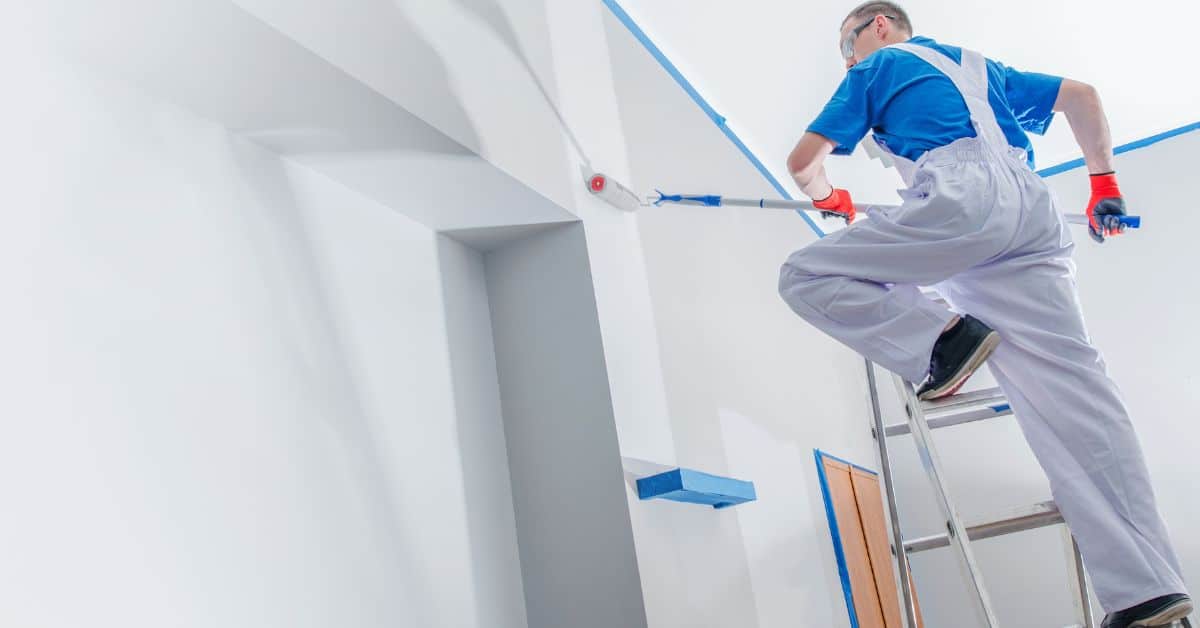
For corners, follow the same process. Cut in first using a paintbrush, then use your roller to blend it into the rolled wall, ensuring no texture lines remain.
Environmental Controls and Timing for Best Leveling
Keep the painting area well ventilated and attempt to maintain a stable temperature and humidity as recommended for your paint products. Avoid rapid air movement that can cause rapid drying and texture formation. Adjust working times by following the manufacturer’s guidelines on the product label.
If conditions are outside the ideal range, plan for longer open times between coats and consider adjustments to your workflow. Use light, even heat if available to promote uniform curing, and minimize drafts that disrupt leveling.
Temperature and Humidity Effects
The ideal temperature for rolling a wall is between 65°F to 85°F (18°C to 29°C). This range promotes even paint flow, reducing the risk of orange peel or stipple.
Extreme temperatures can cause issues. High heat speeds up drying time, leading to skinning and increased texture. Low temperatures slow down leveling, also creating more texture.
Target 65°F to 85°F (18°C to 29°C). If it’s too hot or cold, adjust the temperature if possible, or wait for better conditions.
Drying Time, Recoat Windows, and Flash Time
Proper timing is crucial to avoid dragging or lap marks. Let the first coat dry until it’s no longer tacky but not completely dry (about 2-4 hours). This is called a ‘recoat window’.
If you recoat too soon, you’ll drag the paint and create texture. If you wait too long, you might see lap marks when you apply the second coat.
Use a flash card or damp cloth to test for tackiness before recoating. Allow 2-4 hours between coats for best results.
Using Fans, Heaters, or Humidifiers Safely
Fans help speed up drying time and improve ventilation. Heaters can raise the temperature when it’s too cold. Humidifiers add moisture to dry air.
Use these devices sparingly and safely. Too much heat or airflow can over-dry the paint, causing dust contamination or creating a powdery texture. Keep fans on low speed and heaters at a safe distance from the walls.
Aim for gentle, consistent airflow. Don’t let the air blow directly onto the wet paint. Always follow safety guidelines when using heat sources.
Troubleshooting and Correction Methods
Diagnose texture by noting where it occurs: edges, joints, or mid-field can point to technique or coverage issues. Quick fixes include reloading and lightly reworking the area with a fresh pass to smooth ridges. For deeper texture, you may need to re-prepare the surface and recoat.
If a simple touch-up isn’t enough, consider patching and re-priming affected zones before applying a fresh coat. Don’t rely on spot filling as a long-term solution; address root causes and ensure proper leveling before final coats.
Minor defects and spot fixes
If you’ve got minor orange peel or stipple, don’t worry. You can fix it without repainting the whole wall.
First, lightly sand the affected area with fine-grit sandpaper. Be careful not to sand too hard, as you don’t want to damage the paint below.
Next, wipe off any dust with a damp cloth. Then, using a small roller or even a brush, apply a thin layer of paint to just the textured area. Feather it out so it blends with the surrounding wall.
Let it dry, then lightly sand again if needed. Touch up with more paint if necessary. The key is to blend, not cover up.
When to sand and recoat versus skim-coat
Deciding whether to just sand and recoat or apply a skim coat depends on the severity of the texture.
For light orange peel, sanding and recoating might be enough. Just follow your initial prep steps: clean, degrease, sand, prime, and paint.
But if the stipple is heavy, you’ll need to apply a thin skim coat before painting. This involves applying a layer of joint compound or spackling compound with a wide putty knife, letting it dry, sanding smooth, then priming and painting.
Note: If the texture is really bad, you might need to full resurface the wall. That means scraping off all the old paint, sanding, priming, and starting fresh.
Preventing recurrence after correction
Once you’ve fixed your orange peel or stipple, you want to make sure it doesn’t come back. Here’s how:
First, do a test patch in an inconspicuous area. Try out different tools, paints, and techniques to see what works best.
Next, control your environment. Keep the temperature and humidity within the recommended range for painting. Use fans, heaters, or humidifiers if needed.
Finally, verify your fix before you paint the whole wall. Let your test patch dry completely, then check it for any signs of texture. If it’s smooth, you’re good to go. If not, troubleshoot and try again.
Visual Checkpoints and Quality Inspection Before Declaring the Job Done
Use raking light at a low angle to reveal surface highs and lows across the entire wall. Run your hand across the surface to feel for inconsistencies in texture and film thickness. Check from multiple angles to catch perspective-based looking issues.
Compare adjacent walls for uniformity and verify that seams are invisible or acceptable under your lighting. Confirm that the entire surface looks even and that there are no drips, lap marks, or obvious texture variations.
Raking light and texture detection
Before declaring the job done, use raking light to reveal any hidden imperfections. This technique helps detect orange peel or stipple that might not be visible under normal lighting.
- Set up: Position a strong, directional light source at a low angle (around 45 degrees) to the wall surface.
- Inspect for orange peel: Look for small, circular craters or bumps that indicate orange peel. These will cast distinct shadows under raking light.
- Check for stipple: Stipple appears as tiny, raised dots or lines. Raking light will accentuate these textures, making them easier to spot.
- Avoid missing spots: Ensure you inspect the entire wall surface thoroughly, including edges and corners.
- Check overlap marks: Look for visible roller marks or lap lines that may indicate uneven rolling or missed areas.
- Inspect sheen uniformity: Check if the sheen is consistent across the entire wall. Inconsistencies could indicate improper drying, contamination, or application issues.
- Check for dust or debris: Raking light will reveal any embedded particles that may have been missed during cleaning.
- Inspect corners and edges: Pay extra attention to these areas as they can be prone to imperfections due to their unique rolling requirements.
Quick rule: If you spot any issues under raking light, address them before moving on. This step helps ensure a smooth, even finish that will pass the touch test and final inspection.
Touch and finger-swipe tests
After inspecting with raking light, perform gentle tactile checks to confirm a smooth finish. This step helps detect stipple or other texture issues that might not be visible to the naked eye.
- Light touch: Gently run your fingertips along the wall surface. You should feel no raised textures or bumps.
- Finger-swipe test: Lightly swipe your finger across the wall. If stipple is present, you’ll feel small, raised dots or lines.
- Avoid heavy pressure: Be gentle to prevent damaging the finish or embedding debris into the paint.
- Check edges and corners: These areas can be prone to stipple due to their unique rolling requirements. Ensure they pass the touch test as well.
- Inspect for tackiness: If the wall feels sticky or tacky, it may not be fully dry. Allow more drying time before proceeding.
- Check for rough spots: Feel for any areas that are rougher than others. This could indicate missed spots, improper sanding, or other application issues.
Quick rule: If you feel any texture or imperfections during the touch test, address them immediately to prevent recurrence and ensure a smooth finish.
Final coat acceptance checklist
Before declaring the job done, perform this final inspection to ensure a uniform, high-quality finish. This checklist covers key aspects of a successful paint job.
- Uniform sheen: Check that the sheen is consistent across the entire wall. Inconsistencies could indicate improper drying, contamination, or application issues.
- Lack of texture: Perform a final touch test to ensure no stipple, orange peel, or other textures are present.
- Clean edges and corners: Inspect these areas for any missed spots, drips, or roller marks. Ensure they blend seamlessly with the rest of the wall.
- Proper drying: Check that the paint is fully dry to the touch. If it’s still tacky, allow more drying time before proceeding.
- No visible roller marks: Inspect for any lap lines or visible roller tracks that may indicate uneven rolling or missed areas.
- No dust or debris: Ensure the wall is clean and free of any embedded particles. If necessary, perform a final wipe-down with a damp cloth.
Quick rule: Only declare the job done if every item on this checklist is passed. This ensures a high-quality finish that meets your expectations and stands up to long-term use.
Time- and Cost-Saving Tips for Diyers and Pros
Batch the work by finishing similar walls in one sequence to minimize setup and cleanup. Prioritize ceilings or larger areas first to establish a workflow that reduces handling and backtracking. Choose roller sizes that fit the area to speed coverage without sacrificing finish.
Plan edge work and masking to minimize the number of reworks. Use the right primer and paint types for your substrate to prevent texture issues from the start. Maintain a clean work area and reuse materials when possible to save time and money while preserving quality.
Planning and batching strategies
Start with the largest rooms first. This gives you more space to move around and reduces setup/cleanup time.
Do ceilings before walls. It’s easier to cut in along the ceiling line than along the floor, and any drips will be on the wall, not the floor.
Batch your coats. Apply the first coat to all rooms at once, then let it dry before moving on to the second coat. This keeps wet edges together and reduces the risk of lap marks.
When to call a pro or rent spray equipment
Knowing when to hire a professional or use a paint sprayer can save you time, money, and headaches.
- Complex Textures: Pros have the experience and tools to handle complex textures. Renting a sprayer for these jobs can be expensive and may not give the desired results.
- Large Areas: Sprayers are great for large areas like ceilings or high walls. They can save you time and reduce fatigue.
- Time Constraints: If you’re on a tight deadline, hiring a pro might be worth it. They have the manpower to get the job done quickly.
- Specialty Finishes: Some finishes, like metallic or suede, are best left to professionals. Renting equipment for these can be costly and may not give the desired effect.
- Safety Concerns: If you’re uncomfortable using ladders or working at heights, consider hiring a pro. Safety should always be your top priority.
Maintenance and long-term finish care
Regular cleaning is key to maintaining a smooth paint finish. Dust and dirt can accumulate over time, creating texture-like issues.
Dust: Regularly dust your walls with a soft cloth or microfiber duster. This will remove any accumulated dust and prevent it from building up.
Washing: For tougher stains, use a mild detergent and warm water. Gently wash the area with a soft sponge or cloth. Avoid scrubbing as this can damage the paint.
Conclusion
A smooth, durable wall starts with clean prep, careful rolling, and steady timing. Do it right and you reduce future touch-ups and damage.
First, verify you have the right tools and materials, prepare the surface with priming, mask and protect floors, and set a calm, controlled pace. Test a small patch, practice consistent pressure, and maintain a steady edge as you work, keeping the roller moving to avoid ridges and runs. Always follow manufacturer timing for recoat and ventilation, and recheck the wall with a careful visual inspection before declaring the job done.
Avoid overworking the roller, skip priming, or using the wrong nap for your texture goals. Don’t rush dry times, ignore temperature or humidity that’s out of range, or neglect PPE and good ventilation. If you’re unsure, test in a small area first and go slow to prevent costly mistakes.
If you spot persistent texture issues, uneven sheen, or large trouble spots, it makes sense to call a professional. With the right prep, technique, and controls, you’re ready to deliver a clean, professional look you can be proud of.
FAQ
How do I know I’m getting a smooth finish and not orange peel or stipple?
Look for an even sheen across the wall with no obvious texture. Move a light slowly across the surface to catch any high spots or differences in reflectivity. If you see texture, address tools, technique, or surface prep before rolling again.
What technique changes help minimize texture when rolling?
Keep the roller moving steadily in long, even passes with light to moderate pressure. Overworking the same spot or going over dry patches creates texture; maintain a fresh, damp edge as you work. Use a consistent W or M pattern only as a starting point, then roll out the area with smooth, overlapping strokes.
What common mistakes should I avoid while rolling a wall?
Avoid loading too much paint on the roller, skipping priming on porous surfaces, and rolling too slowly in one spot. Don’t roll across taped joints or corners more than needed. Keep the roller clean and maintain a steady pace to prevent lap marks.
How do I troubleshoot if the finish still looks uneven after rolling?
Check for dry patches, inconsistent paint film, or dirty rollers. Re-roll the affected areas with a clean, lightly loaded roller and a fresh pass in the direction that best blends the surface. If problems persist, review surface prep, primer compatibility, and product instructions.

