

Introduction
Planning your lime plastering project involves understanding the time commitment. Gauging plaster for lime work requires careful timing to ensure each step is completed at the right moment.
From preparing walls to applying and curing the plaster, every stage has a specific duration that impacts the overall timeline. Let’s break down the process into manageable steps by time.
For the full guide, see Gauging Plaster for Lime Work: Ratios, Set Control, and When to Skip It.
Timeline: Gauging Plaster for Lime Work
The entire lime plastering process can take anywhere from a few days to over a week, depending on factors like wall size, weather conditions, and your chosen mix. Here’s a detailed timeline to help you plan:
- Preparation (1-3 days): Clean the walls, remove any loose material, and apply a bonding coat. Allow sufficient drying time.
- Gauging Plaster Mixing (1 day): Measure and mix your lime putty or hydraulic lime with aggregates and additives according to the chosen ratio. This step typically takes around 30 minutes to an hour per batch, depending on the size of your project.
- Application (1-2 days): Apply the gauged plaster using a trowel or hawk and float. The application time varies based on wall size and your working speed.
- Curing (7-28 days): Allow the plaster to cure properly. This is the most time-consuming part of the process, as it requires patience and careful monitoring to ensure the plaster sets correctly and maintains its breathability.
By understanding this timeline, you can better plan your project, allocate resources, and ensure a successful outcome.
Key takeaways
The preparation stage significantly impacts the overall timeline. Ensuring walls are clean, dry, and properly primed will save time in the long run by preventing delays due to inadequate surface conditions.
- Prepare wall surfaces by removing dust, curing moisture, and leveling rough substrates.
- Choose lime plaster mixes suited for hemp or insulating applications as appropriate.
- Match gauging materials to lime type, then calculate workable pot life and set.
- Mix in clean water and additives gradually to maintain uniform consistency.
- Monitor set progress with finger test and scratch checks before loading tooling.
- Safety: wear eye protection and masks; lime dust can irritate lungs.
Table of Contents
- Introduction
- Key takeaways
- Why Gauge Lime Plaster?
- Ingredients and Material Selection
- Gauging Plaster Ratios and How to Calculate Them
- Mixing, Gauging and Workability Techniques
- Set Control — Slowing, Speeding and Monitoring
- Substrate Preparation and Breathability
- When to Skip Gauging and Alternative Systems
- Tools, Safety, Costs and Common Mistakes
- Conclusion
- FAQ
Why Gauge Lime Plaster?
Gauging means adding a hydraulic binder or pozzolan to an air‑set lime plaster to change its strength, set behaviour and workability. Those additions speed early strength gain, reduce long wet shrinkage, and shorten open time compared with pure lime putty; they can also increase risk of alkali-related salts if incompatible with the existing fabric.
Use gauging when the substrate or environment demands faster set or higher early hardness—for example on high‑absorption walls, damp or poorly ventilated spaces, or under mechanical wear—while skip it when breathability, historic accuracy, and maximum flexibility matter. Before you proceed, check the product label or technical data and run a small trial mix on the actual substrate to observe slump, tack and set behaviour.
Benefits of gauging
Gauging lime plaster with hydraulic binders or pozzolans brings several practical advantages. First, it gives you better control over set time. This is handy when working in moist conditions or on poorly ventilated surfaces.
Secondly, it reduces the risk of cracking. Hydraulic binders and pozzolans help strengthen the plaster early on, preventing shrinkage cracks as it dries.
Lastly, gauging improves keying and durability. The added strength helps the plaster bond better with the substrate, making it last longer.
However, remember that gauging also reduces breathability. So, while it’s great for modern substrates, it might not be ideal for historic surfaces where breathability is crucial.
When gauging is unnecessary
Gauging isn’t always necessary or beneficial. For instance, if you’re working on a highly breathable finish like limewash, pure lime putty might be best. It allows the surface to breathe freely, preventing moisture buildup.
Similarly, for specific conservation requirements, gauging could be harmful. Some historic surfaces need to maintain their original character, and adding hydraulic binders or pozzolans can alter that.
If you’re unsure, it’s always a good idea to consult with specialists. They can provide tailored advice based on your specific project and local conditions.
Ingredients and Material Selection
Selecting materials changes how the plaster sets, breathes and resists cracking: choose between lime putty, hydrated lime and hydraulic limes (NHL types) depending on desired workability and setting profile. Aggregates and fillers—sharp sand, graded marble dust, or pouzzolanic fines—affect porosity and shrinkage; particle size and grading determine cohesion and vapor movement.
Additions such as hair or natural fibres improve crack resistance and cohesion without greatly reducing vapor transmission, while pozzolans (metakaolin, volcanic ash, etc.) boost early strength but alter permeability. Source materials from reputable suppliers, compare product data sheets for compatibility, and always validate choices with small‑batch trials and storage checks before committing to full runs.
Lime types and their implications
When it comes to lime, there are two main types: hydraulic and non-hydraulic. Each has its own setting behavior, workability, and durability.
Historical Lime Putty is a non-hydraulic lime, perfect for historic restoration due to its breathability and compatibility with old substrates. It sets naturally over time but may not be suitable for new renders as it lacks early strength.
Hydrated Lime, also non-hydraulic, is quick-setting and high in calcium content. It’s great for mixing with putty to speed up setting but can cause cracking if used alone due to rapid shrinkage.
The NHL (Natural Hydraulic Lime) varieties – NHL, NHL-F, and NHL-K – offer a balance between hydraulic and non-hydraulic limes. They set naturally like putty but also gain strength from hydration. NHL is the most hydraulic, followed by NHL-F and NHL-K.
Aggregates, additives and fibres
Your choice of aggregates, additives, and fibres can significantly alter your plaster’s texture, shrinkage, and mechanical properties. Here’s what to consider:
Sharp Sand is a common aggregate for lime plasters. Its grading (size distribution) affects workability and breathability – coarser sands improve breathability but reduce workability.
Pozzolans, like fly ash or metakaolin, enhance early strength gain and can control shrinkage. However, they may reduce long-term breathability if used excessively. Always check compatibility with lime matrices.
Fibres, such as hair or natural fibres, improve crack resistance and cohesiveness without blocking vapour transmission. They’re particularly useful in renders subject to movement or vibration.
Gauging Plaster Ratios and How to Calculate Them
Mix proportioning is typically expressed as parts by volume (lime to aggregate) and must match whether you are using lime putty, a lime‑putty–based mix, or a hydraulic lime product. Translate manufacturer guidance into batch sizes by determining total yield needed, accounting for sand grading and moisture content, then scaling the recommended parts while maintaining the stated workability.
Work through a simple calculation: decide yield, set your lime:aggregate parts from the product sheet, include any gauging binder as an additional part, and adjust water for consistent texture. Validate each new mix with a thumb or pull test and a small applied patch; if the mix behaves unexpectedly, recheck the data sheet and rerun a corrected small batch rather than proceeding at scale.
Proportioning principles and scaling
Mix proportioning in lime plaster is all about parts by volume. You’re dealing with lime putty, lime-putty-based mixes, or hydraulic lime. Each has its own quirks.
Manufacturer guidance helps, but you might need to scale up or down. A standard recipe could be 1:3 (lime putty to sand). If you need more plaster, keep that ratio but increase both ingredients equally.
Remember, thicker coats need more lime. So, a 2mm coat might use 1:2, while 6mm needs 1:4. Keep records of what works for future reference.
Adjusting mixes for conditions
Ambient conditions matter. Hotter, drier weather speeds up set. So does a porous substrate. You might need to add water or use a slower-setting lime.
Desired set speed also plays a role. If you want it quick, go with hydraulic lime. Slower? Lime putty’s your friend.
Always test before full application. Make small batches, apply them to test patches, and see how they behave. That way, you’re not wasting materials on a bad mix.
Mixing, Gauging and Workability Techniques
Prepare a gauged plaster by adding dry ingredients first, then introducing the lime putty or lime‑putty cement blend, and finally water—mixing just enough to homogenize while avoiding excess air entrainment. Allow any recommended resting or slaking period so dry particles fully wet out and the binder hydrates before final mixing to target workability.
Check readiness with simple tests: pinch or slip feel, uniform colour and texture, and absence of dry pockets or excessive stickiness. If the mix stiffens too fast, batch smaller amounts, manage ambient temperature/humidity, or follow manufacturer recom mendations for rehydration; discard batches that show separation, large bubbles or unpredictable set behaviour.
Step-by-step mixing process
The correct sequence for combining lime, binder, aggregate and water ensures a consistent gauged plaster mix.
- Start by adding dry ingredients (lime putty or cement, aggregates). Mix well to combine evenly. This helps prevent air entrapment later.
- Create a small pit in the center of your dry mix. Slowly pour in half of your measured water while mixing.
- Let it rest for 10-15 minutes (mesting). This allows the lime to absorb water and start hydrating.
- After resting, add the remaining water slowly, mixing continuously. Be careful not to over-mix or introduce too much air.
- Check for consistency: The mix should be cohesive but not sticky. If it’s too dry, add more water; if too wet, add a bit of dry lime putty.
Workability tests and visual checkpoints
Use this checklist to assess your gauged plaster’s consistency and cohesion before application.
- Slip/run test: Squeeze a handful of mix. It should feel cohesive, not crumbly or sticky.
- Pinch test: Pinch the mix between your thumb and index finger. It should hold together but not stick to your skin.
- Flow/slump gauge: Place a small amount in a cone-shaped funnel, then remove it. The mix should slump slightly but maintain its shape.
- Color check: The mix should have a uniform color throughout, indicating proper hydration.
- Texture check: No dry pockets or lumps should remain. If so, remix the batch.
- Air entrapment: Tap the bucket to release any air bubbles. Too many may indicate over-mixing.
- Set behavior: A small test patch should set predictably, not too fast or slow.
Quick rule: If your mix fails any of these tests, remix or discard the batch and start again.
Set Control — Slowing, Speeding and Monitoring
Set rate is driven by binder chemistry, ambient temperature, humidity, substrate moisture and any admixtures; these factors interact with plaster thickness and substrate temperature to speed or slow hardening. Monitor set on site using surface tack, skin formation, finger/knuckle imprint resistance and light scratch tests to judge readiness for subsequent coats or tooling.
To control set: modify environmental conditions (shade, windbreaks, controlled misting or gentle warming), adjust batch size and timing, or alter mix with compatible retarders or hydraulic components as specified by the product instructions. Keep a simple log of batch time, temperature and humidity and stop or delay work when key thresholds—documented from your trials or data sheets—are crossed.
Factors that influence set time
The speed at which lime plaster sets is influenced by several factors. Understanding these helps you predict and control the setting process.
Lime Chemistry: Older lime putty sets slower than fresh. Thicker plasters also take longer to set due to their larger volume. Porosity affects set time too; more porous mixes set faster as they absorb water quicker.
Temperature and Moisture: Warmer temperatures speed up setting, while cooler temps slow it down. Higher humidity retains moisture in the plaster, slowing set time. Conversely, rapid drying speeds up setting.
Admixtures and Substrate: Admixtures like retarders or accelerants can significantly alter set times. A warmer substrate will also speed up setting.
Practical methods to control set
Controlling the set time of lime plaster allows you to work at your own pace. Here are some practical methods:
Adjusting Gauging Proportions: Reducing the amount of gauging water slows down setting, while increasing it speeds it up.
Using Accelerants/Retarders: Follow manufacturer guidelines to use accelerators (like calcium chloride) to speed up setting or retarders (like sugar or tartaric acid) to slow it down. Always consider the impact on final strength and compatibility with traditional lime plasters.
Surface Wetting and Testing: Keep the plaster surface damp to slow down setting, but avoid over-wetting which can weaken the plaster. Regularly test set progression using imprint or scratch tests to judge readiness for next coat or tooling.
Substrate Preparation and Breathability
Ensure the substrate is compatible with a breathable lime system by removing non‑breathable coatings and checking for a history of damp that could trap moisture behind a new plaster. Exposing a keyed, porous background and removing loose material are essential so the lime can adhere and the wall can continue to transmit moisture.
Map moisture sources and perform simple moisture checks with a hygrometer or damp meter; pre‑wet highly absorbent backgrounds and use lime‑based bonding slurries where indicated to promote adhesion without sealing the wall. If you are unsure about hidden salts, contamination or substrate composition, refer to manufacturer guidance or conservation rules and run a small test patch before full application.
Cleaning and removing incompatible coatings
Before applying lime plaster, it’s crucial to remove any non-breathable coatings that could trap moisture. Here’s how:
Cement renders: Use a suitable render remover or acid-based cleaner. Apply, let it soak, then scrub and rinse off.
Plastic paints and enamels: Strip using chemical strippers or sand lightly with fine-grit paper. For tough cases, use a heat gun to soften paint for scraping.
Test small areas first. Always wear protective gear and follow safety instructions on product labels.
Pre-dampening and drying guidance
Properly preparing your substrate involves managing moisture levels. Here’s how:
Pre-dampen: For absorbent backgrounds like lime or brick, pre-dampen to improve adhesion. Mist the surface lightly just before applying plaster.
Avoid over-drying: Don’t let substrates dry out too much as this can cause suction and affect set time. If it’s too dry, dampen slightly before plastering.
To check moisture levels, use a simple tack test: stick a small piece of Blu Tack to the surface. If it sticks firmly, you’re good to go. If it peels off easily, the substrate may be too wet or dry.
When to Skip Gauging and Alternative Systems
Avoid gauging when conservation protocols call for matching historic materials, when existing fabric would react poorly with hydraulic additions, or when a pre‑mixed lime product already provides the required performance. In such cases, using pure lime putty, specified NHL grades, or approved pre‑mixes will better preserve breathability and historic accuracy.
Decide by checking substrate porosity, previous repair materials, and any conservation guidance; where doubt exists, perform a controlled trial patch with the alternative system and monitor set, adhesion and moisture behaviour. Document the selection rationale and test results for future maintenance or compliance records.
Conservation and compatibility considerations
Gauging lime plaster might not always be the best choice, especially when dealing with historic buildings. Conservation protocols often demand reverse-engineered materials to match original recipes.
Historic fabric constraints may require pure lime or traditional mixes to protect the existing structure. Always consult conservation officers before proceeding.
Compatibility is key. Assess your substrate’s porosity, existing lime putty or hydraulic lime, and any cementitious additions that could clash with a gauged lime mix.
Alternative systems and pre-batched renders
When skipping gauging, consider alternative systems like lime-hemp or factory-batched insulating renders. These offer better breathability and insulation but may require more labor.
Standard lime plasters are another option. They’re easier to apply but might not provide the same level of insulation as other alternatives.
Pre-batched renders can save time and reduce waste, but they limit your control over aggregate ratios. Make sure they align with your project’s needs before using them.
Tools, Safety, Costs and Common Mistakes
Have the right kit on hand: mixing drill and paddle, buckets, hawk, trowels, floats, straight edges, moisture meter and PPE including eye protection, gloves and a dust respirator. Respect lime hazards—dust can irritate eyes and skin—store materials safely and keep first‑aid measures and good ventilation ready on site.
Balance purchase versus rental for tools and consider durable consumables to control costs; avoid common mistakes such as inaccurate ratios, poor surface prep, and inappropriate water content by following product instructions and small‑batch testing. When mixes misbehave, stop, document the issue, and either re‑mix with corrected proportions or discard the batch rather than applying a suspect plaster.
Tools, PPE and safe practices
Gather the right gear for a smooth job. Safety’s key when handling lime.
- Drill with paddle mixer: Blends plaster quickly. 1/2″ drill, $20-$50 to buy or rent.
- Mixing bucket: 5-gallon bucket, $3-$10. Keep lime dust contained.
- Hawk and trowel: Apply plaster evenly. Hawk: $10-$20, Trowel: $5-$15 each.
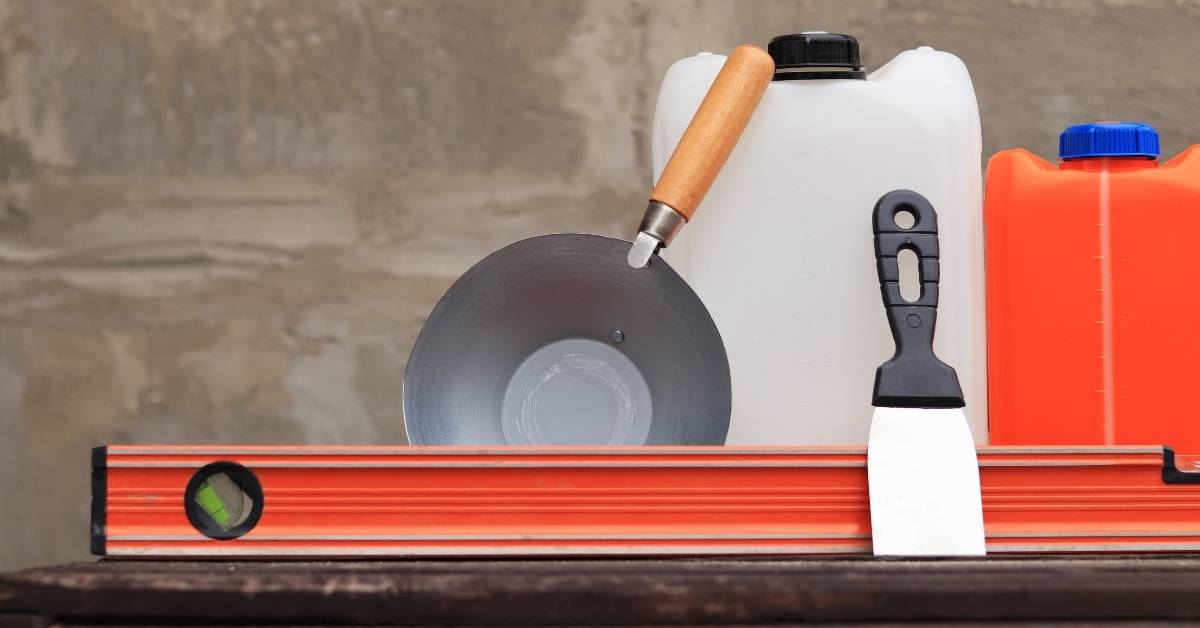
- Straight edge: Screed off excess plaster. 6ft level, $10-$30.
- Plasterer’s float: Smooth out finish. $10-$20.
- Lime-specific gauges/moisture meters: Optional for precise mix control. $50-$200 to buy or rent.
- Eye protection: Safety glasses, goggles. $5-$15. Protect from lime dust and splashes.
- Gloves: Disposable gloves, $5-$15 per box. Keep hands clean.
- Respirator/dust mask: Protect lungs from lime dust. Half-face respirator: $20-$50.
- Long sleeves/pants, sturdy footwear, knee pads: Prevent skin contact and protect joints.
Cost and labour trade-offs
Cheaper materials may save upfront but raise job costs. Know your trade-offs.
Quality plaster, tools, and PPE are investments. Cheap gear can break or cause errors, raising overall costs.
Labour’s another factor. Skilled applicators work faster, reducing labour costs. DIYers save on labour but may take longer.
Consider application limits too. Lower-quality plasters may require more coats, increasing labour and material costs.
Common mistakes and quick fixes
Avoid these pitfalls for a successful job.
- Incorrect gauging: Wrong mix ratios lead to poor workability. Test with ‘drop’ method: right mix holds shape, wrong mix slumps.
- Wrong substrate prep: Incompatible coatings must be removed. Pre-dampen walls to prevent suction issues.
- Overworking plaster: Over-mixing or over-working can cause it to break down and lose strength.
- Insufficient wet-on-wet working time: Rushing can lead to poor adhesion. Extend cure time if needed.
- Improper surface prep: Clean, dry surfaces are key. Remove any contaminants or loose material.
Catch mistakes early. Re-mix, adjust water, extend cure time, or re-apply skim coat as needed.
Conclusion
Gauging lime plaster correctly protects the wall, keeps the finish durable, and reduces costly mistakes. If you treat the mix and the set like a workflow you can control, you’ll see cleaner lines, steadier workability, and a substrate that breathes as it should.
First, verify your materials are compatible, then confirm your ratio math, mix with clean water, test on a scraps area for workability, adjust in small steps, monitor the set, prepare the substrate to breath and receive plaster, and finally check a real section under normal conditions before committing to a full pass. Keep the process steady and your eye on the clock and the moisture in the wall; a little patience now saves dozens of repairs later. safety matters at every stage, and you should test first in a hidden corner or small patch to confirm performance before scaling up.
Common mistakes to avoid are skipping substrate breathability or moisture control, using the wrong gauging ratios or skipping the set-control steps, and rushing the mixing or placement. Don’t ignore dust or skin exposure—wear a mask, gloves, and eye protection, and keep work areas tidy to prevent debris from spoiling the plaster. Do small trials, document what works, and never push a patch beyond what the surface can accept in a single session.
If you’re tackling a large area, dealing with damp or poorly prepared backing, or if the wall history includes previous lime work failures, it’s wise to bring in a professional rather than forcing a DIY patch. A measured approach now buys you long-term durability and a look you can be proud of. Stay deliberate, stay safe, and you’ll finish strong.
FAQ
What wall prep helps lime plaster bond and prevent cracks?
Clean and dampen the surface so it’s not dry and dusty. Remove loose material and roughen smooth faces where needed. Check that the substrate breathes and isn’t sealed with paint or plastic paint underlayers.
What are the main lime plaster ingredients and how do I choose ratios?
Lime putty, sand, and water are the basics, with optional pozzolanic or fiber additives depending on the mix. Exact ratios depend on the plaster type and job, so read the manufacturer instructions or product label for guidance. If unsure, test small batches and follow local recommendations.
Which lime plaster types should I consider (hemp, insulating, etc.)?
Hemp and insulating plasters mix lime with lightweight aggregates for better thermal performance. Traditional lime putty plasters suit older walls; skip the fancy mix only if the wall breathes and the climate suits it. Always confirm suitability with product labels and local advice.
What are the basic mixing and application steps I should follow?
Measure and mix per the product directions, then work the plaster onto the wall in coats that suit the substrate. Keep a consistent slip and don’t overwork it. If instructions aren’t clear, contact the manufacturer or check the datasheet before proceeding.