Introduction
Form ties are the hardware that holds concrete forms in place while the concrete cures. Snap ties, loop ties, and threaded rods are common types you’ll see on a DIY job site. Each type has its own way of behaving during and after the pour, so know what you’re using before you start.
Each type has its uses, pros, and cons, so choose based on the task, ease of removal, and the finish you want. As a hands‑on rule, follow the product label and manufacturer instructions, and check local rules for form work and safe work practices. Practice good installation, keep ties aligned, avoid over-tightening, and watch for shifting forms.
Key takeaways
- Snap ties simplify setup in fast projects but require precise alignment first.
- Loop ties offer adjustable spacing for pour walls and form overlaps during curing.
- Threaded rod provides rigid tie points for high-load sections and reusability.
- Safety warning: wear eye protection and gloves when removing or stressing ties.
- Check local codes and manufacturer guidance before choosing tie type for project.
- Costs and availability vary; evaluate reuse potential, material durability, and project scope.
Table of Contents
- Introduction
- Key takeaways
- Quick Definitions: Snap Ties, Loop Ties, and Threaded Rod
- Installation Methods, Tools and Visual Checkpoints
- Material Composition and Standards Explained
- Strength Comparison and Durability Factors
- DIY Use Cases and Project Examples (Small to Large)
- Cost, Availability and Cost-Benefit Analysis
- Safety Guidelines, Common Mistakes and Maintenance
- Environmental Impact, Recycling and Disposal Best Practices
- Conclusion
- FAQ
Quick Definitions: Snap Ties, Loop Ties, and Threaded Rod
Snap ties are simple plastic or nylon connectors that snap into the form face and hold forms apart while concrete cures. Their primary job is quick, disposable spacing and resisting outward pressure from the poured concrete. Typical components include the tie body, a knob or head, and a washer or clip that locks into place.
Loop ties use a continuous loop or hinged loop that anchors into the form and provides a flexible, reusable connection point. Their main function is to maintain spacing while allowing some reusability for lighter projects. Common hardware includes the loop assembly, reinforcing washers, and an optional nut or spacer for alignment.
Snap ties — what they are
Snap ties are temporary fasteners used in formwork to hold the forms together until concrete is poured. They’re called “snap” because they break off after use, making them easy to remove once the concrete has set.
You’ll find snap ties commonly used in vertical formwork like walls and columns. They come in various sizes, so check your project plans or the product label to ensure you’ve got the right ones for your job.
Never use them horizontally as they won’t hold up under pressure. For horizontal forms, use loop ties instead (see our section on those).
Loop ties — what they are
Loop ties are those flexible, wire-like things you see in concrete forms. Unlike snap ties, they don’t break off when the form’s removed.
Continuous-loop or reusable loop ties are just like regular loop ties, but with a twist. They’ve got a little hook at one end that lets you pull them out after the concrete’s set. No need to cut ’em out.
Here’s where they differ from snap ties:
Snap ties break off when you strip the form, leaving a bit of wire in the concrete. Loop ties? They stay put until you decide it’s time to remove them. And those reusable ones? You can pull ’em out and use ’em again.
Threaded rod — what it is
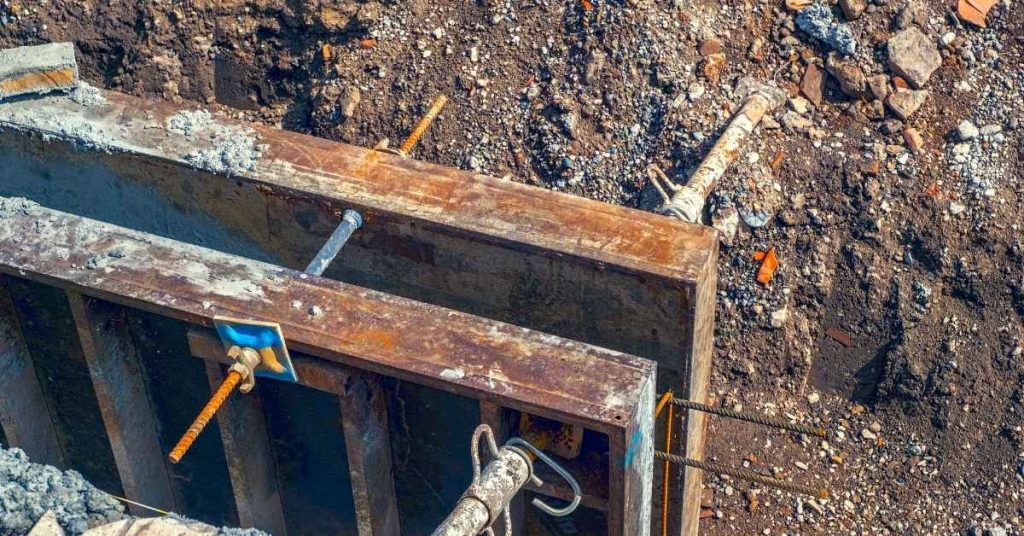
Threaded rod is a heavy-duty alternative to snap ties and loop ties. It’s a steel bar with threads cut into its surface, allowing it to be connected with nuts and washers.
Unlike snap ties that just click together, threaded rods provide a more secure connection by letting you adjust the tension. This makes them ideal for reinforcing concrete forms where strength is crucial.
Check your form design and local building codes to ensure threaded rod is suitable for your project. You’ll need to decide on the size (usually 3/8″ to 1/2″) based on your form’s requirements.
Installation Methods, Tools and Visual Checkpoints
Start with a clean, aligned form face and plan your tie spacing before pouring. For snap ties, place each tie at the desired offset and ensure the knob seats firmly. Loop ties require securing the loop ends and checking that the loop remains centered as you go.
Tools you’ll likely use include measuring tape, a level, and a simple string line; keep spare ties handy for quick swaps. Visual checkpoints focus on consistent height, even embedment depth, and no visible gaps that could channel grout or cause leaks.
Installation steps for snap, loop, and threaded-rod ties
Use this checklist to ensure correct installation of each tie type before pouring concrete.
- Mark anchor points: Use form layout or string lines to mark where ties will go. Ensure they align with rebar placement.
- Snap ties: Insert through form boards, snap into place, and secure with a hammer if needed. Space them 16-24″ apart for wall forms, 12-18″ for slabs.
- Loop ties: Thread through form boards, twist to secure, and space similarly as snap ties. Ensure loops face outwards for easy removal.
- Threaded rod: Insert through form boards, secure with nuts on both sides, and tighten. Space 12-18″ apart for most pours.
- Check spacing: Use a measuring tape to ensure ties are evenly spaced along the form.
- Adjust tie height: Ensure ties are level with the top of the form and protrude enough (2-3″) to embed in concrete.
- Avoid excessive tension: Don’t over-tighten threaded rod or damage ties. Excessive tension can cause forms to bow or break.
- Remove damaged ties: Inspect all ties for damage before pouring. Replace any broken or bent ties.
- Cleanup: After pouring, remove ties as soon as concrete has set enough (usually 24-72 hours).
Quick rule: Always inspect all ties before pouring to ensure they’re secure and correctly placed.
Tools and materials checklist
Use this list to gather necessary tools and materials for installing concrete form ties.
- Hand tools: Hammer, adjustable wrench, tape measure, level, string line.
- Safety gear: Safety glasses, work gloves, ear protection (for power tools).
- Fasteners: Snap ties, loop ties, threaded rod, nuts, washers.
- Consumables: Concrete form release agent, tie removal lubricant.
- Power tools (optional): Impact wrench for tightening threaded rod, drill with screwdriver bit for adjusting snap ties.
- Specialty items: Tie spacers, form alignment guides, rebar chairs.
Quick rule: Always have extra fasteners on hand. It’s better to have too many than not enough.
Visual checkpoints and common QC failures
Use this checklist to inspect form ties before pouring concrete and identify potential issues.
- Alignment: Check that ties are straight and aligned with rebar. Misaligned ties can cause weak spots in the concrete.
- Protrusion: Ensure ties protrude enough (2-3″) to embed in concrete. Insufficient protrusion can lead to tie failure during removal.
- Nut tightness: Check that nuts on threaded rod are securely tightened. Loose nuts can cause forms to shift or collapse.
- Damaged coatings: Inspect ties for damaged protective coatings. Damaged coatings can lead to rusting and tie failure.
- Excessive gap: Check that there’s no excessive gap between form boards at tie locations. Large gaps can cause concrete to leak or forms to shift.
- Form rigidity: Gently push on the form at tie locations. If it feels weak, add more ties or support as needed.
- Clearance for rebar: Ensure ties are far enough from rebar to avoid interference during pouring and setting.
Quick rule: Regularly inspect form ties throughout the pour process. Concrete can set quickly, so it’s important to catch issues early.
Material Composition and Standards Explained
Snap ties and loop ties commonly use durable polymers like nylon or polypropylene, chosen for ease of removal and concrete compatibility. Threaded rods are typically metal, with coatings that resist corrosion and cement exposure. Material choice affects strength, creep, and how cleanly forms release after stripping.
Look for coatings or markings that indicate environment suitability and compliance signals from the supplier. When buying, confirm the tie type matches your form system and verify diameter and length suitability for your project context.
Common materials and coatings (steel grades, plastics, galvanizing)
Choosing the right material for your form ties is crucial. It affects strength, durability, and compatibility with concrete.
- Mild Steel: Cheap but prone to corrosion. Use in dry indoor conditions only. Look for ‘mild steel’ or ‘CS’ marking.
- Stainless Steel: More expensive, resistant to corrosion. Ideal for outdoor use and moist environments. Look for ‘SS304’ or ‘SS316’.
- Galvanized Steel: Mild steel with zinc coating for corrosion protection. Suitable for indoor/outdoor use. Check for ‘galv.’ or ‘G90/G120’ marking.
- Nylon 6/6: Strong, lightweight, resistant to chemicals and UV. Ideal for snap ties. Look for ‘NYLON 6/6’ or ‘PA66’.
- Polypropylene (PP): Lightweight, flexible, good chemical resistance. Suitable for loop ties. Check for ‘PP’ marking.
Material specs and standards to verify
Checking material specifications ensures you’re using safe, compatible form ties.
- Tensile Strength: Look for this rating (e.g., ‘min. 400 MPa’) to ensure tie can handle load.
- Corrosion Resistance: Check if it meets ASTM A696 or EN ISO 12944 standards for outdoor use.
- UV Stability: For plastic ties, check if they meet ASTM D4355 or EN ISO 4892 standards for UV resistance.
- Cement Compatibility: Ensure tie doesn’t react with cement, causing staining or weak bond. Check manufacturer’s data.
- Supplier Certifications: Look for ISO 9001 or other quality certifications to ensure consistent product.
Strength Comparison and Durability Factors
Basic mechanical properties such as tensile and shear resistance give you an idea of performance across tie types. Real-world failures often relate to improper embedment, misalignment, or corrosion and wear from repeated use. Installation habits and form stiffness play a big role in overall strength during the pour.
Durability considerations include resistance to moisture, chemical exposure, and how well the tie materials hold up under stripping. Use practical decision criteria to choose based on expected loads, reuse potential, and ease of installation.
Strength comparison overview
When it comes to strength, snap ties, loop ties, and threaded rods each have their own tendencies.
Snap ties excel in tensile strength, making them ideal for heavy loads and long spans. They can handle more pull before breaking compared to loops or threads.
Loop ties are good all-rounders. They’re not as strong as snaps under pure tension but perform well in shear resistance, which is crucial when forms are subjected to lateral forces.
Threaded rods, on the other hand, shine in high-shear applications like retaining walls or bridge decks. Their pull-out capacity is impressive, but they may not handle pure tension as well as snaps.
Durability, corrosion resistance and lifecycle factors
The lifespan of your form ties depends on their material, coating, environment, and exposure. Here’s what to consider:
Galvanized or epoxy-coated ties offer corrosion resistance, extending their service life in harsh environments. Stainless steel is another option but comes at a higher cost.
Exposure to chemicals, moisture, and repeated loads can wear down ties over time. In such cases, choose ties designed for heavy-duty or industrial use.
Maintenance and replacement are key factors too. If you’re planning to reuse your forms often, go for ties that hold up well under stripping – like snaps or high-quality loops. But if it’s a one-time project, cost-effective threads might be your best bet.