

Introduction
Concrete polishing grit progression is the stepped use of abrasive grits to smooth and shine a concrete surface. In practice, you move from coarser grits to finer ones to minimize swirl marks and achieve a consistent look. A careful sequence helps you control the shine and avoid waviness as you work.
Choose the grit sequence based on the current surface and desired finish, and always follow the manufacturer’s instructions for equipment. Check local rules and safety considerations, and plan a methodical progression to avoid uneven patches. Have the right tools and test on a small area before committing to the whole floor.
Key takeaways
- Plan grit progression from coarse to fine to minimize sanding swirls
- Use consistent pad brands and backing, check for wear before each pass
- Maintain even machine pressure and speed to avoid wavy shine on edges
- Inspect for swirl marks early; rework affected areas with appropriate grit
- Safety: wear eye and respirator protection; manage dust with containment
- Plan project times and costs around drying, cure, and maintenance cycles
Table of Contents
- Introduction
- Key takeaways
- Why Grit Progression Matters for Concrete Polishing
- Understanding Wavy Shine and Swirl Marks on Polished Concrete
- Choosing Pads, Discs, and Machines for Consistent Progression
- Polishing Technique Essentials to Avoid Wavy Shine and Swirls
- Troubleshooting and Repairing Wavy Shine and Swirl Marks
- Safety, Prep, and Environmental Factors That Affect Results
- Project Planning: Time, Cost, and Maintenance for Durable, Consistent Shine
- Conclusion
- FAQ
Why Grit Progression Matters for Concrete Polishing
Progressive grits shape the surface by staged material removal and refinement, guiding the profile from rough to smooth in a controlled manner. Each phase contributes a distinct level of scratch depth and porosity reduction that influences how light interacts with the floor. Skipping steps disrupts this balance, increasing the likelihood of uneven reflection and visible defects under different lighting conditions.
A well-planned progression helps achieve a consistent optical sheen by aligning scratch patterns with the microtexture of the concrete. Early grits open the surface and erase deep scratches, while later grits close micro-porosity to reduce swirl and random abrasion lines. This disciplined approach also supports quality control, cleanliness, and reliable inspection cues before moving to the next stage, with practical checks and surface feel guiding progress and preventing cross-contamination between steps.
How abrasive stage changes surface texture
The first step in concrete polishing is to remove the initial material and scratches left by previous processes. This is done using coarse abrasives, typically starting at 16 or 20 grit.
As you progress through each grit stage (e.g., 30, 40, 50), the abrasive removes the scratches left by the previous stage. Each pass reduces the peak-to-valley contrast on the surface, making it flatter and smoother.
For instance, a 16 grit pad will remove deep scratches and open up the surface’s microtexture. A 30 grit pad refines this further by removing the scratches left by the 16 grit pad. This process continues until you reach the final polishing stage, usually around 800 or 1500 grit.
The “golden rule” for grit progression (conceptual)
When it comes to concrete polishing, there’s a simple yet crucial principle: remove all coarse scratches completely before moving on to finer abrasives.
This means that you should not skip any grit stages. For example, if you’re using 16, 30, and 50 grit pads, you must use each one in order, ensuring that all scratches from the previous stage are removed before moving up.
Always consult your pad or manufacturer’s guidance for the exact step spacing. Some may recommend going from 16 to 30 to 50, while others might suggest a different progression. The key is to follow their advice and not rush through stages.
Understanding Wavy Shine and Swirl Marks on Polished Concrete
Wavy shine describes irregular reflectivity across the slab, where brightness varies with direction and depth of the scratch pattern. Swirl marks are concentric or interlaced lines that disrupt a uniform finish, often following the path of prior tooling. Under directional lighting these flaws appear in distinct ways, revealing the underlying surface texture.
Mechanical causes include inconsistent pressure, worn pads, and incompatible motion type, while procedural factors involve skipped grit steps and improper densification or polishing cycles. Diagnostic checks involve testing a small area with a standard sequence and evaluating results under different light angles. When issues are found, adjust the progression, pad choice, and technique, and consider resealing after smoothing the surface to minimize directional irregularities.
What causes a wavy or inconsistent reflection
A ‘wavy’ shine on polished concrete is not about the surface being literally wavy, but rather an uneven reflection. This happens when material removal isn’t consistent across the slab.
Here’s what causes it:
Uneven Material Removal: Inconsistent grinding pressure or speed can lead to some areas being ground more than others, causing a variation in reflectivity.
Pad Wear and Patterning: Over time, pads wear out unevenly. If not replaced or rotated properly, they’ll leave patterns that show up as waviness under light.
How swirl marks form and how they differ from haze
Swirl marks are directional micro-scratches that run in the same direction as your grinding or polishing motion. They’re different from haze, which is a diffuse loss of clarity caused by tiny particles embedded in the surface.
Here’s why:
Directional Motion: Swirl marks form due to the rotating discs or pads moving in one direction. If the pressure or speed isn’t consistent, they’ll leave visible scratches.
Repair Methods Differ: While haze can often be removed with proper cleaning and polishing, swirl marks require more aggressive action like re-grinding or using a more abrasive grit to remove the scratched layer.
Choosing Pads, Discs, and Machines for Consistent Progression
Conventional diamond and resin-bond pads behave differently from coated abrasives in cut rate, heat generation, and finish quality, and these differences influence progression decisions. Pad hardness and bond type affect how aggressively the surface is opened and how well later grits can refine microtexture while avoiding gouging. Always verify that pad and disc labeling aligns with your machine and that supplier equivalents match your equipment’s requirements.
Guidance on progression is practical and direct: choose a sequence from coarse to fine that minimizes patterning, and confirm compatibility with your grinder or polisher before starting. Flatness checks and even coverage help you spot gaps or high spots early, preventing stubborn waviness. Use a quick compatibility test on a small area to validate a chosen pad/grit pair before committing to the full cycle.
Diamond pads vs resin/abrasive discs
When it comes to concrete polishing, you’ve got two main pad types: diamond and resin/abrasive. Each has its strengths and ideal uses.
Diamond Pads: These are your heavy hitters for fast stock removal. They’re great for rough surfaces and deep grinding. They’ve got a long life and consistent cut rate, but they’re pricier.
Resin/Abrasive Discs: These are more affordable and perfect for fine polishing and refining the surface. They give you that smooth, glossy finish. But they wear out quicker than diamonds and aren’t as aggressive on rough surfaces.
Here’s when to switch: Start with diamond pads to remove major imperfections. Once you’ve got a relatively flat surface, swap to resin/abrasive discs for the final polish.
Backer plates, drive systems, and machine speed considerations
The stiffness of your backer plate, how you mount your pads, and your machine’s speed all affect your final finish.
Backer Plates: Stiffer plates give deeper cuts but can leave more visible scratch patterns. Softer plates are gentler on the surface but may not remove as much material.
Drive Systems & Pad Mounting: Direct drive systems and properly mounted pads help minimize pad slippage, reducing swirl marks. Check your machine’s manual for correct mounting techniques.
Machine Speed (RPM/Linear): Slower speeds give deeper cuts but can cause more heat buildup. Faster speeds are gentler on the surface and reduce heat, but may not remove as much material. Always stay within your machine’s manufacturer-recommended speed limits.
Polishing Technique Essentials to Avoid Wavy Shine and Swirls
Consistent overlap and coverage are essential to avoid repeating scars and to promote even abrasion across the slab, starting with straight passes and moving to cross-cut patterns as the grit changes. Apply a measured amount of contact pressure, maintain steady tool speed, and ensure uniform dwell time to keep the surface from glazing or glazing more than intended. If heat builds or grit glaze occurs, adjust pressure and speed promptly to protect the profile.
Direction discipline and pattern sequencing matter: rotate or vary directions between grits and regularly recheck the area to prevent imprinting the previous grit’s pattern. Establish a regular visual check cadence after each step to catch waviness or uneven brightness early, and validate progression with a simple test panel before proceeding. Maintain tool and pad condition, and follow a safety and dust control routine throughout the process.
Machine handling: speed, pressure, and stroke patterns
Maintain steady machine speed for consistent abrasion. Too fast leaves marks, too slow causes unevenness.
Pressure: Keep it even across the pad. Too much creates divots, too little results in incomplete polishing.
Stroke patterns: Use overlapping passes or cross-hatching to ensure full coverage and avoid repeat scars.
Wet vs dry polishing and lubricant use
Dry: Pros: No mess, faster. Cons: More dust, heat buildup.
Wet: Pros: Dust control, cooler running. Cons: Slower, cleanup needed.
Lubricant: Enhances pad performance, prevents glazing. Use sparingly in dry method to minimize residue.
Visual checkpoints and simple tests during polishing
When: After each grit change or every 10-15 minutes.
- Directional light: Inspect for waviness, inconsistent brightness. Skip this: Risk missing issues until final reveal.
- Fingernail test: Scrape across surface to feel for rough spots. Skip this: Misses fine scratches, swirls.
- Test patches: Polish small areas with different grits. Skip this: Proceeding without validation risks wasting effort.
Quick rule: Pause and rework if any checks fail to avoid costly redo.
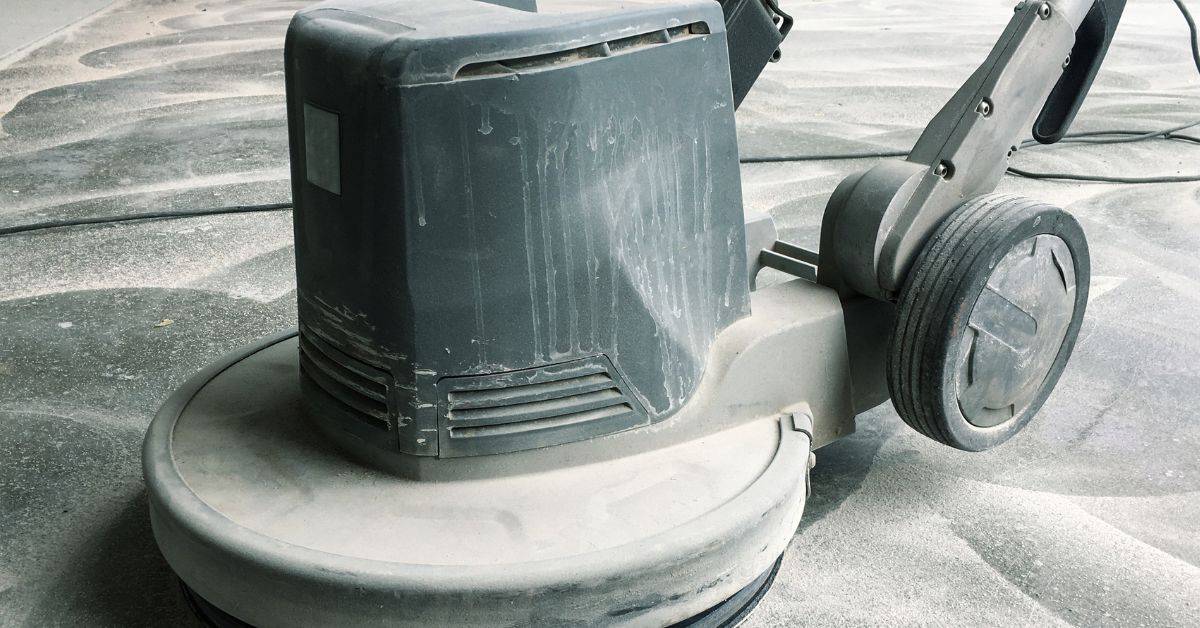
Troubleshooting and Repairing Wavy Shine and Swirl Marks
Begin by defining whether you are dealing with wavy shine or swirl marks and identify plausible causes such as grit contamination, improper progression, or heat buildup. Isolate affected zones to avoid cross-contamination while you test corrective steps on small patches. Use a stepwise approach that starts with the gentlest remedy and advances only as needed, with clear pass/fail criteria to guide decisions.
Document the testing process, including grit sequence, pressure, and number of passes, and compare to surrounding areas to gauge progress. Develop blending or thinning techniques to integrate repairs with the existing finish by feathering edges and maintaining consistent motion. Keep a thorough record of results to inform future projects and prevent repeat patterns from forming.
Fixes for localized swirl marks
Localized swirl marks are small, isolated defects that can be tackled with targeted approaches. The key is to avoid over-polishing and causing more damage.
Re-polish with intermediate grit pads: Start by re-polishing the affected area using a pad with an intermediate grit level between your current stage and the next one down. This helps to break up the swirl marks without removing too much material.
Reduce machine speed: Lowering the machine’s speed can help you maintain better control, allowing for more precise work on the affected area. Be sure not to apply too much pressure, as this could exacerbate the problem.
Use a lighter contact pad: Switching to a lighter contact pad can help blend out micro-scratches. These pads are designed to remove less material with each pass, allowing you to work more gently on the swirl marks.
Correcting large-area waviness or uneven sheen
When dealing with large areas of waviness or uneven sheen, it’s crucial to identify the cause before deciding on a corrective action. Both re-grinding and systematic re-polish passes can be effective, depending on the issue.
Re-grind to a coarser stage: If the waviness is due to improper initial grinding or substrate issues, you might need to re-grind the affected area using a coarser grit. This will help to even out the surface before proceeding with polishing.
Systematic re-polish passes: If the uneven sheen is due to inconsistent polishing, perform systematic re-polish passes using progressively finer grits. Start from the stage where you first noticed the inconsistency and work your way up.
Signs of substrate or flatness issues: If you notice deep scratches, pitting, or other signs of substrate problems, mechanical correction may be necessary before proceeding with polishing. This could involve using a floor grinder to level out the surface.
Safety, Prep, and Environmental Factors That Affect Results
PPE essentials include properly fitted respirators, eye and face protection, hearing protection, gloves, and protective clothing, with fit testing and seal checks as needed. Dust-control strategies should be matched to the job, using HEPA vacuums and wet methods where appropriate, and setting up containment to protect adjacent spaces. Follow local regulations for silica and dust control to minimize exposure risk.
Pre-job workspace preparation involves delineating zones, using barriers, planning ventilation, and performing dust-free cleaning to protect the finish, while environmental conditions such as humidity and airflow influence polishability and cure consistency. Equipment setup should include checks for machine condition and correct grit progressions, plus a clear shutdown and dust-collection maintenance plan to ensure safety and reliability.
PPE and dust-silica control best practices
Safety’s your top priority. Here’s what you need:
Respirator: Use an N95 or P100 respirator, or a PAPR if silica levels are high. Fit test and seal check before starting.
Eye Protection: Wear safety glasses with side shields to keep dust out.
Hearing Protection: Use earplugs or earmuffs to protect your hearing from grinding noise.
Gloves and Clothing: Wear gloves and long sleeves to protect your skin. A Tyvek suit can help contain dust.
Temperature, humidity, and substrate moisture considerations
Environmental conditions matter. Here’s why:
Temperature: Ideal slab temperature for polishing is between 60-80°F (15-27°C). Too cold or hot can affect adhesion of densifiers/sealers.
Humidity: Keep humidity below 60% to prevent dust throw and ensure consistent curing. Above 60%, consider using a dehumidifier.
Substrate Moisture: Check slab moisture content with a moisture meter before grinding/polishing. Ideal is 4-6%. Too high can cause delamination or inconsistent polishing.
Project Planning: Time, Cost, and Maintenance for Durable, Consistent Shine
Assess slab condition and project scope to determine how the grit progression may need adjustment, and set realistic final sheen targets while noting potential trouble spots. Establish a protocol for test areas to guide full-slab planning and document initial and intermediate results for reference. Use this information to manage expectations and plan the work sequence effectively.
Time budgeting and cost estimation should cover prep, grinding/polishing, and any cure or dry intervals, while accounting for dust control and possible rework. Plan for pads, diamonds, consumables, and storage needs, and consider rental versus purchase along with maintenance and PPE. Create a simple data sheet to log slab type, surface imperfections, grit sequence, final sheen, and lessons learned for repeatability on future projects.
Estimating time and labor and planning large jobs
Large concrete polishing projects require careful planning to avoid rushed passes that can lead to defects. Here’s how to break it down:
Divide into zones: Large slabs should be divided into manageable zones. This helps track progress, allows for staged quality checks, and prevents overwhelming yourself with the entire project at once.
Schedule drying and curing times: Concrete needs time to dry and cure between steps. Plan these intervals into your timeline. A general rule is 24-72 hours of drying time per grit stage before moving on to the next.
Perform staged quality checks: After each zone is completed, perform a quick visual check for any defects or inconsistencies. This allows you to correct any issues immediately rather than waiting until the entire project is done.
Budgeting supplies, rentals, and ROI considerations
Material choices significantly impact your final result and budget. Here are key cost factors to consider:
- Abrasive life: Higher-quality diamonds last longer but may have a higher upfront cost. Consider the area you’re polishing and choose accordingly.
- Densifiers and sealers: These enhance durability and shine, but they add to your budget. Choose based on desired final sheen and maintenance needs.
- Tool wear: Regularly inspect and replace worn tools to maintain quality and safety.
- Renting vs buying equipment: Rentals can save money for small projects, but purchasing may be more cost-effective for larger jobs. Consider the number of projects you plan to do in the future.
- ROI considerations: Polished concrete increases property value and reduces long-term maintenance costs. Factor these into your budgeting decisions.
Maintenance routines to preserve shine and prevent swirl formation
Regular maintenance is key to preserving the life and shine of your polished concrete. Here are some daily care tips:
Cleaning routine: Regularly clean the surface using a soft-bristled broom or vacuum to remove dirt and debris. For tougher stains, use a mild detergent and water solution.
Pad rotation: Rotate pads regularly to ensure even wear and tear. This helps maintain consistent polishing results and extends pad life.
Avoid abrasive contamination: Be cautious when using cleaning methods that could reintroduce swirl marks, such as steel wool or harsh chemicals. Always use soft materials and mild solutions to prevent damaging the surface.
Conclusion
Finish with a durable, even shine by sticking to a proven grit progression, testing small areas first, and keeping safety at the top of every step. The right sequence protects edges, avoids swirl and wavy shine, and saves you time and money in the long run.
Check the plan as you go: start with a coarser pad to level and expose aggregate, then move to progressively finer grits in the same pass pattern, clean between steps, verify flatness with a straightedge, and test a small patch under typical lighting before committing to the whole slab. Use the same machines and pad choices throughout, monitor noise and temperature, and stop to regroup if you see new waves, grit chatter, or dull spots. Finish with cleaning, sealing or penetrating sealer as recommended, and document your results for future projects.
Common mistakes to avoid are pushing ahead with too-fine grit on a rough surface, skipping cleaning between steps, and ignoring safety gear or ventilation. Always wear eye and respiratory protection, keep the work area dry and well-ventilated, and test on a hidden corner before full use. If you need a more predictable result, or the surface shows persistent waviness after repair attempts, it’s time to call a pro—rule of thumb: when in doubt, stop and ask for a fresh diagnostic room to avoid costly mistakes. Stay steady, plan smart, and you’ll finish with a polished concrete surface you can be proud of.
FAQ
What is concrete polishing and who is it for?
Concrete polishing is grinding the surface with progressively finer grits to expose aggregate and create a smooth, durable finish. It’s DIY-friendly if you keep it simple and follow safe steps. Start with a basic plan and know your area size to avoid chasing unfinished patches.
How do I choose grit progression for different stages?
Use a standard progression that moves from coarse to fine: you’ll remove scratches first, then refine. Check the pad and machine manufacturer recommendations for your setup. When in doubt, ask at a local supplier or read the label for guidance on your grit sequence.
What tools and supplies do I need to start polishing?
You’ll need a surface grinder or compatible floor polisher, a set of polishing pads or discs in multiple grits, a dust shroud, and basic PPE. Have a scrubber, a vacuum, and small patches of concrete repair materials on hand. Always verify compatibility with your machine and follow label instructions.
What is the step-by-step process to polish without wavy shine?
Start with a properly prepared surface and an even pass with the first coarse pad. Move to successive finer grits with flat, even pressure, keeping the pad flat to avoid flat spots. Finish with the recommended final polish step and inspect for consistency across the area. Check manufacturer instructions and local guidance if unsure about any step.