Introduction
Planning concrete joint layout around columns and corners is a critical step in preventing random cracks. But with so many tasks on your construction timeline, it’s essential to understand how long this process takes.
This guide walks you through each step of the process, providing a clear timeline to help you plan your project efficiently.
For the full guide, see Concrete Joint Layout Around Columns and Corners: Cutting Random Cracks Off at the Pass.
The Concrete Joint Layout Timeline: From Planning to Execution
Proper concrete joint layout around columns and corners requires careful planning and precise execution. Here’s a step-by-step timeline to guide you through the process:
- Planning (1-3 days): Begin by studying your project’s blueprints, determining joint locations, types, and patterns. Consult with local building codes and product labels for specific guidelines.
- Marking Joints (1 day): Once you’ve finalized your layout, mark the joint lines on the slab using a chalk line or similar tool. Ensure your marks are straight and evenly spaced.
- Preparing Tools and Materials (0.5-1 day): Gather all necessary tools, including saws, blades, safety gear, and any formwork required for control joints. Check that everything is in good working order before you begin.
- Sawing Joints (2-4 days): Start sawing when the concrete has reached the recommended strength for cutting. Work systematically, following your marked lines, and ensure cuts are straight and consistent. Allow time for blade changes and tool maintenance.
- Cleaning and Sealing (1 day): After all joints have been cut, clean them thoroughly to remove any debris or dust. Apply a suitable sealant to prevent water ingress and improve durability.
By following this timeline, you can effectively plan your concrete joint layout around columns and corners, minimizing random cracks and ensuring a durable, long-lasting structure.
Key takeaways
The planning phase of the joint layout process is crucial as it sets the foundation for the entire project. The time spent here will directly impact the overall schedule, so it’s essential to allocate sufficient time for this step.
- Plan joint layouts before pour to minimize random cracking near columns.
- Use appropriate joint types near corners to control crack paths.
- Wear PPE and follow tool safety when sawing cuts near edges.
- Detail footings, slab edges, and column pockets to align joints.
- Coordinate reinforcement, dowels, and load transfer near joints during pours.
- Follow sequence and site checks to reduce cracking and rework.
Table of Contents
- Introduction
- Key takeaways
- Why Random Cracks Form Near Columns and Corners
- Joint Types and Their Roles Around Columns and Corners
- Design Principles for Joint Layout Close to Columns and Corners
- Sawing Timing and Technique to “Cut Cracks Off at the Pass”
- Detailing Joints at Columns, Footings, and Slab Corners
- Reinforcement, Dowels and Load Transfer Close to Joints
- Construction Best Practices and Sequencing to Minimize Cracking
- Tools and Materials Checklist and Visual Checkpoints for on-Site Crews
- Conclusion
- FAQ
Why Random Cracks Form Near Columns and Corners
Columns and outside corners concentrate restraint where the slab is tied to stiff elements, so tensile stresses build locally as the concrete shrinks or temperature changes. These concentrated stresses find the weakest path and produce random cracking if not relieved properly.
Differential movement between the slab and column or adjacent pours multiplies the problem, and abrupt changes in stiffness or thickness raise stress concentrations. Check reinforcement layout, connection details, and any product data that affect shrinkage or movement to confirm how much restraint to expect.
Restraint and stress concentration at fixed points
Columns, pedestals, and rigid corners are like anchors for your concrete. They don’t move much, even when the concrete around them wants to.
Fresh concrete is like a liquid, it flows and settles. But once it starts to harden, it can’t flow anymore. If it’s restrained by these fixed points, the tension builds up, like pulling on a rubber band until it snaps.
This tension is strongest at the edges of these fixed points – that’s why you see cracks starting there. It’s like the concrete is trying to escape from being held back.
Early-age shrinkage and thermal movement
Concrete shrinks as it dries, that’s just how it works. And when the temperature drops, concrete contracts too. These movements can cause cracks if they’re not managed right.
The timing of these movements matters. If the concrete is still wet and soft, it can stretch a bit to accommodate these movements. But once it hardens, it can’t stretch anymore, so it cracks instead.
That’s why proper curing is crucial. It helps control how fast the concrete dries and shrinks. And it gives the concrete time to gain strength before these movements start happening.
Load and construction causes
Construction is tough on concrete. Trades traffic, heavy equipment, even just walking on fresh concrete can cause cracks if the concrete isn’t strong enough yet.
Transient loads – that’s fancy talk for temporary loads like scaffolding or falsework – can also cause problems. They put extra stress on the concrete before it’s ready to handle it.
Improper finishing and curing can escalate cracking risk too. If the surface dries too fast, or isn’t properly finished, it can’t hold up under these loads and movements.
Joint Types and Their Roles Around Columns and Corners
Contraction (control) joints are intended to create a planned crack path through the slab, while isolation joints separate the slab from columns, walls, and footings to prevent stress transfer. Construction joints mark pour breaks and can be designed to either transfer load or allow movement depending on how they are detailed.
Around columns and corners you usually need isolation joints plus properly placed contraction joints; confirm joint material and depth with the manufacturer’s instructions or project specs to ensure the joint will perform. If load transfer is required through a construction joint, verify dowel or reinforcement details before proceeding.
Contraction (Control) Joints: Sawn vs Formed
Control joints help manage early-age shrinkage and thermal movement. Near columns, they’re crucial to prevent random cracks.
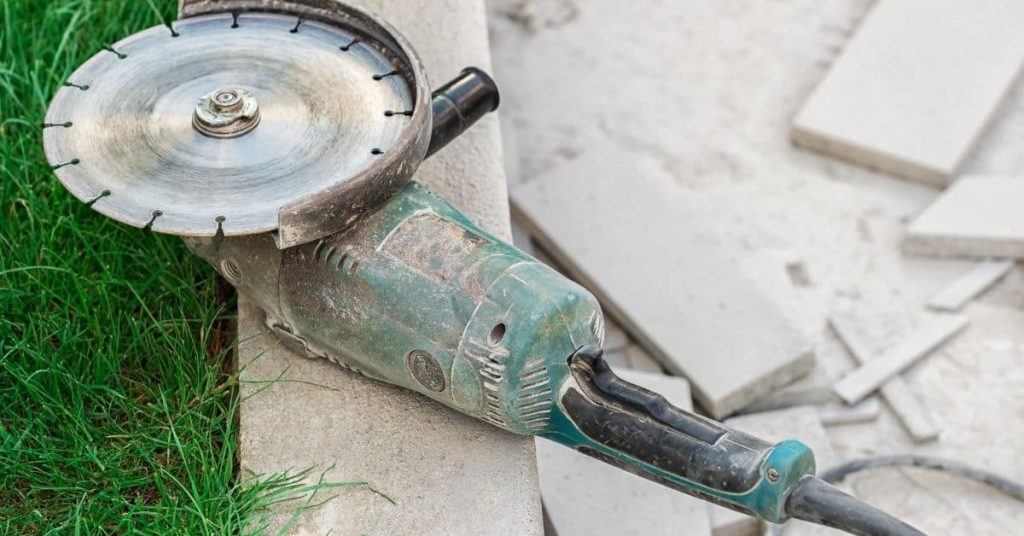
Sawn joints are cut after concrete placement using a saw with a diamond blade. They’re quick and easy but can create dust and noise.
Formed joints use removable strips placed before pouring. They’re cleaner, quieter, but require extra formwork setup. Use sawn joints where restraint is high, like near columns. For less restrained areas, formed joints are better.
Isolation/Expansion Joints and Compression Seals
Isolation joints let structures move independently. At columns, they prevent stress transfer from the main slab to the column.
Use compressible inserts like closed-cell foam or neoprene in these joints. They compress under load, allowing movement while maintaining a seal against water and debris.
Install isolation joints where columns meet slabs or walls. Use compression seals to maintain a watertight barrier.
Construction Joints, Keyed Joints, and Dowel Detail
Construction joints divide concrete pours. Near columns, they must maintain load transfer and prevent random cracks.
Keyed joints use interlocking shapes to connect two pours. They’re strong but complex to form.
Dowel detail uses steel bars (dowels) placed in the first pour, protruding into the second. Dowels maintain load transfer and allow some movement, preventing cracks. Use dowel detail near columns for best results.
Design Principles for Joint Layout Close to Columns and Corners
Keep joint lines continuous and aligned so contraction joints create unbroken paths for shrinkage stresses to follow away from columns and corners. Avoid letting joint patterns terminate at a stiff element where restraint will concentrate; instead extend or wrap joints to isolate the element.
Minimize restrained slab zones by spacing joints so no panel is overly large, and coordinate joint layout with column grid and openings to prevent small awkward panels. Review structural drawings and product guidance to decide exact spacing and whether additional isolation is needed at a particular detail.
Aligning joints with structural elements and openings
When laying out your concrete joint pattern, it’s crucial to align them with key structural elements. This helps create predictable crack paths and reduces the risk of random cracking.
Columns are natural stress points. Aligning joints with columns allows cracks to form where they’re least visible and cause minimal damage. It also helps control where reinforcement will be placed.
Similarly, align joints with trenches, changes in slab thickness, or other openings. This helps manage the movement of the concrete as it dries and shrinks.
Reducing restraint: radial and modified grid patterns
Columns and corners create restraint zones where concrete can’t move freely. This causes stress concentrations, leading to cracking.
To relieve this stress, use specialized joint layouts around these areas:
Radial patterns around columns allow the concrete to expand and contract evenly in all directions. L-shaped or shortened panels at corners reduce the length of joints, minimizing restraint.
Sizing and spacing principles (what to verify)
Proper joint sizing and spacing is vital for controlling cracking. Follow these guidelines:
1. Spacing: ACI 302R recommends a maximum spacing of 3 times the slab thickness for interior joints, and 2 times the thickness for edges. However, this can vary based on local codes and conditions.
2. Verification: Slab thickness, subgrade variability, and finishing methods all affect joint spacing. Always verify with ACI standards and consult a structural engineer for specific projects.
Sawing Timing and Technique to “Cut Cracks Off at the Pass”
Early sawing of contraction joints should be timed so the cut is made after the concrete has gained enough strength to support the saw but before random cracking starts. That window varies with mix, temperature, and wind, so confirm sawing times from the supplier or mix data sheet rather than assuming a fixed interval.
Use a sharp blade, steady travel speed, and the correct cut depth to create an effective weak plane; if traffic or curing methods change, adjust the timing and sequence accordingly. Coordinate with curing and finishing crews so sawing and protection happen in the right order on each panel.
Early-entry vs conventional sawing: choosing the right approach
Timing your concrete cuts is crucial to prevent random cracks. You’ve got two main approaches: early-entry and conventional sawing.
Early-entry: This involves cutting before the concrete has fully set, usually within 12-24 hours. It’s ideal for hot weather or fast-setting mixes where you want to control cracking right away.
Conventional: Here, you wait until the concrete is hard enough to cut without crumbling, typically around 24-72 hours after pouring. This method works well in cooler temps or with slower-setting mixes.
Saw depth, blade selection, and cut profile (what to check)
Before you start sawing, ensure your cuts are deep enough, use the right blade, and create the desired profile. Here’s a quick checklist:
- Cut depth: Aim for 1/4 to 1/3 of slab thickness. Too shallow may not control cracks; too deep weakens the slab.
- Blade type: Use diamond blades designed for concrete. Regular masonry blades won’t last as long and can cause excessive dust.
- Cut profile: For contraction joints, aim for a ‘V’ or ‘U’ shape to help water drainage and prevent edge chipping.
- Blade size: Match blade diameter to your saw’s capacity. Using an oversized blade can cause vibration and poor cuts.
- Tooth spacing: Tight tooth spacing reduces dust but increases cutting time; wider spacing is faster but produces more dust.
- Blade segments: More segments mean smoother cuts, fewer segments are faster but produce more vibration.
- Sawing direction: Saw in one pass, following the joint layout. Back-and-forth sawing can cause excessive heat and poor cuts.
- Water supply: Ensure a steady water supply to keep blades cool and reduce dust.
Quick rule: Always follow manufacturer guidelines for your specific blade and concrete mix.
Practical sequencing for cutting around columns and corners
Sawing joints in the right order helps prevent random cracks. Here’s a practical sequence:
Step 1: Perimeter cuts first. Start at the edges, working your way inward. This helps relieve stress buildup along the perimeter.
Step 2: Column-adjacent cuts next. After doing the perimeters, move to cuts near columns. This reduces restraint and prevents cracks from forming at these high-stress areas.
Step 3: Interior cuts last. Finally, saw any remaining interior joints. By following this sequence, you’re staging your cuts to prevent uncontrolled cracking.

Detailing Joints at Columns, Footings, and Slab Corners
Isolation joints at columns and footings must fully separate the slab so shear and tensile stresses don’t transfer into the stiff element; that usually means continuous joint material full depth of the slab. At outside corners, extend isolation and contraction joints beyond the corner or use a return to prevent stress concentrations at the tip.
Seal joints where moisture or debris could compromise performance, and verify recommended joint filler and sealant types on the product label or manufacturer’s instructions. Place and compact joint material carefully during forming so it remains in position during the pour and finishing operations.
Isolation materials and placement around column bases
Choosing the right isolation material at column bases is crucial to prevent stress transfer between the column and slab. The wrong material can lead to cracking, staining, or weak bond.
- Compressible filler: Use closed-cell foam or similar materials with a compression strength of 50-100 psi. Look for products rated for concrete use. Avoid open-cell foams that absorb water and lose their compressibility.
- Collars: Use neoprene or rubber collars designed for concrete isolation. Check the durometer rating (40-60 Shore A) to ensure they’re flexible enough to accommodate movement.
- Sleeve types: Use plastic or fiber sleeves with a smooth surface to prevent bond. Avoid metal sleeves that can rust and cause staining.
- Placement: Install isolation materials continuously around the column base, extending at least 2 inches up from the slab. Ensure they’re well-seated before pouring.
- Maintain continuity: Keep the isolation material intact during construction. Use temporary supports if needed to prevent damage.
Column collars, sleeves and service penetrations
Proper detailing around service penetrations and anchor bolts ensures joint continuity and prevents stress concentrations.
Sleeves: Use plastic or fiber sleeves with a smooth surface. Size them to fit tightly around the pipe, but allow for thermal expansion. Seal the gap between the sleeve and pipe with a flexible sealant.
Penetrations: Cut slots in the isolation material for pipes and bolts. Ensure they’re wide enough to accommodate movement without binding. Backfill behind sleeves and bolts with a compressible material like closed-cell foam.
Avoid: Do not use metal sleeves or fill gaps with rigid materials that can’t accommodate movement. This can lead to stress concentrations and cracking.
Corner treatments: chamfers, cutbacks, and mini-panels
Proper corner detailing reduces stress concentrations, prevents chipping, and improves the overall appearance of your concrete.
Chamfers: Cut 45-degree or rounded chamfers at corners to distribute stress evenly. This reduces the risk of chipping and cracking at sharp corners.
Cutbacks: Shorten joints at corners by about half their normal width. This allows for slight movement without opening up the joint too much.
Mini-panels: Use small, isolated panels at corners to further reduce stress concentrations. These can be formed with a small expansion joint around them.
Reinforcement, Dowels and Load Transfer Close to Joints
Reinforcing bars and welded wire should be detailed so they don’t unintentionally bridge contraction joints and negate their function; limiter bars or cuts in reinforcement may be needed. Dowels at construction joints should permit load transfer without creating restraint that ties the slab to a column or footing when movement must occur.
Confirm reinforcement laps, bar locations, and dowel details with the structural drawings or designer instructions before placing steel. If you’re unsure whether reinforcement will restrict movement at a particular joint, ask the engineer for a clarification to avoid creating an unintended restraint point.
When and how to use dowels for load transfer
Dowels are crucial near columns where loads need transferring between old and new concrete. Use them when:
1. The joint is within 24 inches of a column face.
2. The slab or footing needs to bear on the column.
Isolate dowels from contraction joints using plastic or steel spacers. This prevents cracks from initiating at the joint and migrating into the column.
Reinforcement placement to control crack widths
Proper reinforcement helps control crack widths, maintaining structural integrity. Here’s how:
1. Use #4 or #5 rebar at 6″-8″ centers in the top and bottom of slabs.
2. Place mesh or welded wire fabric between these layers for additional support.
Avoid continuous reinforcement across contraction joints unless designed as load-bearing. This allows concrete to shrink and expand freely, preventing excessive cracking.
Avoiding unintended restraint from tied reinforcement
Improper detailing can turn planned joints into restrained locations. Avoid these common mistakes:
- Continuous bars: They prevent concrete from shrinking and expanding, leading to excessive cracking.
- Improper ties: Ties too close to the joint can restrain movement, causing unwanted stress.
- Tied reinforcement crossing joints: This can cause restraint if not properly detailed with isolation material or cut-off bars.
- Lack of proper spacing: Bars too close together can lead to excessive cracking due to restrained shrinkage.
Always follow your engineer’s specifications and use common sense. If in doubt, consult a professional.
Construction Best Practices and Sequencing to Minimize Cracking
Prepare and compact the subgrade uniformly, control slab thickness, and follow consistent moisture and curing practices to reduce differential shrinkage and restraint. Coordinate placement, finishing, sawing, and curing so each panel is handled in the same sequence and timing to avoid early or uneven drying that causes stress concentrations.
Keep trades informed about joint locations and timing so inserts, column bases, and penetrations are installed without interfering with joint function. If any site condition forces a deviation from the plan, check manufacturer guidance or consult the engineer to decide a safe adjustment.
Subgrade and vapor control checks before pouring
The subgrade is the foundation of your concrete pour. Before you start, make sure it’s well-compacted to prevent settlement that could lead to cracking at columns and corners.
Check for proper drainage too. Water under the slab can cause problems later on. If needed, install a drainage system or slope the subgrade slightly.
Don’t forget about vapor control. A good vapor retarder will stop moisture from coming up through the slab and causing issues with your concrete. Make sure it’s properly installed before you pour.
Uneven support from a poorly prepared subgrade can cause differential settlement, leading to increased cracking risk at corners and around columns.
Curing, protection, and finishing methods that help joints perform
Proper curing is crucial for your concrete to gain strength and reduce cracking. Keep the surface moist and cool during the first few days after pouring.
Use a cure-and-seal or other protective coating once the concrete has set. This will help prevent moisture loss and keep the joint from drying out too quickly, which can cause early-age shrinkage cracks.
Timing is key with finishing too. Don’t finish the slab until it’s ready to avoid leaving joints unprotected. Use a bullfloat or other suitable tool to strike off the surface and leave a slight crown for drainage.
Early-age shrinkage can lead to cracking if concrete dries out too quickly. Proper curing and protection help joints perform as designed by allowing them to move slightly without cracking.
Site sequencing and trade coordination around critical details
Good site management can prevent many cracking issues. Make sure all trades know when they need to be on-site for their part of the job.
Before pouring, ensure that any isolation inserts or joint formwork are properly installed. Late trades should not be damaging these critical components.
Have a clear checklist for each trade. This will help prevent mistakes and keep everyone on schedule. For example, make sure plumbing and electrical work is done before the slab is poured.
Proper sequencing and coordination among trades can prevent damage to joint formwork or isolation inserts, reducing the risk of cracking at columns and corners.
Tools and Materials Checklist and Visual Checkpoints for on-Site Crews
Have on site: saws with appropriate blades, jointing tools, joint filler and sealant materials, isolation strips, and reinforcement placement tools; inspect blades and consumables before each panel. Include visual checkpoints for joint depth, continuity, and isolation around columns and corners during and after finishing.
Keep a copy of manufacturer instructions and project joint layouts on site to resolve questions quickly, and verify material compatibility if substitutions are proposed. If you see joints that are too shallow, discontinuous, or bridged by reinforcement, stop and address the deficiency before proceeding with finishing or curing.
Tools and materials checklist (saws, inserts, joint fillers)
Before you start laying out your joints, make sure you have all the right tools and materials on site. This checklist will help you stay prepared.
- Handheld Concrete Saw: For cutting control joints. Check blades for wear and tear.
- Diamond Blades: Ensure they’re in good condition and suitable for your saw’s power.
- Joint Inserts: Have the right size and type for your joint width and design.
- Joint Filler: Check that it’s compatible with your insert type and climate.
- Tape Measure: For accurate marking of joint locations.
- Chalk Line: For snapping straight lines for cutting.
- Safety Gear: Include safety glasses, ear protection, and dust mask.
- Manufacturer’s Instructions: Have them on hand to confirm proper use and storage of tools and materials.
Quick rule: Always check manufacturer’s instructions for specific tool and material usage.
Visual checkpoints and inspection checklist before pour and before sawing
Before pouring concrete and cutting joints, perform these visual checks to ensure a crack-free finish.
- Isolation Continuity: Check that isolation materials around columns are continuous and undamaged. Missing or damaged isolation can cause random cracks.
- Dowel Alignment: Ensure dowels are properly aligned for load transfer. Misaligned dowels can lead to cracking.
- Slab Elevations: Verify slab elevations are correct and consistent. Inconsistencies can cause stress and cracking.
- Reinforcement Cover: Check that reinforcement is properly covered. Inadequate cover can cause corrosion and cracking.
- Formwork Alignment: Ensure formwork is straight and aligned. Misaligned forms can lead to cracks in the slab.
Quick rule: Always inspect before pouring and cutting to prevent random cracks.
Common failure modes and what to look for in the field
Knowing common failure modes can help you catch issues early. Here’s what to look for:
- Bridging Reinforcement: Check for reinforcement crossing joints without proper dowels or other load transfer devices. This can cause cracking.
- Missing Isolation: Look for gaps in isolation materials around columns. Missing isolation can lead to random cracks.
- Premature Surface Drying: Ensure the surface isn’t drying too quickly, which can cause shrinkage cracks. Check curing methods and weather conditions.
- Cracking at Corners: Inspect corners for signs of cracking. This could indicate improper corner treatment or inadequate reinforcement.
Quick rule: Regularly inspect your work to catch and fix issues early.
Conclusion
Concrete cracks around columns and corners are predictable, but they don’t have to ruin durability or look. Stay focused on the joints, time your cuts, and follow a simple sequence so the crack paths stay controlled and the slab transfers load properly.
Begin with a practical routine: inspect the area for existing cracks, confirm joint layouts near columns and corners, plan the saw cuts and dowel placements, clear the work area, set your saws and dust control, and then execute the cuts and seal the joints in the correct order, checking as you go for clean edges, proper depth, and no rebar interference. Maintain safe practices at every step, test a small patch first, and don’t rush through margins or corners where errors are costly.
Two common mistakes to avoid are cutting too late or too shallow, which lets cracks propagate and tissue away from the joint, and neglecting proper load transfer near joints, which shifts stress to adjacent areas. Always wear eye and ear protection, secure the work area, and verify you’re following the planned joint types and timing—if anything feels off, pause and reassess rather than forcing a fix. When in doubt about complex details near footings, dowels, or heavy reinforcement, call in a professional rather than risking irreversible damage, and keep the project moving with a clear, safety-first plan. You’ve got this—stick to the plan, verify each step, and you’ll finish with solid joints, a clean look, and long-lasting performance.
FAQ
How do I decide the right joint spacing and layout close to columns and corners?
Follow the project specifics on the product label or manufacturer instructions. If in doubt, check local rules and use the layout plan you already prepared. Don’t guess on spacing—verify with the guidance you have.
When is the right time to saw or cut joints near columns and corners?
Let the concrete set to a workable stage, but don’t wait so long you miss the control window. Check the product instructions for timing and the hardness you should target before cutting. If in doubt, test a small area first and adjust.
Can I retrofit joints after the slab is already poured and cured?
Saw cuts are possible, but it’s harder and may not be as effective. Follow the saw cutter’s guidance and wear dust control, then seal or finish per manufacturer directions. If the surface is already too hard, consider alternatives only after checking instructions.
What should I do if I see cracking forming near columns or corners before joints are laid out?
Don’t panic, but don’t rely on the cracks to be the control joints. Stabilize the area and plan the joint layout per the approved plan and manufacturer instructions. If needed, consult the product guidance or local rules before proceeding.

