
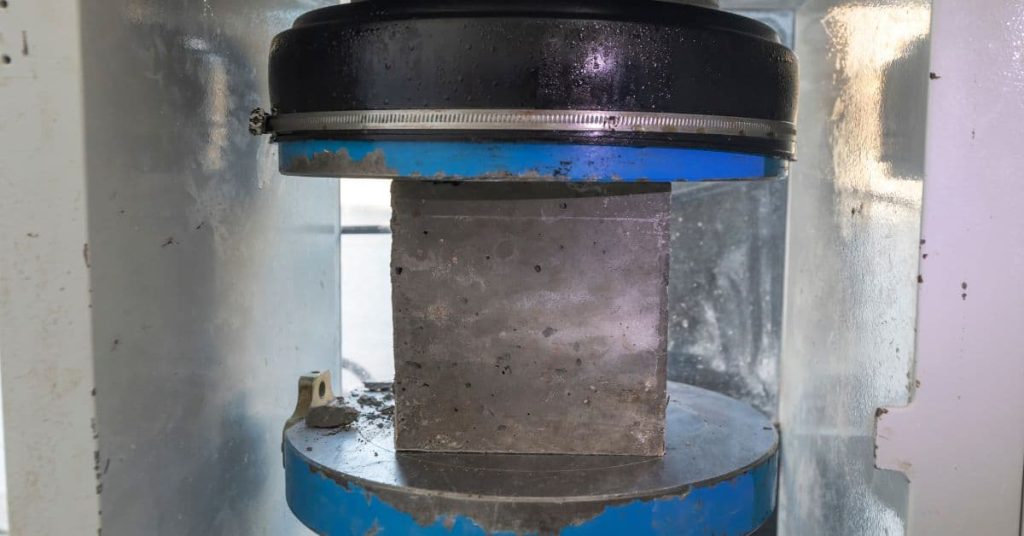
You cannot assume concrete admixtures and additives are compatible just because each product works on its own. Verify the exact base mix, products, dosages, addition sequence, temperature range, and planned finish in current manufacturer information; ask technical support about the complete combination; then run and document a representative trial batch before the main pour.
This is especially worthwhile when a project combines a water reducer, accelerator or retarder, integral pigment, fibers, water-repellent admixture, bonding product, curing compound, or later-applied sealer. On a small project, one unexpected change in set, air, workability, color, or finishing behavior can turn a manageable pour into wasted material.
A successful trial is useful evidence for the conditions tested, not a universal approval. It does not prove compressive strength, durability, air content, permeability, code compliance, or performance in substantially different weather. For structural, reinforced, permit-controlled, or specification-controlled work, do not improvise a blend; involve the designer, ready-mix supplier, or product manufacturer as appropriate.
Key Takeaways
- Treat every exact product combination as unproven until it has written manufacturer support and a job-like trial batch.
- First identify whether each product belongs in fresh concrete at all; many sealers and surface treatments do not.
- Record the exact base mix, water source, dosage basis, addition order, mixing method, temperature, and intended finish.
- Use a control sample without the questioned combination whenever practical, and change only one variable per comparison.
- Watch the entire process: mixing, placement, finishing, early hardening, curing, and any planned coating or sealer adhesion.
- Never use extra water or an unverified “rescue” admixture to make a failed trial seem workable.
- Stop and seek technical guidance if setting, foam, segregation, color, surface condition, or coating compatibility is unexpected.
ToC
- The Short Answer: Treat Every Product Combination as Unproven Until It Passes a Trial
- First Diagnose the Plan: Is This an Admixture Trial or a Product-Use Mismatch?
- Build a One-Page Compatibility File Before Buying or Mixing
- Small-Pour Trial-Batch Checklist: Set Up a Representative, Controlled Test
- Run the Trial and Observe the Points That Reveal Incompatibility
- Interpret the Results: Go, Revise, or Stop
- Main-Pour Readiness Checklist and Failure-Prevention Plan
- Trial-Batch Log Template and Questions for Technical Support
The Short Answer: Treat Every Product Combination as Unproven Until It Passes a Trial
Concrete additions interact through more than their labels suggest. A water reducer may change the feel of a mix that also contains pigment and fibers. An accelerator or retarder can behave differently with a particular cementitious blend, temperature, water content, or mixing duration. Fibers can alter placement and finishing even when they are evenly dispersed. A curing compound or sealer may create a separate compatibility issue after the concrete is placed.
Variables that can change the result include the base mix, actual water added, dosage, order of addition, mixer type, mixing energy, material temperature, air temperature, direct sun, wind, elapsed time before placement, and finishing method. The same named product can therefore behave differently in a different bagged mix, with a different pigment color, or on a hotter day.
The conservative rule is simple: if instructions conflict, the manufacturer has not confirmed the combination, or the work has structural or specification requirements, do not make up a recipe. A passed trial only supports the precise combination and conditions you tested. It does not automatically carry over to another brand, another base mix, a different dosage, or a future pour in different weather.
First Diagnose the Plan: Is This an Admixture Trial or a Product-Use Mismatch?
Before testing compatibility, make sure the products are meant to be used in the same stage of the work. Some problems described as “admixture incompatibility” are really attempts to put a product in the wrong place.
| Product category | Typical role | Question to resolve before trialing |
|---|---|---|
| Integral admixture | Added to fresh concrete under its label directions | Is it approved for this exact concrete mix and with the other proposed additions? |
| Fiber reinforcement | Mixed into fresh concrete or mortar as specified | Is the fiber type and format suitable for the mix, placement thickness, and planned finish? |
| Dry integral color | Mixed through the concrete | Does the color supplier identify restrictions involving water reducers, accelerators, fibers, or curing products? |
| Color hardener or release | Applied at the surface during decorative finishing | Does it fit the planned finish sequence rather than the fresh-mix formulation? |
| Bonding agent | Used at an interface or in a specified repair system | Is it intended for that substrate, repair material, and exposure? |
| Curing compound or sealer | Applied after placement or curing, depending on the product | Will it interfere with later coatings, stains, adhesives, or a separate sealer? |
In particular, do not add a topical concrete sealer to fresh concrete unless its manufacturer explicitly identifies that product for integral use. Likewise, a surface-applied decorative product should not be treated as an ingredient in the batch merely because it is sold for concrete work.
Separate your questions into stages: fresh-concrete behavior, finishing and appearance, bond to an existing substrate, curing, and later coating or sealer adhesion. This prevents a good fresh-mix trial from being mistaken for proof that a later sealer will bond correctly.
Also ask what problem you are actually trying to solve. If the goal is workability, faster set, slower set, color, crack control, water resistance, or bond, several added products may be masking a basic issue: the wrong bagged mix, unsuitable placement weather, a weak scheduling plan, poor drainage, or an incompatible finishing sequence. Fibers are not a substitute for required reinforcing steel, welded wire reinforcement, jointing, or engineered crack-control design. An integral water-repellent product does not eliminate drainage, curing, joints, or a compatible surface treatment.
When to stop and escalate
Do not rely on a DIY compatibility trial alone for footings, reinforced slabs, retaining work, structural repairs, freeze-thaw-exposed concrete, potable-water applications, chemical-exposure areas, or any project governed by a permit, engineered drawing, or written specification. Cosmetic work such as a small nonstructural garden ornament or test paver has a different risk level than a slab supporting a vehicle, a step, or a structural element. When failure could affect safety, serviceability, or a required inspection, obtain project-specific direction.
Build a One-Page Compatibility File Before Buying or Mixing
A short, precise record makes the trial repeatable and gives technical support the information needed to answer a real compatibility question. Do this before opening containers or purchasing substitutes.
- Identify the base material exactly. Record the bagged concrete mix name and product code, or list the site-batched cement, aggregate, sand, and any supplementary cementitious materials if known. A product answer for one base mix may not apply to another.
- List every addition. Write the manufacturer, complete product name, product version, and lot or batch information where available. Include products that appear later in the process, such as a curing compound, stain, bonding agent, or sealer.
- Copy, do not invent, the limits. From current technical data sheets and labels, note stated dosage ranges, addition directions, temperature limitations, water restrictions, cleaning requirements, and explicit incompatibilities. Do not combine separate maximum dosages into a made-up “safe total.”
- Describe job conditions. Note expected air and material temperature, sun and wind exposure, water source, mixer or mixing method, likely waiting time, placement thickness, forms or substrate, and the desired finish.
- Ask about the complete system. Contact the manufacturer or local technical representative with the whole list. Asking whether an accelerator is “good for concrete” is not the same as asking whether it is compatible with a named bagged mix, a named pigment, a named fiber, and a particular curing system.
- Set acceptance criteria in advance. Define what acceptable looks like for this job: placement without extra water, a workable time window, manageable finishing, uniform color, distributed fibers, no unusual foam or segregation, and no conflict with curing or planned surface treatment.
Use current documents, not an old screenshot or an unverified retailer description. Supplier experience can be helpful, but for critical work it should not replace written manufacturer guidance. Save emails, chat transcripts, or technical bulletins with the project records.
Small-Pour Trial-Batch Checklist: Set Up a Representative, Controlled Test
The purpose of a trial is not to teach basic concrete mixing or to use up leftover chemicals. It is to recreate the proposed process closely enough to expose obvious fresh-concrete and finishability conflicts before the main pour. If you need help establishing a uniform base batch first, review how to mix concrete basics before attempting a compatibility comparison.
- Use the same base mix, water source, tools, mixer or mixing method, planned additions, addition sequence, and finishing tools intended for the actual work as far as practical.
- Choose a trial quantity large enough to place and finish meaningfully, but not so large that it creates unnecessary waste or becomes difficult to manage safely.
- Prepare labeled molds, small forms, or a disposable test area. Do not place experimental material into a critical footing, slab, step, or repair.
- Make a control sample with the same base concrete but without the questioned added-product combination whenever practical. It gives you something real to compare against.
- When comparing options, test one planned combination against that control. Do not change water, pigment, fiber type, dosage, addition order, and weather plan all at once.
- Stage all materials before water is introduced. Assign one person to measure and another, if possible, to keep notes and timing.
- Keep the original packaging and technical data sheets at hand. Follow the label’s sequence for introducing each product.
Label each sample with the date; base mix identification; each product; actual measured amount; water amount; addition order; mixing method; air conditions; and sample location. “Blue pigment plus fibers” is not a usable record. “Named base mix, stated water amount, named pigment at its stated dosage basis, named fiber format, sequence used, and weather conditions” is.
Do not add extra water to rescue a stiff, fast-setting, or fiber-heavy trial. That changes the comparison and can conceal the very problem you are trying to identify. Do not add another accelerator, retarder, or water reducer as an unplanned correction, either. Stop, record what happened, and seek product-specific guidance.
Run the Trial and Observe the Points That Reveal Incompatibility
Observe the batch from the first wetting through early hardening. A result that looks acceptable in the mixer may still be difficult to place, impossible to finish as planned, or incompatible with the curing and sealer system.
During mixing
Note whether the material wets out and becomes uniform with the specified mixing process. Watch for clumping, fiber balls, unusual thickening or thinning, persistent foam, an unusually airy appearance, segregation, excessive bleeding, or pigment that does not distribute evenly. Compare these observations with the control rather than relying on memory.
During placement and consolidation
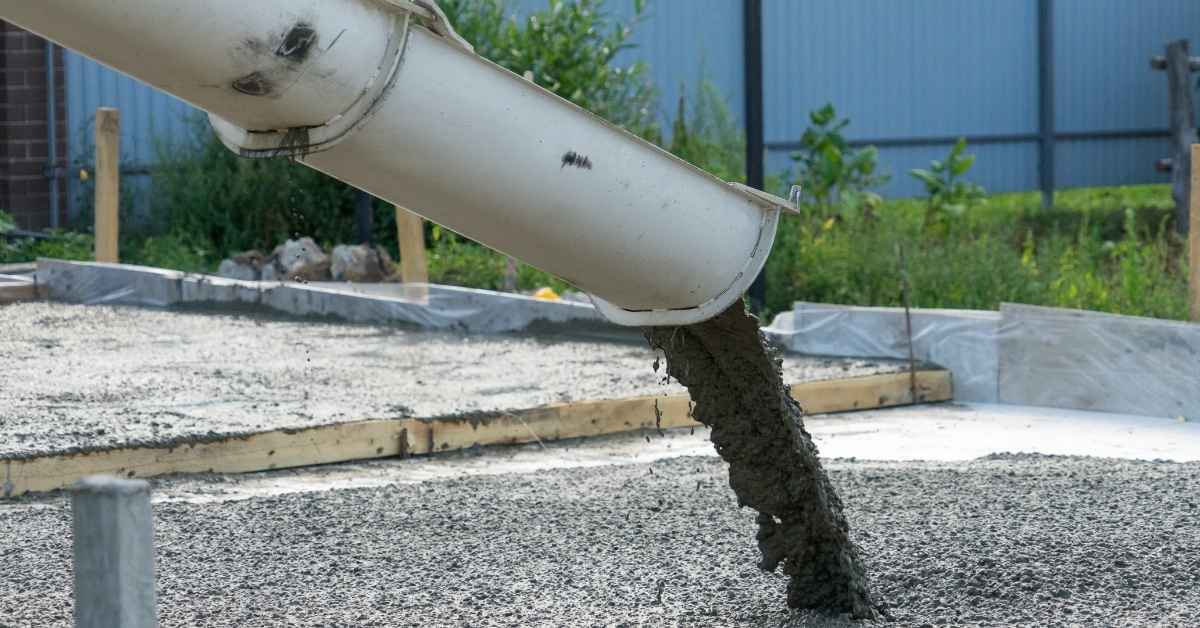
Assess how readily the concrete moves into edges and corners, how it responds to the consolidation method planned for the job, and whether aggregate or paste separates. Look for uneven fiber distribution or fibers collecting at the surface. If the actual project has narrow forms, a textured mold, or a repair interface, include a representative feature in the test instead of judging only a flat puddle of concrete.
During finishing
Observe whether the surface closes normally, whether paste rises excessively, and whether the surface tears, crusts, or remains unstable. Check whether fibers interfere with a smooth, broomed, exposed-aggregate, stamped, or decorative finish. With colored concrete, look for uniformity in the fresh surface, while remembering that final color must be judged only after proper curing and according to the color system’s instructions. For decorative exterior work, modern concrete landscaping options offers related planning context, but the exact color and finish system still needs its own trial.