

Introduction
Best Paint for Kitchen Cabinets is the durable, wipeable finish you apply to cabinets.
This intro covers how to pick a practical option and get started without the fluff. You’ll learn what to check on labels and how to prep before painting.
You’ll want a plan for surface prep, primer, and the type of topcoat. Avoid common stumbles by checking product instructions and local rules, and plan stop points for drying and curing. If in doubt, read labels and ask at the store for guidance.
Key takeaways
- Select durable cabinet paints: enamel or acrylic variants designed for kitchens.
- Opt for satin or semi-gloss finishes for cleanability and wipeable surfaces.
- Label and organize tools, masking, and brushes to prevent cross-contamination.
- Test finish on a hidden panel before committing to cabinets.
- Always ventilate work area and wear a respirator or mask.
- Allow proper dry and cure times per label, then inspect joints.
Table of Contents
- Introduction
- Key takeaways
- Quick Recommendation: Best Paint Types for Kitchen Cabinets
- Choosing Finish and Color for Longevity and Cleanability
- Tools and Materials Checklist
- Step-by-Step DIY Process with Clear Stop Points
- Application Methods: Brushing, Rolling, and Spraying
- Visual Checkpoints and Quality Control (Stop Points You Can See)
- Troubleshooting Common Problems and Fixes
- Durability, Maintenance, Touch-Ups, and When to Repaint
- Conclusion
- FAQ
Quick Recommendation: Best Paint Types for Kitchen Cabinets
For cabinet work, identify the main paint categories and how they balance durability with finish. Water-based options often dry quickly and are easier to clean up, while oil-based or enamel types can offer a harder, more durable surface. A DIY-friendly choice often leans toward water-based enamels or acrylics that level well and resist cleaning.
When selecting, check the label and manufacturer guidance to confirm suitability for cabinetry and kitchen use. Look for notes on surface prep, curing time, and compatibility with existing finishes. Remember to verify that the product data aligns with your project needs before buying.
Water-based (acrylic/alkyd hybrid) — why many DIYers prefer it
Water-based paints are a top choice for DIYers due to their ease of use. They clean up with just water, making your job quicker and less messy.
Low odor means you can paint without worrying about strong fumes. It’s especially helpful if you’re working in a small space or have sensitive family members nearby.
Water-based paints also reduce yellowing. Over time, oil-based paints can darken and turn yellow. With water-based, your cabinets stay fresh-looking longer.
Despite their ease of use, they’re still durable. They form a tough film that resists chipping and wear. It’s perfect for high-traffic areas like kitchen cabinets.
Oil-based and traditional enamel — when they make sense
Oil-based paints and enamels have their place, especially when you need toughness. They form a hard, durable finish that stands up to heavy use.
They also self-level, which means they smooth out on their own. This is great for achieving a professional-looking finish with minimal effort.
However, there are trade-offs. Oil-based paints have a stronger odor. You’ll need good ventilation and might want to plan your painting around when you can air out the space.
The cleanup is also more demanding. You’ll need mineral spirits or paint thinner to clean brushes and rollers, which adds extra steps and waste.
Choosing Finish and Color for Longevity and Cleanability
Sheen level influences how durable and cleanable the surface will be. Higher sheens resist staining and wipe clean more easily but can highlight flaws. Lower sheens hide wear better but can be harder to clean.
Balance appearance with maintenance by considering kitchen lighting and traffic. Verify finish options and their suitability for cabinetry on the product label or data sheet, and follow guidance from the manufacturer for best results.
Sheen options and their pros/cons
The sheen of your cabinet paint affects cleanability, durability, and the visibility of imperfections. Here are some common sheens:
Matte/Satin: These offer a soft, subtle look but can show fingerprints and stains easily.
Semi-Gloss: More durable and easier to clean than matte or satin, semi-gloss is a popular choice for kitchens. It reflects light, making it ideal for dark cabinets or small spaces.
High Gloss: The most durable and easiest to clean, high gloss also shows every imperfection. It’s best suited for larger, well-lit areas.
Color, undertones, and kitchen lighting
Kitchen cabinet color impacts the overall feel of your space. Consider these factors:
Lighting: Lighter colors reflect light, making small spaces feel bigger. Darker colors absorb light, creating a cozy atmosphere.
Undertones: Warm undertones (reds, oranges) create a cozy feel, while cool undertones (blues, greens) can make a space feel larger and more refreshing.
Contrast with countertops: Consider the contrast between your cabinets and countertops. High contrast creates drama, while low contrast offers a cohesive look.
Tools and Materials Checklist
Put together a DIY-friendly set of essential tools and consumables, including protective gear and cleanup supplies. Prioritize working surfaces that won’t damage cabinets and easy-to-clean PPE like gloves and masks. Have brushes, rollers, or a sprayer with appropriate tips ready based on your chosen method.
Emphasize reading labels for prep, application, and cleanup instructions before use. Check the quality of surfaces and materials by reviewing the product instructions and safety data sheets where available.
Prep and Application Tools
Before you start painting, make sure you have all the right tools to prep your cabinets and apply the paint smoothly.
- Degreaser: To clean grease and grime off cabinet surfaces. Check: It should be designed for kitchen use.
- Sandpaper (120-grit): For smoothing surfaces and helping paint adhere. Check: Grit size is suitable for cabinets.
- Tack cloth: To remove dust after sanding. Check: It’s sticky enough to grab fine particles.
- Angled sash brush (1.5-2″): For cutting in edges and corners. Check: Bristles are firm yet flexible.
- Roller cover (3/8″ nap): For painting large, flat areas. Check: Nap size is suitable for your cabinet doors.
- Masking tape: To protect areas you don’t want to paint. Check: It’s painter’s tape designed for sharp lines.
- Drop cloths: To protect floors and countertops from drips. Check: They’re large enough to cover your work area.
- Safety glasses: To protect your eyes from debris and paint splatter. Check: They fit well and provide good coverage.
Quick rule: Always check your tools before starting to ensure you’re using the right ones for the job.
Paint and Accessory Specs to Verify
Before purchasing paint, make sure it’s suitable for your cabinet surfaces. Check these specifications on product labels.
- Recommended substrate: Ensure the paint is designed for cabinets or woodwork. Check: It matches your cabinet material (e.g., wood, laminate).
- Adhesion: Make sure the paint adheres well to the surface. Check: It’s rated for good adhesion on wood or your specific substrate.
- Recommended primer: Some paints require a specific primer. Check: Primer is compatible with your chosen paint.
- VOC statement: Verify the paint’s volatile organic compound levels. Check: VOCs are within acceptable limits for indoor use.
- Application methods: Ensure the recommended application methods match your tools (brush, roller, spray). Check: Methods suit your chosen application tools.
- Paint type: Match the paint type to your cabinet material. Check: It’s water-based or oil-based, depending on your substrate and desired finish.
Quick rule: Always read and understand product labels before purchasing to ensure you’re getting the right paint for your cabinets.
Step-by-Step DIY Process with Clear Stop Points
Begin by emptying all cabinets and protecting floors and hardware. Do thorough cleaning and degreasing to remove residue. Sand lightly to create a good key for primer or sealer.
Stop points occur after prep, after priming, and between coats. At each stop, inspect for dust or imperfections and wait as needed per product instructions before proceeding.
Step-by-Step Process
The following steps guide you through the entire kitchen cabinet painting process, from prep to finish. Each step includes clear actions and stop points to ensure a successful DIY project.
- Preparation: Gather tools, materials, and safety gear. Clear workspace and cover floors.
- Cleaning & Degreasing (Stop Point 1): Clean cabinets thoroughly using a degreaser. Inspect for any damage or repairs needed.
- Sanding & Repairs (Stop Point 2): Lightly sand cabinet surfaces to create a smooth finish. Fill gaps and repair any damages. Check for proper adhesion before priming.
- Priming & Painting (Stop Point 3): Apply primer, allowing it to dry according to manufacturer’s instructions. Paint cabinets in thin, even coats, letting each coat cure as recommended.
- Final Touches & Cure (Stop Point 4): Allow painted cabinets to fully cure before reattaching hardware and reassembling. Inspect your work for any touch-ups needed.
Prep, cleaning, and hardware removal — Stop Point 1
Start by emptying cabinets of all contents. Remove doors and drawers, labeling each for easy reassembly.
Use a degreaser to clean cabinet surfaces thoroughly. Wipe with a damp cloth to remove any residue. Inspect cabinets for any repairs needed before moving on to sanding.
Stop Point 1: Cabinets should be clean, dry, and free of any grease or dirt. All hardware should be removed and labeled.
Sanding, repairs, and de-glossing — Stop Point 2
Lightly sand cabinet surfaces using a fine-grit sandpaper. Focus on feathering edges to remove any existing finish. Sand with the grain of the wood.
Fill any gaps or holes with wood filler. Allow it to dry, then lightly sand again to create a smooth surface. Check for proper adhesion by running your hand over the surface; if it feels smooth and even, you’re ready for priming.
Stop Point 2: Cabinets should be lightly sanded, repaired, and free of any glossy finish. The surface should feel smooth and even to the touch.
Priming, painting, and cure — Stop Points 3 and 4
Apply a primer specifically designed for the paint you’ve chosen. Use a brush or roller to apply an even coat, following the grain of the wood.
Allow the primer to dry according to manufacturer’s instructions. Lightly sand with fine-grit sandpaper to remove any dust. Apply topcoats in thin, even layers, allowing each to cure as recommended before applying additional coats.
Stop Point 3: Cabinets should have a smooth, even layer of primer, ready for painting. Allow the primer to dry completely before proceeding with topcoats.
Stop Point 4: Painted cabinets should be fully cured and free of any tackiness before reattaching hardware or reassembling. This may take up to a week, depending on your paint and environment.
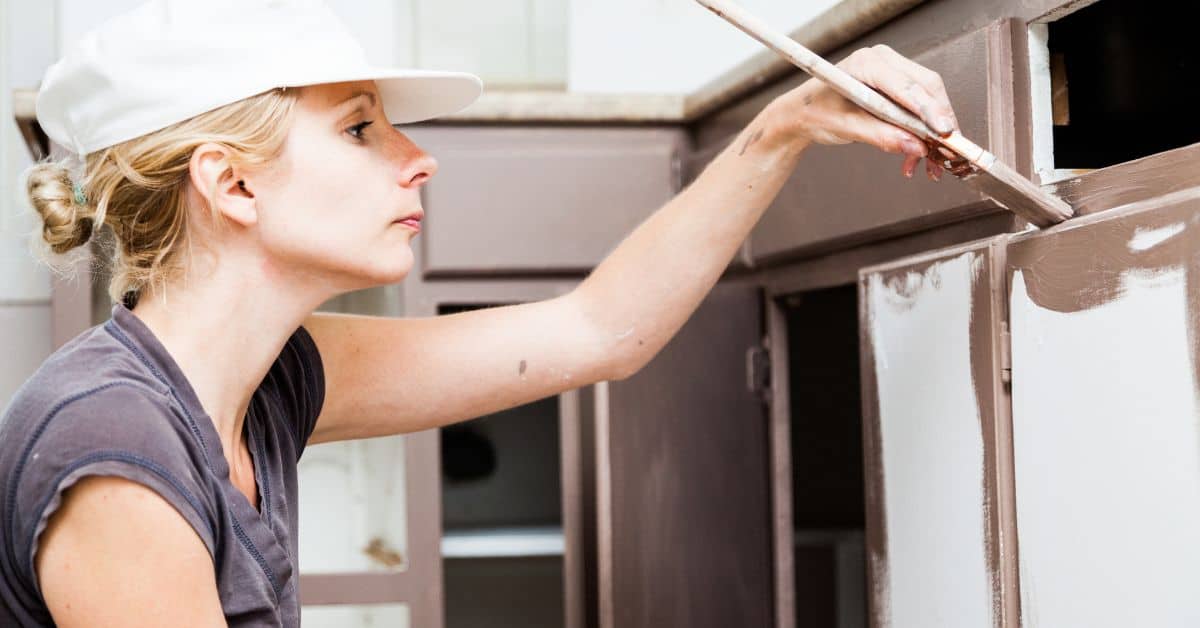
Application Methods: Brushing, Rolling, and Spraying
Brushing can yield controlled edges and minimal setup downtime. Rolling covers flat surfaces quickly but may require careful technique to avoid lap marks. Spraying delivers a smooth, even finish but needs proper ventilation and masking.
Choose methods based on skill, space, and equipment availability. Always verify technique recommendations and safety guidance on the product label or manufacturer instructions.
Brush and Roller Best Practices
When using a brush, work in long, smooth strokes to avoid visible marks. For the first coat, use a back-brushing technique – apply paint, then pull the brush towards you to