

Introduction
Properly placing and supporting rebar before pouring concrete prevents voids. This is the core idea behind working concrete around reinforcement. Keeping the bar(s) elevated and centered helps the concrete bond and carry load.
Use appropriate spacers or chairs to hold rebar at the right height and position. Make sure the bars are clean, tied together, and not resting on the ground so they stay in place during the pour. Pour evenly and compact gently, watching for any gaps and adjusting as needed rather than blasting through the mix.
Key takeaways
- Rebar provides structural strength and crack control in concrete members.
- Use proper spacing, chairs, and supports to position rebar accurately.
- Pre-pour checks confirm coverage, clear pour path, and form alignment.
- Keep tools ready, secure ties, and protect rebar from displacement.
- During pour, ensure continuous concrete flow beneath rebars to eliminate voids.
- Follow safety rules, document inspections, and coordinate with crew for quality.
Table of Contents
- Introduction
- Key takeaways
- Why Correct Concrete Placement Around Rebar Matters
- Pre-Pour Planning and Specification Checks
- Tools, Materials, and Accessories Checklist
- Securing Reinforcement to Minimize Movement During Pour
- Placement Techniques to Avoid Voids Under Rebar
- Special Approaches for Densely Reinforced Zones
- Inspection, Acceptance Criteria, and Testing
- Safety, Quality Control, and Contractor Responsibilities
- Conclusion
- FAQ
Why Correct Concrete Placement Around Rebar Matters
Proper consolidation around rebar and adequate concrete cover are critical to the member’s bond, load transfer, and overall strength. When rebar is surrounded by well-compacted concrete, the structure develops its intended performance and durability. Voids under bars weaken capacity and invite problems later in service.
Check cover values, rebar spacing, and alignment at corners, intersections, and around ties. Understand how improper placement can lead to gaps that trap air or create microvoids. Use a practical QA approach to flag potential congestion early and guide corrective actions.
Structural integrity and load transfer
Proper concrete placement around rebar is crucial for maintaining the structural capacity of your project. Voids under rebar can interrupt load paths, reducing the section’s ability to carry intended loads.
Each piece of rebar needs adequate compaction around it to ensure bond strength and proper load transfer. This helps maintain the designed strength of the member.
Following design intent is key here. Voids can lead to unexpected deflections, cracks, or even structural failure over time.
Durability and corrosion risks
Voids and inadequate concrete cover around rebar allow moisture and chlorides to reach the steel, accelerating corrosion. This can lead to reduced service life and costly repairs.
Corrosion causes expansive rust, which cracks the surrounding concrete. This further exposes the rebar to more corrosion, creating a vicious cycle.
Proper consolidation ensures a dense, homogeneous concrete matrix that resists moisture penetration and protects against corrosion.
Cost and remediation implications
Voids under rebar can lead to costly consequences. Inspections may reveal defects, requiring repairs that involve removing and replacing concrete, adding labor and material costs.
Downtime is another factor. Repairs can delay project completion or shut down structures for maintenance, impacting productivity and potential revenue.
Prevention through correct placement is cheaper than remediation. Always follow best practices to avoid these issues.
Pre-Pour Planning and Specification Checks
Pre-pour work defines how voids are avoided by confirming bar layout, clear cover, spacers, and embedment lengths on the drawings. This step ties the as-built reality to project requirements. It sets expectations for subsequent concrete placement and consolidation.
Review drawings and specs for spacing, hooks, minimum clearances, and embedded items. Verify pour plan, mix design notes, vibrator type and use, and consolidation approach. Assess form stability, spacer distribution, and potential misalignment risks before pouring.
Review drawings and cover requirements
Before you start, grab the project plans. You need to understand how reinforcement is laid out.
Check these:
- Rebar spacing – too close can trap concrete, creating voids.
- Hooks and stirrups – ensure they’re placed correctly to hold everything together.
- Minimum clearances – rebar needs space from forms. Too little, you’ll have voids.
- Embedment lengths – check where reinforcement goes into other elements like walls or slabs.
Verify cover requirements too. Rebar needs a certain thickness of concrete around it for protection and strength. Check contract docs and local codes. If unsure, consult the engineer.
Sequence, access, and logistics planning
Plan your pour sequence carefully. You want to avoid trapping concrete under rebar.
First, identify temporary openings in forms where you can place concrete without covering reinforcement.
Then, plan access paths. Your crew needs room to move around, vibrate the concrete, and consolidate it properly. Too narrow, and you’ll create voids.
Lastly, consider lift heights. Pouring too high at once can lead to bridging and voids under rebar.
Communication and roles
A good pour starts with a good plan. Get everyone on the same page before you begin.
Hold a pre-pour meeting. Invite formwork crew, steel fixers, pump operator, and concrete crew. Assign responsibilities clearly:
- Formwork crew – ensure forms are stable and properly spaced.
- Steel fixers – confirm reinforcement is placed correctly.
- Pump operator – coordinate concrete delivery to avoid congestion.
- Concrete crew – consolidate the mix around rebar without creating voids.
Assign field verification roles too. Someone needs to check cover and ensure proper consolidation before finishing.
Tools, Materials, and Accessories Checklist
Core supports and shoring keep reinforcement at the right elevation and prevent movement during the pour. Select chairs, spacers, and form accessories that match the cover requirements. Clear redundant items that could obstruct placement.
Vibration and consolidation tools should match the job: internal vibrators, pokers, and tampers, plus a plan for curing. Use placement aids like chutes, rails, and spacer blocks to maintain margins. Verify mix compatibility with additives and confirm a practical slump range for your section.
Supports: chairs, spacers, bolsters, and ties
Use these supports to hold rebar at the correct elevation and prevent movement during concrete placement.
- Rebar chairs: Ensure they are evenly spaced along the bars. Check that they maintain the required cover from the formwork face.
- Slab bolsters: Verify they support the slab reinforcement grid at the correct elevation and prevent sagging.
- Formwork spacers: Confirm they keep the formwork tight and maintain consistent cover throughout the pour.
- Rebar ties: Check that they secure the vertical bars to the horizontal ones, preventing movement during placement.
- Adjustable supports: Ensure they can be raised or lowered to accommodate varying cover requirements.
- Plastic vs. metal: Choose supports based on your formwork material and required durability.
- Compatibility with formwork: Make sure supports are compatible with the formwork system being used.
- Inspect before pour: Check all supports for damage or wear that could compromise their function during placement.
Quick rule: Inspect and adjust supports as needed just before concrete placement to ensure rebar is held at the correct elevation and won’t move during pouring.
Vibration and placement equipment
Use these tools to consolidate concrete around reinforcement and prevent voids.
- Internal vibrators: Use them for slabs and heavily reinforced sections. Ensure they reach the bottom of the pour without displacing rebar.
- External pokers: Employ these for walls and columns with accessible faces. Work from top to bottom in a systematic pattern.
- Tamps: Use them for small, thin sections or where vibrators can’t reach. Ensure consistent pressure is applied.
- Vibration time: Calculate the required duration based on slab thickness and concrete slump.
- Access tools: Have necessary equipment (like ladders, platforms) to safely access hard-to-reach areas.
- Chutes or funnels: Use them for controlled placement of concrete into forms, preventing segregation and reducing void risk.
- Rails or screeds: Ensure they are level and properly secured to maintain a consistent finish and prevent honeycombing.
- Spacer blocks: Use them to maintain gasket-free margins between forms, preventing concrete leakage and ensuring proper consolidation.
Quick rule: Always vibrate or consolidate concrete around reinforcement until it stops moving. This ensures no voids are left under the rebar.
Mix and admixture considerations
Coordinate with your concrete supplier to select a suitable mix design and admixtures for your reinforcement layout.
- Slump: Request a slump range of 4-6 inches for most reinforced placements. This provides adequate workability without excessive segregation.
- Plasticizers: Consider using them to improve concrete flow and reduce void risk in heavily reinforced areas.
- Superplasticizers: Use these high-range water reducers for highly congested reinforcement. They can significantly improve concrete flow without increasing water content.
- Air-entraining agents: Add them to increase concrete durability and resistance to freeze-thaw cycles, but avoid excessive air content which can compromise strength.
- Curing compounds: Choose ones that won’t compromise the bond between concrete and reinforcement or cause bleeding issues.
- Compatibility with steel: Ensure admixtures are compatible with the type of reinforcing steel being used to prevent corrosion risks.
- Mix design review: Verify that the selected mix design meets required strength and durability standards for your project.
- On-site testing: Conduct slump tests and perform air content measurements to confirm concrete quality before placement.
Quick rule: Always consult with your concrete supplier when selecting admixtures. They can provide expert guidance based on the specific mix design and reinforcement layout of your project.
Securing Reinforcement to Minimize Movement During Pour
Pre-pour planning aligns rebar layout with drawings and identifies critical intersections. Decide on chair and spacer placements to maintain cover during the pour. This reduces the chance of bars shifting when the concrete rushes in.
Use proper tying techniques and avoid over-tight connections that kink bars. Bracing and supports should be consistent to resist movement from concrete pressure. Perform on-site checks right after setup and adjust before the pour begins.
Proper tying and fastening methods
Use wire ties, not pliers, to secure intersecting rebar. Tighten enough for stability but not so much that you kink the bars.
Position ties away from concrete’s flow path. This lets concrete consolidate properly around the reinforcement.
At critical intersections, use a figure-eight tie pattern. This gives better support and prevents bars from moving out of alignment.
Preventing vertical/lateral displacement
Use rebar chairs, supports, or temporarily braced assemblies to keep spacing consistent. This resists movement from concrete pressure and vibration.
Edge bars need extra support. Use additional chairs or braces at the edges of your pour to prevent lateral displacement.
At openings, install temporary bracing to maintain rebar position during lifts. This keeps your spacing consistent under wet concrete’s weight.
Managing overlaps and congested areas
Plan lap lengths carefully. Overlaps should be at least 40 times the bar diameter, but not so long they cause congestion.
Stagger laps where possible. This reduces congestion and allows concrete to flow more easily around the reinforcement.
Use chairs or spacers in congested areas. This maintains cover and alignment, and helps prevent voids under rebar.
Placement Techniques to Avoid Voids Under Rebar
Adopt a placement sequence that encourages steady flow around bars and minimizes stagnant pockets. Staged pours help manage multiple bars or layers and reduce local segregation. Plan for clean transitions between lifts.
Keep drop heights controlled and use appropriate equipment to place around reinforcement. Targeted consolidation under bars prevents voids without displacing the bars. Include a simple visual and physical check to confirm full encapsulation.
Controlled placement and progressive filling
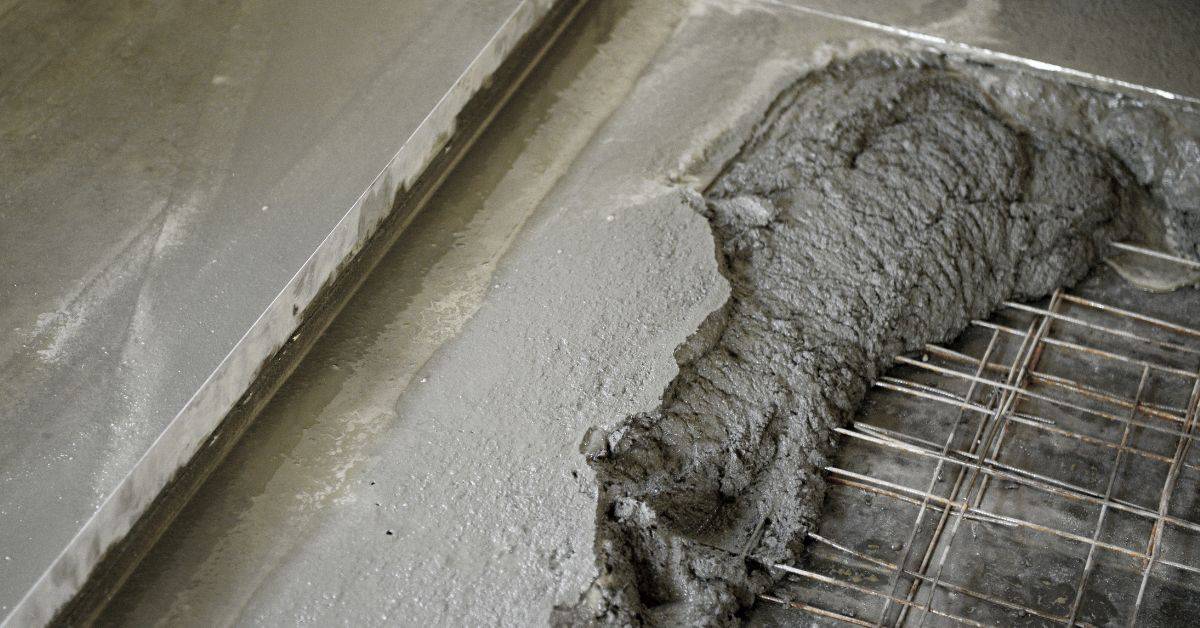
Pouring concrete in lifts helps avoid voids under rebar. Start at the bottom, feeding low and slow.
Why? This allows concrete to flow beneath reinforcement rather than just sitting on top of it.
Imagine pouring from a great height – air gets trapped. Low drops let concrete find its own level, filling voids as it goes.
Be patient. It’s like filling a glass with water; you can’t rush it or you’ll create bubbles (voids).
Correct vibration practices
Vibrators help remove air from concrete. But use them right.
Insertion points: Start at the bottom, vibrate up. Insert vibrator probes between bars if possible.
Overlap spacing: Overlap vibrator passes by half the probe length to ensure full consolidation.
Internal vs surface: Use internal vibrators for deep sections. Surface vibrators are good for thin toppings, but not enough for dense reinforcement.
Use of feed tubes, tremies, and pour-aids
When rebar’s close together, use feed tubes or tremie pipes to direct concrete.
How? They guide concrete beneath dense reinforcement, preventing bridging (concrete piling up without filling voids).
Pour-aids can help too. These are admixtures that make concrete flow better, reducing segregation and improving consolidation.
Remember, these tools aid placement. But they’re no substitute for proper planning and technique.
Special Approaches for Densely Reinforced Zones
Engineering alignment matters in congested areas. Confirm any local detailing changes or staged pours with the engineer before proceeding. Document approved variations that affect cover or spacing.
Plan for higher-flow mixes or controlled placement methods to minimize voids around dense reinforcement. Establish sequencing, pump or direct placement strategies, and targeted vibration that preserves rebar position. Keep records of approvals and field decisions.
Flowable and self-consolidating concrete (SCC)
In densely reinforced zones, regular concrete might not flow well enough to fill all voids. That’s where self-consolidating concrete (SCC) comes in.
SCC is designed to flow into place under its own weight, reducing the need for vibration and minimizing void formation around rebar. It’s perfect for congested areas.
But remember, it’s not a one-size-fits-all solution. Always confirm with your project engineer that SCC is acceptable for your specific application and design mix.
They can advise on the right mix design, slump, and viscosity targets to ensure void-free placement in your densely reinforced zones.
Localized staging and temporary openings
Sometimes, you need to create temporary access points to reach those hard-to-get-to spots under dense rebar. Here’s how:
Staged pours: Pour concrete in sections, allowing each lift to cure before moving on to the next. This lets you consolidate and vibrate the concrete thoroughly before it sets.
Use removable sleeves or form sections. These can be taken out after pouring and vibrating, leaving no trace behind. Just make sure they’re properly designed and approved by your engineer.
Always plan these openings carefully to avoid trapping air or creating weak points in your structure.
Temporary supports and sacrificial formwork
In some cases, you might need to create temporary paths for the concrete to follow. Here are a couple of methods:
Use temporary pans or channels. These can guide the concrete under rebar, ensuring it fills all voids. Once the concrete has set, they can be removed, leaving no trace behind.
Or consider sacrificial formwork. This is left in place after pouring and vibrating. It provides additional support for the concrete while it cures, helping to maintain its shape and strength.
Always consult with your engineer before using these methods. They can advise on the best approach for your specific situation and ensure they meet structural requirements.
Inspection, Acceptance Criteria, and Testing
Pre-pour checks should confirm layout, cover, spacing, and form integrity, with a clear plan to address congestion. This foundation helps prevent voids from forming during the pour. Define how acceptance will be measured before finishing begins.
During placement, monitor consolidation effectiveness and avoid displacing rebar. Use a practical plan for post-pour verification, including non-destructive testing if required and clear criteria for corrective actions. Keep documentation of observations and outcomes.
Pre-pour visual and mock-up checks
Before any concrete goes in, walk the site to ensure everything’s ready. This helps prevent voids under rebar.
- Rebar layout: Check if it matches plans. Wrong bars can cause voids.
- Cover distances: Verify they’re correct. Too little cover leaves rebar exposed, too much wastes material.
- Spacing and chairs/spacers: Ensure they’re right. Incorrect spacing can lead to voids or weak concrete.
- Formwork integrity: Inspect for cracks or weaknesses. Poor forms let in water, causing honeycombing.
- Access around reinforcement: Check if it’s clear. Congestion makes placing concrete tough.
- Pour plan: Review it. It should address potential congestion and ensure even placement.
- Supports and temporary openings: Verify they’re secure. Unstable supports can shift, causing voids.
- Temporary formwork: Inspect for stability. Weak forms can collapse, ruining the pour.
Quick rule: A thorough pre-pour walk-through helps catch issues before they cause problems.
During-pour monitoring and documentation
While concrete’s going in, keep an eye on things. This helps ensure it’s filling around rebar properly.
- Vibration: Monitor vibrators. Inadequate vibration leaves voids, too much displaces concrete.
- Pour rate: Keep track of it. Too fast can cause bridging above rebar, too slow lets concrete set before filling.
- Visual cues: Watch for signs of trouble. Air pockets or poor flow indicate potential voids.
- Audible cues: Listen to the vibrators. Changes in sound might signal issues with concrete or formwork.
- Spot checks at congested zones: Inspect these areas closely. They’re prone to voids if not monitored.
- Placement methods: Ensure they’re followed. Wrong methods can push concrete away from rebar, creating voids.
- Document observations: Keep records. This helps with QA and dispute resolution later on.
- Consult engineer if needed: If you spot issues, ask for advice. Early intervention can prevent costly mistakes.
Quick rule: Regular monitoring during the pour ensures concrete’s filling around rebar as intended.
Post-pour inspection and remedial testing
After the pour, inspect the concrete. This helps detect any voids or other issues early.
- Non-destructive testing (NDT): Plan for it. Methods like GPR or radar checks find voids without damaging the structure.
- Cover verification: Check cover thickness. Too little cover leaves rebar at risk of corrosion, too much wastes material.
- Void indicators: Document any signs of voids. This helps track progress and identify problem areas.
- Acceptance criteria: Define them clearly. These should be based on project specs and industry standards.
- Corrective actions if voids are detected: Plan for them. Remediation might involve additional concrete, vibrators, or even re-pouring.
- Consult engineer for remediation decisions: If voids are found, ask for advice. Engineers can help decide the best course of action.
- Destructive testing (DT): Plan for it if needed. DT methods like core drilling or hammer tests provide more info but damage the structure.
- Record all findings: Keep detailed records. This helps with future maintenance and repairs.
Quick rule: Thorough post-pour inspection and testing help ensure concrete’s quality and longevity.
Safety, Quality Control, and Contractor Responsibilities
Wet concrete work near heavy rebar requires documented safety protocols and proper PPE. Establish barriers, fall protection, and measures to control dust and exposure. Assign responsibilities for maintaining a safe and efficient pour zone.
QA duties should cover pre-pour checks, vibration controls, and inspection milestones. Clearly define roles for contractor and engineer, including deviations, RFIs, and tolerances. End with post-pour curing and defect-punch list responsibilities to confirm void-free placement.
Site safety while consolidating and accessing rebar
Safety is paramount when working around heavy rebar, especially with wet concrete. Always wear appropriate PPE, including hard hats, safety glasses, and steel-toed boots.
Use fall protection where required, securing yourself to formwork or other stable structures. Be cautious while moving around the site, watching your step and avoiding tripping hazards.
When operating vibrators or pumps near reinforcement, maintain a safe distance to prevent injury from kickback or concrete spillage. Follow manufacturer guidelines for equipment operation.
Quality control protocols and accountability
Before pouring, conduct a pre-pour checklist. Verify formwork integrity, rebar spacing, and edge distances. Ensure all parties involved sign off on the plan.
During consolidation, monitor vibration to avoid over-vibration or under-vibration, which can lead to voids. Use inspection holes or radiography to check for any issues.
At each stage of the pour, have responsible personnel sign off. This includes formwork erectors, reinforcement placers, and concrete placers. Keep records of these sign-offs for future reference.
When defects are found: repair options and approvals
If voids or other defects are discovered, address them promptly. Options include local rework (removing defective concrete and replacing it), grout injection, or partial removal and replacement.
Before proceeding with any repairs, consult the engineer of record. They will assess the defect’s severity and approve the repair method.
Document all defects found, repairs made, and approvals received. This is crucial for maintaining a complete project record and ensuring quality control.
Conclusion
paragraph 1 should be 2 sentences long. Wait, we must output proper HTML with 3-4 paragraphs, not extra text. Let’s craft properly.
Conclusion
Getting concrete around rebar right matters for safety, long-term durability, and a clean finish. When you do it correctly, you prevent cracks, reduce costly repairs, and keep the project looking good for years to come.
Check the plans and specs, set and secure the reinforcement, have the right tools and materials on hand, and pour in controlled lifts with proper vibration and consolidation to avoid voids. Verify clearances, follow the pre-pour checks, and inspect as you go so you don’t miss a bug or a loose tie that can bite you later.
Avoid common mistakes like skipping proper securing of the rebar, pouring too fast or with the wrong slump, and neglecting vibration or finishing close to forms. Always wear proper PPE, keep forms solid and clean, and test a small area first before committing to the whole pour. If the zone is densely reinforced or the project is critical, know when to call a professional instead of pushing through—then stay focused, work methodically, and you’ll finish strong with a solid, safe, and lasting result.
FAQ
Why is rebar placement so critical for a concrete pour?
Rebar is the backbone of the slab. If it moves or sits high or low, you get weak spots, cracks, or spalling. Proper placement keeps the steel in the right position to carry load and help the slab act as a unit.
What are the best practical techniques to place rebar without creating voids?
Keep rebar elevated on chairs or supports so it sits at the intended depth. Bundle small sections only long enough to install, then tie securely and check alignment before pouring. Don’t let rebar rest on the forms or subgrade where concrete can’t flow around it.
How can I avoid voids under the bars during the pour?
Use a proper pour plan with staggered placement and continuous concrete flow so the mix can fill around every bar. If you see gaps or fishhooks of air around the rebar, stop and fix the setup before continuing. Choose a concrete mix with good flow characteristics and use vibration or tapping to help consolidation around the bars, but don’t overwork it.
What should I know about spacing and cover for rebar?
Rebar needs adequate cover so corrosion is avoided and strength is preserved. Check the label or datasheet for recommended cover and spacing for your project, and follow local rules or the manufacturer’s instructions. If you’re unsure, use conservative, modest cover and verify with the plan or a professional.