
Introduction
Thin concrete warps when uneven moisture and temperature pull the slab in different directions. Moisture gradients and the way the mix dries out interact with the slab’s thin profile to cause bowing. Reinforcement and curing setup can worsen or help the effect depending on how evenly things stay throughout the cure.
To keep things flat, plan for even moisture, steady temps, and a curing setup that minimizes rapid changes. Check the placement and type of reinforcement, and ensure protection from sudden drying or wetting so moisture moves more evenly. When in doubt, read the product label and manufacturer instructions, and follow local rules for curing and humidity.
Key takeaways
- Moisture gradients drive warping; ensure uniform moisture by planned curing and placement.
- Reinforcement affects moisture-induced stress; place proper rebar or mesh to distribute loads.
- Curing setups matter most; use consistent environment and avoid rapid drying or soaking.
- Temperature and humidity interact; supervise pour timing and ventilation to minimize gradients.
- Detrimental warping risks rise with inadequate detailing; inspect edges, joints, and slab thickness.
- Safety note: keep forms secure and PPE on site during curing and monitoring.
Table of Contents
- Introduction
- Key takeaways
- What Is Warping in Thin Concrete and Why It Matters
- How Moisture Gradients Form Through Slab Thickness
- Interaction of Temperature and Moisture: Compound Effects
- Role of Reinforcement and Slab Detailing in Reducing Warping
- Curing Strategies That Prevent or Reduce Warping
- Construction Best Practices and Common Mistakes to Avoid
- Case Studies, Costs, and Lessons Learned
- Inspection, Monitoring, Mitigation, and Safety Considerations
- Conclusion
- FAQ
What Is Warping in Thin Concrete and Why It Matters
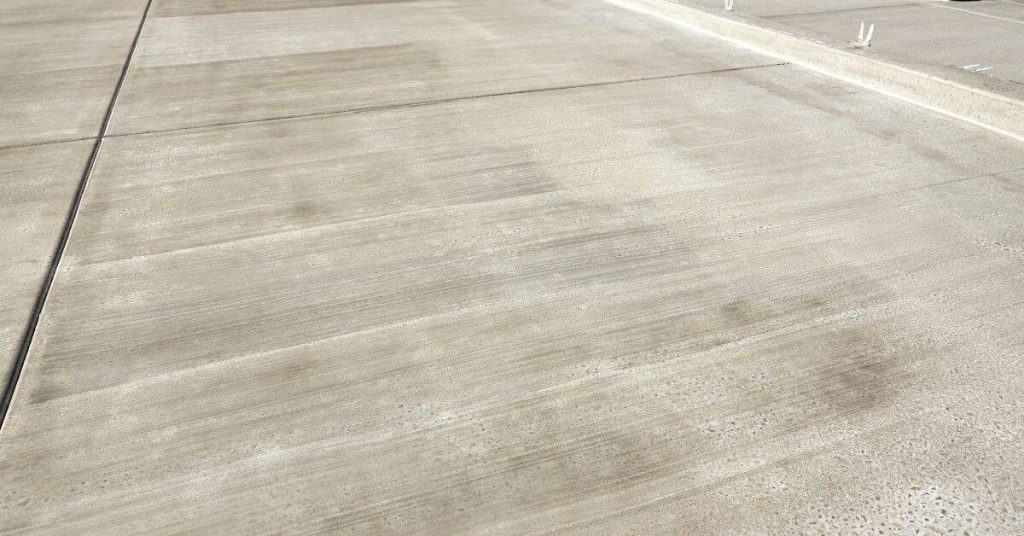
Warping, or curling, happens when a thin concrete slab bends or twists rather than laying flat. It often stems from moisture gradients, uneven drying, and restrained reinforcement that fight each other as the mix cures. The result can show up as edge lift, surface cracks, or misaligned joints that complicate next steps on the project.
In this section, you’ll learn the primary and secondary causes of warping and how to recognize them on site. We’ll cover practical consequences for durability and safety, plus how to set expectations for measurements and inspections. Look ahead to see how curing setups, reinforcement layout, and moisture control can change the likelihood of warp in your specific job.
Definition and physical mechanisms
Warping in thin concrete slabs is a distortion where the slab bends or twists out of its intended flat shape. This happens due to differential strains caused by moisture and temperature gradients, along with restraint effects from reinforcement.
Moisture migration within the slab creates varying degrees of shrinkage as it dries. When one part of the slab shrinks more than another, it causes a strain difference, leading to bending or displacement. Temperature shifts can also cause expansion and contraction at different rates across the slab’s surface, further exacerbating warping.
Reinforcement plays a significant role in warping. If the reinforcement is restrained (e.g., anchored at both ends), it prevents the concrete from shrinking freely, causing additional stress and warping. This is known as ‘restrained shrinkage’.
Why thin slabs are more vulnerable
Thin concrete slabs are more susceptible to warping due to their lower thickness and low stiffness. The thinner the slab, the less material there is to resist bending forces caused by differential drying and shrinkage.
Surface drying is a significant factor in thin slabs. As the top layer dries faster than the bottom, it shrinks more, causing the slab to curl upwards at the edges (edge lifting). This effect is amplified in thinner slabs because there’s less concrete below to counteract this force.
Low stiffness means that thin slabs are less rigid and more flexible. While this can be beneficial for some applications (like reducing cracking from minor movements), it also makes them more prone to warping under the influence of restrained shrinkage and moisture gradients.
How Moisture Gradients Form Through Slab Thickness
Moisture gradients form when the surface dries faster than the interior or when underlying moisture moves into the concrete. Capillary action and self-desiccation during hydration also shape the humidity profile across the thickness. The result is a differential that can drive shrinkage and movement in the slab.
Gradients evolve as the slab ages, with surface drying typically most rapid early on and interior changes continuing later. These shifts influence thermal responses, microcracking risk, and potential warping tendencies. Practical indicators and simple field checks help you track progress and plan interventions if needed.
Surface drying, capillary suction, and internal self-desiccation
Moisture gradients in concrete start forming right after placement. Here’s what happens:
Surface drying: The top layer dries out first due to evaporation. This is the dominant process early on.
Capillary suction: Moisture from below rises up through tiny pores, meeting the drying surface. This becomes significant as the slab ages.
Internal self-desiccation: As concrete hydrates, it loses moisture internally too. This process continues throughout the slab’s life but is slower than surface drying initially.
Diffusion and transient moisture profiles
Moisture doesn’t just sit still in concrete. It moves, creating changing moisture profiles over time:
Moisture diffuses from wetter to drier areas. This happens gradually, taking days or even weeks.
These transient profiles create varying warping stresses. Early on, the surface dries fast, pulling inwards. Later, as inner moisture moves out, it pushes outwards.
Understanding these transient changes helps predict when and how warping might occur.
Measuring and modeling humidity gradients
To manage moisture gradients, you need to monitor them. Here’s how:
Use relative-humidity sensors or moisture probes at different depths. Simple field checks like mass change can also help.
Compare your readings with established diffusion models or standards. This helps predict moisture movement and warping risks.
Regular monitoring lets you adjust curing regimes if needed, keeping gradients under control.
Interaction of Temperature and Moisture: Compound Effects
Temperature differences across a thin slab change how moisture moves, so drying on one face can pull the slab into a warp as the two sides respond differently. This coupling makes climate and sun exposure a key part of the warp risk equation. You need to watch for persistent gradients under real-world conditions.
Reinforcement and curing timing interact with these gradients to set up initial stress patterns. By considering placement, restraint, and early moisture levels, you can anticipate how temperature and moisture will combine to shape the final slab bend. Simple checks and practical mitigation steps help keep warp in check.
Curling from combined temperature and moisture gradients
Temperature changes cause concrete to expand and contract. Moisture loss makes it shrink. In thin slabs, these effects happen at different rates across the depth.
Imagine a slab with one side exposed to sun, the other shaded. Daytime heat makes the surface expand. Meanwhile, moisture evaporates faster up top, causing that layer to shrink more than the cooler bottom.
At night, temperatures drop. The slab contracts evenly but the drier top shrinks more. This sets up a curling effect – the slab bends upwards at the edges like a piece of paper left in the sun.
Site and seasonal factors to consider
Sun exposure is key. South-facing sides in northern climates, or north-facing in southern, get more direct sunlight. This causes greater temperature swings and faster drying.
Wind also plays a role. It speeds up evaporation, creating steeper moisture gradients. Humidity swings matter too – drier air promotes faster moisture loss.
Seasonal changes bring different challenges. Summer heat drives faster drying and bigger temperature swings. Winter cold slows down curing but can cause freezing-thawing damage if not properly protected.
Role of Reinforcement and Slab Detailing in Reducing Warping
Reinforcement type and layout alter how stiff and restrained the slab is, which directly impacts differential movement. Edge treatments and internal grids influence how bending moments develop and where a warp might start. The goal is to distribute restraint evenly without inviting cracking.
Spacing, cover, and dispersion of reinforcement affect shrinkage restraint across the slab. By choosing appropriate patterns and coordinating with formwork and curing, you can reduce the likelihood of differential movement. Practical workflow tips help keep restraint effective from placement through early curing stages.
Reinforcement types and their effectiveness
Choosing the right reinforcement is crucial to minimize warping. Each type has its strengths:
Rebar: Provides high tension capacity, but layout can be labor-intensive.
Welded Wire Mesh: Offers good crack control and ease of installation, but may not provide the same level of tension resistance as rebar.
Synthetic Fibers: Distributes micro-cracks, reducing warping. They’re easy to use but have lower tension capacity than steel.
Joints, edges, and support conditions
Proper detailing of joints and edges helps control warping:
Joint Spacing: Wider joints allow more slab movement. Narrower joints restrict movement but may cause cracking.
Edge Support: Well-supported edges reduce edge curling. Unsupported edges can warp upwards.
Subgrade/ Base Contact: Good contact prevents warping due to differential settlement, but too much friction can cause restraint and increased warping.
Material specs and standards explained
Material choices impact warping. Here’s what matters:
- Cement Type: Type I or II cement is standard for most slabs. Type III accelerates setting but may increase shrinkage.
- Admixtures: Air-entraining admixtures reduce drying shrinkage, helping to minimize warping.
- Aggregate: Coarse aggregates with low absorption and high modulus help control warping.
- Modulus of Elasticity (E): Higher E means stiffer concrete, reducing warping. Look for E ≥ 3000 ksi in specs.
- Avoid Low-Strength Concrete: Lower strength increases the risk of cracking and warping. Specify a minimum compressive strength of 3000 psi.
Curing Strategies That Prevent or Reduce Warping
Moisture control during curing drives the early development of warping risk. Indicators like surface drying rate and edge behavior help you decide when to intervene. The right curing plan keeps moisture more uniform from edge to center in a thin section.
Choose curing methods based on weather and the intended use of the slab, and apply them consistently across the entire area. A stepwise approach to protection, moisture retention, and gradual transition to long-term curing supports a flatter final profile and fewer movement issues.
Step-by-step curing protocol
The following sequence ensures your thin slab stays protected and evenly cured during the critical first week.
- Within 1-4 hours after finishing, cover the slab with plastic sheeting or a curing membrane to retain moisture. Check: Ensure the entire surface is covered without gaps.
- Maintain consistent surface moisture for 24-48 hours using periodic misting or water sprays. Check: The surface should be consistently damp but not overly wet.
- After 24-48 hours, gradually reduce the frequency of misting to allow slow drying. Check: The slab should feel slightly damp to the touch.
- Continue long-term curing by keeping the surface moist for at least a week, adjusting based on weather conditions. Check: Monitor edges and center for signs of differential drying or curling.
- If edges show early curling or center remains overly damp after 7 days, re-evaluate protection and adjust as needed. Call a pro if: Curling persists despite proper curing.
Curing materials, setups, and tools checklist
Use this checklist to gather the right supplies for your thin slab’s curing needs.
- Plastic sheeting: Essential for immediate post-finish pr