Introduction
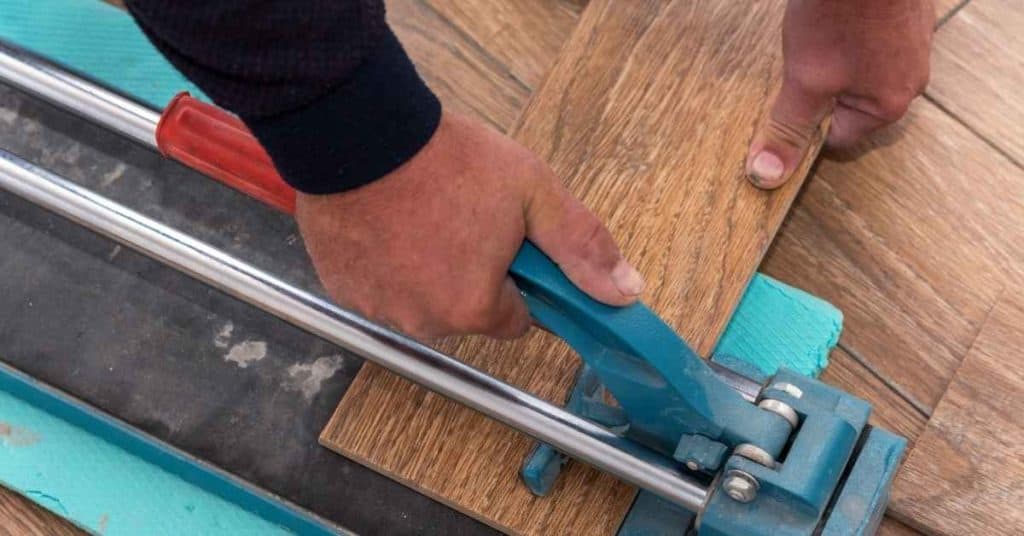
Flush transitions are finish pieces that create a seamless edge between floor surfaces without a visible drop or lip. In this article, we’ll cover how to get flush transitions, have clean scribes, and build custom saddles that look like part of the install. Focus on matching height, marking where trim meets the floor, and selecting the right profile for the room.
Start with practical checks: confirm level planes, clearance for doors, and the material you’re joining. Plan for scribing or shaping with hand tools, dry-fit before fastening, and verify manufacturer instructions or local rules for safety. If in doubt, check the product label and choose a method that keeps things snug and natural to the space.
Key takeaways
- Match existing flooring height with flush transitions using proper underlayment and shims.
- Scribing requires precise transfer methods and dry-fit before final glue/nail.
- Custom saddles should be specified by thickness, radius, and edge treatment.
- Choose transition type based on material movement and room traffic.
- Visually check seams under varied lighting; adjust gaps with trimming.
- Safety: wear eye protection when cutting or sanding and secure work area.
Table of Contents
- Introduction
- Key takeaways
- Why Cheap-Looking Transitions Happen and How to Avoid Them
- Overview of Flush Transitions, Scribes, and Custom Saddles
- Choosing the Right Transition for the Material and Setting
- Measuring, Templating, and Planning for a Seamless Result
- DIY Methods for Achieving Near-Professional Flush Transitions
- Scribing Techniques to Hide Seams and Transitions
- Custom Saddles: When to Order One and How to Specify It
- Visual Checkpoints, Finishing Touches, and Styling Tips
- Conclusion
- FAQ
Why Cheap-Looking Transitions Happen and How to Avoid Them
Transitions look cheap when profiles don’t line up, gaps are visible, heights are uneven, or the finish is rushed; inspect the joint, note the height difference, and identify the visible edges before you start. Measure and mark the problem area so you know whether you need a profile change, trim, or substrate work.
Getting this right affects durability, safety, and appearance—loose gaps trap dirt, trip hazards form where heights aren’t matched, and poor finishes shout DIY. Fixing the root cause up front saves rework and keeps the finished seam from looking tacked-on or amateur.
Visual and tactile cues of a quality transition
A quality transition should look and feel seamless. Here’s what to check:
Line Continuity: The line where the two surfaces meet should be straight, smooth, and continuous.
Edge Crispness: The edges of the transition strip should be clean and crisp, not ragged or uneven.
Underfoot Feel: A good transition feels solid and stable underfoot. No wobbling, gaps, or tripping hazards.
Design priorities: aesthetics vs. function
When choosing a transition strip, balance is key. You want it to look good, but it also has to work well.
Aesthetics: A seamless visual line between surfaces can make a space feel larger and more cohesive.
Functionality: Consider factors like movement (will people be rolling heavy objects across it?), moisture (is it in a wet area?), and accessibility (does it need to accommodate ramps or other assistive devices?).
Prioritize these needs based on your specific situation, but always aim for a balance between the two.
Overview of Flush Transitions, Scribes, and Custom Saddles
Flush transitions sit level with both surfaces, scribing cuts one material to match the other, and custom saddles bridge differences with a shaped piece; pick the technique that fits the materials and traffic. Sketch the joint and note which approach preserves the flooring edge and which requires trimming or added material.
Each choice trades off time, cost, and appearance—flush looks clean but can need substrate work, scribing preserves material lines but takes skill, and custom saddles solve odd heights or curves. Matching the method to the situation avoids wasted effort and a mismatched final look.
Flush transitions explained
A flush transition is where the floor covering meets the wall at a seamless, level line. It’s like there’s no transition at all.
It works best in rooms with hard flooring like tile or wood, and in spaces that flow seamlessly from one room to another.
Why it reads high-end? Because it looks like the floor and wall are one continuous surface. It’s clean, simple, and elegant.
Scribes and seam blending basics
A scribe is a cut made along the edge of a wall to create a tight fit for your flooring. It’s how you blend materials together.
The key is tapering your cuts, making them thinner as they get closer to the wall. This hides the transition and makes it look like one continuous surface.
It takes practice, but with careful measuring and cutting, you can create a seamless look between different materials.
Custom saddles and tapered profiles
A custom saddle is needed when you’ve got different heights or movement zones to bridge. Like going from tile in the kitchen to hardwood in the living room.
The saddle is cut to match the profile of both materials, tapering down to meet them seamlessly. It’s like a bridge between two surfaces.
To make it look good, you’ve got to match the materials exactly. That means using the same species and stain for wood, or matching grout colors for tile.
Choosing the Right Transition for the Material and Setting
Match the transition to both the flooring type and the room function: hardwood, tile, vinyl, and carpet all behave differently at an edge, and entryways or wet areas have special needs. Check the flooring thickness, edge treatment, and how the room will be used before committing to a style.
Picking poorly can cause finish problems, water intrusion, or premature wear where traffic concentrates. Choose a transition that maintains movement allowances and water resistance appropriate to the setting to avoid repairs later.
Matching materials and finishes
The material you choose for your transitions should blend seamlessly with adjacent floors, not stand out. Here’s how to pick right:
- Wood species: matching grain & color
– Choose wood that matches existing flooring in grain pattern and color.
– Look for species with similar Janka hardness rating (e.g., oak ~1360, maple ~1450) for durability.
– Tip: Avoid exotics if you want a subtle transition. - Metal finishes: coordinating sheen & hue
– Match metal finish to adjacent floors’ hardware or trim (e.g., brushed nickel, oil-rubbed bronze).
– Check manufacturer’s finish compatibility with your flooring.
– Tip: Matte finishes hide scratches better than glossy. - Colored vinyl: matching hue & undertone
– Match vinyl color to adjacent floors’ dominant hue and undertone.
– Look for vinyl with similar wear layer thickness (e.g., 20 mil) for even appearance.
– Tip: Darker colors hide dirt better. - Transition strips: matching material & design
– Choose transition strip that matches adjacent floors’ material (wood, metal, etc.).
– Select a design that complements both floors’ style.
– Tip: T-molding works best for level transitions, reducers for uneven ones. - Adhesives & sealants: compatible with materials
– Choose adhesives/sealants compatible with your flooring type (check manufacturer’s guidelines).
– Look for products with good bond strength and flexibility.
– Tip: Avoid cheap, unknown brands to prevent bonding issues.
Pro tip: Buy materials from reputable sources, store properly, and follow mixing instructions carefully. This ensures you get the best results and avoid costly mistakes.
Height differences and movement requirements
When choosing transitions, you gotta consider the ups and downs of your floor. Here’s what to check:
Subfloor movement: Check if your subfloor moves around. If it does, you’ll need a transition that can handle that. Most floors can take up to 3mm of movement per meter, but check your specific product.
Expansion gaps: Floors expand and contract with temperature changes. Make sure there’s enough room for this by leaving expansion gaps at walls and other transitions. A safe range is 10-15mm, but check local codes or manufacturer instructions.
And remember, local accessibility codes might have a say in your transition height too. They usually allow for a max difference of 13mm between levels. So, aim for that when unsure.
Measuring, Templating, and Planning for a Seamless Result
Accurate layout beats correction work—measure the opening, check substrate flatness, and cut a cardboard or thin plywood template to trial-fit the joint. Verify the template sits flush and that adjacent floors line up before ordering parts or cutting final pieces.
Planning reduces surprises on install day and prevents costly re-cuts or ill-fitting saddles. A careful dry-fit and re-check of dimensions protects your time and materials and leads to a much cleaner final seam.
Key measurements and checks
Before you start, gather your tools – tape measure, level, notepad. You’ll need to check a few things to ensure a seamless transition.
Height variance: Measure floor heights on both sides of the seam every 12 inches. Note any differences; they must be accounted for in your transition.
Floor thicknesses: Check thickness at multiple points along the seam. If there’s a variance, you might need custom saddles or tapered transitions.
Door clearances: Measure from finished floor to bottom of doors on both sides. Ensure your transition won’t interfere with door operation.
Creating paper/cardboard templates
Templates help you preview fit, show fabricators, and test sightlines before cutting. Use them when planning flush transitions or custom saddles.
- Trace transition line: Draw a line on the floor where your transition will go.
- Cut cardboard to size: Use your trace as a guide, cut cardboard strips to match transition length and width.
- Mark template sides: Label which side is ‘A’ and ‘B’.
- Test fit: Place template on seam, check if it fits flush with both floors.
- Check sightlines: View from different angles to ensure no tripping hazards or visual inconsistencies.
- Show fabricators: Take photos or bring templates to show exactly what you need.
- Measure and note: Record measurements, any height variances, and specific needs (like custom saddle heights).
- Avoid skipping: Skipping these steps can lead to poor fits, wrong transitions, or costly rework.
Quick rule: Always double-check your templates before committing to cuts. It’s easier – and cheaper – to adjust paper than concrete.
DIY Methods for Achieving Near-Professional Flush Transitions
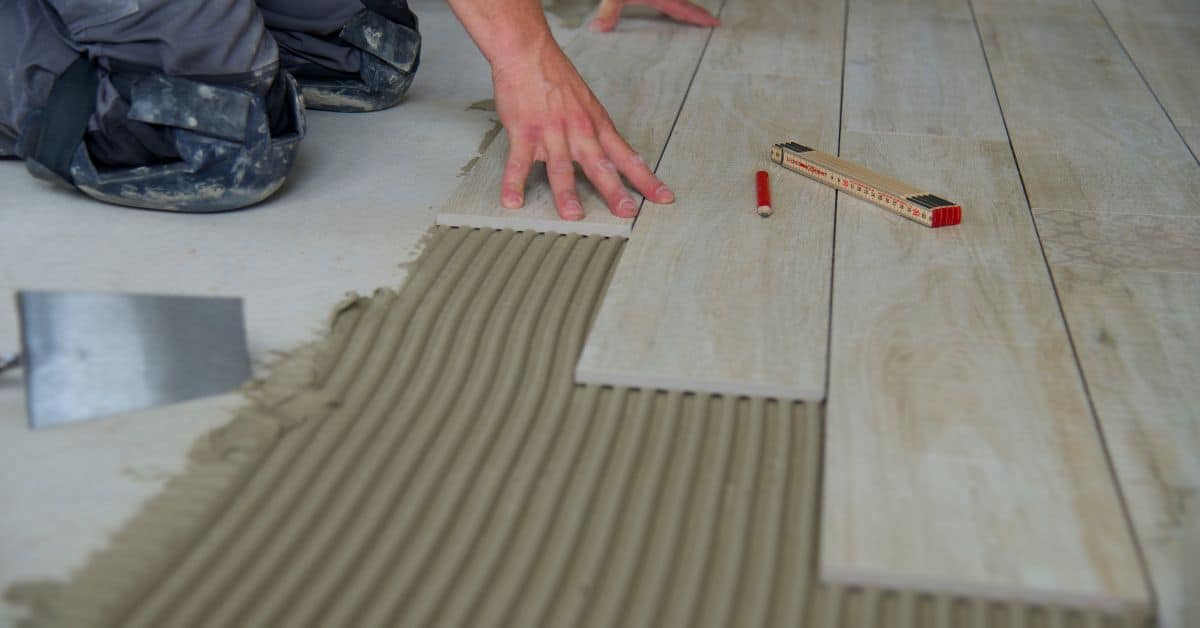
You can get professional-looking flush transitions by undercutting the adjoining material, feathering substrate layers, using metal building plates, or selective sanding to fine-tune height. Test techniques on scrap and work incrementally instead of removing too much at once.
These methods save money but demand patience—overcutting or uneven sanding ruins the edge and forces a replacement. Work slow, test fit often, and stop when the surfaces sit flush under a straightedge.
Undercutting and Precision Routing
To create a flush transition, you’ll need to undercut the adjacent flooring profiles. This creates space for your insert to sit level with the floor.
Use a router with an undercut bit. Start at the highest point, making multiple passes until you’ve reached the desired depth. Be careful not to go too deep and damage the subfloor.
Safety first: Always wear safety gear, including goggles and ear protection. Keep your hands behind the bit’s cutting path.
For precision, use a guide or template to ensure consistent depth and prevent overcutting.
Feathering and Sanding Edges for Alignment
Sanding is crucial for fine-tuning height and edge blending. Start with coarse grit (e.g., 60) to remove major imperfections, then progress to finer grits (e.g., 80, 120).
For wood flooring, use a random orbital sander. For engineered, consider hand-sanding to avoid damaging the wear layer.
Feathering: Sand edges at an angle to create a smooth transition from one floor height to another. This prevents tripping hazards and maintains aesthetics.
Avoid sanding too aggressively or using too coarse a grit, which can damage the flooring’s finish.
Installing Concealed or Low-Profile Fasteners
Concealed fasteners and adhesives help maintain a continuous surface while allowing for movement. They’re ideal for flush transitions.
For wood flooring, consider clips or spacers that attach to the subfloor. For engineered, use drop-in or snap-down systems designed for your specific product.
Adhesives: Use construction adhesive sparingly along the edges of your insert. This provides extra hold without restricting movement.
Always follow manufacturer guidelines for installation and movement requirements. Incorrect installation can lead to warping, buckling, or gapping.
Scribing Techniques to Hide Seams and Transitions
Scribing copies the profile of one material onto another to create a tight reveal; transfer the contour with a scribe tool or compass, then make tapered cuts and file to match. Aim for a consistent reveal width and keep scrap pieces for trial fits before final trimming.
Good scribing hides gaps and looks custom, but sloppy lines expose glue lines and uneven edges. Take your time to match texture and color at the joint to make the seam visually disappear.
Tool choices and templates for accurate scribing
The right tools and templates make scribing a breeze. Here’s what you need.
- Scribe tool: For thin materials, use a sharp scribe tool to mark the exact shape of your wall or surface.
- Coping saw: For thicker materials, a coping saw lets you make precise cuts along your scribed line.
- Oscillating cutter: This versatile tool can handle both thin and thick materials, making it great for tight spaces.
- Templates: Create templates from cardboard or paper to ensure consistent cuts. Trace and cut along the template lines.
- Clamps: Secure your material in place with clamps to prevent movement during cutting.
- Safety glasses: Protect your eyes from debris with safety glasses.
- Work gloves: Wear work gloves to protect your hands from cuts and splinters.
- Dust mask: Use a dust mask when cutting to avoid inhaling particles.
Quick rule: Always double-check your scribed lines before cutting. A mistake here means recutting, which wastes time and material.
Filling, caulking, and color-matching seams
After cutting, it’s time to make those seams disappear. Start by choosing the right filler or caulk.
For wider gaps, use a paintable latex filler. For narrow gaps, opt for a paintable acrylic-latex caulk. Both can be sanded and painted over.
Color-matching: To make your seam invisible, match the color of your filler or caulk to your wall or surface. Use a small amount on a test area first to ensure it’s a perfect match.
Before applying, prepare your surface. Clean it thoroughly, let it dry, then lightly sand and wipe off any dust. This ensures your filler or caulk adheres properly.
Custom Saddles: When to Order One and How to Specify It
Order a custom saddle when off-the-shelf profiles won’t solve odd thresholds, compound angles, or larger height differences; document the opening, profile, and material choices, and provide a clear template or measurements to the fabricator. Note finish preferences and edges that must be eased or left sharp when you submit specs.
Getting the specs right prevents a bad fit and delays—fabrication fixes are time-consuming and costly on-site. If you’re unsure about tolerances or edge details, check the fabricator’s instructions or ask for recommended tolerances before you finalize the order.
What to Measure and Provide to a Fabricator
The key to a perfect custom saddle is providing accurate information to your fabricator. Here’s what you need to do:
Measure carefully: Take precise measurements of the surface where the saddle will sit, including length, width, and any irregularities.
Create templates: Make paper or cardboard templates of the area. This helps the fabricator understand the shape and size better. Refer to Measuring, Templating, and Planning for details.
Provide photos: Take clear, well-lit photos of the area from different angles. Include any reference points or measurements in the photo.
Specify load/movement conditions: Tell the fabricator about expected loads and movement to ensure the saddle can handle it. This is crucial for Matching materials and finishes and Height differences and movement requirements.
Material and Edge Detail Options to Request
The material and edge details of your custom saddle play a significant role in the final look. Here are some options:
- Wood: Popular for its natural beauty. Specify the species, grain pattern, and finish. Avoid rapid changes in humidity to prevent warping.
- Metal: Durable and modern. Choose between steel, aluminum, or stainless steel. Powder coating provides a durable finish. Ensure it’s compatible with other materials.
- Engineered Composite: Low-maintenance and durable. Available in various colors and textures. Check warranties for long-term performance.
- Edge Profiles: Square, beveled, or rounded edges can change the look drastically. Specify your preference based on your design aesthetic.
- Finish: Matte, gloss, or textured finishes affect the final appearance. Choose one that complements your space.
Visual Checkpoints, Finishing Touches, and Styling Tips
Use a simple checklist: consistent gap width, color continuity, flushness underfoot, and clean trim alignment; walk the seam, sight from multiple angles, and feel it barefoot to confirm. Make small finish adjustments like filling tiny gaps or feather-sanding before sealing or staining.
Finishing choices make a transition read custom or cheap—proper color blending and crisp lines elevate the whole floor. Don’t rush the last checks; a few careful tweaks are what separate a good job from an obvious patch.
Lighting and sightline tests
Before sealing, use this checklist to catch any flaws under different lighting angles and sightlines.
- Low-angle light: Check for gaps or unevenness. Use a flashlight to see what’s hidden in shadows.
- View from multiple angles: Walk around the transition, checking for inconsistencies. Look for any visible seams or misalignments.
- Check corners: Corners often show gaps due to slight variations in installation. Use a corner gauge if necessary.
- Inspect edges: Ensure all edges are flush and smooth. Feel with your fingers if needed.
- Sightline test: View the transition from across the room. Any issues will be exaggerated at this angle.
- Check for shadows: Uneven transitions cast unnatural shadows. Adjust as necessary to minimize them.
- Inspect caulk lines: Ensure they’re smooth and even, with no gaps or bubbles.
- Review scribe lines: Check that they’re tight and consistent across the entire transition.
Quick rule: Don’t rely on just one lighting angle. Catch issues early to avoid costly fixes later.
Trim, reveal, and shadow line strategies
Instead of trying to hide every edge, use these techniques to create controlled reveals and matching shadow lines for a custom look.
- Trim alignment: Ensure trim is flush with the transition. Use shims if necessary to maintain consistency.
- Check reveal width: Consistent reveal widths make transitions appear intentional. Adjust as needed.
- Shadow line continuity: Ensure shadow lines are consistent across the entire transition. Use a level or straight edge to check.
- Inspect reveals under light: Check that reveals aren’t too dark, which can indicate gaps or unevenness.
- Review trim finish: Ensure it matches the surrounding surfaces in color and texture.
- Check for trim overhang: Overhanging trim can catch dirt and look unkempt. Keep it flush with the transition.
- Inspect reveal edges: Ensure they’re clean and sharp, not rounded or worn.
- Review shadow line depth: Consistent shadow line depths create a cohesive look. Adjust as needed.
Quick rule: Embrace reveals and shadow lines to elevate your transitions, but keep them consistent for a polished look.
Conclusion
Take control of your transitions with confidence by sticking to precise measuring, testing, and careful fitting. When you respect materials, follow a clean plan, and test ideas in a small area first, you protect safety, avoid costly mistakes, and get a near-professional look.
Now the practical path: start by confirming the material and setting, measure carefully, and draft a simple plan or template. Check your planned transition type for the space, then test a dry fit or mock-up in a hidden area before committing. If it looks right, proceed with a flush transition, a scribe, or a custom saddle as your plan calls for, then install, trim, and verify that seams are tight and surfaces remain undamaged. Finish with a compatible seal or edge treatment and recheck the visual alignment from multiple angles. Always test in a small area first and keep safety gear on during cutting, sanding, or tapping tasks.
Common mistakes to avoid are rushing the layout, skipping the test fit, or forcing a piece into place that doesn’t fit cleanly. Don’t skip measuring twice and cutting once, and avoid using the wrong fasteners or tools for the substrate. Mismatch in materials, failing to leave proper expansion gaps, and neglecting masking or edge protection can ruin the result and risk damage to floors or walls; keep the workflow deliberate and steady, and protect surrounding surfaces at every step.
If the space is oddball, or if you’re unsure about the substrate, fasteners, or a long, complex run, it makes sense to bring in a pro. A correct saddle or custom trim often pays off in durability and look, but only after you’ve verified the basics in a safe, controlled way. Stay focused, follow your plan, and you’ll finish with a seamless transition you can be proud of.
FAQ
How do I verify a flush transition across different substrate materials without leaving gaps?
Check the substrate edges for level and flatness before you install. Use a straightedge to spot high spots or dips, and plan for shims or gradual bevels as needed. Follow the adhesive and caulk manufacturer instructions for the chosen materials and local rules.
What are practical steps to scribe against irregular walls so the seam stays tight?
Temporarily set the piece, mark the wall angle with a scribing tool or a sharp pencil, then cut the edge to match. Dry-fit often, then fine-tune with a sharp blade or rasp. Verify with a thin spacer to ensure the final gap stays even along the whole length.
When should I order a custom saddle versus using an adjustable transition?
Choose a custom saddle when existing tolerances are off or a seamless profile is needed for a particular step or curve. If the spread is within typical, adjustable or modular options may suffice; check that the profile matches your joints and material thickness. Always follow manufacturer instructions for sizing and installation.
What are the common mistakes that ruin a transition, and how can I fix them if I’m already mid-project?
Moreso than any tool, poor prep, dirty surfaces, and rushing the fitting cause problems. Stop, clean the area, re-measure, and re-fit the piece before final adhesive or caulk. If you notice light gaps after install, re-scribe or add appropriate covering trim per product guidance.

