

Introduction
Tooling joint sealant is the process of shaping the sealant bead so it adheres and forms a tight, continuous seal. In practice, it means smoothing the bead with the right tool while it still cures so you don’t get gaps or sags. Your results depend on good surface prep, choosing the right tool, and following the sealant manufacturer’s instructions.
Guidelines for application and tooling technique can vary by product, so read the label and follow local rules. Different sealants behave differently as you work, so consider your options and test on a small area before committing. If you’re unsure about a detail, check the manufacturer instructions, the product label, and local requirements to choose a safe approach.
Key takeaways
- Proper tooling creates a uniform bead and improves seal adhesion across gaps.
- Choose sealant type based on joint movement, substrate, and exposure conditions.
- Wear gloves and eye protection when tooling to avoid skin irritation.
- Use proper tooling technique: steady pressure, backer support, and smooth strokes.
- Remove excess sealant promptly and protect curing bead from rain or sun.
- Read manufacturer instructions for cure times, surface prep, and environmental limits.
Table of Contents
- Introduction
- Key takeaways
- Why Proper Tooling Matters
- Types of Joint Sealant Materials
- Tools and Materials Checklist
- Surface Preparation: the Foundation of a Good Seal
- Application Techniques for a Clean, Functional Bead
- Curing, Drying, and Weather Considerations
- Cleanup, Maintenance, and Longevity
- Common Problems, Troubleshooting, and Mistakes to Avoid
- Conclusion
- FAQ
Why Proper Tooling Matters
Tooling isn’t just about making a bead look neat. It controls edge wetting, surface profile, and how the sealant contacts the substrate. Proper tooling improves the long-term performance of the joint, not just its appearance.
Tooling also accommodates movement in the joint from temperature changes, shrinkage, and load. Selecting the right bead size, depth, and profile helps the seal handle anticipated movement without failing. Substrate prep and cure considerations strongly influence how well the tool performs, from surface cleanliness to moisture management and compatibility with concrete environments.
Sealing vs. Finishing — purpose-driven tooling
The goal of tooling joint sealant is to create a functional, long-lasting barrier against water and air intrusion while also achieving an appealing finish.
- Bead Width: Controls the amount of sealant applied. Wider beads accommodate more movement but may look bulkier. Tip: For most joints, 1/2″ to 3/4″ width is sufficient.
- Bead Depth: Determines how far the sealant penetrates into the joint. Deeper beads provide better adhesion and movement accommodation but can be messier to tool. Tip: Aim for a depth equal to half the bead’s width.
- Profile: The shape of the bead affects its flexibility and appearance. Rounded or filleted profiles are more flexible, while sharp-angled profiles provide better adhesion but less flexibility. Tip: For most joints, a 1/8″ fillet is suitable.
- Caulk Gun: A steady, even flow of sealant is crucial for consistent tooling. Rentable caulk guns with adjustable controls are available at hardware stores. Price: Around $20-$30 per day.
- Finishing Tools: Finger/caulking spatulas and molded profiles help achieve a neat, uniform finish. Tip: Use a damp sponge to wipe away excess sealant for a clean finish.
Performance outcomes of a clean bead
A well-tooled joint sealant bead provides superior protection and longevity. Here’s what you can expect:
Reduced Leaks: Proper tooling ensures complete coverage, preventing water and air intrusion that can lead to leaks and damage.
Longer Life: A clean bead allows the sealant to cure evenly and fully, extending its lifespan. Poorly tooled beads may crack or peel prematurely due to uneven curing or inadequate adhesion.
Easier Maintenance: Well-tooled joints are easier to clean and maintain. A neat bead won’t collect dirt or debris as easily, reducing the need for frequent cleaning or touch-ups.
Types of Joint Sealant Materials
Common sealant chemistries for concrete joints include silicone, polyurethane, acrylic, and silyl-terminated hybrids. Each material has general strengths, but exact movement capability, adhesion, and substrate compatibility are defined by the manufacturer data sheets. Always check the datasheet for specifics before choosing.
DIY uses vary by exposure and joint type, with interior versus exterior conditions affecting material choice. Substrate prep basics, like porosity and priming needs, influence how well the sealant adheres. Curing, skin time, and finish options also shape the final look and function under different environments.
Pros and cons of each material family
Choosing the right sealant material is crucial for a lasting, professional-looking joint. Each has its strengths and weaknesses.
- Silicone: Flexible, good UV resistance, but not paintable or suitable for high-movement joints.
- Polyurethane: High movement capability, paintable, but less UV-resistant and can have strong odors.
- Acrylic: Inexpensive, easy to use, but less durable, not suitable for exterior or high-movement joints.
- Silyl-terminated (Hybrid): Combines silicone’s flexibility with polyurethane’s movement capability, but can be more expensive.
Matching sealant to substrate and movement
The type of concrete substrate and expected joint movement greatly influence your material choice. Porous surfaces may require priming, while wood or masonry substrates need compatible sealants.
For control joints (little to no movement), silicones or acrylics work well. For expansion joints (high movement), polyurethane or silyl-terminated hybrids are better suited.
Always check the manufacturer’s datasheet for substrate compatibility and expected joint movement ratings before selecting a material.
Tools and Materials Checklist
Essential tools include a caulking gun, replacement nozzles, masking tape, tooling spatulas, backer rod, cleaners, and PPE. Each item serves a purpose in prep, application, and finish. Plan for compatibility with your chosen sealant to avoid surprises.
Think about backer rod sizes, cleaners or solvents, and proper PPE for your job. Budget and availability of compatible tooling matter, as does safety and prep work like masking and surface cleaning. Keep a quick compatibility checklist handy for solvent and substrate matching.
Nozzle types, gun control, and bead sizing guidance
Before you start sealing, make sure you’ve got the right nozzle for your sealant and joint size.
- Check nozzle shape: Round noses give smooth beads, while flat noses create square beads. Choose based on your joint’s profile.
- Match nozzle size to joint width: Too small and you’ll underfill; too large and you’ll overfill. Practice on scrap to get it right.
- Avoid worn-out nozzles: They cause inconsistent bead sizes and poor adhesion.
- Caulk gun control: Use a caulk gun with adjustable controls for better pressure and flow regulation.
- Practice before applying: Get a feel for the nozzle and gun on scrap material to avoid mistakes on your final joint.
Quick rule: The right nozzle and practice make perfect beads.
Backer rod, bond-breakers, and joint geometry
Understanding your joint’s shape and using the right tools ensure a clean, deep seal.
- Check joint width: Narrow joints need smaller backer rods; wider ones require larger sizes. Use a rod that’s about 1/3 the joint’s width.
- Use bond-breakers for wide joints: They prevent adhesion to the substrate, keeping your sealant intact during movement.
- Consider joint depth: Deep joints need larger backer rods and might require multiple passes with the sealant gun.
- Avoid overfilling: Too much sealant can cause it to ooze out, leading to a messy finish and potential damage.
Quick rule: Matching backer rod size to joint width ensures proper depth and adhesion.
Safety and PPE
Protect yourself and your workspace before you start sealing.
- Wear gloves: Protect your hands from chemicals and mess. Choose gloves compatible with your sealant type.
- Use safety glasses: Shield your eyes from debris and drips.
- Protect clothing: Wear old clothes or a protective apron to keep your gear clean.
- Ventilate workspace: Ensure proper ventilation to avoid inhaling fumes. Use fans or open windows if possible.
Quick rule: Always read the product’s safety data sheet (SDS) for specific handling and disposal instructions.
Surface Preparation: the Foundation of a Good Seal
Identify common substrates such as concrete, masonry, and painted surfaces, and note how each needs different prep. Good adhesion starts with cleaning and removing contaminants. Prepping correctly reduces the risk of premature failure.
Cleaning and degreasing steps matter, including chosen cleaners and scrub techniques. Removing old sealant mechanically or with solvents must be done carefully to avoid substrate damage. Thorough drying and moisture control are essential before sealing, and adhesion tests on inconspicuous areas can help confirm readiness.
Cleaning methods for different substrates
Preparing your substrate is crucial for a good seal. Here’s how to clean common surfaces:
Concrete and Masonry: Use a stiff-bristle brush with a suitable cleaner, like TSP (trisodium phosphate). Scrub well, rinse thoroughly, and let it dry.
Painted Surfaces: Solvent-wipe using acetone or denatured alcohol. Remove any wax or grease. Let it dry completely before sealing.
When and how to use primer or adhesion promoters
A primer can boost adhesion, especially on tough surfaces. Here’s when and how:
Use a primer if your substrate is: non-porous (like concrete), previously sealed, or you’re unsure about adhesion.
Follow these steps: Choose a primer suitable for your sealant type (check manufacturer guidelines). Apply it thinly and evenly using a paintbrush. Let it dry as instructed before applying the sealant.
Application Techniques for a Clean, Functional Bead
Define the preparatory workflow: surface cleaning, priming if required, joint selection, backing material, and sealant compatibility. Establish a clean environment and a tack-free window to reduce contamination before loading the applicator.
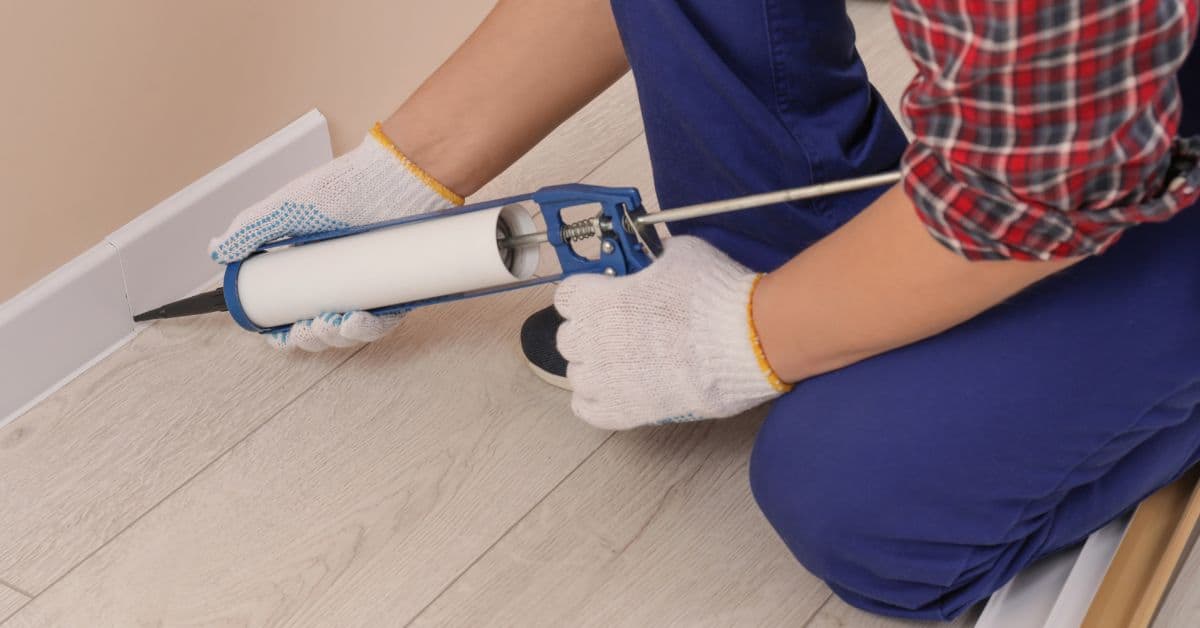
Detail loading and priming: correct cartridge orientation, nozzle size, and a smooth start to avoid air pockets. Bead application needs a steady rhythm, consistent speed, and a perpendicular or slightly oblique angle for a uniform line. Finishing should align with skin time and proper tooling intervals to prevent sags.
Laying the bead: gun control and motion
Steady pressure is key to a clean, consistent bead. Too much or too little can cause gaps or excess sealant.
Hold the nozzle at a 45° angle to the joint for most applications. This helps create a uniform bead that adheres well.
Move the gun continuously along the joint. Starting and stopping abruptly can lead to sags or gaps. Practice your rhythm before starting the real job.
Tooling methods, timing, and finish profiles
Timing is crucial in tooling. Tool too early, you’ll remove sealant; too late, it won’t adhere properly.
- Concave profile: Use a rounded tool for concave finishes. Apply pressure evenly to avoid flattening the bead.
- Flush profile: Use a flat tool for flush finishes. Be careful not to remove too much sealant.
- Open time: Tool within 5-10 minutes of laying the bead, depending on temperature and humidity.
- Pressure: Apply firm but even pressure. Too much can remove sealant; too little won’t shape it properly.
- Motion: Work from one end to the other in a smooth, continuous motion. This helps maintain adhesion and a consistent finish.
Visual checkpoints and demo resources
Use this checklist after laying and tooling to ensure a good seal.
- Uniform contact:</