
Introduction
Tarp lines on concrete after curing are the visible creases or texture lines where a tarp overlapped during the curing process. They show up as different shading or ridges on the surface. You can address them by cleaning, light grinding, or letting time and use soften or blend them in.
Start with a simple cleaning if the lines are just dirty or smeared. If the lines persist, you may consider light grinding, but check the surface and tool guidance before you proceed. If you’re unsure, test your approach on a small area and consult product labels, manufacturer instructions, or local rules to choose the safe path.
Key takeaways
- Understand tarp lines: they form from curing residue and pigment shift on surface.
- Visual tests: quick scratch test and water bead check to gauge hardness.
- Patience often avoids grinding: delay mechanical work until surface stabilizes.
- Cleaning method: use neutral cleaner and avoid abrasive brushes on film.
- Light grinding: perform with proper containment, minimal removal, test in a small area first.
- Prevention: seal curing area, protect from rain exposure, and schedule cleanup post-set.
Table of Contents
- Introduction
- Key takeaways
- What Tarp Lines Are and How They Form
- Diagnosing the Mark: Quick Tests and Visual Checkpoints
- Patience: When Waiting Is the Right First Step
- Cleaning Methods for Surface Films and Stains
- Light Grinding/Scuffing: When and How to Do Minimal Mechanical Correction
- Decision Framework: Cleaning Vs Light Grinding Vs Patience
- Tools and Materials Checklist and Material Specs Explained
- Finishing, Repair Touch-Ups, and Prevention
- Conclusion
- FAQ
What Tarp Lines Are and How They Form
Tarp lines show up as marks on cured concrete. They can appear as surface films, staining, efflorescence, or a light etching. Moisture, curing compounds, and trapped debris often contribute to how they form.
Think of the mark as a surface interaction where moisture moves through the slab or where finishing products leave a residue. The exact cause may involve several factors working together. Confirm by comparing the surface feel and color with nearby areas that were treated differently.
Types of Visible Defects
Tarp lines on concrete can manifest differently. Understanding these variations helps you choose the right repair method.
Film: This is a thin, often shiny layer left by curing compounds or membranes. It’s usually easy to remove with cleaning.
Stain: Stains are discolorations that penetrate slightly into the surface. They might need light grinding and sealing for removal.
Etch: Etching is a light, frosty appearance caused by chemical reaction with moisture. It’s typically removed by light grinding.
Light Scar: These are shallow grooves or marks that break the concrete’s surface. They often require light grinding to smooth out.
Causes of Tarp Lines
Tarp lines form due to how concrete cures under tarps. Here’s what happens:
Moisture gets trapped, creating moisture gradients. This leads to uneven curing and line formation.
Reduced air circulation under the tarp causes concentration of curing compounds or membranes. These can leave lines as they cure differently than the rest of the slab.
Any trapped debris, like dust or small stones, can also create lines by preventing even curing.
Cosmetic vs Structural Marks
Not all tarp lines require heavy-duty repair. Here’s how to tell if a line is just cosmetic or needs deeper remediation:
Cosmetic: If the line is shallow, smooth, and doesn’t affect the concrete’s strength, it’s likely just cosmetic. You can usually feel this with your fingers.
Structural: Deeper, rough, or cracked lines might indicate structural issues. These could weaken the concrete over time. If you feel a dip or roughness when running your hand over the line, it might be structural and need more attention.
Diagnosing the Mark: Quick Tests and Visual Checkpoints
Start with a visual walk‑through: note color, sheen, and pattern of the mark. Gently run your hand over the area to feel for film or roughness. Look for signs of trapped material beneath the surface, like a crust or powdery residue.
Do a small test in an inconspicuous spot by cleaning a tiny patch and watching how it responds. Decide if the issue is a surface film, a deeper stain, or something etched. When in doubt, reference the product label, manufacturer instructions, or local guidance before proceeding to cleaning, grinding, or waiting.
Wet Wipe and Etch Test
Use this checklist when you suspect a film or stain on your cured concrete. It helps identify surface issues before deciding between cleaning, grinding, or waiting.
- Wet wipe test: Use a damp cloth to see if residue lifts. If it does, you’re dealing with a film that can be cleaned.
- Etch test: Apply an acid-free etchant (like muriatic acid diluted 1:6) on a small hidden area. If the mark lightens, it’s a stain; if it darkens or bubbles, it’s true etching that may require grinding.
Quick rule: Always test before proceeding with any treatment to avoid unnecessary work and potential damage.
Tap and Sound, Hammer-and-Chisel Check for Delamination
Use this checklist when you suspect underlying damage or delamination. These non-destructive checks help rule out serious issues that require professional attention.
- Tap test: Gently tap the concrete with a hammer. A dull sound indicates possible delamination; a clear, ringing sound means it’s solid.
- Hammer-and-chisel check: Carefully chip away at the edge of the mark using a cold chisel and hammer. If the concrete chips off easily or reveals hollow spaces, there’s underlying damage.
Quick rule: If you find signs of delamination or underlying damage, stop work immediately and consult a professional.
Visual Checkpoints and Photo Log
Use this checklist to consistently document your concrete’s condition. Good photos help track progress, communicate with pros, or make claims if needed.
- Consistent lighting: Use the same light source and time of day for each photo to ensure consistency.
- Reference points: Include a ruler, tape measure, or other known size objects in your photos for scale.
Quick rule: Take photos from the same angle and distance each time to clearly see changes over time.
Patience: When Waiting Is the Right First Step
Some discoloration or haze will lessen as moisture equilibrates in the slab. Waiting gives the concrete a chance to breathe without introducing new work. Rushing can push you toward unnecessary grinding or harsh cleaners.
Check the manufacturer guidance or local rules for any recommended cure times or conditions. If the surface looks unchanged after a reasonable pause, you can consider other options. Patience is a legitimate first step when the goal is a safe, minimal intervention.
Typical Curing Behavior and What to Expect Over Time
Concrete needs time to cure properly. This process can take anywhere from a few days to several weeks, depending on the mix design, temperature, and humidity.
During this period, you might notice some discoloration or minor defects. These are often temporary and will improve as the concrete stabilizes. Here’s what to expect:
First 24-72 hours: The surface may look wet or shiny due to excess water evaporating.
Next few days to a couple of weeks: You might see some discoloration, film, or minor stains. These can fade as the moisture equilibrates and the concrete hardens.
Temperature and Humidity: Factors Affecting Natural Improvement
Environmental conditions play a significant role in how quickly your concrete improves. Here’s what you need to know:
High temperatures and low humidity speed up evaporation, which can cause rapid curing but may also lead to surface defects like crazing or mapping.
Conversely, cool temperatures and high humidity slow down the curing process, allowing for more gradual moisture loss and potentially reducing the likelihood of defects. However, this can also prolong the time it takes for your concrete to reach its full strength.
In borderline cases where you’re unsure whether to wait or intervene, monitor the situation closely. Keep an eye on the weather forecast and re-check the surface regularly.
Re-Checking and Documenting Before Intervention
Before you decide to clean or grind those tarp lines, it’s crucial to give your concrete time to stabilize. Here’s a simple schedule to follow:
After 7 days: Re-check the surface for any signs of improvement. Take photos from the same angle and distance to document the condition.
After 14-21 days: Re-check again. Some defects may have faded or disappeared entirely. If there’s no change, consider waiting another week before making a decision.
Only when you’re confident that natural improvement has stopped and the marks are persistent should you proceed with cleaning or grinding. Always document the surface condition before and after any intervention to track progress effectively.
Cleaning Methods for Surface Films and Stains
Begin with the gentlest approach: a basic detergent wash and a soft scrub. If the surface remains dull or stained, move to an alkaline cleaner following the label. For efflorescence, apply the recommended cleaner and test in a small area first.
Always wear eye protection and gloves, and test a hidden spot before full use. Follow the product instructions and verify required dwell time and rinsing steps. If you must use stronger cleaners, check compatibility with your concrete and surrounding materials.
Gentle cleaning: detergent and agitation
Start with the gentlest method to avoid damaging your concrete. Mix a mild detergent – like dish soap – with warm water.
Apply the solution to the affected area using a soft-bristled brush or a long-handled scrubber. Work in small sections, about 2-3 feet at a time.
Scrub gently but firmly, using circular motions. Agitation helps break down and lift off surface films. Be sure to avoid scrubbing too hard, as this can scratch the concrete.
This method should be your first attempt for removable films. It’s safe, easy, and won’t harm your concrete if done correctly.
Chemical cleaners: alkaline cleaners and efflorescence removers
For tougher films, consider using an alkaline cleaner or an efflorescence remover. These products are designed to break down and dissolve certain types of stains.
Always follow the manufacturer’s instructions for mixing and application. Safety first – wear gloves, eye protection, and old clothes.
Before applying to your entire surface, test the product on a small, hidden area. This ensures it won’t cause discoloration or damage to your concrete.
Apply the cleaner using a sprayer or a brush, working in small sections. Let it sit for the recommended time, then scrub gently with a soft-bristled brush. Rinse thoroughly afterwards.
Rinsing, neutralizing, and drying best practices
After cleaning, thoroughly rinse the area with clean water. This removes any residue that could redeposit or cause new marks.
If you’ve used an alkaline cleaner, neutralize the pH by rinsing with a solution of white vinegar (1 part) and water (4 parts). This helps prevent efflorescence from forming again.
Let the concrete dry naturally. Do not use heat or fans to speed up drying, as this can cause new marks or cracks. Keep pets and children away until it’s completely dry.
Regular inspection during drying is crucial. If you notice any new marks or issues, address them immediately before they become bigger problems.
Light Grinding/Scuffing: When and How to Do Minimal Mechanical Correction
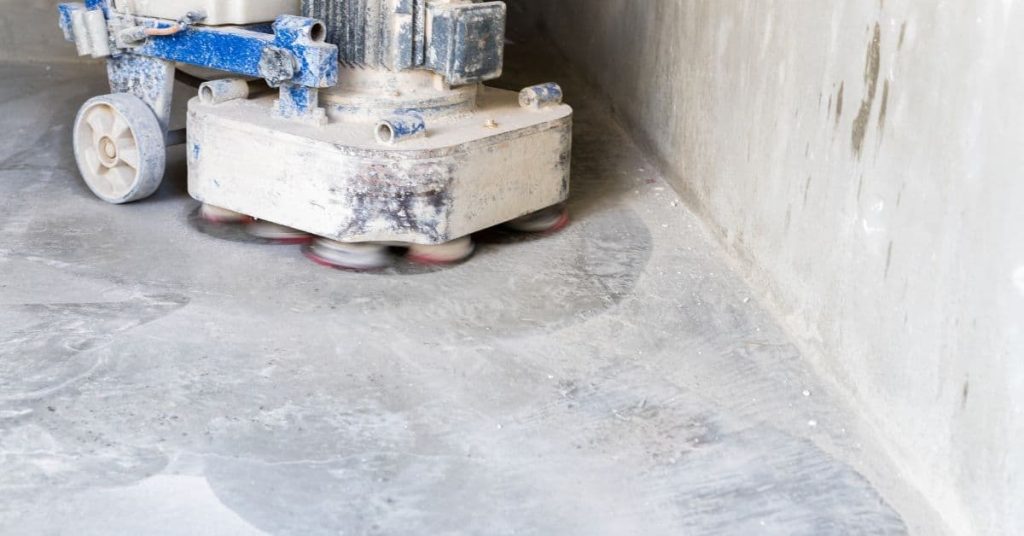
Light mechanical abrasion is justified when the mark sits at the surface and does not respond to cleaners. Use the mildest pad and lowest material removal that achieves the look you want. Work in small, controlled passes and avoid deep or uneven grinding.
Keep the finish uniform by testing in a hidden area first. Monitor the depth of material removal and adjust pressure accordingly. Always verify tool suitability and patch guidelines with official instructions or local rules before proceeding.
Tools, abrasives, and safe operating guidelines
To tackle light grinding on your concrete surface, you’ll need the right tools and safety gear.
- Orbital sander: A variable-speed orbital sander is ideal for this task. Start with a low speed to avoid removing too much material.
- Diamond hand pads: Begin with the finest grit available (e.g., 120-grit) to minimize material removal. Coarse grits can be used later if needed.
- Safety glasses: Protect your eyes from debris with safety glasses or goggles.
- Respirator: Wear a respirator rated for concrete dust to protect your lungs.
- Gloves and ear protection: Use work gloves to protect your hands, and wear hearing protection if using power tools.
- Optional: rental tools: If you don’t own an orbital sander, consider renting one. Prices vary but expect around $25-$50 per day.
Technique: test patch, direction, and blending
Before you start grinding, perform a small test patch in an inconspicuous area to ensure the desired results. This helps you determine if more or less aggressive action is needed.
Work evenly across the affected area using steady, overlapping strokes. Keep your sander flat on the surface and maintain consistent pressure.
When approaching edges, feather the grinding action to avoid visible transitions between ground and unground areas. This helps maintain a uniform finish.
If you’re using hand pads, follow the same principles: test first, work evenly, and blend edges carefully.
Dust control and surface protection during grinding
Controlling dust is crucial for both safety and cleanliness. Wet methods, such as using a water-fed pole sander or misting the surface, can help suppress dust.
Alternatively, use a HEPA vacuum attached to your orbital sander to collect dust at the source. This requires a compatible vacuum and sander setup.
Mask adjacent finishes with painter’s tape and plastic sheeting to protect them from dust and debris. Keep the concrete surface hydrated by misting it occasionally during grinding to prevent micro-cracking.
Note: Always follow manufacturer guidelines for your specific tools and abrasives, and adjust techniques as needed based on your surface’s condition.
Decision Framework: Cleaning Vs Light Grinding Vs Patience
Use a simple flow: start with patience if time allows; if not, try gentle cleaning and evaluate the result. If surface film persists, consider light grinding only after confirming technique and depth risks. Reserve grinding for when surface correction is clearly needed and safe for the slab.
Base your choice on the diagnosis, the desired finish, timeline, and risk tolerance. Always cross‑check relevant instructions, labels, and local requirements before committing to a method.
Situations favoring patience or cleaning
Waiting, cleaning, or a combination of both might be all you need for some issues. Here are common scenarios:
Superficial films: These often disappear on their own or with gentle cleaning. Don’t rush into grinding.
Recent curing discoloration: Give it time. Discolorations due to curing can fade over weeks to months, especially in warm, dry conditions.
Remember, patience is free and waiting won’t harm your concrete. Cleaning methods covered earlier can help if films or stains persist.
Situations that require light grinding or professional remediation
Some issues need more than just time and cleaning. Here are signs to look for:
Persistent etching: Deep, lasting marks from acid rain or other contaminants might need mechanical correction.
Texture mismatch: If grinding is required elsewhere on the slab, light grinding can help match the texture.
Failed cleaning tests: If gentle cleaning and waiting haven’t worked, it’s time to consider light grinding. But if the issue is severe or you’re unsure, consult a pro.
Estimating impact on appearance, schedule, and cost
Each method has its trade-offs. Here’s what to consider:
Time: Waiting is the least time-consuming initially but may extend your project timeline if issues persist. Cleaning is quick but might need rechecking. Light grinding takes more time but can be done in stages.
Finish uniformity: Patience and cleaning maintain the original finish best, while light grinding can introduce texture changes that need blending.
Labor intensity: Waiting requires no effort. Cleaning is low-effort but might need repeating. Light grinding is more labor-intensive but can be done DIY with careful technique (refer to earlier sections).
Cost: Waiting and cleaning are cheap, while light grinding needs abrasives and may require pro help if severe. Check local rates for pros and materials.
Tools and Materials Checklist and Material Specs Explained
Keep a DIY‑friendly kit: cleaners suited for concrete, soft and non‑metallic pads, PPE, and basic testing supplies. Include brushes, a soft cloth, and a small bucket for rinsing. Have a reliable moisture meter or other simple test tools as a backup if available.
Learn to verify material specs on labels or data sheets before use. Check for surface compatibility, required dwell times, and any precautions. If you can’t confirm a spec, pause and consult the manufacturer instructions or local guidance.
Basic DIY kit for assessment and cleaning
Before you start, gather these essentials to assess and clean your concrete surface.
- Soft-bristle brush: Gently removes dirt without damaging the surface. Hard bristles can scratch.
- pH-neutral cleaner: Safe for most surfaces, won’t damage or discolor. Always test first.
- Rags or sponges: For applying and wiping off cleaner. Microfiber works well.
- Camera: Take ‘before’ photos to track progress and document any issues.
- Tape measure: To check for leveling, cracks, or other defects.
- Flashlight: Inspects hard-to-see areas like corners and under objects.
- pH test strips: Confirm your cleaner is suitable. Wrong pH can damage the surface.
- Gloves: Protects hands from chemicals and rough surfaces.
Quick rule: Always test cleaners on a small, hidden area first to avoid damaging your concrete.
Abrasives and machines: what to check on labels
When renting or buying grinding tools, check these specs on the label to ensure you’re using the right equipment.
- Abrasive type: Diamond, silicon carbide, or aluminum oxide. Each has different strengths and uses.
- Grit range: Lower numbers (e.g., 16-36) are coarse; higher (80-250) are fine. Start with medium grit for light grinding.
- Pad backing: Check if it’s compatible with your machine. Wrong backing can cause damage or reduce effectiveness.
- RPM limits: Machine’s max speed should match or exceed pad’s recommended RPM. Too low can cause glazing, too high can damage the pad.
Quick rule: If unsure about specs, start with a medium grit (36-80) diamond pad and a machine that matches its RPM range.
Safety and PPE requirements
Protect yourself from dust, chemicals, and other hazards with these essential safety gear.
- Gloves: Protects hands from chemicals and rough surfaces. Choose rubber for wet tasks, leather for grinding.
- Eye protection: Safety glasses or goggles shield eyes from debris and splashes. Use side shields for extra protection.
- Respirator: Required when grinding to protect against silica dust. Choose a P100 filter with a tight-fitting face seal.
- Earplugs: Protects hearing from loud machines. Use with eye and respiratory protection for full coverage.
- Long sleeves and long pants: Protect skin from chemicals, dust, and debris.
Quick rule: Always use the highest level of PPE required for your task to minimize risks.
Finishing, Repair Touch-Ups, and Prevention
After removing the film or stain, blend any patch or repair to match the surrounding finish. Consider resealing or protecting the cured surface if appropriate for your environment. Plan for a consistent cosmetic result across the area treated.
Use practical preventive steps to avoid future tarp lines, such as controlling moisture and drying conditions during curing, and reviewing the concrete surface prep before finishing. If you’re unsure about sealing options, verify with product instructions or local recommendations before proceeding.
Blending and matching surface texture
After removing tarp lines, your first task is to blend the patched area with the existing concrete. Here’s how:
Feathering: Use a soft brush or feathering tool to gently remove any raised edges of the patch. Work in small, circular motions.
Use matching finishing pads for your grinder. These mimic the texture of existing concrete. Run them over the patched area, following the direction of the original finish.
If color doesn’t match, consider color-adjusting treatments. Stains and dyes can help blend the patch. Always test on a small, hidden area first.
Sealers, curing choices, and tarp best practices
To prevent future tarp lines, use sealers wisely. Apply a penetrating sealer after patching. It won’t change the look of your concrete but will protect it from moisture.
For curing, keep tarps off until the surface is fully dry. Then, use them sparingly and only when necessary. Remove as soon as possible to avoid lines.
Choose heavy-duty tarps with reinforced edges. Secure them tightly but not so tight they leave marks. Use weights or stakes if needed.
When to consult a concrete restoration professional
DIY is great, but know your limits. Here are signs it’s time to call a pro:
Large-area damage: If tarp lines cover more than 10% of your surface, consider professional help.
Structural concerns: If you notice cracks or uneven settling under the tarp lines, there might be underlying structural issues.
Inability to match finish: If you can’t blend the patch with the existing concrete despite your best efforts, it’s time to call in an expert. They have specialized tools and techniques for tough jobs.
Conclusion
Take the right steps now to protect the concrete, keep the tarp lines from getting worse, and keep the surface looking clean. Safety first, then choose the simplest path that gets the job done without risking damage or costly fixes.
When you wrap this up, think in a simple sequence: test a small area first with whatever cleaning method you’ll use, evaluate if a waiting period helps, then decide if you clean, lightly grind, or just wait. Clean with mild, non-abrasive methods first; if films persist, scrub with a soft cloth and a gentle pad, then recheck after a rinse. If stains resist and you’ve waited long enough, you can consider light grinding or scuffing, but do it only on the affected area with minimal material removal and a non-metallic pad. If nothing clears after testing and patience, stop there and plan a controlled fix rather than a full rework. Always wear eye protection and follow the product directions, and test any cleaner or pad in a hidden spot first.
Common mistakes to avoid are rushing to grind too deep, using harsh chemicals that burn or discolor the concrete, and skipping the test area or the waiting step. Do not grind without a clear plan, and never ignore a small area test or obvious edge or corner where the line meets the surface. Work in small passes, keep the area damp as you work to see true results, and clean up thoroughly so residues don’t recoat the surface.
If the mark won’t respond after a patient, measured approach, or if you see cracking, spalling, or significant surface damage, call a professional for a targeted repair or finish. You can keep moving with confidence by sticking to the tested sequence, protecting the edges, and choosing the simplest, safest option that restores the look and keeps the concrete durable. You’ve got this—commit to the plan, check twice, and finish strong.
FAQ
Can tarp lines disappear completely after curing, or should I expect some mark long-term?
Expect some trace of the tarp line if there was a strong seal with the concrete. You can often reduce visibility with proper cleaning, light grinding, or time. If you’re unsure, compare several low-traffic areas and follow the manufacturer’s guidance for any finishing steps.
What is the safest way to test if I should clean or grind next?
Start with cleaning and a gentle scrub to see if the surface stain lifts. If lines remain clearly visible, consider light grinding as a controlled option. Avoid heavy grinding unless you’re sure the surface can tolerate it and you’re following sensible safety steps.
What should I check on products or instructions before grinding or cleaning?
Read the label or datasheet for the concrete and any coatings involved. Check that the method you choose is compatible with the slab type and finish. If in doubt, stop and consult the manufacturer instructions or local rules for guidance.
When is it best to wait longer before taking action?
If weather, humidity, or the slab cure state isn’t right, waiting can help. Patience can let surface conditions improve and reduce the need for grinding. If you’re unsure, default to cleaning first and reassess after a short, practical pause.