
Introduction
Repairing concrete after fire exposure means assessing damage from heat, spalling, and strength loss and deciding what to fix.
This guide covers what to look for and how to approach testing and repairs in plain, DIY language. It focuses on visual signs and simple checks you can perform safely at home.
Start with a careful visual inspection for cracking, loose or broken surfaces, and spalled areas. Consider simple non-destructive tests like rebound hammer tests or pulse velocity testing to gauge strength, and always check the equipment instructions and local rules before proceeding. If in doubt, verify any findings with the manufacturer guidance or a qualified professional.
Key takeaways
- Fire exposure can cause spalling and surface strength loss requiring careful triage.
- Start with safe access, shut utilities, and avoid damaged areas until inspected.
- Conduct two-stage assessment: quick visual check then detailed measurements for damage.
- Use nondestructive tests like rebound hammer and pulse velocity for initial insights.
- Visual indicators and NDT results guide whether repair or replacement is needed.
- Ensure appropriate safety gear, follow manufacturer guidance, and verify local codes.
Table of Contents
- Introduction
- Key takeaways
- How Fire Affects Concrete: Mechanisms and Visible Indicators
- Safety, Access and Initial Triage After a Fire
- Two-Stage Condition Assessment: Preliminary Then Detailed
- Nondestructive Testing (NDT) Methods and Interpretation
- Destructive Testing and Laboratory Analyses
- Repair Decision-Making and Intervention Strategies
- Materials, Specifications, and Tools for Post-Fire Repairs
- Long-Term Performance, Monitoring and Common Mistakes to Avoid
- Conclusion
- FAQ
How Fire Affects Concrete: Mechanisms and Visible Indicators
The concrete you see after exposure can tell only part of the story. Fire drives rapid moisture movement, creating pore pressure and microcracking as the matrix expands and contracts at different rates. Thermal gradients across the section contribute to surface spalling and surface color changes that suggest deeper changes beneath. Hydration products may shift with heat, and interactions with certain aggregates can influence how the material responds to high temperature. Always verify temperature effects with testing rather than relying solely on what is visibly burned or cracked.
Material choices matter for vulnerability. Cement type, aggregate expansion behavior, moisture state, and admixtures like air-entraining agents shape how spalling and strength loss present themselves. Supplementary cementitious materials and mix design choices also play a role in performance under heat. Distinguishing what you can observe—cracks, pops, discoloration—from what requires data helps prioritize your next steps. Use a testing plan to confirm residual strength and damage extent after a fire event, and factor in safety and repair implications before moving forward.
Thermal and moisture-driven mechanisms
Fire exposure drives rapid heating of concrete, causing moisture vaporization. This creates steam pressure that builds up within the concrete’s pores.
Steam pressure, combined with thermal expansion, causes microcracking at the surface. These cracks allow more heat to enter, leading to further damage and spalling – flaking or chipping of the concrete surface.
The high temperatures also cause decomposition of hydration products that bind the concrete together. This results in a loss of strength and durability.
Role of aggregates, cement type, and permeability
The type and properties of aggregates used in concrete play a significant role in its response to fire. Aggregates with high thermal expansion coefficients can cause additional stress within the concrete as they expand more than the paste.
Concrete’s permeability also affects its vulnerability to spalling. More permeable concretes allow heat to dissipate faster, reducing the risk of spalling. Less permeable concretes retain heat longer, increasing the risk.
The type of cement used and the concrete mix history can influence how it behaves under high temperatures. For instance, concretes with supplementary cementitious materials may have improved fire resistance due to their slower hydration rates.
Visual signs: color, spalling, cracking and surface deposits
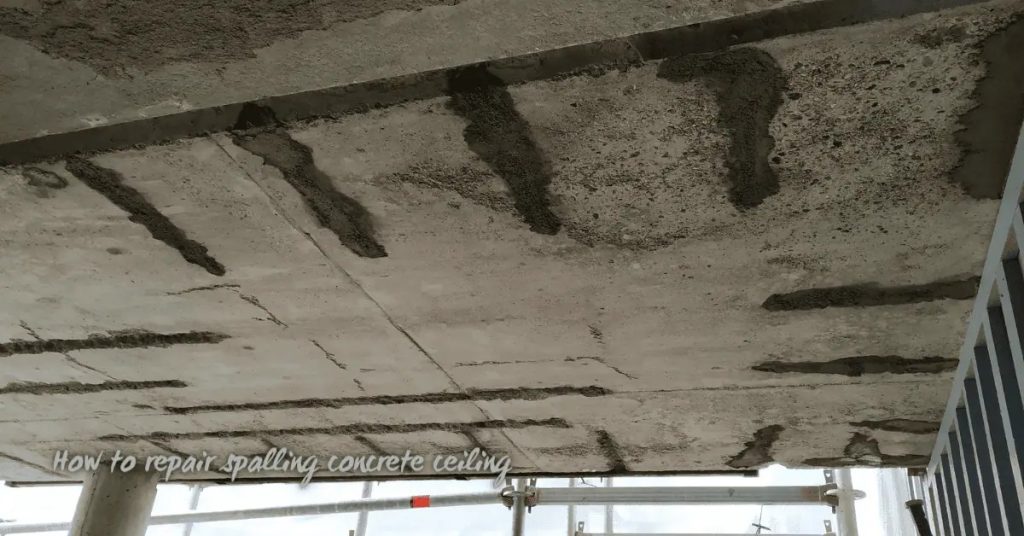
After a fire, concrete may show several visible signs of damage. Discoloration gradients can indicate varying levels of heat exposure. Pop-outs or small pieces of concrete that have been ejected from the surface are clear indicators of spalling.
Crack patterns can provide clues about the extent and nature of the damage. For instance, radial cracks may suggest explosive spalling due to steam pressure buildup. Surface deposits like powdery residues could indicate decomposition of hydration products.
While these visual cues are helpful, they should not be relied upon solely for assessment. Many signs of fire damage require confirmatory testing to determine the extent and nature of underlying damage or strength reduction.
Safety, Access and Initial Triage After a Fire
Safety comes first, even before you set foot inside. Start with personal protective gear and hazmat awareness, then assess obvious hazards like cracking, spalling, and any signs of heat-affected surfaces. Check for electrical and gas line reactivity and isolate those systems as appropriate. Keep hot surfaces under control and identify any immediate risks of collapse before you proceed with inspection.
Control access and establish a safe workflow. Set up a perimeter, post clear signage, and restrict entry to authorized personnel. Create a safe path for movement that avoids unstable areas while you coordinate with professionals. Quick triage helps determine if urgent stabilization is needed and whether a fire restoration specialist or structural engineer should be engaged right away.
Immediate hazards and site stabilization
First, assess the risk of collapse. Look for large cracks, leaning structures, or bulging walls – these are red flags. Inspect for loose debris that could fall and cause injury.
Check for hazardous materials like asbestos or lead paint. If present, contact hazmat professionals immediately. If the structure is unstable, consider involving emergency engineers or structural shoring experts.
Secure any hot surfaces to prevent further damage. Use temporary supports if necessary, but be careful not to cause more harm than good. Document all observations and actions taken.
Quick triage checklist for inspectors
Use this checklist when first entering a fire-damaged site.
- Visual scan: Quickly assess the entire area for obvious hazards and damage.
- Photographic mapping: Take photos from different angles to document the scene. Include timestamps and weather conditions.
- Mark suspect members: Flag any areas that show signs of significant damage or instability.
- Check for spalling: Look for flaking or peeling concrete, which indicates heat exposure.
- Inspect rebar: If visible, check for exposed or rusted rebar. This could indicate strength loss.
- Examine supports: Ensure they’re still stable and not showing signs of failure.
- Assess utilities: Check for damaged electrical lines, gas leaks, or other utility issues.
- Evaluate access paths: Make sure entry points are safe and clear of debris.
Quick rule: If you’re unsure about any aspect, consult a professional immediately.
When to stop and demolish vs continue evaluation
Large deformations or unstable supports are clear signs that the structure may need demolition rather than repair. If you see significant leaning, bulging, or cracks wider than 1/4 inch, consider calling a licensed structural engineer.
Also, if there’s evidence of widespread spalling, exposed rebar, or severe rusting, it might be too risky to continue evaluation without professional help. Safety should always be your top priority.
Remember, even small signs of damage can indicate bigger problems hidden beneath the surface. It’s better to err on the side of caution and consult an expert if you’re unsure.
Two-Stage Condition Assessment: Preliminary Then Detailed
A two-stage approach helps separate quick judgment from thorough verification. Start with a preliminary qualitative survey to gauge salvageability and safety, then plan a detailed investigation with sampling and tests only if warranted. This staged flow keeps you focused on what matters for a safe and economical path forward. Use initial findings to map out the proposed testing sequence and decision points.
During the preliminary stage, look for visible spalling, cracking patterns, discoloration, moisture, and critical load-bearing considerations. Document conditions with photos and diagrams, and note any existing access or safety concerns. Establish go/no-go criteria that trigger the transition to detailed testing, especially where visual signs or residual strength concerns raise questions about structural importance and repair viability.
Preliminary Inspection Items and Documentation
Before diving into detailed testing, conduct a preliminary survey to assess the concrete’s condition. This helps determine if further investigation is necessary.
- Photographic log: Snap pictures of affected areas from various angles for future reference.
- Visual checkpoints: Inspect for visible signs like spalling, cracking patterns, and surface discoloration.
- Hammer sounding: Gently tap the concrete with a hammer to listen for hollow or dull sounds indicating delamination or voids.
- Map color/spall zones: Sketch out or use a grid system to mark areas with different colors or spalling severity.
- Record construction drawings: If available, note the original design and reinforcement details.
- Moisture presence: Check for dampness or efflorescence, which could indicate moisture intrusion.
- Fire exposure indicators: Estimate fire duration and temperature based on visible signs and any available thermal history logs.
- Load-bearing role: Identify if the concrete is structurally crucial to avoid delays in repair planning.
- Accessibility: Assess if the area can be safely reached for further inspection.
- Immediate safety concerns: Note any hazards that need immediate attention, like unstable structures or exposed rebar.
Quick rule: If you spot severe spalling, extensive cracking, or structural importance, proceed to detailed testing.
Planning a Detailed Inspection
After the preliminary survey, plan a targeted detailed investigation with sampling and tests where warranted.
- Targeted sampling locations: Select representative areas for testing based on visual observations and potential hotspots.
- NDT selection: Choose appropriate non-destructive test methods like rebound hammer, ultrasonic pulse velocity, or ground-penetrating radar (GPR).
- Permits and clearances: Ensure you have the necessary permits and safety clearances for sampling and testing.
- Safety controls: Implement measures to protect workers from hazards like falling debris or unstable structures.
- Laboratory tests: Plan for core sampling and lab tests if NDTs indicate further investigation is needed.
- Expected deliverables: Outline what you aim to achieve, such as a severity map, recommended repairs, and replacement vs. repair thresholds.
- Accessibility review: Re-evaluate access points for heavy equipment or specialized testing tools.
- Communication plan: Establish clear lines of communication among contractors, building owners, and inspectors.
- Decision tree: Create a simple flowchart to guide decisions on further tests or repairs based on initial findings.
Quick rule: Always prioritize safety and access when planning detailed inspections.
Reporting and Decision Criteria
The preliminary report should clearly state the concrete’s condition, recommended tests, and initial repair vs replacement suggestions based on visual observations. The detailed report should provide a comprehensive assessment.
Preliminary report: Include a summary of visible signs, estimated fire exposure, moisture presence, and any immediate safety concerns. Recommend further testing where necessary.
Detailed report: Present a severity map highlighting affected areas, recommended repairs, and replacement thresholds based on test results. Provide clear recommendations for next steps, such as repair methods or demolition if warranted.
Decision criteria: Base your decisions on the concrete’s residual strength, durability, and structural importance. Consider both short-term safety and long-term performance in your recommendations.
Nondestructive Testing (NDT) Methods and Interpretation
Post-fire damage guides what you can safely test and how. Spalling patterns, microcracking, and moisture movement can affect readings, so interpret results in the fire context. Plan tests with an eye toward confirming residual capacity and locating hidden voids or delamination. Use NDT as a screening tool to reduce uncertainty before any invasive steps.
Build a testing toolbox tailored to post-fire concrete. Use non-destructive readings to gauge relative strength, locate delamination, and identify moisture pockets. Combine methods to cross-check results and minimize ambiguity, then determine if targeted destructive tests are needed for validation. Document calibration, surface condition, and access constraints, and keep results organized to inform a clear remediation path.
Rebound hammer — uses and limits
The rebound hammer is a quick, easy-to-use tool for getting surface hardness trends. It’s great for relative strength screening, comparing different areas of the concrete.
But remember, it only gives you surface info. It won’t tell you about deep cracks or delaminations. You’ll need to calibrate with cores to get accurate strength readings.
Don’t misuse it. It’s not meant for absolute strength measurements or detecting moisture. Use other NDT methods alongside it.
Ultrasonic pulse velocity, GPR and thermography
Ultrasonic Pulse Velocity (UPV) sends sound waves through concrete. It detects internal flaws like cracks or voids by measuring how fast the waves travel.
Ground-Penetrating Radar (GPR) uses electromagnetic waves to map out reinforcement and embedded features, helping you spot any voids or delaminations.
Infrared thermography shows subsurface anomalies by picking up temperature differences. It’s useful for locating moisture and voids, especially after a fire where moisture migration can be an issue.
Moisture mapping and chloride/alkalinity screening
After a fire, you need to know if there’s still moisture in the concrete. Quick field tests can detect residual moisture, helping you plan repairs.
Check for salts too. Chloride ions from fire retardants or other sources can cause corrosion of reinforcement. Simple field kits can test for chlorides and alkalinity. High levels might mean you need to consider special repair materials.
These tests are quick, but they’re not perfect. Use them alongside other NDT methods for a full picture.

Destructive Testing and Laboratory Analyses
Destructive testing serves to anchor field observations in actual material performance. Decide on core extraction carefully, focusing on representative zones that reflect the severity of fire exposure and residual strength concerns. Document core locations, depths, and handling to ensure traceability and relevance for repairs or replacement decisions. Use results to anchor repair strategies and long-term performance expectations.
In the lab, run a focused suite that illuminates the damage profile and durability outlook. Strength testing, petrographic analysis, and microscopic assessment of heat-affected zones provide essential context. Chemical analyses can reveal hydration changes and interactions with aggregates. Size, spacing, and handling of samples should follow a plan that supports representative conclusions and aligns with project goals and safety considerations.
Core sampling best practices and compressive testing
When it comes to fire-damaged concrete, destructive testing is crucial. We’re talking about core sampling here.
First, pick your spots carefully. You want cores from areas that show signs of spalling or strength loss. But remember, don’t just grab one. Take at least three, spaced evenly across the affected zone. This gives you a better idea of what’s going on throughout the whole area.
Size matters. Aim for 2-inch diameter cores, drilled to a depth that reaches into undamaged concrete if possible. This helps us compare core strengths to original design and in-situ expectations. Don’t rely on single cores; they might not tell the full story.
Petrographic and microscopic examination
Now, let’s talk about petrography. This is where we look at your concrete under a microscope to figure out what’s happening inside.
We’re checking for signs of heating damage – like calcined aggregates or microcracking. These can tell us how deep the heat went and help us decide on repair depth. It’s like reading tea leaves, but with concrete instead of tea.
Microscopy also helps us understand aggregate reactions. Some aggregates don’t play nice when they get too hot. We need to know if that’s happening so we can plan repairs right.
Bond, corrosion and anchor testing
Fire doesn’t just mess with the concrete itself. It can also hurt your reinforcement. That’s why we do pull-out tests and check for corrosion.
Pull-out tests tell us how well the concrete and rebar are sticking together. If they’re not playing nice, we might need to replace or encase that rebar. Same goes if we find signs of corrosion – like rust stains or delamination.
Anchor testing is important too. If you’ve got anchors in your concrete, we want to make sure they’re still holding strong after the fire. Safety first, right?
Repair Decision-Making and Intervention Strategies
Choosing the path forward starts with a clear framework that weighs function, test results, safety, and anticipated longevity. Assess whether repair, strengthening, or replacement best preserves the structure’s purpose and future performance. Use a decision process that translates findings into concrete actions and prioritizes safety and reliability.
Set action triggers and a prioritized sequence. Decide when patching or reconstructing is appropriate versus when reinforcing or reframing is needed, guided by residual capacity and spalling depth indicators. Plan a flow that starts with basic visual checks, proceeds through non-destructive tests, and ends with targeted invasive tests if required. Include repair options, material compatibility considerations, curing, and expected service life implications in your decision notes.
Criteria for localized repair versus member replacement
The decision to repair or replace fire-damaged concrete depends on clear, objective factors. Here’s what to consider:
Repair: If damage is localized, affecting less than 20% of the cross-section, and reinforcement remains intact, repair may be feasible.
Replace: If damage extends beyond these limits, or if reinforcement is significantly compromised (e.g., exposed, corroded, or lost), replacement might be necessary. Always consider residual strength and load demand in your decision-making process.
Common repair techniques for fire-damaged concrete
Once you’ve decided to repair, choose the right technique based on damage type:
Patching: Remove loose material, clean, and apply compatible repair mortar. Ensure good bond with the existing substrate.
Substrate consolidation: For delaminated concrete, use injection techniques to consolidate and reattach the substrate before patching.
Reinforcement exposure and repair: If reinforcement is exposed, clean it thoroughly, remove any loose rust, and apply a protective coating before covering with fresh mortar. Always ensure proper reinforcement coverage after repair.
Strengthening and retrofit options
When residual strength is insufficient, consider these strengthening measures:
External jacketing: Apply a layer of reinforced shotcrete or fiber-reinforced polymer (FRP) to increase the member’s capacity.
Steel or FRP confinement: Wrap columns with steel or FRP to improve their ductility and strength under axial load and bending.
Load path restoration: If fire damage has disrupted the load path, consider adding new reinforcement or using post-tensioning techniques to restore the structure’s integrity.
Materials, Specifications, and Tools for Post-Fire Repairs
Material selection centers on compatibility with existing concrete and resilience to prior heat exposure, with a focus on low permeability. Reference standards and guidelines should drive justification rather than brand specifics. Keep the emphasis on performance and durability so repairs hold up against future exposure. Check the label and manufacturer guidance for any temperature-related considerations before committing to a system.
Frame the repair strategy with a specifications approach that cites applicable codes and guidelines. Outline repair mortar classes, bonding agents, injections, and surface sealers, and address curing and bond strength targets. Document the reasoning behind chosen systems and ensure the plan accommodates substrate condition, surface preparation, and post-application testing plans to verify performance.
Tools and materials checklist
Before starting repairs, ensure you have all necessary tools and materials on-site. This checklist helps you prepare for various tasks.
- Coring kit: To extract concrete cores for testing.
- NDT equipment: For non-destructive testing (rebound hammer, ultrasonic pulse velocity, etc.).
- Hand tools: Trowels, brushes, chisels, and hammers for surface preparation.
- Bonding agents: Epoxy or latex-based primers to enhance adhesion.
- Repair mortars: Low permeability, fire-resistant options like Type III cement or calcium aluminate cements.
- Epoxy/urethane injections: For filling cracks and voids.
- Curing materials: Plastic sheets, damp covers, or curing compounds to maintain moisture during curing.
- Safety gear: Hard hats, safety glasses, gloves, and ear protection.
Quick rule: Missing tools can slow down work. Double-check your list before starting repairs.
Surface preparation, bond assurance and application steps
Proper surface preparation is crucial for durable repair adhesion. Follow these steps:
Remove loose concrete using a chisel or hammer. Clean the surface with a wire brush to remove dust and debris.
Roughen or saw-cut repair edges at 45-degree angles to create mechanical interlocking. Apply a bonding agent primer evenly across the prepared surface, following manufacturer’s instructions.
Quick rule: Skipping these steps can lead to delamination and reduced bond strength.
Curing regimes, monitoring and quality control
Appropriate curing is vital for repair material strength development. Follow this regime:
Maintain high humidity (95% RH) and temperature (70-80°F/21-27°C) around the repair area using plastic sheets, damp covers, or curing compounds. Monitor and adjust conditions as needed.
After 28 days, perform adhesion tests like pull-off or push-off tests to validate repair effectiveness. Compare results with acceptance criteria from relevant standards (e.g., ASTM D4541).
Quick rule: Inadequate curing and lack of quality control can result in weak repairs that fail prematurely.
Long-Term Performance, Monitoring and Common Mistakes to Avoid
Set realistic expectations for how repairs will perform and what durability looks like over time. Define practical performance benchmarks such as bond integrity and load-bearing capacity, and use them to guide ongoing monitoring. Share these expectations with owners and contractors so everyone aligns on goals. This clarity helps catch deviations early and keeps repairs on track.
Establish a structured monitoring plan that begins after repairs and extends into the long term. Schedule short-term checks and longer-term evaluations, and use a consistent checklist for visual condition, moisture, coatings, and sealants. Include non-destructive tests and select occasions for core sampling as warranted by conditions and safety. Document all actions and learn from recurring mistakes to improve future outcomes.
Monitoring plan and inspection intervals
Use this checklist to monitor your repaired concrete’s performance over time. Early detection of issues helps maintain durability and prevents costly repairs.
- Initial Inspection (1-2 weeks post-repair): Check for proper curing, surface appearance, and any immediate signs of distress.
- Short-Term Follow-ups (1-3 months): Assess crack growth, moisture intrusion, and bond integrity. Use a magnifying glass or borescope to inspect hard-to-reach areas.
- Medium-Term Inspection (6-12 months): Evaluate load-bearing capacity with non-destructive testing like Schmidt hammer/rebound testing. Check for signs of corrosion and surface degradation.
- Long-Term Annual Checks: Perform half-cell potential tests to monitor reinforcement corrosion risk. Inspect coatings/sealants for performance and maintenance needs.
- Occasional Core Sampling (every 2-5 years): If warranted, take cores to assess compressive strength and confirm repair integrity. This helps plan future maintenance and repairs.
Quick rule: Regular inspections help catch small issues before they become big problems. Don’t skip follow-ups!
Common assessment and repair mistakes
Learn from these common errors to avoid compromising your concrete repairs.
- Overreliance on surface appearance: Don’t assume that visible damage is the only issue. Insufficient sampling can miss hidden problems leading to premature failure.
- Insufficient sampling: Take samples from various locations, including hard-to-reach areas, to get a comprehensive understanding of your concrete’s condition.
- Wrong material choice: Using inappropriate repair materials can lead to poor bond strength and accelerated deterioration. Always follow manufacturer guidelines and consult with a professional if unsure.
- Undersizing repairs: Inadequate repair size can leave weakened areas susceptible to further damage. Ensure repairs are large enough to address the entire affected zone.
By avoiding these mistakes, you’ll improve your concrete’s long-term performance and durability.
Cost, lifecycle and sustainability considerations
When deciding between repair or replacement, consider the long-term costs and environmental impact. Durable repairs can save money and reduce your structure’s carbon footprint.
Repair vs Replacement Costs: While repairs may seem cheaper initially, they often provide better value over time compared to frequent replacements. Consider the total cost of ownership when making decisions.
Footprint of Repair Choices: Opt for sustainable repair materials and methods that minimize waste and reduce energy consumption during production and application.
Durable Repairs Reduce Long-Term Liability: Well-executed repairs can extend your structure’s service life, reducing the risk of costly failures and lawsuits. Investing in quality repairs now pays off in the long run.
Conclusion
Safety first, then durability. After fire exposure, concrete needs careful checking, honest testing, and repairs that don’t create new problems. Stay focused on what you can verify on site, and prioritize holding the structure together and looking right without making things worse.
First, secure the area and start with a simple, methodical check: inspect for cracking and spalling, remove loose material only where it’s safe, and note any areas that sound hollow when tapped. Then document what you see, identify access routes for further assessment, and do basic nondestructive checks if you have the tools. Decide on repair approaches based on the indications you found, and stick to reputable materials and follow their specs. Test small areas first, then expand, and always follow a clear plan rather than guessing.
Common mistakes to avoid: rushing repairs over visibly damaged zones without confirming the extent, using improper materials or methods, and skipping temporary stabilization or safety practices. A simple rule of safety is to treat any fire-damaged concrete as suspect until proven otherwise, and never mix methods that could trap moisture or cause new cracking. Protect yourself with PPE, work in good light, and document every step.
If the signs point to deeper damage, or if you’re unsure about testing results, bring in a professional before you push ahead. A pro can interpret nondestructive and destructive tests, confirm repair scope, and select materials to restore long-term performance. Stay steady, follow the plan, and you’ll get a durable result you can trust—even in tough retrofit conditions.
FAQ
What are the visual signs of spalling and possible strength loss after a fire?
Spalling shows as chipping or flaking on the surface and may expose rough or hollow areas. If the surface feels hollow or powdery underfoot, that can mean surface strength is reduced. Look for burnt color changes, cracks, and scaling that didn’t exist before the event.
How should I perform a basic condition assessment after fire exposure?
Start with a close surface inspection of all damaged areas. Note cracking patterns, delamination, or hollow sounds when tapping with a hammer. Photograph and label areas, then compare with pre-fire photos or drawings if you have them.
What non-destructive tests can I reasonably do or reference, and what do they tell me?
Rebound hammer tests can give a rough indicator of surface hardness, while pulse velocity tests can hint at internal quality. Use the test results as rough guidance, not a final verdict, and follow the manufacturer’s instructions for any device you use.
When should I involve a professional or run laboratory tests?
If there are wide cracks, deep spalls, or a lot of surface delamination, bring in a pro for a thorough assessment. Laboratory tests may be needed to confirm structural condition and design appropriate repairs; follow local rules and the product labels for testing requirements.