
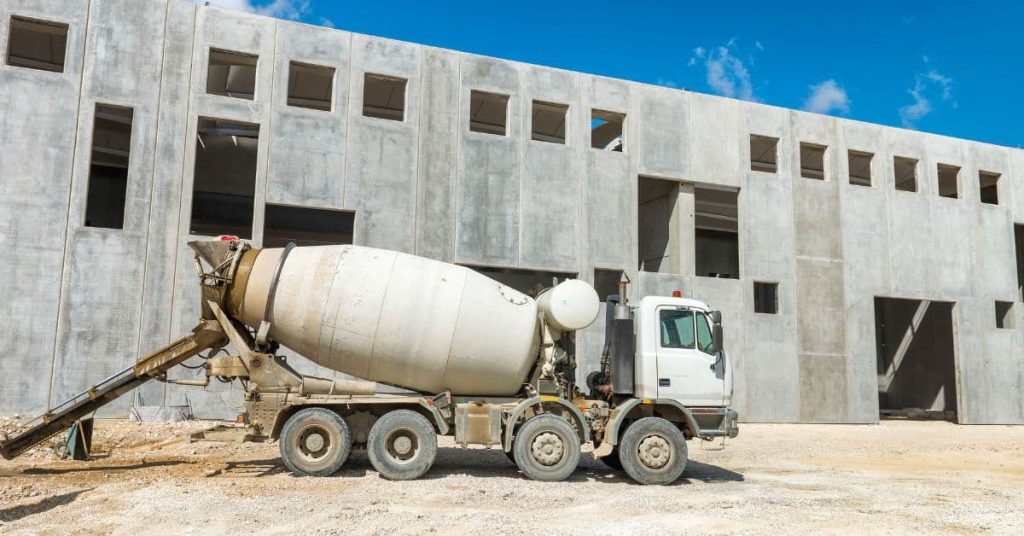
Plan a hard-access concrete pour as one continuous, tested route from the truck discharge point to every part of the form. Do this before booking the load: confirm where the truck can safely stand, how concrete will travel, who will control placement, and what happens if access or equipment fails.
A pump, chute, or wheelbarrow route is not automatically workable because it looks close enough on a sketch. A sharp turn, soft setup area, low overhead line, congested reinforcement cage, steep wheelbarrow path, or unreachable final corner can turn an otherwise routine delivery into a delay, blockage, segregation problem, or incomplete pour.
This guide is about delivery-path logistics, access, placement sequence, and contingency planning. It does not replace approved structural plans, formwork requirements, mix instructions, pump-operator procedures, or local safety and environmental rules.
Key Takeaways
- Choose the delivery method only after surveying the actual truck-to-form route.
- Ask the ready-mix supplier and pump provider to review site access, mix information, and the proposed setup before dispatch.
- Map every restriction: turning, ground conditions, overhead hazards, bends, slopes, gates, excavation edges, and reinforcement congestion.
- Plan placement from the farthest or soon-to-be-inaccessible zone back toward access, unless engineered placement requirements say otherwise.
- Give one person authority to communicate with the truck driver or pump operator and to call a pause or stop.
- Do not treat manual transfer as an automatic backup for a pumped or structural pour; test whether the crew can maintain safe, continuous placement.
- Prepare decisions for a late truck, denied access, pump problem, form movement, weather event, or interrupted placement before concrete is dispatched.
ToC
- Start With a Route Test, Not a Pour-Day Guess
- Diagnose the Actual Bottleneck Before Choosing a Method
- Make a Site Delivery Map and a Pour-Day Route Sheet
- Plan a Pumped Pour: Line Geometry, Setup, and Receiving-End Control
- Plan Chute or Manual Transfer Without Creating a Continuity Problem
- Build the Placement Sequence and Crew Plan Around the Farthest Point
- Prepare for Failures That Turn Access Into a Bad Pour
Start With a Route Test, Not a Pour-Day Guess
Concrete delivery is a logistics problem first. Fresh concrete must move from the truck to the correct location in the form without uncontrolled drops, repeated handling, unnecessary delay, or workers improvising around hazards. The important question is not, “Can we get a truck to the site?” It is, “Can we place concrete continuously and controllably into every required area?”
Walk the complete route after the forms, reinforcement, bracing, scaffolding, temporary fencing, and material piles are in their final positions. An early survey is useful, but it is not enough. The route that looked open during excavation may be blocked once the formwork and rebar are installed.
There are three broad delivery options:
- Direct chute: Often the simplest method when the truck can safely position close enough and the chute can serve all intended discharge points.
- Pumped concrete: Useful where the truck cannot reach the form directly, but only when the pump operator confirms the proposed setup, line route, and mix compatibility.
- Manual transfer: Potentially reasonable for a genuinely small volume and short, stable route. It becomes risky when the crew cannot transfer, place, consolidate, observe forms, and finish at the needed pace.
Arrange an on-site discussion with the concrete supplier and, when pumping is proposed, the pump company. Give them current photographs and a simple site drawing in advance, then confirm conditions on site where possible. The actual truck, pump, mix, line, and local access limitations matter. Do not rely on a generic reach figure, a neighbor’s experience, or a guess based on the apparent distance.
Diagnose the Actual Bottleneck Before Choosing a Method
Hard access is not one problem. A truck may be able to reach the driveway but lack room to turn or leave. The chute may reach the near edge of a slab but not the back edge. A pump may have a physical route to the form, while the hose team has no safe position from which to place concrete around reinforcement. Diagnose the limiting condition before deciding how to deliver.
Check the truck route separately from the concrete route
Start at the public road and trace the delivery vehicle’s path all the way to its staging position. Confirm entrance width, turning areas, gates, parked vehicles, tree branches, overhead services, slopes, soft shoulders, utility covers, retaining walls, and the intended exit. A delivery driver may refuse an unsafe route or setup, and that is a necessary safety decision rather than a problem to solve by persuasion.
Do not direct a loaded truck onto ground of uncertain bearing capacity, close to an excavation edge, beneath questionable overhead hazards, or into a route without a safe exit. Truck dimensions, weight, turning needs, and clearance requirements vary by vehicle. Obtain those details from the provider assigned to your delivery.
Trace the route from discharge to form
Measure and mark the path concrete must take after it leaves the truck or pump. Include every change of direction and elevation, not just straight-line distance. Look for narrow gates, stairs, loose ground, landscaped areas, temporary ramps, uneven thresholds, pedestrian crossings, and areas where the crew would have to work beside an excavation.
Then inspect the receiving end. Can the chute or hose reach each placement zone without striking forms, dragging over reinforcing steel, snagging on embedded items, or forcing people into cramped positions? Deep walls, narrow sections, dense reinforcement, and complex foundations often need a more detailed placement plan than an open slab.
| Observed condition | What it may mean | Planning response |
|---|---|---|
| Truck can stage safely and chute reaches all zones | Direct chute may be practical. | Confirm final position, chute swing, discharge sequence, and exit route with the driver or supplier. |
| Truck can stage, but chute misses part of the form | Repositioning may not solve the access gap. | Ask whether a reviewed pump setup is suitable; do not assume a short hose extension solves the issue. |
| Truck cannot safely enter or stage near the form | Access, not chute reach, is the bottleneck. | Explore a pump setup from a safe staging location, or redesign the delivery logistics before scheduling. |
| Pump line route has tight turns, elevation changes, or crowded work areas | Line geometry and hose handling may be the bottleneck. | Have the pump operator review the route, support needs, mix, setup space, and safe crew locations. |
| Only wheelbarrow access appears possible | Placement rate and worker fatigue may become the bottleneck. | Run a dry test and decide whether the volume, path, crew size, and placement requirements make manual transfer realistic. |
| No method serves the farthest zone safely | The plan is not ready. | Change access, equipment, staging, project phasing, or schedule. Do not discover this after the truck arrives. |
Finally, assess continuity risk. Consider delivery spacing, traffic, dispatch reliability, weather exposure, pump availability, crew attendance, lighting, gate access, and the effect of a stopped placement operation. A route can be physically possible yet operationally poor if it cannot keep up with the concrete arriving.
Make a Site Delivery Map and a Pour-Day Route Sheet
A simple hand sketch is enough if it is accurate and understandable. The purpose is to prevent assumptions between the site lead, driver, pump operator, and crew. Make the map from the truck’s approach direction, not only from the form outward.
Show the street approach, entrance and exit, vehicle staging position, form perimeter, pump position if used, hose or line route, tool area, material storage, washout location, and emergency access. Mark hazards and restrictions clearly: low branches or wires, soft ground, slopes, narrow corners, utility covers, open excavations, pedestrian routes, parked vehicles, and gates.
Use arrows to show the placement sequence. In many cases, it makes sense to begin at the farthest or least-accessible area and work back toward the access point. That prevents fresh concrete, filled forms, hose routing, or finishing activity from blocking the last section. However, structural placement sequence, lift practices, and consolidation requirements may be specified by plans, an engineer, an inspector, or product instructions. Follow those project-specific requirements.
Include these items on the route sheet
- Delivery date, arrival window, confirmed supplier contact, and site address with clear access directions.
- Named site lead, pump contact where applicable, and the person authorized to change the plan or stop work.
- Truck staging instructions, pump setup area, and route protections that must remain in place.
- Placement zones in order, including the farthest zone and any areas requiring special access.
- Who handles hose guidance, chute receiving, traffic or gate control, route housekeeping, consolidation, and form observation.
- Approved washout location and cleanup responsibilities.
- Emergency access and a clear route for people to leave the work area without crossing an active discharge path.
Clear and protect the route before the truck arrives. Move vehicles, secure gates, remove trip hazards, protect vulnerable landscaping if it must be crossed, and keep unrelated work out of the delivery area. Do not use bare soil, a storm drain, or a convenient low spot as an assumed washout area. Follow local environmental rules and the site’s approved washout plan.
Plan a Pumped Pour: Line Geometry, Setup, and Receiving-End Control
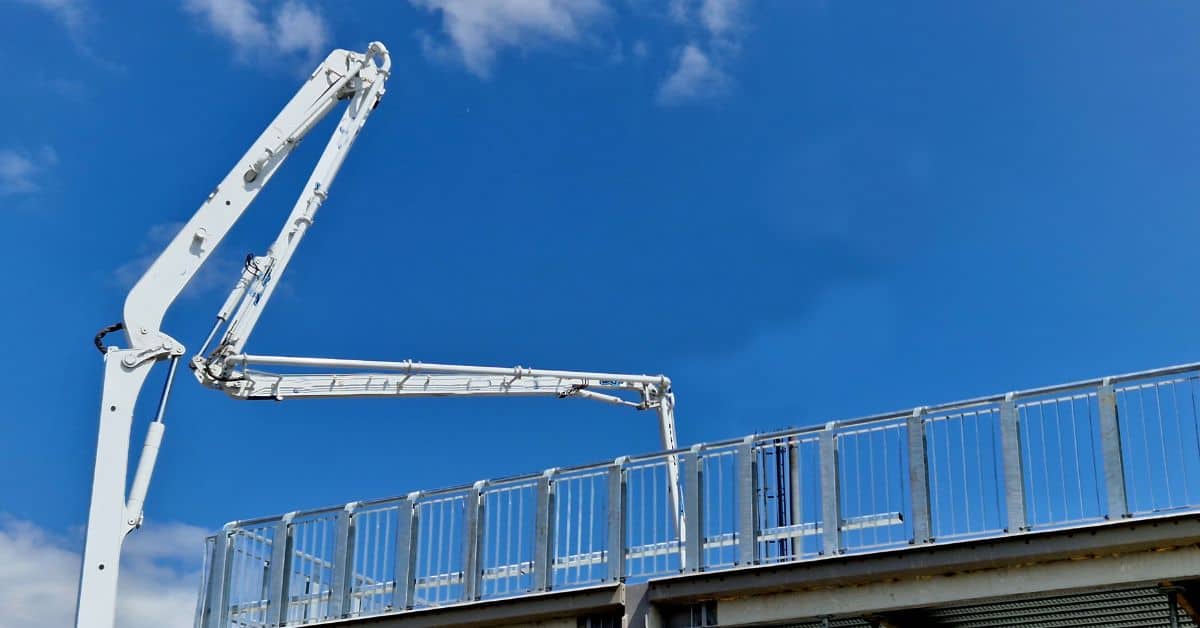
Ordering a pump is not the same as planning a pumped pour. The pump operator needs the proposed mix information, line route, discharge locations, setup footprint, site conditions, and anticipated placement sequence. The operator must decide whether the equipment, line configuration, and concrete are appropriate for the job.
Keep the route as direct and uncomplicated as site conditions allow. Each unnecessary bend, abrupt direction change, poorly supported section, rubbing point, or improvised detour increases handling difficulty and the possibility of interruption. The operator should review line length, bends, vertical rises or drops, hose routing, support requirements, clearance around the equipment, and potential damage points.
Do not make on-site water additions or other mix changes simply to make pumping easier. Pumpability and any authorized adjustment are matters for the concrete producer and pump operator. Use the project’s specified mix and follow the producer’s data sheet and direction.
Organize the receiving end
The hose team needs a clear, protected working area at the form. Assign one person to direct where concrete goes and ensure that the planned sequence is followed. Workers who handle the hose must do so only as trained, authorized, and directed by the pump operator. Plan how the hose will move from one zone to the next without damaging reinforcement, pushing forms out of position, or trapping workers between the hose and an obstacle.
Place concrete at the intended receiving location in manageable areas and layers consistent with the project requirements. Do not use long free-fall drops, uncontrolled hose swings, or repeated dragging through the form as substitutes for proper access. In structural work, follow approved requirements for placement, lift sequence, and consolidation rather than relying on a general rule.
Set a simple communication system. One designated lead communicates with the pump operator and truck driver. Agree on radio use or hand signals before pumping begins, including clear instructions for slow, pause, restart, and emergency stop. Everyone should know who has authority to call a stop when form distress, an access hazard, or a line concern appears.
Pressurized pump lines require strict caution. Never stand in front of a line outlet, straddle a line, open or disconnect a line, or attempt to clear a suspected blockage. Keep people clear and follow the operator’s shutdown and clearing procedure. A line failure or blockage release can be violent. Pump priming, operation, cleaning, and blockage response belong to the operator’s procedures and equipment instructions.
Plan Chute or Manual Transfer Without Creating a Continuity Problem
Direct chute delivery avoids pump-line complexity, but it still requires a confirmed truck position, realistic chute reach, and a safe placement sequence. Ask where the driver expects to stand and how the chute will swing. Confirm that the crew can receive concrete at each intended point without working beneath a raised chute, overreaching at an excavation edge, or blocking the truck’s exit.
Plan the sequence so the truck does not need to move around fresh concrete, open trenches, or workers. If the chute can only serve selected locations, decide in advance whether each remaining area has a reviewed alternate route. Do not wait until the near side is full to discover that the far side is beyond reach.
Manual transfer deserves an honest workflow test. More wheelbarrows do not automatically create a workable operation. Consider the loading point, travel surface, slope, route width, dump point, return path, cleanup, and worker fatigue. At the same time, the crew may need to place concrete, consolidate where required, monitor forms, keep the route clear, and prepare the surface.
Run a dry test using empty wheelbarrows, route markers, or mock loads. This exposes gate conflicts, tight turns, soft ground, collisions between crews, and places where a barrow cannot be tipped into the form cleanly. Give barrow traffic a stable, dedicated path separated from the form crew where practical.
Manual transfer is usually a warning sign rather than a solution when the route is long, steep, slick, uneven, or congested; the volume is substantial; the placement needs to remain continuous; or the crew is too small to perform several critical tasks at once. Do not overload wheelbarrows or send people running over uneven ground carrying concrete.
Build the Placement Sequence and Crew Plan Around the Farthest Point
Turn the map into zones. For each zone, identify the delivery method, crew positions, access route, and the next zone. Start with the area likely to become inaccessible first when that sequence is compatible with the engineered plan. A foundation with pockets, a wall with congested steel, or a slab surrounded by limited access may need a different approach than an open rectangle.
Assign people by responsibility, not by a vague instruction to “help with the pour.” On a demanding job, the same person cannot reliably control truck movement, guide a hose, place concrete, operate a vibrator where required, watch forms, and begin finishing.
- Site lead: Controls the plan, communicates with providers, and makes pause or stop decisions.
- Truck or pump liaison: Relays only the site lead’s instructions to the driver or operator.
- Receiving crew: Manages chute receiving or works under the pump operator’s direction at the hose.
- Placement and consolidation crew: Places material where needed and performs required consolidation according to the project requirements.
- Form observer: Watches braces, ties, joints, leakage, bulging, and reinforcement position.
- Route steward: Keeps the access path clear, protects crossings, and prevents people from entering hazardous zones.
- Finishing crew: Prepares to take over without abandoning critical placement duties too early.
Before dispatch, verify tools, power supply, charging or fuel arrangements where relevant, lighting, protective equipment, communications, access keys, weather protection, and the approved washout setup. Clean water may be needed for cleanup where appropriate, but it is not a license to alter the concrete mix. Maintain continuous observation of forms, braces, reinforcement, and the travel route while the pour is underway.
Prepare for Failures That Turn Access Into a Bad Pour
A useful contingency plan does not pretend every problem has a quick fix. It identifies who decides, who calls whom, and when the safe choice is to delay, cancel, or stop. Make these decisions before concrete is dispatched, while alternatives are still available.
| Failure point | Pre-pour decision to make |
|---|---|
| Truck is late or cannot enter | Confirm supplier contact, access directions, alternate staging possibilities reviewed in advance, and who can authorize rescheduling. |
| Pump cannot safely set up or line route changes | Use only an alternate setup reviewed by the pump provider; otherwise defer the pour rather than improvise line geometry. |
| Suspected line blockage or equipment fault | Stop clear of the hazard and follow the pump operator’s procedure. Keep untrained personnel away from pressurized equipment. |
| Form leaking, bulging, moving, or showing unexpected deflection | Stop placement immediately and have the responsible qualified person assess the formwork before resuming. |
| Crew shortage or route becomes blocked | Decide whether remaining staff can safely cover all critical roles. Do not abandon form observation or safe access to keep material moving. |
| Weather or traffic interruption | Confirm communications, protection measures, and the person authorized to coordinate a delay with dispatch and project oversight. |
Interrupted placement matters because concrete can become harder to place and consolidate as time and conditions change. An unplanned interface may be weak or visibly objectionable depending on the element, mix, temperature, elapsed time, and project requirements. There is no universal safe pause duration. Do not add water, retemper concrete, change admixtures, or restart compromised material without direction from the concrete producer and the responsible project professional.
For cosmetic, nonstructural work, a pause may mainly affect appearance and finish consistency. For a structural element, permitted work, engineered plans, or an inspected placement, an interruption or sequence change can require direction from the responsible designer, inspector, or contractor. Treat form movement, poor consolidation access, and prolonged interruptions as technical issues, not cosmetic inconveniences.
Final go/no-go meeting
Hold a short meeting shortly before dispatch or before the truck is released to the site. Walk the route one last time and confirm:
- The supplier and pump provider, if used, have the current access information and confirmed setup plan.
- Truck approach, staging, exit, emergency access, and washout are clear and protected.
- The hose, chute, or manual route serves every placement zone, including the farthest one.
- Forms, reinforcement, bracing, and temporary site conditions have been checked after the final route survey.
- Every critical role is staffed, tools are staged, and communications have been rehearsed.
- The placement sequence, backup decisions, stop-work authority, and weather plan are understood by the crew.
If one of these items is unresolved, the logistics plan is not complete. Correct it before the concrete arrives. Good access planning is not extra paperwork; it is what keeps a difficult pour controlled from the first discharge to the last reachable section of the form.
For related planning, review how to calculate concrete yardage before ordering, and use a dedicated slab pour preparation guide for project-specific base, reinforcement, and curing work.