closeup of red brick wall with mortar joints

Installing Expansion Joints in New Stucco: Simple Layout Rules for DIY Projects

Introduction

Expansion joints are gaps that let stucco expand and contract without cracking. In new stucco, plan these joints where movement or stress is likely and at regular intervals. Keep joints clean and avoid sealing them with rigid materials.

Where to place joints depends on wall size, substrate, and climate. Check manufacturer guidance and local rules for spacing, then mark the layout before you start. Use flexible, exterior-grade joints and follow the directions on the label for installation and curing.

Key takeaways

  • Plan joint layout around walls, corners, and openings to avoid short spans.
  • Use appropriate joint spacing and type per stucco system guidelines.
  • Seal, flash, and WRB continuity must be maintained at joints.
  • Keep pry bars and hammers away from new edges to prevent cracking.
  • Inspect after curing, repair cracks promptly, and re-check flashing alignment.
  • Follow local codes and manufacturer instructions for joint materials.
Table of Contents

Why Expansion Joints Matter in Stucco

Expansion joints are built into stucco to accommodate movement in the substrate. They help prevent cracks from forming across the surface. Planning joints from the start protects the finish and reduces future repairs.

As a DIYer, you should consider where movement is likely and place joints accordingly. Check the substrate, sheathing, and framing for movement factors. Use the product instructions as your guide for location and spacing rules.

How movement affects stucco assemblies

Stucco is a rigid material that doesn’t stretch much. So, it’s crucial to plan for movements caused by various factors.

Thermal movement happens as temperatures change. Stucco expands in heat and contracts in cold. This can lead to stress if not accounted for.

Moisture movement occurs when stucco absorbs or loses water. It swells when wet and shrinks when dry, causing stress.

Structural movements, like settling or shifting of the substrate, also put stress on stucco layers. These stresses can cause cracking if not relieved by expansion joints.

Consequences of missing or improper joints

Missing or improperly placed expansion joints lead to serious problems in stucco assemblies.

Cracking is the most common issue. It starts small but can grow, leading to water intrusion and further damage.

Delamination occurs when the stucco layers separate from each other or the substrate. This happens due to the buildup of stress that wasn’t relieved by expansion joints.

Water intrusion is another major concern. Cracks allow water to enter, causing damage to the substrate and leading to mold growth. It can also cause further cracking as the water expands when it freezes.

Back to top ↑

Types of Joints and Where to Use Each

Expansion or movement joints are designed to absorb larger shifts in the structure. Control joints guide where cracks can form in a controlled way. Isolation joints separate stucco from other materials to avoid transfer of movement.

Apply expansion joints at changes in plane or near large openings. Use control joints along long straight runs. Consider isolation joints around windows, doors, and adjoining walls as needed. Refer to the manufacturer instructions for exact guidance.

Expansion (movement) joints

Movement joints, also known as expansion joints, are crucial in stucco systems. They allow for natural expansion and contraction of the stucco due to temperature changes and moisture absorption.

Use movement joints: between large wall fields (over 20ft wide), at corners where walls meet at different angles, or where dissimilar materials meet like wood or metal.

Typically, they’re placed every 16-24 feet on center. But always check your specific project’s requirements.

Control and isolation joints

Control joints are used to direct where the stucco will crack, preventing random cracking. Isolation joints separate dissimilar materials or substrates to prevent stress transfer.

Use control joints: every 8-12 feet on center in large wall fields to control cracking patterns.

Isolation joints are needed: at penetrations like windows, doors, and chimneys. Also, use them where stucco meets dissimilar substrates like brick, stone, or metal.

Back to top ↑

Tools and Materials Checklist for DIY Installation

Have the right joint profiles and backer materials on hand before work starts. Gather sealants compatible with stucco and the chosen joints. Prepare basic safety gear such as gloves and eye protection for the project.

Keep a cutting tool, tape measure, and chalk line ready for marking. Have a clean workspace and a method to clean joints before sealing. Verify compatibility and installation notes on the product label as you shop.

Recommended tools

Before you start, make sure you have the right tools for the job. This checklist covers essential hand and power tools needed for layout, cutting, fastening, and finishing your joint system.

  • Tape measure: To ensure accurate spacing and depth of joints.
  • Chalk line: For snapping straight lines on the surface.
  • Carpenter’s square: To mark 90-degree angles for control joints at corners.
  • Utility knife: For scoring and cutting backer material and sealant.
  • Jigsaw or reciprocating saw: With a fine-tooth blade, to cut expansion joint profiles.
  • Hammer: To tap in control joint wedges.
  • Trowel: For applying sealant and backer material.
  • Safety glasses: Protect your eyes from debris during cutting and sanding.

Quick rule: Always double-check your measurements before making cuts to avoid mistakes.

Material selection basics

Choosing the right materials is crucial for a successful expansion joint installation. Here’s a checklist of common joint profiles, backers, and sealants to consider.

  • Expansion joint profiles: Choose from foam, rubber, or metal profiles based on your substrate and movement needs.
  • Backer material: Select compatible materials like fiber-reinforced tape or mesh for added strength.
  • Sealant: Opt for a flexible, paintable sealant that’s compatible with stucco and your chosen profile.
  • Joint width: Determine the appropriate joint width based on substrate movement and expansion joint type.
  • Depth: Ensure your profiles are deep enough to accommodate expected movement.

Quick rule: Always check product compatibility with stucco and your specific substrate before making purchases.

Safety and site preparation items

Proper safety measures and site preparation are essential for a smooth installation. Here’s what you need to ensure a safe and efficient work environment.

  • Personal Protective Equipment (PPE): Include safety glasses, gloves, and ear protection as needed.
  • Scaffolding or planks: Secure platforms for working at heights safely.
  • Drop cloths or plastic sheeting: Protect adjacent surfaces from sealant spills and debris.
  • Ladder: For accessing high areas, ensure it’s stable and secure.
  • First aid kit: Have one on-site in case of minor injuries.

Quick rule: Always prioritize safety by wearing appropriate PPE and using stable work platforms.

Back to top ↑

Simple Layout Rules and Planning Workflow

Start with a clear assessment of wall geometry and openings. Mark joint lines to reflect anticipated moves and transitions. Coordinate joint placement with control lines to maintain visual consistency.

Decide on spacing factors by checking product guidelines and local rules. Make sure joints do not conflict with penetrations or flashings. Keep the planning visible so you can follow it during installation.

Locating joints relative to openings and corners

When planning your expansion joint layout, consider the stress points around openings like windows and doors. These areas need extra support.

Inside corners should have a joint running vertically through them. This helps control cracking from wall movement.

For wall returns, place joints at the return line to direct any stress away from the corner. This prevents cracks from forming at the 90-degree angle.

Around openings, run joints along the head and jambs of windows and doors. This helps manage movement and keeps your stucco looking sharp.

Field size and segmenting long runs

Long wall elevations can be tricky to plan. Break them down into smaller, manageable segments called fields.

Each field should be no larger than 10′ x 10′. Check your manufacturer’s guidelines for exact sizing. Local codes may also have spacing requirements.

Start at the bottom and work your way up. Place a joint every 8-12 feet horizontally, depending on wall length. Vertically, space joints about 6-8 feet apart.

Remember, these are general guidelines. Always consult local codes and manufacturer recommendations for precise spacing.

Coordination with trim, flashing, and transitions

Expansion joints should align with trim, flashing, and other transitions to maintain a watertight seal. This keeps moisture out and prevents damage.

For flashing, run your joint lines right over the top of it. This ensures water can’t sneak behind the stucco and cause problems.

With window trim, align your joints with the trim’s edges. This creates a clean, finished look and helps manage movement around the opening.

At transitions like parapets or chimneys, place a joint at the line where the two surfaces meet. This controls stress and prevents cracking between them.
Back to top ↑

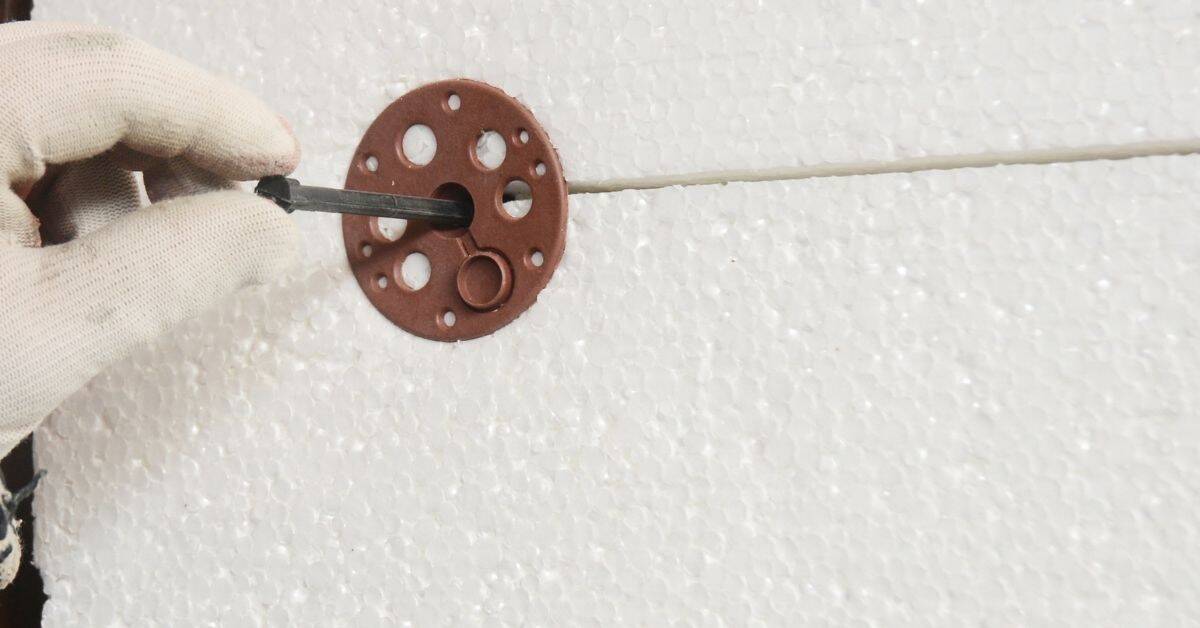
Hand with glove holding tool against foam board with plastic anchor

Step-by-Step Installation Procedure (DIY-Friendly)

Begin with marking the joint locations on the stucco surface according to the plan. Install backer materials and profiles in the marked zones. Install sealant as the final step after the joint profile is secured.

Follow the sequence from marking to backer, then profile, and sealant. Check the immediate setup for alignment and level. Confirm timing guidance from manufacturer instructions before applying subsequent coats.

Step-by-Step Installation Process

Follow these clear, numbered steps to install expansion joints in your new stucco project like a pro.

  1. Preparation and safety checks: Inspect the site, gather tools, and wear appropriate PPE. Ensure the substrate is clean, dry, and free of debris.
  2. Marking out joint locations: Use your layout plan to mark expansion, control, and isolation joints on the wall using a level and straight edge.
  3. Main work – Installing joint profiles: Starting from the bottom, install metal or PVC joint profiles, ensuring they’re plumb, aligned, and securely fastened. Use compressible backer material as needed.
  4. Applying stucco coats: Apply scratch, brown, and finish coats around the joints, embedding them properly according to manufacturer instructions. Allow each coat to cure before proceeding.
  5. Final checks and cleanup: Inspect your work for any missed spots or defects. Remove any excess material and clean up the site.

Measuring, marking, and preparing the substrate

Accurately transfer your layout plan to the wall and prepare the surface for joint installation.

Use a level and straight edge to mark out joint locations on the wall. Ensure these marks are exactly where you want the joints to be.

Prepare the lath or WRB by securing it to the substrate, following manufacturer instructions. Ensure it’s secure and won’t move during installation.

Clean the surface thoroughly to remove any dust, debris, or contaminants that could compromise joint adhesion.

Installing joint profiles and backer

Set the metal or PVC joint profile in place while maintaining plumb and alignment. Use compressible backer material as needed.

Start from the bottom and work your way up, ensuring each profile is level with its neighbors. Use shims if necessary to maintain a consistent gap between the wall and the profile.

Secure the profiles in place using nails or screws, following manufacturer instructions. Ensure they’re securely fastened to prevent movement during stucco application.

If using compressible backer material, install it according to manufacturer instructions, ensuring it’s properly compressed and won’t move during installation.

Applying stucco coats around the joint and finishing

Properly embed the joint profiles in the stucco, following a consistent scratch/brown/finish coat sequence.

For the scratch coat, apply stucco to a thickness of about 1/4 inch around the joints. Use a hawk and trowel to spread it evenly, embedding the joint profiles as you go.

Allow the scratch coat to cure according to manufacturer instructions before applying the brown coat. Apply this layer to a thickness of about 3/8 inch, again ensuring the joints are properly embedded. Let it cure.

Finally, apply the finish coat to a thickness of about 1/8 inch. Smooth it out evenly around the joints, following manufacturer instructions for finishing flush or recessed. Allow it to cure completely before painting or sealing.

Back to top ↑

Flashing, WRB Continuity, and Waterproofing Details

Ensure flashing details align with joint locations to shed water away from the joint. Maintain continuity of the weather-resistive barrier across joints and penetrations. Protect the substrate from moisture before final finishes.

Coordinate joint placement with WRB margins and flashing transitions at openings. Recheck that there are no gaps or misalignments under the sealant. Follow the manufacturer guidance for compatible materials and transitions.

Integrating joint profiles with housewrap and flashing

The key to a watertight expansion joint is integrating your joint profiles seamlessly with the weather-resistive barrier (WRB) and flashing. Here’s how:

First, overlap the WRB over the joint profile by at least 4 inches. This ensures that any water hitting the joint gets redirected back onto the WRB.

Now, apply your flashing. Overlap it on top of both the WRB and the joint profile. Again, aim for a 4-inch overlap to maintain the drainage plane.

This setup allows water to drain off the joint and onto the WRB, which then directs it down and out. No leaks, no worries.

Drainage and slope considerations at sills and transitions

At sills and transitions, proper drainage is crucial to keep water away from your expansion joints. Here’s what you need to do:

First, ensure the joint profile slopes away from the opening or transition. This encourages water to drain off rather than sitting in the joint.

Next, terminate the joint profile properly at sills and transitions. Extend it beyond the sill or transition by about 1 inch, then slope it downwards to direct water away.

At windows and doors, make sure your flashing terminates underneath the joint profile. This prevents water from getting trapped behind the joint and causing issues.

Back to top ↑

Common Mistakes, Troubleshooting, and Repairs

Watch for gaps between profiles and backer materials that can trap moisture. Avoid over-tightening or misplacing joints near openings. Do not skip the pre-seal or surface cleaning steps.

Spot early signs of movement or cracking and address promptly without major demolition. Use approved repair methods and compatible sealants for any damaged joints. When unsure, consult product data sheets or local code officials before proceeding.

Typical installation errors and how to avoid them

Here are some common mistakes DIYers make when installing expansion joints in new stucco. Avoid these pitfalls for a successful project.

  • Poor alignment: Misaligned joints can compromise the integrity of your stucco system. Always align joints with control joints in adjacent walls and avoid running them through corners or openings.
  • Incompatible sealants: Using the wrong sealant can lead to joint failure. Stick to high-quality, flexible, and paintable sealants designed for expansion joints.
  • Blocked movement: Obstructions in the joint can prevent proper expansion and contraction. Ensure nothing inhibits movement by keeping joints clear of debris and maintaining proper drainage.
  • Improper substrate preparation: A poorly prepared surface can cause adhesion problems. Always clean, prime, and prepare your substrate according to manufacturer guidelines before installing joint profiles.

By being aware of these common mistakes and taking steps to avoid them, you’ll ensure a long-lasting, effective expansion joint system.

Diagnosing cracks, leaks, and adhesion problems

When issues arise in your stucco system, it’s crucial to identify the cause before attempting repairs. Here are some visual and tactile checks to help you determine if the problem is due to joint failure, substrate movement, or application errors.

Cracks: Inspect cracks for width, location, and pattern. Hairline cracks near openings may indicate settling, while wider cracks at corners could signal poor installation. Cracks that widen during temperature changes suggest a failed expansion joint.

Leaks: Look for water stains or dampness around joints, windows, and doors. Leaks can be caused by improper flashing, damaged sealants, or clogged weep holes. Check these areas thoroughly to pinpoint the source of the leak.

Adhesion problems: Gently push on stucco surfaces near joints to check for give or detachment. If the stucco feels loose or moves easily, it may indicate poor adhesion due to improper substrate preparation or inadequate sealant application.

Repair and retrofit strategies for existing stucco

If you’re dealing with an older stucco system that needs joint repairs or retrofits, follow these practical strategies to minimize scope and maintain your home’s appearance.

Adding or replacing joints: To add new expansion joints or replace failed ones, carefully cut through the existing stucco using a utility knife or oscillating tool. Clean out any debris, apply a primer, and install new joint profiles following the steps outlined in our installation guide.

Resealing: If your expansion joints are still intact but leaking, reseal them using a high-quality, flexible sealant. First, cut out any damaged or deteriorated sealant, clean the joint, apply primer, and then fill with new sealant according to manufacturer instructions.

Patching cracked stucco: To repair small cracks in your stucco, use a vinyl spackling compound or stucco patching material. Apply the patch according to package directions, allow it to dry, and then sand, prime, and paint as needed. For larger repairs, consult our article on repairing damaged stucco for step-by-step guidance.

Back to top ↑

Inspection, Maintenance, and Compliance Checklist

Create an inspection routine that covers pre-installation checks and post-installation reviews. Include seasonal maintenance tasks for joints and seals. Verify that details align with manufacturer recommendations.

Keep a record of inspections and any corrective actions for future reference. Coordinate with local code officials if required and confirm up-to-date compliance. Use the checklist as a living document for ongoing upkeep.

Visual checkpoints for sign-off

Use this checklist after installation to ensure everything is in order before signing off on the job.

  • Alignment: Check that joint profiles are straight and evenly spaced. Misaligned joints can lead to uneven stucco application and increased risk of cracking.
  • Continuity: Ensure joint profiles run continuously without breaks or gaps. Incomplete profiles can cause water intrusion and stucco delamination.
  • Sealant adhesion: Inspect sealant beads to confirm they adhere well to both the substrate and joint profiles. Poor adhesion can result in sealant failure and water penetration.
  • WRB/Flashing integration: Verify that housewrap and flashing are properly integrated with joint profiles. Inadequate integration can compromise the building envelope’s integrity, leading to water damage.
  • Joint depth: Measure joint depths to ensure they’re consistent and match design specifications. Inconsistent depths can affect stucco application and performance.
  • Stucco coverage: Check that stucco coats completely cover joint profiles, providing a uniform appearance and protecting the joint system from moisture and debris.
  • Slope at sills: Confirm that sills have proper drainage slope away from the building. Improper slope can cause water to pond and enter the wall assembly.
  • Transition details: Inspect transitions between different materials (e.g., stucco to brick) to ensure they’re properly flashed and sealed. Poorly detailed transitions can lead to water intrusion and damage.

Quick rule: A thorough visual inspection helps prevent costly repairs down the road.

Routine maintenance tips and service life signs

Regularly inspect your stucco expansion joints to maintain their performance and extend their service life.

  • Annual inspection: Inspect joints annually, or more frequently in harsh climates. Regular inspections help catch issues early before they become major problems.
  • Sealant condition: Check sealant beads for signs of cracking, peeling, or discoloration. Damaged sealants should be replaced to prevent water intrusion.
  • Joint movement: Gently push and pull on joint profiles to ensure they move freely without binding. Restricted movement can indicate a problem with the joint system.
  • Stucco condition: Inspect stucco around joints for cracks or other signs of distress. Damaged stucco should be repaired to protect the joint system.
  • Drainage at sills: Ensure sills have adequate drainage and are free from debris. Clogged or improperly sloped sills can cause water backup and damage.
  • Flashing condition: Check flashing at transitions for signs of corrosion, damage, or dislodgment. Damaged flashing should be repaired to maintain the building envelope’s integrity.
  • Re-seal joints every 5-10 years: Joint sealants have a limited lifespan and should be replaced every 5-10 years, depending on climate and joint exposure. Regular resealing helps maintain the joint system’s performance.
  • Professional intervention: If you notice significant cracking, water intrusion, or other signs of severe damage, consult a professional stucco contractor for repair advice.

Quick rule: Regular maintenance helps keep your expansion joints in top shape and extends their service life.

What to verify with manufacturers and building inspectors

Before finalizing your joint layout, consult product literature and local building codes to ensure compliance and maximize performance.

  • Installation instructions: Carefully follow manufacturer guidelines for installing joint profiles, sealants, and stucco. Deviating from recommended procedures can void warranties and compromise performance.
  • Warranty limits: Understand the warranty coverage for your chosen joint system components. Warranties typically cover defects in materials and workmanship but may have limitations or exclusions.
  • Local building codes: Check with your local building department to ensure your chosen joint system complies with applicable codes and standards. Non-compliance can result in fines, delays, or even removal of installed components.
  • Expansion joint spacing: Verify that your planned joint spacing matches manufacturer recommendations and local code requirements. Inadequate spacing can lead to cracking and other performance issues.
  • Joint depth and width: Ensure your chosen joint dimensions align with manufacturer guidelines and local codes. Incorrect dimensions can affect the joint system’s performance and appearance.
  • Sealant type and color: Confirm that your chosen sealant type and color match the manufacturer’s recommendations for your specific joint system and stucco finish. Incompatible sealants or colors can negatively impact performance and aesthetics.
  • Flashing and WRB compatibility: Ensure that your chosen flashing and housewrap products are compatible with your selected joint profiles and stucco system. Incompatible components can lead to water intrusion and other problems.
  • Inspection requirements: Familiarize yourself with local inspection requirements for expansion joints. Failure to comply with inspection protocols can result in delays or additional costs.

Quick rule: Thoroughly research and verify product specifications, warranties, and code compliance before installing your joint system.

Back to top ↑

Conclusion

Expansion joints in stucco are not optional flair—they keep cracking to a minimum, protect waterproofing, and keep the surface looking straight and professional. Do the layout right, protect the wrap and flashing, and you’ll save time, trouble, and costly repairs later.

First, verify the right joint locations and spacing, measure carefully, plan where flashing and WRB need to pass through, gather the exact tools and materials, set the joints, install them cleanly, test the waterproofing, seal where required, and then inspect everything from top to bottom. Follow the workflow you laid out in the planning steps, and work steadily in small sections to avoid overloading or mistakes. Always test a small area first and stay within safe working limits to protect yourself and the finished work.

Two common mistakes to avoid are skipping or misplacing joints and skipping proper flashing and WRB detail. Don’t shortcut the waterproofing details or rely on a single sealant for long-term durability. Use proper fall protection when working at height, keep edges clean, and don’t rush through steps that affect adhesion or movement. If you’re unsure about the building movement, water intrusion risk, or complex flashing, pause and reassess the plan rather than forcing a result.

Call a professional if you encounter structural movement, extensive water intrusion, or uncertain layout that could compromise the system. Otherwise, with careful planning, safe work practices, and disciplined execution, you can complete a reliable, visually solid install that stands up to weather for years to come. Stay focused, keep safety first, and finish with confidence.

Back to top ↑

FAQ

How do I decide where to place expansion joints in new stucco without overdoing it?

Plan joints where movement is likely: near corners, transitions, and stress points. Check the stucco product instructions and local guidelines for their recommended joint locations and spacing. When in doubt, prioritize joints at known movement hotspots and along long, unbroken wall runs.

How should I handle expansion joints near doors, windows, or corners?

Keep joints clear of openings, but plan for alignment across adjacent surfaces. Use control joints to create predictable break lines and avoid trying to “hide” them in trim. Follow manufacturer guidance for detailing at openings and intersections.

What signs tell me joints aren’t working after installation?

Look for cracking that runs through or just past joints, buckling, or unusual movement at joints after weather events. If joints look loose or weatherproofing around them shows gaps, reassess the layout and detailing. Always verify with product labels or instructions for acceptable behavior.

How do I maintain expansion joints to prevent moisture problems?

Keep joints clean and free of debris, and inspect waterproofing continuity around the joints regularly. Use the approved sealant or backer materials as specified by the manufacturer, and check that flashing and WRB detail remains continuous at joints. If you see gaps or deterioration, consult the product instructions for repair steps.

Back to top ↑