
Introduction
Removing ice melt residue after sealing is cleaning concrete surfaces without etching the finish. Use a non-acid cleaner and plenty of clean water, and work from the edges toward the center to avoid spreading residue. Test a small area first and scrub gently with a soft brush, then rinse well.
Look for signs of salt damage such as powdery or rough patches, staining, or efflorescence after winter use. Prevent damage by cleaning regularly and choosing compatible sealers and de-icers, checking manufacturer guidance and local rules. Keep the plan simple: pick a mild cleaner, follow label directions, and repeat as needed.
Key takeaways
- Identify whether ice melt residue is surface film or salt damage.
- Test cleaning on a small area before full application to avoid etching.
- Use non-acid cleaners and follow manufacturer instructions for your concrete.
- Protect nearby plantings and wind drift; wear goggles and gloves.
- Rinse thoroughly with clean water; inspect for remaining crystals before resealing.
- Document damage signs and maintenance plan to prevent future salt damage.
Table of Contents
- Introduction
- Key takeaways
- Why Ice Melt Residue Matters Before Resealing — Impact on Concrete and Sealers
- Identify Salt Damage Vs Removable Residue
- Safety, Prep, and Tools Checklist
- Non-Etching Cleaning Workflow — Step-by-Step Before Resealing
- Techniques for Stubborn or Crystallized Deposits
- Avoiding Etching and Other Common Cleaning Mistakes
- Repair and Remediation When Cleaning Isn’t Enough
- Long-Term Prevention and Maintenance Plan Before and After Resealing
- Conclusion
- FAQ
Why Ice Melt Residue Matters Before Resealing — Impact on Concrete and Sealers
Salt-based de-icers like sodium chloride, calcium chloride, and potassium chloride leave residues that sink into concrete pores and move with moisture, leading to deeper substrate damage and higher porosity. You’ll see white or gray efflorescence, powdery or crystalline deposits, staining, and signs of salt-induced freeze-thaw stress that hint the surface isn’t ready for sealing. Residues also undermine sealer adhesion and can cause hazy, milky seals or premature bond failure if moisture is trapped beneath the coating.
Before you reseal, remove the salt residue with a pH-neutral cleaner or a specialized salt-removal product, use light brushing, and give the surface a thorough low-pressure rinse. Then let everything dry completely and verify with a moisture test or surface tack check; plan the reseal for a calm, dry window to avoid reabsorption and intermittent adhesion problems.
How ice melt chemicals harm concrete
Ice melt chemicals, like sodium chloride, calcium chloride, and potassium chloride, can wreak havoc on your concrete. They penetrate deep into the pores through capillary action and moisture movement.
Here’s what they do:
Crystallization: When water freezes in the pores, it expands. This forces salt crystals to grow, causing micro-cracks and increasing porosity.
Freeze-thaw acceleration: The expanding ice weakens the concrete’s surface, making it more susceptible to damage from subsequent freeze-thaw cycles.
Efflorescence: Salt draws moisture to the surface, where it evaporates and leaves behind a white or gray powdery deposit called efflorescence. This reduces slip resistance and makes the surface look unsightly.
Spalling: Severe freeze-thaw cycles can cause pieces of concrete to break off, leading to spalling and exposing fresh surfaces to more damage.
Surface weakening: The combined effects of these processes weaken the concrete’s surface, reducing its overall strength and durability.
How residue interferes with sealers
Ice melt residue can cause serious issues when you try to reseal your concrete. Here’s why:
Soluble salts: Residue contains soluble salts that prevent proper bonding between the sealer and the concrete surface. This means the sealer won’t adhere as well, leading to potential peeling or flaking.
Films: The residue leaves behind a film on the surface that can cause blushing or hazing of the sealer, making it look milky or uneven.
Contaminants: Dirt, debris, and other contaminants in the residue can interfere with the sealer’s ability to form a complete, even film. This can lead to accelerated bond failure when moisture is trapped under the sealer.
The result? A poorly sealed surface that won’t protect your concrete as it should, leading to premature deterioration and reduced lifespan of both the sealer and the concrete itself.
Identify Salt Damage Vs Removable Residue
Identify salt damage from removable residue by using clear visual signs and a quick touch test. Look for color patterns, sheen of crystals, and where the residue sits—recesses or shadows often hold more—then run a gloved finger or brush to feel for a chalky crust versus a rough, permanently changed surface. Do simple on-site tests like a water bead followed by re-wetting, a light scrub with a non-acid cleaner, or a gentle probe with a plastic scraper to see if the surface yields or crumbles.
This matters because if cleaning restores a uniform surface and the color lightens, you’re likely dealing with removable residue. If etching or deep texture remains after the test, plan for resealing or a professional assessment and document patterns before you proceed. Take before/after photos and note where sun or shade affects the appearance to guide your next steps.
Visual and tactile checkpoints
Before you start cleaning, use these signs to tell temporary residue from permanent damage.
- White crusts: Temporary. Scrape off easily with a plastic scraper.
- Powdery deposits: Temporary. Brush off gently.
- Flaking: Possible damage. Check for underlying discoloration.
- Pitting: Permanent etching. Surface is damaged.
- Surface roughness: Possible deep damage. Feel with gloves or brush.
- Concentrated residue in recesses: Temporary. Clean thoroughly.
- Uniform dulling: Etching. Won’t clean off completely.
- Color returns after re-wetting: Temporary. Residue dissolves.
Quick rule: If it’s easy to remove and surface is uniform, it’s residue. If not, plan for repair or professional help.
Quick tests to differentiate residue from etching
Perform these simple checks to confirm if deposits are removable residue or deeper damage.
Wet wipe test: Use a damp cloth. If residue smears, it’s temporary.
Water absorption test: Pour water on the surface. If it beads up, etching may be present.
Touch test: Feel with gloves or brush. A rough, densified surface indicates deeper damage.
Test clean patch: Clean a small area. If residue comes off easily and surface remains uniform, it’s removable residue.
Safety, Prep, and Tools Checklist
Safety, prep, and the right tools go hand in hand for non-etching concrete cleaning. Put on gloves, eye/face protection, long sleeves, and a respirator if you’re using cleaners, and keep chemicals away from plants and drains.
Shield plants, landscaping, and nearby drains with tarps or plastic to contain runoff, and mark off pets and high-traffic areas. Build a practical kit: buckets, spray bottle, garden sprayer, hose, a low-pressure washer setting, soft pads, brushes, non-metal scrapers, and approved pH-neutral cleaners or degreasers. Dispose rinse water properly and verify residue is removed by visual clarity, no hazy film or streaks, and allow the surface to dry before resealing.
Personal protective equipment and site safety
Before you start, gear up and prep your work area to ensure a safe and efficient cleaning process.
- Gloves: Protect your hands from harsh chemicals. Use rubber or nitrile gloves.
- Eye/face protection: Wear safety glasses with side shields or a face shield to prevent chemical splashes.
- Long sleeves: Cover exposed skin to minimize contact with cleaning solutions.
- Respirator (optional): If using strong cleaners, wear a respirator for added protection.
- Footwear: Wear sturdy boots or shoes to protect your feet from debris and chemicals.
- Ventilation: Ensure the area is well-ventilated. Open windows or use fans if indoors.
- Protect plants: Cover nearby plants with tarps or plastic sheeting to prevent damage from runoff.
- Mark off areas: Keep pets and people away from the work area using cones, tape, or signs.
Quick rule: Always prioritize safety first. Skipping protective gear can lead to injuries or chemical exposure.
Tools and materials checklist
Gather these essential tools and materials before you begin cleaning ice melt residue from your concrete surfaces.
- Soft-bristle push broom: Use this to gently remove loose debris and residue. Hard bristles can scratch the surface.
- Soft deck brush: For scrubbing, use a soft-bristled brush designed for delicate surfaces.
- pH-neutral cleaner or commercial residue remover: Choose a cleaning solution that won’t damage concrete or compromise sealers. Always test on a small area first.
- Buckets: You’ll need at least two – one for clean water and one for the cleaning solution.
- Hose/low-pressure washer: Use a low-pressure setting to avoid damaging the concrete surface. A garden hose with an adjustable nozzle works well.
- Rinse water source: Have a dedicated water source for rinsing, preferably one that can be directed away from plants and drains.
- Absorbent cloths: Use these to wipe up any remaining residue or test patches before resealing.
- Test-patch materials: Before applying sealers, perform a test patch to ensure the cleaner hasn’t compromised the surface.
Quick rule: Having the right tools and materials ensures an effective clean without damaging your concrete surfaces.
Non-Etching Cleaning Workflow — Step-by-Step Before Resealing
Start with a dry-removal baseline: sweep thoroughly, broom away loose grit, dust, and white salt crystals, and lift fines with a magnet or shop-vac so you don’t grind the surface. Separate salt types and residues as you go—watch for efflorescence, calcium chloride or rock-salt, and clay soils—and note any staining or signs of prior etching to guide the cleaning approach. Use a gentle, non-etching sequence that starts dry and moves to a mild cleaner only if needed, applying with low-foam, non-abrasive tools, and skip acidic or chlorinated cleaners that can bite into concrete.
Control water and brushing technique by keeping usage minimal, using a soft-bristle brush or microfiber pad, and avoiding aggressive scrubbing or pooling in joints. Work in small sections so you don’t oversaturate and can keep the surface surface dry enough to test. Rinse with clean water at low pressure, test the surface for any film or residue, and perform a neutral-pH check to confirm the surface is ready for sealing—no signs of etching or efflorescence should remain before you apply the sealer; if in doubt, check the label or manufacturer instructions and follow local guidance for best results.
Step-by-Step Cleaning Process
The following sequence ensures a thorough, non-etching cleaning workflow before resealing your concrete.
- Wear appropriate PPE and ensure site safety as outlined in the Safety, Prep, and Tools Checklist.
Reason: Safety first to protect you and your surfaces. - Perform a visual and tactile check for residue and signs of damage.
Reason: Identify problem areas and tailor cleaning approach as needed. - Dry remove loose grit, dust, and salt crystals using a broom, magnet, or shop-vac.
Reason: Prevents forcing salts into pores during wet cleaning. - Test clean in an inconspicuous area with your chosen cleaner to ensure no adverse reactions.
Reason: Avoids damaging the surface with incompatible products. - Clean and rinse the entire surface following the guidelines in the subsequent sections, then perform final checks for residue and etching.
Reason: Ensures a clean surface ready for sealing.
Dry removal and initial rinsing
Begin by removing loose residues to prevent them from being forced into pores during wet cleaning.
Start with a stiff-bristle broom or shop-vac equipped with a HEPA filter to lift dry residue.
Use a magnet on the end of a stick to collect metal shavings and other magnetic particles.
Be cautious not to scratch the surface with the magnet’s edge.
Thoroughly rinse the cleaned area using a low-volume, high-pressure washer or garden hose with a spray nozzle.
Work in small sections to prevent oversaturation and pooling, which can lead to efflorescence.
Mild cleaning and neutral rinses
After dry removal, use a pH-neutral cleaner or manufacturer-formulated residue remover to tackle remaining residues.
These cleaners are designed to be gentle on concrete surfaces while effectively removing salts.
Apply the cleaner according to the manufacturer’s instructions using a low-foam, non-abrasive tool like a soft-bristle brush or microfiber pad.
Work in small sections and rinse thoroughly with clean water after each section.
Important: Always perform a test patch before applying any cleaner to ensure compatibility with your surface and no adverse reactions.
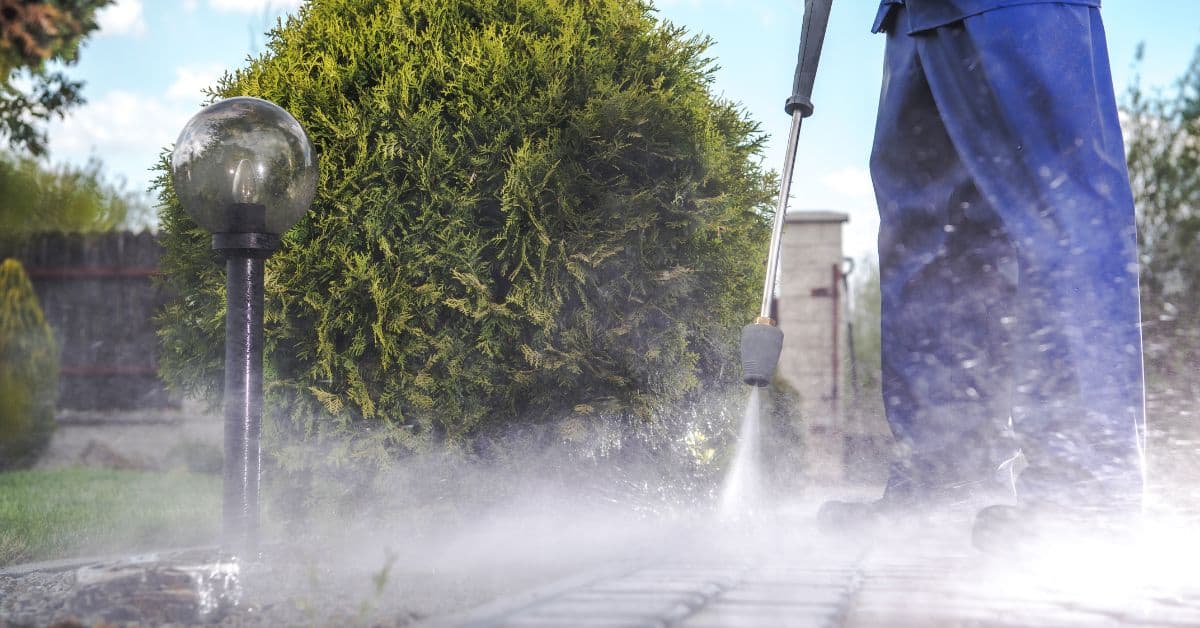
Low-pressure power washing best practices
Power washing can be an effective tool for removing tough residues, but it must be done carefully to avoid damaging the surface.
Use the lowest effective pressure setting and a wide-angle nozzle (at least 40°) to distribute water evenly.
Keep the wand moving continuously across the surface to prevent concentrated water streams from etching or damaging the concrete.
Follow equipment and surface manufacturer guidance for power washing techniques to avoid voiding warranties.
Caution: Never use a pressure washer with a narrow-angle nozzle (0° or 15°) as it can cause severe damage, including etching and gouging.
Techniques for Stubborn or Crystallized Deposits
Stubborn or crystallized salt deposits aren’t the same as simple surface residue, and you’ll need a clear escalation plan. Start with rinsable poultices and a neutral cleaner, then move to limited chemical cleaners only if there’s still residue after multiple attempts. Always check substrate tolerance and test cleaners on a small area first.
This approach protects the finish and sealants while giving you a path to cleaner results without guesswork. It matters because wrong moves can etch or lift a surface, or trap salts beneath a finish. If you don’t see progress after trying the safer steps, stop and consider professional help or a restoration specialist before risking damage.
Poultices and repeated rinsing
When simple cleaning doesn’t cut it, consider a poultice. It’s like a big band-aid that draws out crystallized salts.
A poultice is a paste made from powdered cleaner and water. Apply it thickly over the affected area. Let it dwell for 24-48 hours. Then scrape off and rinse. Repeat if needed.
Neutral cleaners can also help. Use them repeatedly, followed by thorough rinsing. This can slowly dissolve salts without aggressive chemistry.
When to consider stronger treatments or a pro
Strong acid washes and specialty chelants can be powerful, but they can also damage your concrete if not used right.
Test first. Always test any cleaner on a small, hidden area before going big. Check for etching or damage.
If you’ve tried poultices and repeated neutral cleaning with no luck, it might be time to consider stronger treatments. But remember, these should be used by experienced contractors only. They know how to handle them safely and effectively.
When in doubt, call a pro. If you’re unsure about any treatment, don’t hesitate to hire a sealant or restoration specialist. It’s better to be safe than sorry.
Avoiding Etching and Other Common Cleaning Mistakes
Top etching culprits sneak into DIY cleaning: overused acids in any strength, aggressive cleaners, high pressure water or brushes, and abrasive tools that scratch the surface. Each mistake changes the surface chemistry or texture, making it more porous or leaving residues that invite future staining. Start with a clear test-first rule: try a small, inconspicuous patch, document the results with notes or photos, and only escalate if the test shows no adverse effects after a short dwell.
Know the signs and when to pause: color changes, a powdery film, halos around grime, or etched patterns indicate acid exposure and risk. Use safe, non-etching methods first—neutral pH cleaners, mild degreasers, soft-bristle brushes, and low-pressure rinses—and rinse thoroughly to remove residues. If any negative changes appear, stop, neutralize with a pH-balanced cleaner per label, and check the sealant manufacturer guidelines before proceeding with caution.
Common mistakes that cause etching
Here are some common mistakes to avoid when cleaning unsealed concrete. These can lead to etching, increased porosity, or residue left behind.
- Overusing acids: Undiluted or concentrated acids can quickly damage the surface. Always dilute and use sparingly.
- Wire brushing: Abrasive tools like wire brushes can scratch the concrete, increasing its porosity and making it harder to clean.
- High-pressure narrow nozzles: Using high pressure with a narrow nozzle can blast away surface material, leaving pits or grooves.
- Skipping test patches: Always test cleaning methods on a small, inconspicuous area first to avoid unexpected damage.
Remember, these mistakes can alter the surface chemistry and texture of your concrete. Take care to avoid them.
Safe escalation protocol
When cleaning unsealed concrete, it’s important to follow a safe, stepwise approach to avoid etching and other damage. Start with a visual assessment of the surface.
Test patch: Begin with mild methods on a small, inconspicuous area. Use neutral pH cleaners or low-pressure rinses. Document the results with notes or photos.
If no adverse effects are seen after a short dwell time, proceed gradually. Only escalate to stronger methods or professional help if necessary and after consulting manufacturer guidelines.
Repair and Remediation When Cleaning Isn’t Enough
Cleaning and light etch prevention won’t always restore a stained or damaged surface. When you see visible etching, a powdery film, salt crystallization, spalling, or discoloration that cleaning won’t reverse, it’s time to consider repairs. Patching small blemishes, crack repair with suitable injections or surface seals, and resurfacing options like thin overlays or full-depth overlays offer options that balance durability and look, plus clear decision points for DIY versus hiring a pro based on area, depth, and safety concerns.
This matters because DIY work hinges on surface stability and your access to the right tools, not just time or budget. Use it as a practical guide to decide when to patch, when to seal cracks, and when to resurface, and to recognize when major cracking or movement signals professional evaluation. After remediation, plan prep, sealing, and curing steps around weather and moisture, and set a simple maintenance rhythm to keep resealing intervals predictable and prevent future deterioration.
Patching spalled areas and hairline cracks
When cleaning can’t restore your concrete surface, it’s time for some patching. This is ideal for small blemishes like spalls or hairline cracks.
For spalls, use a concrete repair caulk or mortar to fill the voids. Apply with a trowel or putty knife, ensuring you pack it well into the damaged area.
For hairline cracks, consider using an epoxy crack filler. It’s flexible and durable, making it great for preventing further damage. Apply with a caulking gun, smoothing it out with a trowel or brush.
Remember, patching is a localized fix. If the damage is extensive, you might need to consider resurfacing or consulting a pro.
Resurfacing vs localized repair
Sometimes, patching isn’t enough. Here’s when to consider resurfacing:
– If you’ve got extensive spalling or widespread pitting.
– When the surface is severely discolored and cleaning can’t reverse it.
Resurfacing options include thin-overlay or full-depth overlay. Both involve applying a new layer of concrete over the existing one, but they differ in depth and durability.
Before you decide, get contractor assessments. They can provide quotes and advice tailored to your specific situation. It’s always wise to consider multiple opinions.
Long-Term Prevention and Maintenance Plan Before and After Resealing
Establish a practical, people-friendly seasonal calendar that lines up with resealing: pre-winter prep, post-winter clean-up, and quarterly inspections to catch early residue buildup, while clearly flagging what to do if salt exposure spikes. Focus on choosing salt-resistant or compatible sealers by checking for salt tolerance, UV stability, and compatibility with any existing coatings, and plan when to reapply after major ice melt events, all while keeping a simple decision tree in mind for reseal versus postpone based on surface condition.
This matters because small daily and weekly habits compound over a season, so prompt removal of visible melt, thoughtful use of alternative de-icers, and avoiding calcium chloride on delicate finishes reduces long-term residue and prolongs seal life. Clear drainage fixes and surface prep steps—like ensuring proper slope drainage, clearing efflorescence-prone areas, and addressing textures that trap melt residue—free up the surface for better adhesion and easier maintenance. Use a straightforward inspection checklist before resealing: test a small area for adhesion, note weather windows, and document current residue levels to decide if extra cleaning is needed, then follow a simple quick-reference guide to decide when resealing is appropriate or when conditions warrant postponement.
Choosing sealers and application timing
When selecting a sealer, look for these properties:
Salt tolerance: Resists salt intrusion to prevent residue buildup.
UV stability: Maintains its protective qualities under sunlight exposure.
Compatibility with existing sealers: Ensures it bonds well with your current sealer, if any.
Seasonal maintenance, drainage, and best practices
Establish a seasonal maintenance calendar:
Pre-winter prep: Clean and seal surfaces before snowfall.
Post-winter clean-up: Remove residue promptly after thawing.
Quarterly inspections: Check for early residue buildup.
Improve drainage to minimize residue:
Proper slope: Ensure water runs off efficiently.
Clear efflorescence-prone areas: Remove any obstacles blocking runoff.
Avoid concentrated piles of ice melt: Spread de-icers evenly to prevent damage.
Conclusion
Getting ice melt residue off before resealing protects the concrete, keeps the sealer from failing early, and preserves a clean, even finish. Safety comes first, and a careful, non-etching approach saves you time and money in the long run.
Proceed with a simple checklist in your head as you go: inspect the surface for obvious salt damage, test a small inconspicuous spot first, dry before scrubbing, use the stepwise non-etching workflow, rinse and neutralize as needed, and let the area dry completely before applying sealer. Keep the work tight to the target area, follow the order you’ve planned, and document any spots that need extra attention for later touch-up.
Two common mistakes to avoid are using aggressive cleaners or tools that can etch or roughen the concrete, and skipping the test patch or full-dry timing that reveals hidden damage. Do not rush the prep or skip safety gear, and never seal over damp concrete. If the residue remains stubborn after fixed attempts, or you see cracking, spalling, or persistent salt staining, pause and reassess the surface.
If you’re not confident after multiple attempts, or you notice salt damage beyond removable residue, call a professional. The right call now protects your investment, and with solid prep you’ll have a solid seal that lasts. Stay focused, work methodically, and you’ll get a durable, clean result.
FAQ
What signs indicate salt damage on concrete beyond obvious residue?
Look for surface scaling, chalky or powdery texture, small pits, or a dull, spalled finish. Cracks that widen with freeze-thaw cycles can also signal salt damage. If the surface feels rough even after cleaning, that’s one to watch.
How can I prevent salt damage through cleaning and sealing?
Keep up with regular, non-etching cleaning to remove salt buildup before it penetrates. Use a sealer compatible with de-icing seasons and reapply per manufacturer guidance. Ensure proper drainage so melt water doesn’t pool and re-wet the surface.
What should I consider when choosing de-icing products for concrete?
Prefer products labeled safe for concrete and follow their usage instructions. Avoid harsh blends that contain chlorides if you’re protecting sealers. Check manufacturer guidelines and local rules for any restrictions in your area.
Why is drainage important for salt prevention, and how can I improve it?
Standing water lets salt stay in contact with the slab longer, speeding damage. Improve slope away from structures, clear cracks and gutters, and keep drainage paths open. If water ponds after cleaning, address the grade before resealing.