
Introduction
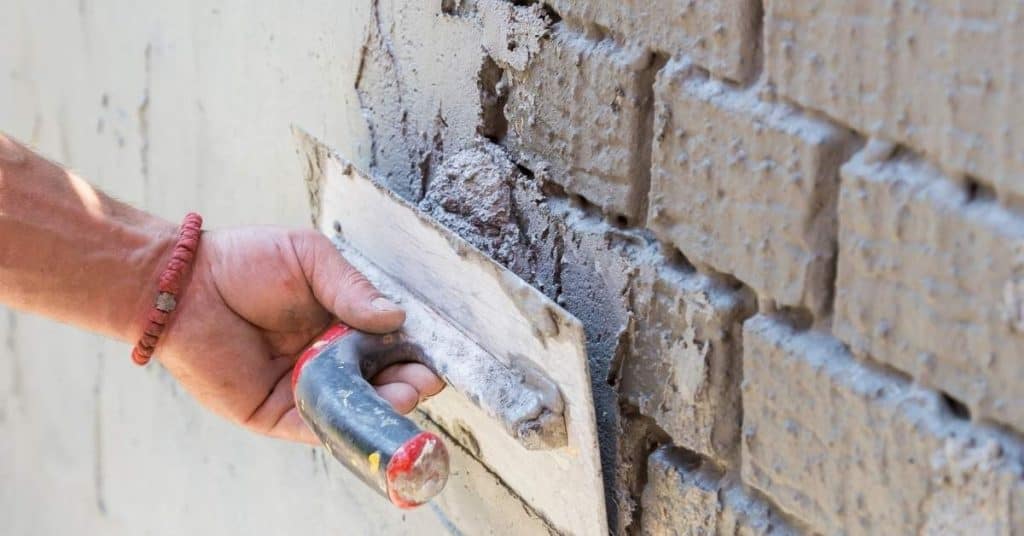
Patching plaster over brick arches means applying new plaster to cover the brick and hide uneven shadows. You’ll aim for a flat, uniform surface that looks seamless with the surrounding wall. Work in small steps, keeping the mix workable and the surface clean as you go.
Start by inspecting for loose bricks or dust, then dampen the area to help the plaster grab. Apply a thin scratch coat to key areas, then build up with a second coat as needed and smooth it out. Let the coating set according to the product instructions and check your work against the surrounding surface, making any small corrections as you go. If in doubt, test a small area first to see how it dries and blends.
Key takeaways
- Assess brick arch for cracks, moisture, and loose mortar before patching.
- Use a compatible patching system with proper reinforcement to minimize shadow lines.
- Roughen and clean brick surfaces to ensure good bond and even absorption.
- Tie new plaster into arch of existing render with temporary supports as needed.
- Screen shadows with feathered edge, consistent thickness, and controlled curing.
- Monitor curing environment and test bond; wear eye protection during topcoat application.
Table of Contents
- Introduction
- Key takeaways
- Why “Shadow Lines” Form on Plastered Brick Arches
- Tools and Materials Checklist
- Inspecting and Preparing the Brick Arch
- Selecting the Right System and Reinforcement Strategy
- Step-by-Step Patching Workflow to Avoid Shadow Lines
- Visual Checkpoints and Simple Tests During the Job
- Curing, Priming and Painting to Hide Transitions
- Troubleshooting Recurring Shadow Lines and Durable Fixes
- Conclusion
- FAQ
Why “Shadow Lines” Form on Plastered Brick Arches
Shadow lines show up when the plaster thickness varies across the arch. Substrate movement can transfer unevenness into the finish, especially where brick and mortar joints are irregular. Lighting can also exaggerate slight thickness differences that you don’t notice in daylight.
Differential adhesion between the plaster and brick, plus thermal expansion and contraction, can create long, thin ridges that cast shadows. Inspect how each area responds to moisture and heat, and note any flexing or cracking that points to movement. Keep an eye on joints where the arch meets the surrounding wall for thinned patches.
Substrate movement and thermal/structural causes
Brick arches are not static structures. They expand and contract with temperature changes, and the mortar between bricks shrinks over time. This movement can cause stress on the plaster finish, leading to shadow lines.
The arch itself also flexes under its own weight and any additional loads. This flexure can create tiny cracks in the plaster, which show up as shadow lines when light hits them at an angle.
To minimize this, ensure your brickwork is sound and well-pointed before you start plastering. Use a flexible finish to accommodate some movement.
Adhesion, keying and differential stiffness
Poor adhesion between the brick and the plaster can cause shadow lines. If the plaster doesn’t stick properly to the bricks, it can lift or crack, creating visible outlines.
The same goes for incompatible materials. For example, using a stiff finish over a flexible base can lead to problems. The base moves, but the finish doesn’t, causing stress and cracks.
To avoid this, use a suitable plaster mix for your substrate. Ensure good keying – a rough surface for the plaster to grip onto – by cleaning and preparing the bricks properly before you start.
Lighting and surface profile factors
Low-angle light can exaggerate small undulations in your plaster finish, making them appear as shadow lines. This is why you might see them more at certain times of day or under artificial lighting.
The profile of your finish also matters. A smooth, even surface will reflect light evenly and won’t show up shadow lines. But any lumps, bumps, or hollows can cause light to hit the surface at different angles, creating shadows.
To control this, use a consistent trowel technique when applying the plaster. Work in small areas and use a straight edge to ensure your finish is even and smooth.
Tools and Materials Checklist
Gather a set of trowels in small to medium widths and a screed board for controlled thickness. Have a hawk or mixing tray ready, plus a margin trowel for detail work. Choose a base plaster or setting mix that suits masonry arches and pair it with a compatible bonding coat.
Keep staples like plaster mesh or reinforcement fabric handy, and select setting plasters that are flexible enough for curved surfaces. Check product labels or manufacturer instructions for recommended substrate and cure times, then plan with local rules in mind. For safety, have a damp sponge, bucket, and protective gear accessible at the job.
Recommended plaster types and bonding agents
Before you start mixing, check this list to ensure you’re using the right materials for your arch.
- Cement/Lime/Gypsum-based plasters: Consider their pros (strength, breathability) and cons (shrinkage, staining).
- Setting-type skim coats: Use for final layers to achieve a smooth finish.
- Bonding primers/polymer additives: Apply when plastering over old or non-absorbent surfaces.
Quick rule: Match your plaster type to the arch’s condition and desired finish.
Lath, reinforcement and edge beads
Choose the right reinforcement materials to prevent cracks and shadow lines on your arch.
- Metal lath: Suitable for structural repairs, but can rust. Use with anti-rust primer.
- Paper-backed mesh: Ideal for small cracks and easy application.
- Fiberglass tape: Flexible, no rust risk; great for corners and edges.
- Corner/arch beads: Protect vulnerable areas from impact damage.
Quick rule: Use a combination of reinforcement materials to suit the arch’s condition and your repair needs.
Inspecting and Preparing the Brick Arch
Start with a visual check of the arch for cracks, spalling, or loose bricks. If you find loose mortar, gently remove it with a chisel or brush and avoid damaging sound bricks. Clean the surface to remove dust, efflorescence, and debris that could impede adhesion.
Repair deteriorated brickwork with compatible mortars or restoration patches, ensuring a solid, even base. Rinse if needed and let the substrate dry to a stable condition. Confirm there are no hidden voids under the arch that could telegraph through the finish.
Repairing bricks and mortar joints before plastering
Before you start plastering, it’s crucial to ensure your brick arch is solid and stable. This means fixing any loose or damaged bricks and repointing the mortar joints.
Start by removing any loose mortar from the joints using a trowel or a stiff brush. Then, fill deep voids in the joints with fresh, compatible mortar. Make sure it’s similar to the existing mortar to avoid differential movement.
If bricks are damaged, replace them carefully, ensuring they’re well-bedded and aligned with the arch. Use a suitable, matching mortar for repairs.
Cleaning, wetting and priming procedures
To ensure your plaster adheres properly to the brickwork, you need to clean it thoroughly and prepare the surface.
First, remove any efflorescence or dust from the bricks using a stiff brush or a wire brush attachment on a power drill. Be careful not to damage the surface.
Next, pre-wet the brickwork. This helps prevent suction and ensures even plaster application. Use a spray bottle or a damp cloth, but avoid soaking the bricks.
Finally, apply a bonding coat to improve adhesion. Use a suitable primer or bonding agent as recommended earlier in this guide. Ensure the surface is evenly coated and allow it to dry according to the manufacturer’s instructions before plastering.
Selecting the Right System and Reinforcement Strategy
Compare options like bonded one-coat renders, traditional three-coat systems, and veneer skim approaches to suit the arch geometry. For curved surfaces, consider reinforcement that helps resist cracking without adding excessive stiffness. Match the system to the substrate so it remains workable on the curve.
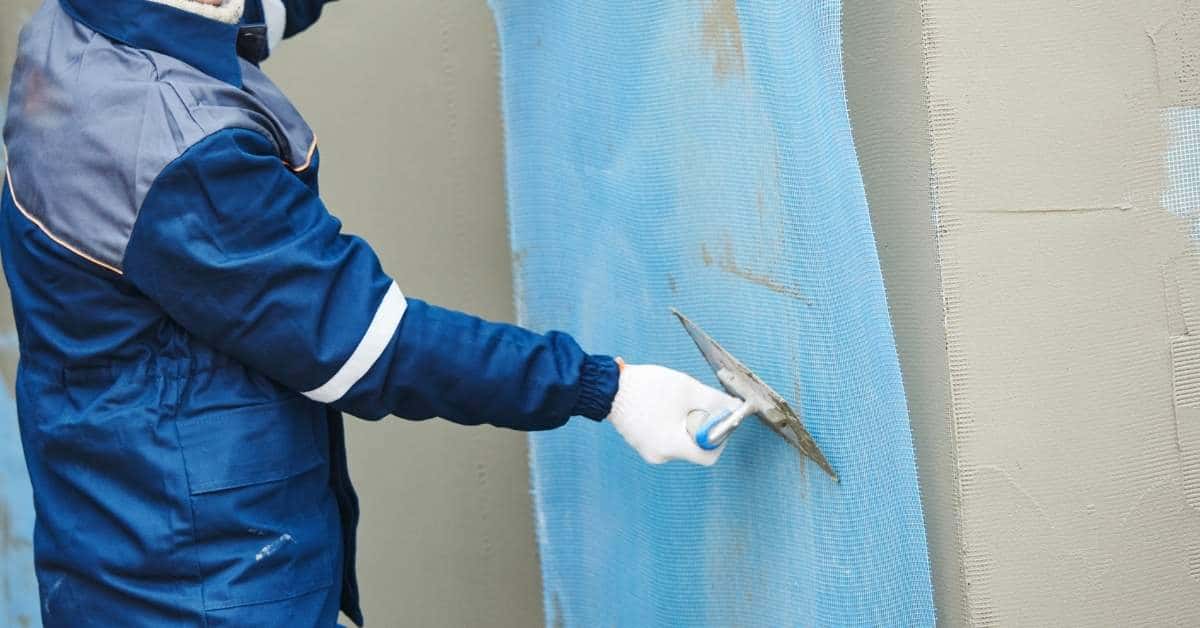
Plan reinforcement such as mesh or fabric placed at the appropriate layer, following the manufacturer’s guidance. For arches, ensure the reinforcement lays flat and conforms to the curve without creating high spots. Check local building guidance or product data sheets for compatibility with brick and lime or cement mortars.
When to use mesh, lath or a floating base
The choice between mesh, lath, and a floating base depends on your arch’s span, curvature, and expected movement.
Mesh: Use this for wider spans (over 1.2m) and arches with significant curvature. It provides excellent reinforcement but needs careful installation to avoid ‘shadow lines’.
Lath: Suitable for smaller spans (under 1.2m). Lath is cheaper but offers less reinforcement than mesh. Use it when movement is minimal.
Floating base: This is a thin layer of render applied directly onto the arch, without reinforcement. It’s best for narrow arches with little curvature and no expected movement.
Designing movement/control joints for arches
Movement joints are crucial to accommodate differential movement without visible lines. Here’s how to design them:
Discreet joint locations: Place joints at intervals that match the arch’s curvature and span. Typically, every 1-1.5m is suitable.
Flexible interfaces: Use a flexible material like backer rod or foam tape to fill the joint before applying the render. This allows for movement without cracking.
Details to accommodate differential movement: Make sure joints are deep enough (at least 15-20mm) and wide enough (around 10-15mm) to allow for expected movement. Seal them with a flexible sealant after rendering.
Step-by-Step Patching Workflow to Avoid Shadow Lines
Begin with a thin scratch coat to establish a uniform base over the arch. Work from the highest point toward the abutments to keep thickness even. Apply a consistent pass and check with a straightedge as you go.
Follow with a main coat that builds to a controlled thickness, feathering edges to blend with surrounding surfaces. Use overlapping passes and avoid heavy rims that can show as lines. Let the coat set enough before applying a finish skim that glides smooth along the curvature.
Step-by-Step Process
This sequence guides you through patching a plaster arch without creating shadow lines. Follow these steps for a smooth, professional finish.
- Inspect and prepare the arch as detailed earlier. Ensure all bricks and joints are sound and clean.
- Wet the arch lightly to prevent rapid suction of the plaster. Use a spray bottle or damp cloth.
- Mix your chosen plaster according to manufacturer’s instructions. Aim for a smooth, lump-free consistency.
- Apply the scratch coat using a hawk and trowel. Work from the bottom up, ensuring even coverage and consistent thickness. Use a straight edge to strike off any excess.
- Allow the plaster to set until it’s no longer tacky but not yet hard. Lightly float over the surface with a steel wool pad to create a key for the next coat. Check for any missed spots or low areas.
- Apply intermediate coats, building up the profile and feathering edges as outlined in the following sections. Ensure each coat is allowed to set before proceeding.
- For the final skim, mix a small batch of plaster with a slightly higher water content for easier application. Apply thinly and evenly, using a light touch to maintain the arch’s profile.
- Allow the final coat to set, then lightly sand any high spots or imperfections. Wipe clean with a damp cloth and inspect your work under different lighting conditions.
Applying a keyed scratch or base coat
A solid, well-keyed base coat is crucial for preventing shadow lines. Here’s how to achieve it:
Start by mixing your plaster with a slightly stiffer consistency than usual. This helps create a mechanical key that improves adhesion.
Using a hawk and trowel, apply the plaster in thin, even layers from bottom to top. Work quickly but carefully to maintain consistent thickness across the arch’s profile.
Tip: Use a straight edge or guide rule to strike off any excess plaster and ensure a level surface.
Building intermediate coats and feathering edges
Intermediate coats help build up the arch’s profile and prepare it for the final skim. Here’s how to apply them without creating shadow lines:
Mix your plaster with a consistency similar to that of the base coat. Apply thin, even layers, building up the profile gradually. Use a straight edge or guide rule to maintain consistent thickness.
When feathering edges, use a flexible trowel or float to blend the plaster into the existing surface. Work from the middle outwards, ensuring no sharp transitions that could cast shadows.
Tip: When working with butt joints, stagger your coats and feather the edges to avoid creating ridges.
Final skim, texture match and profile control
The final skim is crucial for achieving a uniform appearance across all light angles. Here’s how to apply it:
Mix your plaster with a slightly higher water content for easier application. This helps maintain the arch’s profile and creates a smooth, consistent finish.
Apply the final coat thinly and evenly using a flexible trowel or float. Work from the middle outwards, using a light touch to maintain the arch’s profile.
Tip: Inspect your work under different lighting conditions to ensure no shadow lines are present. If necessary, lightly sand any high spots or imperfections and reapply a thin skim coat.
Visual Checkpoints and Simple Tests During the Job
Use a straightedge at key moments to verify evenness across the arch. Raking light at a low angle helps reveal high spots and shadows in the plaster. Gently tap the surface to listen for hollow or thin areas that need attention.
Perform a pull-test on suspected patches to confirm adhesion, and recheck after any rework. Check transitions at the ends of the arch to ensure a clean blend into surrounding surfaces. Schedule quick checks after each major step to catch issues early.
Straightedge and Raking-Light Inspections
Use this checklist during each stage of your patching process to ensure no high or low spots cause shadow lines.
- Before priming: Check for any remaining dips or humps. Use a straight edge and raking light to reveal imperfections.
- After base coat: Inspect for levelness. Any misses here will show up in the final skim.
- Between coats: Ensure each new layer is level with the last. This helps avoid buildup and shadow lines.
- Before final skim: Double-check for any remaining issues. A straight edge and raking light will show you what to fix.
Quick rule: Inspect after each stage, not just at the end. Catching problems early saves time and material.
Bond Testing and Small Sample Patches
Before committing to full-scale patching, test adhesion and compatibility with these checks at critical spots.
- Edge beads: Test bond strength here. Poor adhesion can cause shadow lines later on.
- Mortar joints: Check how well the new plaster bonds to old mortar. Incompatibility can lead to delamination.
- Arches’ underside: Ensure good contact and adhesion in this hard-to-reach area.
- Sample patches: Apply small test patches using your chosen system. Let them cure, then check for signs of poor bond or incompatibility.
Quick rule: Never skip these tests. They’re the best way to avoid surprises and ensure a lasting repair.
Curing, Priming and Painting to Hide Transitions
Follow curing instructions for the chosen system, keeping the surface protected from rapid drying or wind is key. Avoid extreme heat or direct sunlight that could cause cracking. Allow appropriate time for a stable finish before priming.
Choose primers that suit both the patch and surrounding plaster, then select paints with a finish and sheen that minimize residual lines. Test color and sheen on a small patch if possible, and verify coverage and compatibility with the patching system per label guidance.
Curing times and moisture management
Once you’ve patched your plaster, it’s crucial to let it cure properly. This means giving it time to dry slowly and evenly to prevent shrinkage lines from forming.
Rule of thumb: Allow 2-3 days for each 1/8 inch of patch depth. Keep the room temperature between 60-70°F (15-21°C) and maintain a relative humidity of around 40-50%.
Avoid direct heat sources or drafts that could speed up drying and cause cracks.
Use a damp cloth to mist the patched area lightly once or twice a day. This helps keep moisture levels consistent as the plaster cures.
Primer, texture coatings and paint strategies
After curing, it’s time to prime your patched area. A good primer will help seal the plaster and provide a better surface for painting.
Choose an alkyd primer designed for new plaster. It dries fast and provides excellent adhesion for paint.
For texture, use a light application of a spray-on texture coating. This will help blend the patched area with the existing surface and minimize the appearance of transitions.
When it comes to paint, opt for a low-sheen or flat finish. These sheens reflect less light, helping to hide minor imperfections. Use a high-quality latex paint in a color that matches your existing wall as closely as possible.
Troubleshooting Recurring Shadow Lines and Durable Fixes
When lines reappear, identify whether they track with substrate movement, patch thickness, or finish compatibility. Start with local rework in the affected area, adjusting thickness and feathering to blend new material with the old.
Consider movement joints or a different finish system if lines persist across seasonal shifts. Review your substrate, primer, and topcoat choices against manufacturer instructions and local building practices to ensure a long-lasting solution.
Local repair options versus full rework
When you’re dealing with recurring shadow lines, the first step is to decide whether to perform a local repair or a full rework. Here’s how to tell:
Local Repair (Feathering & Re-skimming): If the shadow lines are minor and isolated, you can often get away with feathering out the edges of the patch and reapplying a thin skim coat. This works best when the underlying structure is sound.
Cut Back to Base Coat: When the problem area is larger but still contained, consider cutting back to the base coat. Remove any loose or damaged material, then apply a new base coat before reapplying intermediate and final coats.
Full Removal & Replacement: If shadow lines are extensive, severe, or indicative of underlying structural issues, it’s usually best to remove all affected material back to the substrate. This ensures you’re addressing any hidden problems and gives you a clean slate for repairs.
Upgrades for long-term stability
To prevent recurring shadow lines, consider these upgrades that enhance the longevity of your plasterwork:
Flexible Membranes: Apply a flexible membrane between the brick arch and the plaster. This allows for minor movement without transferring stress to the plaster, preventing cracks and shadow lines.
Improved Reinforcement: If possible, reinforce the arch itself with stainless steel or fiberglass rebar before applying new plaster. This strengthens the arch and reduces the likelihood of future issues.
Altered Joint Details: Review your joint design. Wider joints allow for more movement without stressing the plaster. Consider using movement/control joints that are wider than standard, or install additional joints to accommodate increased movement.
Conclusion
Patch work on brick arches sticks best when you lock in safety, solid prep, and proper curing from the first coat to the final paint. Stay focused on durable results and you’ll avoid repeat shadow lines and costly rework.
First, your read-once checklist in plain terms: confirm the area is safe to work in, wash and dry the brick thoroughly, choose the right patching system and reinforcement, follow the step-by-step patching workflow, keep checking with the visual checkpoints and simple tests as you go, let everything cure fully, then prime and paint to hide transitions, and finally inspect for any shadow lines after the finish coat. Do each step in order and don’t rush the cure times.
Common mistakes to avoid are skipping moisture checks or using the wrong mix, over- or under-building patches, and skimping on curing and sealing. Don’t move ahead with high-traffic use before it’s dry, and don’t force patches with excessive pressure or fast-drying products that crack. Always wear basic safety gear, keep the work area well ventilated, and test a small area first to check how the material behaves before you commit to the whole arch.
When to call in a pro: if you find new cracks in the brick, any structural movement, or shadow lines stubbornly reappear after you’ve reworked the patch and finish. If you’re unsure about reinforcement needs or access is awkward or unsafe, get a qualified tradesperson involved. Stay steady, follow the steps, and you’ll finish with a sound, smooth arch that looks right and lasts.
FAQ
What should I check about the existing brick arch before patching to avoid shadow lines?
Look for loose bricks, crumbling mortar, and obvious cracking. Make sure the arch is structurally sound and that any movement or bowing is addressed. If you’re unsure, consult or follow the brick or mortar manufacturer guidance and local rules before patching.
What patching approach is safest for minimizing shadow lines on a brick arch?
Use a patching method that bonds well to both brick and the existing plaster. Follow the materials’ instructions for bonding primers, setting compounds, and reinforcement. If instructions aren’t clear, check the label or manufacturer’s datasheet for the correct sequence and mixing guidance.
How do I assess and control moisture to prevent plaster shadow lines after patching?
Test for moisture in the brick and substrate before patching and use breathable, compatible materials. Keep a consistent drying rate across the patch by avoiding thick layers at once and following product guidance on curing conditions. If in doubt, refer to product labels and local recommendations on humidity and curing.
What signs indicate my patch is failing or likely to develop new shadow lines?
Watch for cracks that reappear, flaky plaster, or movement at the arch. If you see recurring cracking, reassess substrate prep, reinforcement, and finish coats. Recheck manufacturer instructions and consider adjusting reinforcement strategy or patch thickness as needed.