
Introduction
Painting cabinet doors correctly means preparing the surface, choosing the right paint, and applying even coats.
You’ll want to clean and sand, then wipe dust before priming. Then choose a finish that matches your cabinet style and follow the paint label for drying times.
Start with light, even coats and avoid runs by keeping a steady pace. Check the product instructions for open time and recoats, and work in a dust-free area. If you’re unsure about adhesion or sanding grit, test a small area and adjust your process.
Key takeaways
- Inspect cabinet doors for loose panels and warping before painting begins.
- Degrease surfaces thoroughly and remove grease, dust, and old finishes.
- Sand with even strokes to smooth edges without gouging veneer.
- Prime properly and allow adequate drying time per manufacturer instructions.
- Wear eye protection and a mask; ensure adequate ventilation during painting.
- Reassemble hardware only after fresh coats cure and inspect alignment.
Table of Contents
- Introduction
- Key takeaways
- Overview and Project Scope
- Tools and Materials Checklist
- Assessing and Preparing Your Cabinet Doors
- Surface Prep: Cleaning, Sanding, and Priming
- Painting Techniques for a Professional Finish
- Reassembly, Hardware, and Final Touches
- Troubleshooting Common Problems
- Long-Term Care and Maintenance
- Conclusion
- FAQ
Overview and Project Scope
This guide explains how to paint cabinet doors correctly and safely. It covers common DIY steps, expected effort, and typical time and cost considerations based on door count and material. It also clarifies which door types the plan applies to, including wood, MDF, and laminate, and when to call a pro versus tackling the job yourself.
Use this as a practical reference for planning, not a fixed price sheet. Check local rules and product labels for any specific requirements. If you’re unsure about your project scope, compare your doors to the guide’s criteria and decide whether DIY is appropriate.
Who this guide is for
This guide is designed for homeowners, renters with permission from their landlord, and DIY enthusiasts looking to upgrade their kitchen or bathroom cabinets. You should have basic tools like a screwdriver, paintbrushes, sandpaper, and safety gear. A well-ventilated workspace is crucial for proper painting.
Some experience with DIY projects helps, but this guide walks you through each step in detail. If you’re new to painting or unsure about any part of the process, don’t hesitate to ask a professional for advice.
This guide applies to wooden, MDF, and laminate cabinet doors. Each material has its own quirks, but with proper prep and paint choice, you can achieve great results.
Results to expect
With careful preparation and the right materials, you can expect a durable, professional-looking finish that transforms your cabinets. The final result depends on several factors:
Preparation quality: A thorough cleaning, sanding, and priming will give you the best results. Rushing through these steps may lead to peeling or chipping paint.
Paint type: High-quality cabinet paints designed for durability and adhesion are essential. Latex-based paints with built-in primers often work well. Avoid using cheap, low-quality paints that can peel or fade over time.
While you won’t achieve a perfect factory finish at home, the results should be impressive. If you’re not satisfied with your first attempt, don’t worry – practice makes perfect! If you’re still struggling after a few tries, it might be time to call in a professional.
Tools and Materials Checklist
Set aside a dedicated workspace and gather the essential hand tools, brushes, rollers, a compatible primer, and the topcoat. Separate essential items from optional gear so you don’t overbuy. Consider safe, user-friendly finishes such as water-based options and follow label recommendations for your door material.
Label everything as you go and keep spare parts or hardware in a small tray. For each item, verify the manufacturer instructions or product data sheets before use. If in doubt, opt for the more forgiving option and test on a hidden area first.
Tools you’ll need
Before you start, make sure you have all the necessary tools at hand. This checklist will help you gather everything you need.
- Screwdriver (Phillips and Flathead): To remove cabinet door hardware.
- Claw Hammer: For tapping off hinges if needed.
- Orbital Sander (optional, but recommended): For smoothing surfaces. Rent or buy depending on frequency of use.
- Sandpaper (120-grit and 220-grit): For prep work. Get both grits for best results.
- Respirator: Essential for sanding and painting to protect against fumes.
- Eye Protection: Safety glasses or goggles to keep debris out of your eyes.
- Painter’s Tape: For masking off areas you don’t want painted.
- Paint Brushes/Rollers (2-2.5 inches): For applying paint. Choose a good quality brush or roller for best results.
Quick rule: Always prioritize safety gear – respirator, eye protection, and gloves.
Paints, primers and consumables
Selecting the right paints, primers, and consumables is crucial for a successful cabinet door painting project. Here’s what you’ll need.
- Primer (Water-based or Oil-based): To seal surfaces and improve paint adhesion. Choose water-based for easier cleanup, oil-based for better durability.
- Paint (Water-based Enamel or Oil-based): For the final finish. Water-based is low-odor and easy to clean up, oil-based offers better durability.
- Tack Cloth: To remove dust before painting.
- Masking Tape: For protecting areas you don’t want painted.
- Sandpaper (220-grit for final sanding): For smoothing surfaces after priming and between coats.
- Painter’s Putty: To fill any holes or cracks before painting.
- Paint Thinner/Solvent (if using oil-based paint): For cleaning brushes and rollers.
Quick rule: Always use a primer to ensure better paint adhesion and durability.
Assessing and Preparing Your Cabinet Doors
Inspect each door and drawer front for damage, warping, or loose hardware. Remove all hardware if you can safely do so, and label each piece so it goes back in the same place. Decide whether to remove doors for full painting or to paint in place with doors on the cabinet.
When labeling, note the hinge side and top orientation to ensure proper reassembly. If you encounter structural issues beyond minor scuffs, plan for repairs or professional assistance as needed. Keep the cabinet frames accessible but protected during prep.
Inspecting for damage and repairs
Before you start painting, give your cabinet doors a thorough once-over. You’re looking for any signs of damage that need fixing before you break out the paint.
Warping: Check if doors are bowed or twisted. If it’s minor, sanding might help. Severe warping may require replacement.
Loose joints: Tighten any screws securing the door to its frame. If a joint is separating, use wood glue and clamps to repair it.
Veneer issues: Check for peeling or bubbling veneer. Lightly sand and re-glue if minor. Severe damage may need replacement.
How to remove, label, and store doors
Safety first: Remove all hardware – hinges, knobs, pulls – using a screwdriver. Be careful not to scratch the door face.
Number each door with painter’s tape and a marker as you remove it. Start at one end of the cabinet run and work your way across. This ensures doors go back in the right spot.
Lay doors flat on saw horses or a large, clean drop cloth. Never paint cabinets while they’re hanging; gravity will cause drips and runs.
Store doors in a cool, dry place away from direct sunlight. Keep them level to prevent warping.
Surface Prep: Cleaning, Sanding, and Priming
Start with a thorough cleaning to remove grease, dust, and residues. Use a method appropriate for your door material and the existing finish. Deglossing or light scuffing helps ensure the new coat adheres well.
Follow a sensible sanding progression based on the current surface and primer choice, and prime to promote adhesion and a smooth finish. Always consult the product label or manufacturer instructions for recommended prep steps specific to your doors. If you’re unsure, test a small area first and adjust based on results.
Cleaning and deglossing procedures
Start by removing all hardware – knobs, hinges, and screws. Use a mild soap solution like Murphy Oil Soap to clean the doors. Grease and grime can prevent paint from adhering properly.
Deglossing: For laminate or sealed surfaces, you might need to degloss instead of sand. Use a deglosser like TSP Substrate Prep or sand lightly with 220-grit sandpaper. Always spot test first!
Rinse thoroughly with clean water and let dry completely before moving on.
Sanding strategy and visual checkpoints
Use this checklist when sanding your cabinet doors for a smooth finish. Start with coarse grit, then progress to finer grits.
- Start with 120-grit: Remove any major imperfections or old paint.
- Feel for surface: Run your hand over the door. You should feel no rough spots.
- Wipe off dust: Use a damp cloth to remove sanding dust between grits.
- Progress to 150-grit: Smooth out any remaining imperfections.
- Feel again: Check for smoothness. No rough spots!
- Wipe off dust: Clean the door thoroughly.
- Finish with 220-grit (optional): For a super-smooth finish, use this grit to remove any remaining sanding marks.
- Final wipe: Ensure no dust remains before priming.
Quick rule: Always sand with the grain of the wood. Never against it!
Choosing and applying primer
Primer selection: Choose a primer that suits your substrate – oil-based for oil paint, water-based for latex. Zinsser B-I-N is great for most surfaces.
Application: Apply using a brush or roller, depending on the primer’s recommendation. Work in manageable sections to avoid lap marks.
Dry time and sanding: Let dry according to manufacturer’s instructions – usually 24 hours. Lightly sand with 220-grit between coats for a smooth finish. Wipe off dust before applying the next coat.

Painting Techniques for a Professional Finish
Choose brushing, rolling, or spraying methods that suit the door material and your space. Use even strokes and avoid heavy coats that can sag or run. Plan for thin, controlled applications and proper overlap between passes.
Let each coat dry per the product’s guidance before applying the next. Maintain consistent technique and keep the surface dust-free during curing. If you encounter brush marks or texture, reassess your approach and consult the label for tips specific to your finish.
Brushing and rolling tips
When painting cabinet doors, start by cutting in the edges with a good quality angled brush. This helps you get clean lines and avoid overrunning onto other surfaces.
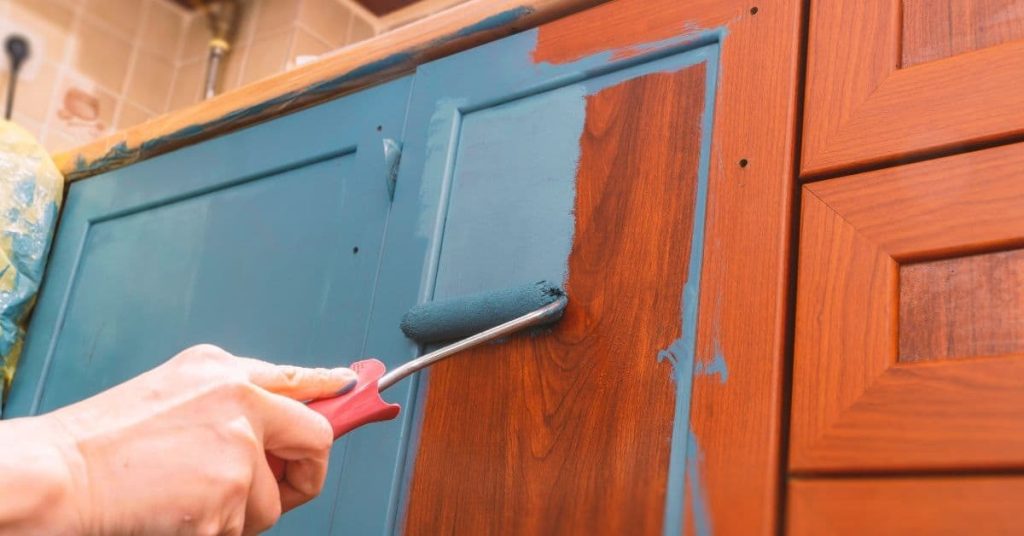
For the main areas, use a foam roller or fine-nap roller for smooth surfaces. These give a stipple-free finish. Work in small sections at a time, about 2′ x 2′, to keep a wet edge.
Tip: Don’t overload your roller. A light touch helps avoid drips and runs.
Using a paint sprayer (DIY-friendly)
A paint sprayer can give a professional finish, but it’s not always necessary. If you’re tackling a large project or want to save time, consider renting one.
Safety first: Wear a respirator and protect your eyes. Set up in a well-ventilated area or outside if possible. Keep the nozzle moving at a steady pace for even coverage.
Troubleshooting common issues:
– Orange peel: You’re spraying too fast or too far away.
– Runs: You’re applying too much paint at once.
Layering and sanding between coats
Most cabinet doors need 2-3 coats for full coverage. Apply thin, even coats to avoid drips and runs.
After each coat, let it dry according to the manufacturer’s instructions (usually 16-24 hours). Then, lightly sand with fine grit sandpaper (220 or higher) to smooth out any raised grain. Wipe off dust with a damp cloth.
Check for any missed spots or imperfections before applying the next coat. If it’s still wet or tacky, give it more time to dry.