

Introduction
Formwork bulge or bow is when the plywood or panel forms in your walls push out or flex under load. Brace spacing is how often you place and tighten supports to keep the panels true. Check that the bracing system is aligned, secure, and capable of resisting the expected weight.
Do a quick pre-pour check: look for any outward bulge, loose fasteners, gaps at the joints, and ensure braces are snug. Tighten and re-align as needed, verify plumb and square where practical, and review any manufacturer or local rules before the truck arrives. If anything looks off, consult the label instructions or seek guidance to avoid overloading the formwork.
Key takeaways
- Ensure brace spacing follows form size, anticipated fresh concrete pressure, and instructions.
- Check form construction for plumb walls, true alignment, and solid footing contacts.
- Place steel reinforcement according to plans, keep proper clearances, and secure without movement.
- Perform quick pre-pour checks: clean surfaces, compatible coatings, and tie-ins ready.
- Implement safety rules and traffic control to protect crew and passing vehicles.
- Inspect footing and formwork before pour; correct flaws to avoid costly recalls.
- Plan for formal inspection readiness; document bracing, alignment, and concrete pour sequencing.
Table of Contents
- Introduction
- Key takeaways
- Why Bulge and Bow Happen and Why They Matter
- Site Prep and Footing Work That Prevent Form Problems
- Building Forms and Adding Steel Reinforcement Correctly
- Designing Brace Spacing and Layout to Resist Fresh-Concrete Pressure
- Quick Pre-Pour Checks to Run Before the Truck Shows up
- Formal Inspection Checklist and Common Mistakes to Avoid
- Safety Rules and Traffic Control During Formwork and the Pour
- Tools, Materials Checklist and the Cost of Getting It Wrong
- Conclusion
- FAQ
Why Bulge and Bow Happen and Why They Matter
Bulge and bow formwork come from a mix of lateral pressure and insufficient stiffness. Lateral earth, water pressure against panels, and the fresh concrete weight push outward when the form is not rigid enough. Material quality and curing can amplify these forces, or reduce the form’s ability to resist them.
Bracing, panel stiffness, and proper spacing keep faces true. Header and stud supports prevent panels from bending or twisting; excessive spans or loose connections invite distortion. Localized point loads and penetrations add bending moments that concentrate stress in small areas and create weak spots in the surface. These issues translate to rough surfaces, voids, and misalignment, and they can drive rework and project delays. Quick checks before pour help catch problems early and avoid costly fixes later.
Common Root Causes
Bulges and bows in formwork aren’t random. They happen due to a few common reasons.
Under-designed bracing is a big one. If braces are too far apart or not stiff enough, they can’t hold the form panels straight under pressure.
Poor nailing or fastening lets panels move around, causing distortion. Excessive concrete pressure, like from high slump mixes or rapid pours, can also push panels out of shape. Weak form materials, like thin plywood or OSB, bend easily under stress.
Keep in mind, these causes work together. One weak link can start a chain reaction leading to bulges and bows.
Consequences and Cost Implications
Bulging or bowed formwork isn’t just unsightly. It can cause real problems that hit your wallet hard.
Rework is a big one. You might have to strip off the bad concrete, fix the forms, then pour again. That’s time and material down the drain.
Scrapped panels are another cost. If formwork is too damaged, you’ll need to replace it. And if bulges or bows cause structural defects, you could face costly repairs later on.
Delays are a hidden cost. Fixing bad forms takes time, pushing back your pour schedule and holding up the whole project. All this adds up to more labor, more materials, and a longer timeline. That means a bigger bill for you.
Site Prep and Footing Work That Prevent Form Problems
Start with robust site layout and controllable bearing. Baselines, corner stakes, and footing locations must be checked to ensure forms line up straight before any digging begins. Verify measurement accuracy on every corner to prevent a skewed foundation.
Soil assessment and bearing prep set the stage for stable formwork. Note moisture content and bearing capacity and plan for stabilization if needed. Clean, level trenches and proper side supports keep verticality intact through the pour.
Excavation, Soil Conditions, and Compaction Checks
Before you start digging, know your soil. Get a geotechnical report if needed.
Check: Soil type (clay, sand, gravel), moisture content, and bearing capacity. No loose pockets or soft spots.
Compaction tests ensure a stable base. Use a nuclear densometer or sand cone test. Aim for 90-95% Proctor density.
Layout, Elevation, and Squaring of Form Footings
Accurate layout is key. Use a transit or laser level for precise elevations.
Check: Corner stakes are square (90°). Use a 3-4-5 triangle method if needed.
Ensure footing trenches are clean, with uniform width and vertical sides. Use batter boards to maintain alignment.
Building Forms and Adding Steel Reinforcement Correctly
Choose form materials based on durability, surface finish, and chemical compatibility with the concrete mix. Ensure they resist moisture and work well with sealants where required. Avoid cheap or damaged panels that sag under load.
Panel assembly should yield flat, true surfaces with consistent gaps and tight joints. Verify continuous bearing on the base and along all supporting members to prevent flex and bow. Plan rebar layout early and confirm chairs don’t interfere with braces or panels. Prepare openings and edge details without compromising form integrity.
Form construction tips and visual checkpoints
Before you start pouring, run through this checklist to ensure your formwork is solid and won’t leak or bulge.
- Tight joints: Check all panel edges for tight fits. Gaps can let concrete seep out and cause leaks.
- Proper blocking/wales: Ensure blocking and wales are securely fastened to support the form panels and prevent bulging.
- Sealed seams: Inspect all seams for proper sealing. Unsealed seams can cause leaks and weak spots in your concrete.
- Continuous support under panel edges: Verify that there’s continuous support under all panel edges to prevent bowing.
- Plumb and level: Check that forms are plumb (vertical) and level. Out-of-square forms can cause bulging and uneven surfaces.
- Secure bracing: Ensure braces are securely fastened and at the correct intervals to resist bowing and movement.
- No trapped concrete: Confirm that braces won’t trap concrete, causing weak spots or bulges in your slab.
- Edge support: Check end supports, chamfers, or edge beads. Inadequate support can lead to edge spalling and bulging.
Quick rule: If you skip these checks, you risk leaks, bulges, and weak spots in your concrete.
Rebar placement, ties, and clear cover checks
Proper rebar placement is crucial to prevent forms from being pushed out during the pour. Here’s how to confirm it:
Rebar spacing: Measure between rebars to ensure they’re evenly spaced according to your design. Inconsistent spacing can lead to weak spots in your concrete.
Chairs and posers: Verify that chairs and posers are correctly placed, providing even support for the rebar. Incorrect placement can cause rebars to shift during the pour, pushing out forms.
Tie locations: Check tie locations to ensure they won’t interfere with formwork or bracing. Improper ties can cause bulges and weak spots in your concrete.
Embeds: Confirm that embeds are properly placed and won’t interfere with formwork or rebar. Incorrect placement can cause bulges and leaks during the pour.
Designing Brace Spacing and Layout to Resist Fresh-Concrete Pressure
Brace spacing depends on form height, material stiffness, pour rate, slump, and any temporary load interruptions. Each factor affects the required stiffness and spacing, so tailor your plan accordingly. Use simple practical rules to translate these factors into bracing density.
Translate factors into a bracing plan with a conservative approach for the tallest sections. Choose brace patterns that maximize stability and align with the pour direction and openings. Stagger braces to avoid weak lines and maintain continuous support along walls and corners.
How to estimate appropriate spacing (guidance and safe ranges)
Estimating brace spacing involves balancing form stability with material efficiency. Here’s a simple way to get you started:
Form height: Generally, taller forms need closer bracing. A good rule of thumb is 1 brace per 2 feet of height for wood and 3-4 feet for steel or composite.
Material stiffness: Stiffer materials like steel or composite can handle wider spacing. For these, consider 3-4 braces per 8 feet of height. Wooden forms may need more frequent bracing due to their flexibility.
Always double-check your estimates with structural drawings or consult an engineer for final spacing, especially on critical sections or tall forms.
Bracing types and connections that hold up
Choosing the right bracing method is crucial. Here are some common options:
Wales: Horizontal braces that run along the form’s height, supporting the top of the panel. Use them every 4-6 feet.
Spreaders: Diagonal braces that connect opposite corners of a panel, preventing bulging. Place them at 45-degree angles and space them every 8-12 feet.
Ties: Vertical braces that connect the top and bottom of a form, providing additional stability. Space them every 6-8 feet.
Inspect connections to ensure they’re secure and can transfer loads effectively. Tighten bolts, check welds, and make sure anchors are sound.
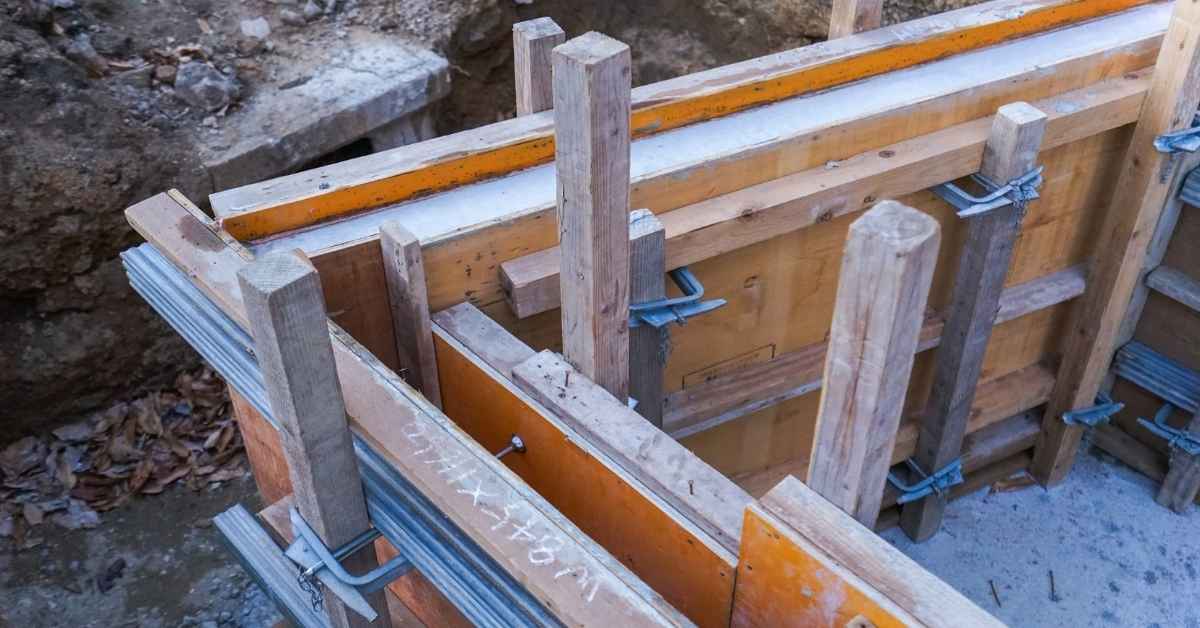
Quick Pre-Pour Checks to Run Before the Truck Shows up
Keep a tight, prioritized checklist that fits into a 10–20 minute window. Start with form geometry and look for bulges or bows, and confirm alignment with the pour direction. Verify dimensions match the design and templates before concrete arrives.
Rule out brace issues and surface readiness in rapid passes. Check brace spacing, connections, and condition; ensure no loose components can fail under pressure. Clear the deck of debris and confirm joints and sealants are ready as required.
Fast visual and tactile checks (forms and braces)
Before the concrete truck arrives, give your formwork a quick once-over. You’re looking for any issues that could cause immediate problems during the pour.
Loose fasteners can let forms shift under pressure. Give every nail, bolt, and screw a tug to ensure they’re tight. If anything’s loose, tighten it up now.
Check for missing braces. Count them against your plan to make sure none are missing. If you find any gaps, install new braces immediately.
Press on form panels with your hands. They should feel solid and stable. Any deflected panels, or ones that give under pressure, need reinforcing or replacing before the pour.
Reinforcement, embeds, and service penetrations check
Concrete’s strong, but it needs help from rebar and other embedded items. Make sure they’re all in place and secure before the pour.
Check rebar clear cover. Use a tape measure to ensure there’s enough concrete between the rebar and the formwork. Too little cover can lead to corrosion and structural issues down the line.
Confirm anchor bolt positions. Make sure they’re where they should be, and that they’re secure. You don’t want them shifting during the pour.
Inspect sleeves and projections. Ensure any embedded items are secure and won’t push into the forms when the concrete’s poured. If anything’s loose or wobbly, fix it now to avoid problems later.
Formal Inspection Checklist and Common Mistakes to Avoid
Pre-pour readiness requires exact footing dimensions, plumb and level panels, and proper bracing. Check tight joint seals, lumber condition, and absence of gaps or damaged components. Review release agents and weather considerations that could affect form integrity.
During the pour, monitor for panel deflection and secure alignment. Ensure there are no loose fasteners or weak connections and verify load transfer paths stay even. Document pour sequence, defects, and any needed bracing adjustments for accountability.
Inspection items to document
Before you start pouring, use this checklist to document key formwork details. This helps track issues and ensures everyone’s on the same page.
- Brace spacing: Measure and record brace spacings along both walls and across the slab. Inadequate spacing can lead to bulging or bowing.
- Anchor types: Note down the type of anchors used (e.g., J-bolts, U-bolts) and their condition. Loose or damaged anchors can cause formwork to shift.
- Form material: Record the type of formwork material used (wood, metal, etc.). Different materials have varying strengths and tolerances.
- Slump/temperature info: Document concrete slump and temperature at the time of pouring. These factors affect how well the concrete stays within the forms.
- Deviations from plans: Note any deviations from the approved plans, such as changes in form dimensions or reinforcement layout.
Quick rule: Documenting these details helps identify and fix issues early, preventing costly rework.
Typical installation mistakes and quick fixes
Before the concrete truck arrives, double-check your formwork for these common mistakes. Quick fixes can prevent bulging or bowing.
- Missing spreaders: Ensure all vertical stakes have spreader bases to distribute pressure evenly. Missing ones can cause formwork to lean or twist.
- Inadequate stakes: Check stake length and spacing. Too short or widely spaced stakes won’t hold the forms securely under concrete pressure.
- Loose ties: Tighten any loose tie rods, ensuring they’re secure and evenly tensioned. Loose ties can allow formwork to shift.
- Improperly placed spacers: Verify that all spacers are correctly positioned between forms. Incorrect placement can lead to uneven pressure distribution.
Quick rule: Addressing these issues promptly prevents them from causing problems during the pour.
Safety Rules and Traffic Control During Formwork and the Pour
Outline PPE requirements, roles, and responsibilities clearly. Designate a qualified supervisor, spotters, and a signal/communication lead to keep operations coordinated. Ensure everyone understands the plan and their responsibilities around the pour.
Address fall protection, edge integrity, and live pour hazards. Use guardrails or harnesses where needed and keep working edges protected. Manage truck arrival, hose placement, and flow with a dedicated pour director and clear signals.
Worker safety and load management
Ensure everyone on site is wearing the right PPE – hard hats, safety glasses, steel-toed boots, gloves, high-visibility gear. A qualified supervisor oversees operations, with spotters assisting.
Never overload forms during setup. Use proper lifting and shoring practices to prevent accidents. Keep unsecured formwork and loose rebar away from the pour line.
Control access to the work area. Only authorized personnel should be near the pour. Maintain clear paths for emergency access.
Managing truck arrival and pour-zone safety
Establish a clear pour zone before the truck arrives. Remove any obstacles that could hinder safe operation.
Designate spotters to guide the truck into position. Use two-way radios or signals for clear communication. The pour director coordinates flow, preventing crowding around the truck.
Position hoses and chutes safely to minimize tripping hazards. Ensure they’re secure and won’t move during the pour. Keep a safe distance from the truck’s discharge point.
Tools, Materials Checklist and the Cost of Getting It Wrong
Provide a practical core tools and consumables list. Include a quick-reference materials checklist for bracing, lumber, fasteners, seals, and release agents. Tie formwork deficiencies to material waste, labor time, and schedule delays to underline the cost of shortcuts.
Cover brace-spacing checks and pre-pour straightness verifications. List must-have hand tools and power tools, plus substitutes to stay on schedule. Include consumables like seals and ties and outline a pre-pour QC workflow to prevent truck returns.
Essential tools and materials to have on-site
Before you start setting up your formwork, make sure you’ve got these must-have tools and materials on site. This checklist helps your crew work fast and avoid common mistakes.
- Rails/Wales: Straight edges for your forms. Check they’re straight before using.
- Spreaders: Keep forms apart. Ensure they’re the right size for your formwork.
- Diagonal Braces: Prevent bulging. Space them as recommended earlier.
- Nails/Screws: Secure forms. Check they’re long enough to penetrate supports.
- Straps: Hold forms together. Inspect for wear or damage before use.
- Shim Stock: Fill gaps. Ensure it’s thick enough to level forms.
- Levels (Tape Measure, Laser, etc.): Check plumb and level. Verify readings with multiple levels.
- Inspection Tools (String Line, Plumb Bob, etc.): Quick checks before pour. Use them to spot issues early.
Quick rule: Missing or damaged tools can lead to poor formwork setup, causing bulges and bows in your concrete pour.
Cost impact of formwork failures and prevention ROI
Proper formwork setup prevents costly rework, downtime, and delays. Here’s how to budget for competent inspection or engineer review on critical pours.
- Concrete Waste: Bulges/bows mean wasted concrete. Estimate savings with proper bracing.
- Rework Penalties: Fixing formwork mistakes costs time and labor. Plan for these extra expenses.
- Labor Downtime: Delays due to formwork issues idle your crew. Schedule buffer time for inspections.
- Scheduling Delays: Late pours mean late project completion. Allocate resources for engineer review on critical pours.
- Preventive Checks: Regular inspections catch issues early. Budget for frequent checks during setup.
- Competent Inspection/Engineer Review: Critical pours need expert eyes. Allocate funds for these services in your budget.
Quick rule: Investing in proper formwork and inspections saves you money in the long run, preventing costly rework and delays.
Conclusion
Get this right and you protect people, your work, and the finish. A solid brace layout and smart checks keep the concrete from pushing the forms too fast, saving you from costly fixes and a crooked wall.
Make the next moves with a simple check: confirm footing and form alignment is true, verify brace spacing matches the plan, ensure reinforcement is clean and properly placed, clear the path for the ready-mix truck, run the quick pre-pour checks, and lock in the area for traffic control. Do these in that order, and don’t skip any step; if you’re unsure, pause and verify before the truck shows up.
Avoid these traps: skip bracing or overdo it, misplace anchors, or mix forms with weak connections—these invite bulge, bow, or worst, a costly failure. Don’t pour into unsafe conditions or without PPE and a clear traffic plan. If the job stretches beyond your comfort zone or you uncover bad footing, call in a pro before you push on. Stay deliberate, stay safe, and you’ll have a solid finish you can be proud of. You’ve got this.
FAQ
What are the basics of formwork construction I should know as a DIYer?
Keep the formwork square, level, and tight so it won’t bulge under pressure. Use straight boards or panels with proper supports, and double-check alignment before you pour. If anything looks off, fix it now rather than after the truck arrives.
How should I place and support steel reinforcement in the forms?
Position rebar according to the plan and keep it off the ground with chairs or spacers so it sits in the middle of the wall or slab. Tie adjacent bars securely and inspect clearance to the formwork so concrete can flow around it. If you’re unsure about spacing, verify with the label or instructions on your rebar product and local guidance.
What are practical steps during the concrete pouring process to prevent formwork failure?
Pour steadily and keep the formwork filled without overloading it suddenly. Use proper vibration or compaction methods that won’t dislodge the forms, and watch for any bowing or movement as you go. If the forms start to distort, stop and brace them again before continuing.
What should I check for foundation and formwork compliance before pouring?
Confirm the footing and formwork meet your project’s level, alignment, and support requirements. Look for any gaps, loose nails, or weak bracing that could allow the wall to move. If unsure about requirements, check the manufacturer instructions, labeling on materials, or local guidelines for basic compliance checks.