
Introduction
Stress-relief cuts and reinforcement help fix plaster cracks above doorways by reducing tension and adding support. I’ll show you how to identify the crack pattern and decide if you need cuts, mesh, or patching compound. This is a hands-on job you can do with common tools, but check your plaster type and any local requirements before you start.
There are a few practical approaches to stress-relief cuts and reinforcement you can choose from. Typical options include shallow relief cuts, fiberglass or metal mesh, and patching compound, with care taken to match the wall feel. Always verify product labels and instructions, and follow local rules for crack repair and plaster work.
Key takeaways
- Identify cracks above doorways early to plan proper stress relief and reinforcement.
- Choose appropriate stress relief cuts (V, keyhole, or saw-cut) depending on crack.
- Reinforce with fiberglass mesh and multi-layer joint compound for durability and bonding, and anchored edge nails for secure bonding.
- Use sharp utility knife to clean edges and establish clean cut lines.
- Match finish plaster and paint after curing following manufacturer guidelines.
- Safety: wear eye protection, mask dust, and turn off power when cutting.
Table of Contents
- Introduction
- Key takeaways
- Why Plaster Cracks Form Above Doorways
- Assessing the Crack and Deciding Repair Scope
- Types of Stress Relief Cuts and How They Work
- Tools and Materials Checklist
- Step-by-Step: Making Stress Relief Cuts and Reinforcing the Area
- Finishing to Match Existing Plaster and Paint
- Cost, Time Estimates, and DIY Vs Professional Choices
- Safety, Prevention, and Long-Term Maintenance
- Conclusion
- FAQ
Why Plaster Cracks Form Above Doorways
Cracks above openings are a telltale sign of movement and finish failure, not just a surface issue. You’ll see patterns that help pinpoint what moved and when. Common shapes include vertical, diagonal, rabbit-shaped, or widening at corners, each signaling something about load paths and settlement.
Structural factors like header performance, lintel adequacy, and door sag influence how loads transfer through studs and framing. This concentrates stress just above the opening and can crack plaster or drywall finishes. Distinguish movement-related cracks from finish or adhesive failures caused by moisture, temperature cycling, or plaster compatibility with the substrate.
Structural movement and settlement
The cracks you see above doorways often start with the building itself. Framing shifts, joist deflection, and settlement can all concentrate stress at those door headers.
When a house settles, it’s not always evenly. Some parts might sink more than others. This uneven movement puts extra pressure on the headers above doors and windows. That’s why you often see cracks there first.
Deflection happens when joists sag under load. If they’re not properly supported, they can bend, pushing up on the header and causing it to crack. The same goes for framing members that shift or move out of plumb.
Look for cracks that run vertically or diagonally above doorways. These usually signal movement-related issues.
Thermal, moisture, and humidity effects
Temperature changes and moisture can also cause cracks in your plaster. Here’s how:
Plaster expands when it gets warm and contracts when it cools. The same goes for the framing members behind it. If they don’t expand and contract at the same rate, you get stress and cracking.
Moisture can make things worse. It causes both materials to swell, putting even more pressure on the plaster. And if that moisture freezes, well, that’s a whole other problem.
Check for cracks that run horizontally or follow the perimeter of the doorway. These often indicate thermal or moisture-related issues.
Plastering and construction defects
Sometimes, the problem isn’t with the building itself but how it was finished. Poor plastering can lead to cracking.
If the plaster didn’t key properly into the lath or substrate, it can’t stick when stress is applied. Inadequate bonding between coats of plaster can also cause problems. And missing control joints mean there’s no place for the plaster to expand and contract naturally.
Look out for cracks that are ‘rabbit’ or ‘e’-shaped, or widen at corners. These often indicate a problem with the plastering itself.
Assessing the Crack and Deciding Repair Scope
Documenting crack width, length, and pattern helps you decide between a simple patch or a bigger fix. Note doorway location and any surrounding damage such as stains or bulging. Look for signs that point to structural movement or just a finish issue.
Check for indicators like sticking doors, floor or ceiling gaps, or sagging arches, plus any moisture or efflorescence behind the plaster. Set up a simple documentation routine with photos, measurements, and a basic map of the crack area. Use that to determine if reinforcement is enough or if a professional assessment is needed.
How to inspect and document damage
First, grab a ruler, caliper, camera, and paper for sketching. You’ll need these to measure, photograph, and note the cracks.
Measure crack width at its widest point. Length is crucial too – mark it with a pencil or tape. Use a caliper for precise measurements.
Take scale photographs. Place a ruler or measuring tape next to the crack. This gives context and helps track changes over time.
Sketch a simple map of your home, marking doorways and cracks. Note any surrounding damage like water stains, bulging plaster, or nail pops.
Cosmetic vs structural indicators
Hairline cracks are usually cosmetic. They’re thin, often due to minor settling or plastering defects. If they’re not widening, you might just need a simple patch.
Widened cracks, especially those that follow vertical or horizontal lines, could be structural. These may indicate movement in the framing or foundation.
Stair-step patterns suggest stress from door lintels or studs. Check for any signs of moisture, like water stains or salt efflorescence. This can cause cracks to widen over time.
If you see bulging plaster, loose chunks, or cracks that seem to be getting worse, these are red flags for structural issues. Don’t ignore them – they might need professional attention.
When to call a professional
If cracks are progressively widening, it’s time to call in the pros. This could indicate ongoing movement or structural issues that need addressing.
Misaligned doors or windows, sagging arches, or floors that feel spongy underfoot – these all suggest framing movement. Don’t try to fix these yourself; get a professional opinion first.
Any visible damage to the lintel above your doorway, or signs of trouble with roof beams or joists, should also raise alarm bells. These are serious structural issues that need immediate attention from a pro.
Remember, it’s always better to err on the side of caution. If you’re unsure about any cracks or damage, don’t hesitate to call in an expert for advice and assessment.
Types of Stress Relief Cuts and How They Work
Shrinkage joints, control joints, and micro-cuts each interrupt stress paths to slow or stop crack propagation. They are chosen based on door width, plaster thickness, and the substrate you’re on. Placement should match known movement patterns while preserving lath, hardware, and wiring.
Tools and materials include appropriate saws or grinders, edge templates, patch or plaster, and reinforcement options. Understand safety requirements and whether cuts should be pre-cut or made after the plaster has cured, depending on the situation.
Shrinkage joints and purpose
Shrinkage joints are deliberate separations made in the plaster to accommodate surface movement. They’re typically placed above doorways, where cracks often form due to structural movement and settlement.
Why they work: By interrupting stress paths, shrinkage joints allow the plaster to move independently, preventing cracks from propagating further.
Their placement is crucial. For standard doors (32″-36″ wide), a single joint above the doorway, about 1/4″ deep and running parallel to the door frame, usually suffices.
Control cuts and expansion joints
Control cuts are targeted grooves made in the plaster to control where cracks occur. They’re narrower than shrinkage joints, typically around 1/8″ wide.
Why they work: By creating a weak point, control cuts encourage cracks to form there instead of randomly across the surface.
Expansion joints differ by allowing movement between two surfaces. They’re wider than control cuts and filled with a flexible material like backer rod or foam.
Choosing cut patterns and placement
Placement of relief cuts should relate to door geometry, framing, and crack history. For instance, if cracks are forming above the header, a shrinkage joint there might help.
Consider door width/height, plaster thickness, and substrate (lath, drywall, concrete). Deeper cuts may be needed for thicker plasters or wider doors.
Spacing should follow material thickness and manufacturer guidance. For standard plasters, cuts every 6-8 feet along the length of the wall are common.
Tools and Materials Checklist
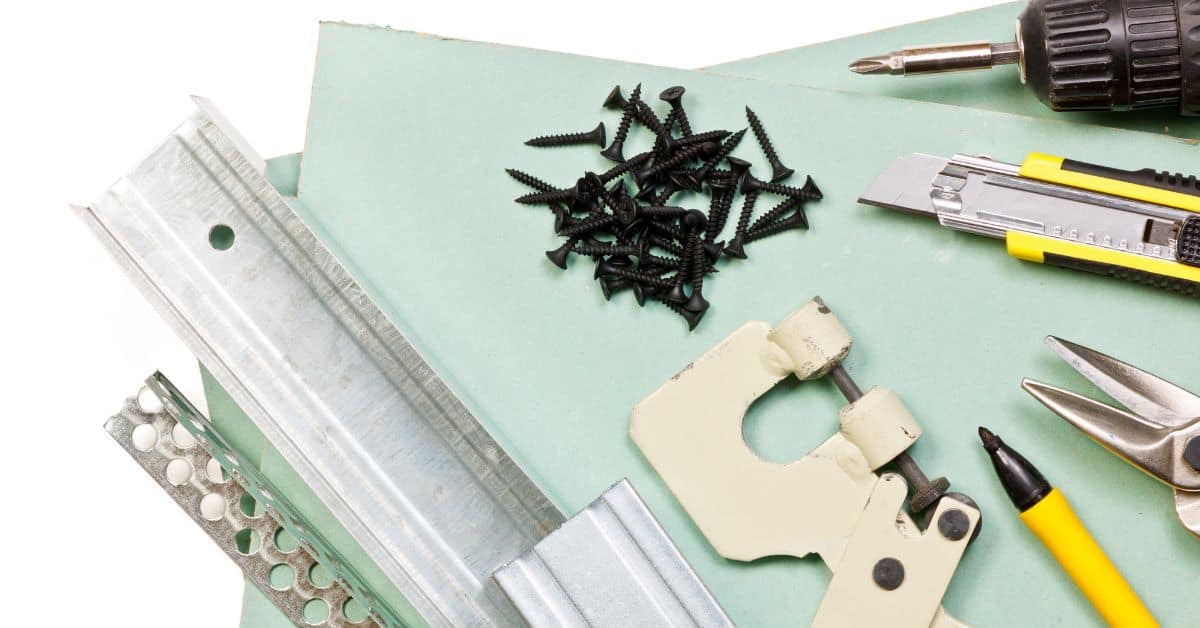
Identify the crack location and determine if a stress-relief cut is needed, then select cutting tools such as a utility knife or angle grinder with a guard. Always include safety gear in your plan. Keep the work area contained and clean while you work.
Reinforcement choices range from metal lath to fiberglass mesh or polymer grids, with bonding agents to improve adhesion. For patches, have plaster patch mixes or lime-putty ready, plus the correct thickness guidance and finishing materials to match the surface.
Cutting tools and PPE
Before you start trimming or cutting, gear up and gather the right tools.
- Dust mask: Protect your lungs from plaster dust. Use a respirator for deeper cuts.
- Eye protection: Safety glasses or goggles keep dust out of your eyes.
- Hearing protection: An angle grinder can be loud; protect your ears.
- Utility knife: For scoring and shallow cuts on the plaster surface.
- Angle grinder with diamond blade: For deeper cuts, like stress-relief cuts or removing damaged plaster.
- Hand saw or keyhole saw: For small channels or precise cuts.
- Oscillating multi-tool: Useful for intricate cuts and shaping.
- Gloves: Protect your hands from cuts and dust.
- Angle grinder guard: Essential safety when using an angle grinder.
Quick rule: Never skip PPE. Safety first, always.
Reinforcement options (mesh, tape, metal)
Choose the right reinforcement for a strong repair.
- Metal lath: Best for wide cracks and structural repairs. Use with a bonding agent for better adhesion.
- Fiberglass mesh tape: Suitable for narrow cracks. Apply with a primer or bonding agent.
- Polymer grid: Flexible, good for curved surfaces. Use with a compatible patching compound.
- Metal expansion strips: Ideal for control cuts and expansion joints. Install before plastering.
Quick rule: Match reinforcement to crack width and plaster type for best results.
Patching compounds and finishing materials
Use compatible materials for a durable, long-lasting repair.
- Plaster patch mix: Ideal for small cracks. Match the existing plaster type if possible.
- Lime-putty or gypsum-based patch: For larger repairs. Choose based on your wall’s construction.
- Bonding agent or primer: Improves adhesion of patch to existing plaster. Use before applying the patch.
- Setting-type plaster compound: For deep cuts or voids. Apply in thin layers, allowing each to set before adding more.
- Acrylic paint or primer: For final finish. Choose a color and type that matches your existing wall.
Quick rule: Always test patching compounds on a small area first to ensure compatibility with your existing plaster.
Step-by-Step: Making Stress Relief Cuts and Reinforcing the Area
Start with a clear prep by assessing patterns above the doorway, clearing the area, and protecting floors. Verify no live utilities and consult a professional if cracks are unusually wide. Gather PPE and the necessary tools before you begin.
Plan the cuts with measured length and spacing, choosing horizontal or staggered layouts. Use the recommended tool and depth to avoid cutting into embedded hardware or wiring. After cutting, install reinforcement and prepare patch material for the first coat.
Step-by-Step Process
Follow these practical steps to safely make stress relief cuts and reinforce cracks above doorways.
- Assess the area, clear it, protect surfaces, and gather safety gear. Check for live lines or structural concerns with a pro if needed.
- Plan your cuts: length, spacing, orientation. Mark measurements carefully.
- Cut safely: use dust control, make multiple shallow passes, verify cuts are clean and even.
- Choose reinforcement: mesh/tape, metal lath, or epoxy dowels. Plan attachment method and anchor spacing.
- Prepare patch material with bonding agents. Key the surface, apply base coats, feather edges, and cure initially.
Surface preparation and cutting technique
Protect the area and remove loose material before making clean, controlled relief cuts.
Use a utility knife or chisel to rake out the crack. Ensure it’s deep enough for reinforcement but not so deep you hit framing.
Safety first: Wear eye protection when cutting. Keep your tool at a consistent angle and depth.
Use a rotary tool, saw blade, or chisel to make partial-depth cuts. Keep them straight and evenly spaced above the door frame.
Installing reinforcement and backing
Embed mesh or tape into the base coat or adhesive for continuous reinforcement across the opening.
For metal lath, secure it with nails or screws every 4-6 inches. Ensure it’s flush with the surface and covers the entire crack area.
Pro tip: Use a level to ensure your reinforcement is straight and even.
If using epoxy dowels, drill holes, insert dowels, and fill with epoxy. Allow it to cure before proceeding.
Patching, curing, and secondary coats
Fill the crack with patching compound, troweling it smooth and feathering edges for a seamless finish.
Cure the initial patch according to the manufacturer’s instructions. This usually involves keeping the area damp and covered for 24-72 hours.
Secondary coats: Apply additional coats as needed for strength, allowing each coat to cure before applying the next.
Before painting or finishing, ensure the patch is completely cured and compatible with your chosen paint/finish.
Finishing to Match Existing Plaster and Paint
Choose a matching texture—feathered, knockdown, or skim coat—and test on a small patch before full application. Record the base color and finish to ensure sheen compatibility with nearby surfaces. This helps the repair disappear into the wall.
Blend edges with feathered transitions, apply thin skim coats, and use the right texture technique to mimic the surrounding wall. Primer and sealer strategies should align with the plaster type and future paint choices, followed by appropriate top coats for durability and color depth.
Texture matching techniques
Matching the existing plaster texture is crucial for a seamless repair. Start by identifying your current texture – it could be feathered, knockdown, or skim coat.
Use the same tools and techniques to replicate it. For feathered textures, use a spray hopper and trowel. For knockdown, apply with a hawk and float. Practice on sample boards or test patches until you get it right.
For skim coat textures, use a wide trowel and apply thin, even layers. Remember, practice makes perfect. Once you’re confident, apply the texture to your repair using the same techniques.
Priming, painting, and touch-up blending
Start with a bonding primer to ensure good adhesion. If there’s any stain or discoloration, use a stain-blocking primer first.
For paint, match the finish (matte, eggshell, satin) and sheen of the existing wall. Test your color in an inconspicuous area before full application. Use a small roller or brush to feather the edges of your patch, blending it into the surrounding plaster.
For touch-ups, use a texture roller or sponge dampened with paint to replicate surface irregularities around the door arch. Work quickly and lightly for best results.
Cost, Time Estimates, and DIY Vs Professional Choices
Material costs include plaster, reinforcement, patches, and bonding agents, plus any tools you may rent. Budget for protective gear and cleanup supplies as part of the job. Plan for potential disposal or waste handling if from a previous repair.
Time will hinge on crack complexity, moisture issues, and any hidden damage. Consider whether a structural assessment or reinforcement is needed, which can affect overall value and warranty considerations. Use a simple checklist to weigh DIY effort against professional expertise and long-term durability.
Typical cost drivers and budgeting tips
The cost of concrete repair varies greatly depending on several factors. Here’s what you need to consider when budgeting:
Extent of damage: Minor cracks can be cheap fixes, but major damage or structural issues will hike up the price. Inspect thoroughly and prioritize repairs.
Reinforcement materials: Using rebar or mesh for reinforcement can increase costs. Check if your repair needs these, and consider alternatives like fiber-reinforced concrete.
Access: If the area is hard to reach, you might need special equipment, which adds cost. Consider accessibility when planning repairs.
For structural repairs, always consult a professional engineer first. They can provide detailed estimates and ensure your repair is safe and up to code.
DIY complexity checklist vs when to hire
Before you start any plastering project, use this checklist to assess your DIY skills and the job’s requirements. It’ll help you decide if it’s a suitable DIY task or if you should hire a professional.
- Job size: Check the total area of walls/ceilings to be plastered. If over 100 sq ft, consider hiring a pro due to time and skill requirements.
- Surface condition: Inspect surfaces for cracks, holes, or damage. More than minor imperfections may require a professional’s touch to ensure a smooth finish.
- Accessibility: Check if all areas are easily accessible with ladders and scaffolding. Difficult access can lead to safety issues and poor workmanship.
- Plaster type: Confirm the plaster type (traditional, dot & dab, or multi-finish). Some types require more skill and experience to apply correctly.
- Underlying structure: Check for any signs of structural issues. If found, consult a structural professional before proceeding.
- Time available: Estimate the time needed based on job size and your DIY skill level. If you can’t dedicate enough time, consider hiring help to avoid rushed work.
- Safety equipment: Ensure you have necessary safety gear (safety glasses, gloves, dust mask, etc.). Skipping this can lead to injuries or improper application due to discomfort.
- Previous DIY experience: Assess your previous plastering or similar tasks. If you’re a complete beginner, consider hiring a pro for at least the first room as a learning experience.
Quick rule: If any item on this list gives you pause or seems beyond your current skill level, it’s best to hire a professional plasterer. They have the tools, experience, and knowledge to ensure a quality job done safely and efficiently.
Safety, Prevention, and Long-Term Maintenance
PPE is essential: eye protection, dust mask, and hearing protection where needed. Implement dust control and safe cutting practices around plaster, lath, and hidden utilities. Plan ahead to prevent new damage during the repair.
After repairs, monitor crack movement and address moisture, humidity, and expansion joints to reduce recurrence. Establish a simple maintenance schedule and inspect after seasonal changes to catch issues early.
Safety precautions during cutting and repair
Dust control: Wear a respirator rated for plaster dust. Keep the area well-ventilated using fans or open windows.
Electrical checks: Turn off power to nearby outlets before starting work. Use a non-contact voltage tester to ensure no live wires are present.
Hidden utilities: If you’re unsure about any hidden pipes, wires, or ducts behind the plaster, contact your local utility companies for assistance.
Tool safety: Always use sharp blades and tools in good condition. Keep hands away from moving parts. Secure ladders properly before climbing.
Preventive measures to avoid future cracks
To prevent cracks from recurring, address the root causes and maintain your plasterwork regularly.
- Control movement: Ensure doorways are properly framed. Use expansion joints where needed.
- Moisture control: Fix any leaks promptly. Maintain proper humidity levels in your home.
- Proper bonding: Ensure new plaster bonds well with the existing surface and substrate.
- Regular inspection: Check for signs of movement or moisture damage regularly.
By addressing these factors, you can significantly reduce the risk of future cracks.
Monitoring and maintenance schedule
Regular inspection is key to maintaining your plasterwork. Here’s a simple schedule:
Every three months: Inspect for new cracks or signs of movement. Document any findings.
Annually, after seasonal changes: Perform a thorough check. Address any minor issues promptly to prevent them from worsening.
Every five years: Consider hiring a professional for a comprehensive inspection and touch-up repairs.
Conclusion
Fixing plaster cracks above doorways hinges on making the area strong, dry, and visually seamless so it won’t reopen or crumble. Do the work with control, verify each step, and keep safety at the forefront to avoid costly mistakes or damage.
First, inspect the crack for movement, moisture, or loose plaster, verify the repair scope, and then choose the appropriate relief cut and reinforcement. Make a clear plan, gather the required tools and materials, and proceed in a logical order: assess, cut, reinforce, and finish. Work in small sections, test as you go, and keep tools sharp and handling deliberate.
Common mistakes to avoid are rushing the cuts, skipping reinforcement, and skipping a test patch or proper finishing. Always wear eye protection, use a dust mask, and test any repair in a hidden spot first. If the crack continues to move after repairs, or if moisture or structural concerns appear, don’t push past a safe limit—reassess and bring in a pro if needed.
When in doubt about progress or structural intent, call a professional rather than forcing through. Stay methodical, follow the check you created, and you’ll finish clean, durable, and ready for paint. You’ve got this—steady momentum beats guesswork every time.
FAQ
How can I identify cracks that are actually a plaster issue above a doorway, not just surface hairlines?
Look for cracks that follow the door frame line, run vertically or diagonally, or move when you press the surrounding wall. If they widen with movement or door use, they’re likely a plaster problem tied to the framing. Mark the edges and test by gently tapping around the crack to hear hollow spots or separation.
What are the common stress relief cuts used for plaster above doorways?
Common cuts are gentle curves or shallow vee cuts that relieve tension around the arch or header. They break the long, straight plaster sheet and give a place for patches to anchor without cracking again. The goal is to route the crack to a forgiving end point where patching won’t re-crack under load.
What technique should I use to make these stress relief cuts safely and accurately?
Use a sharp utility knife and a straightedge to score along the planned line, then deepen with controlled passes. Cut slowly, keep the blade at a shallow angle, and avoid forcing through hard patches. Clean the dust after each pass and keep the line visible for patching.
What materials are typical for reinforcing the repaired area, and how do I apply them?
Fiberglass mesh or paper tape plus joint compound are common. Embed the mesh or tape with a thinned base coat over the repair, press out air pockets, and let it set before applying a top coat. Follow the product labels for application thickness and drying times, and only cover with finish after the compound is fully dry.