
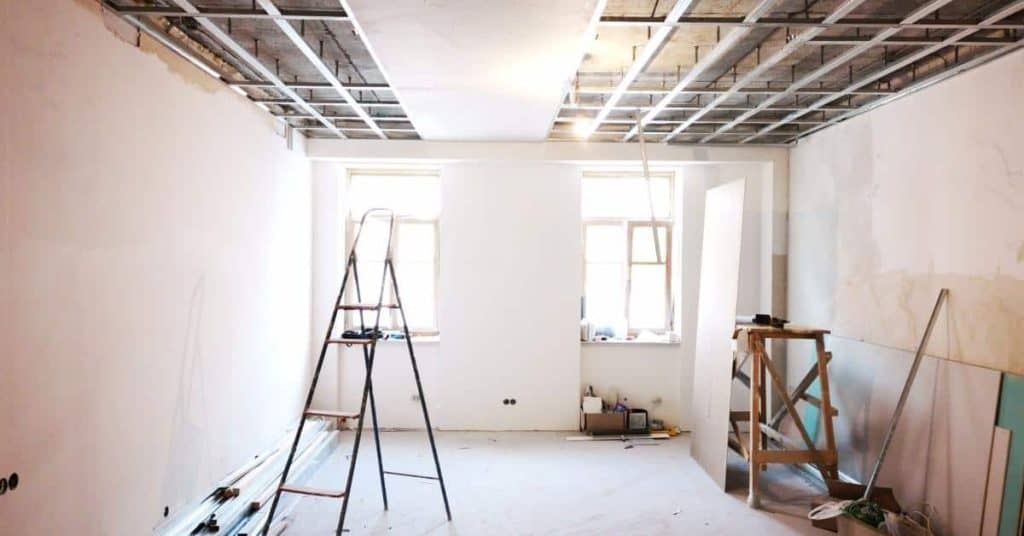
Introduction
Fixing a sagging drywall ceiling involves choosing the right fastener pattern, using adhesive appropriately, and knowing when to add strapping. I’ll walk you through practical approaches you can do at home, without fancy tools. Check product labels and local rules for fastener types and weight limits.
Count on a hands-on approach: test the area, prep the surface, and pick a pattern that matches your ceiling. If you’re unsure about loads or spacing, review the manufacturer instructions and safety guidelines before starting. This article focuses on plain-language, real-world steps you can adapt to your space.
Key takeaways
- Assess sag types: deflection, step cracking, or patch failure to choose repair.
- Verify safety: power off, secure ladders, and brace area before any work.
- Keep adhesives compatible with ceiling material and temp conditions during application.
- Use patterns that distribute load; avoid single-row only, include blocking.
- Add strapping or channels when framing lacks stiffness or repair spans.
- Inspect after repair: test ceilings gently, check for movement, re-inspect quarterly.
Table of Contents
- Introduction
- Key takeaways
- Quick Diagnosis — Types of Sag and Deciding Repair Vs Replacement
- Safety, Access, and Temporary Support
- Tools and Materials Checklist
- Fastener Patterns and Placement — Principles, Not Single Numbers
- Adhesives — Types, Selection, and Proper Application
- When to Add Strapping, Blocking, or Resilient Channels
- Repair Workflows: Small Fixes Vs Major Rehangers
- Finishing, Inspection, and Long-Term Prevention
- Conclusion
- FAQ
Quick Diagnosis — Types of Sag and Deciding Repair Vs Replacement
Start by identifying where the sagging is centered. Look for localized sinks, long-span droops, or widespread cracking and bounce across the ceiling. Compare the severity in different areas to gauge scope.
Use clear criteria to decide between repair and replacement. If only a small area sags, repairs may be enough; if the entire panel system is compromised, removal and replacement might be required. Always verify with product labels or manufacturer guidance when in doubt.
Localized vs Widespread Sag
First, figure out if you’re dealing with a small issue or a big one. Here’s how:
Localized sag – You’ll see a small area drooping, maybe around a seam or where something was hung. It feels soft to the touch.
Widespread failure – The whole ceiling is drooping, not just one spot. It might feel spongy all over. This could be due to systemic issues.
Determining the Underlying Cause
Now, let’s find out why your ceiling is sagging. Here are some common causes:
Fastener pull-through: Check if screws or nails have popped through the drywall paper. You might see them poking out.
Adhesive failure: If you’ve used adhesive, check if it’s still stuck to the ceiling and not peeling off.
Joist deflection: Feel along the joists. If they’re sagging, that could be your problem.
Moisture damage: Look for water stains or mold. This can weaken drywall over time.
Safety, Access, and Temporary Support
Plan for safe access before you touch the ceiling. Clear the area below and use stable ladders or a scaffold as appropriate. Have a helper nearby in case you need a hand during work.
Set up temporary supports if needed to hold weight while you work. Use shoring or supports only as recommended by manufacturers or local codes. Check for any electrical or plumbing hazards in the work zone.
Lifting and bracing methods for ceiling panels
To repair sagging drywall ceilings, you’ll need to temporarily lift and brace the panels. Here are a few methods:
Temporary Jacks: Use adjustable jacks to lift the panel from below. Place them on stable platforms or stands to prevent damage.
T-Braces: These can be made using 2x4s and screws. Attach one end to a stud, then screw the other end to the ceiling panel to pull it up.
Drywall Lift: Rent or buy a drywall lift for easy, safe lifting of heavy panels. It allows you to work hands-free while the panel is secured in place.
Personal protective equipment and site prep
Safety first! Here’s what you’ll need before starting your ceiling repair:
- Hard Hat: Protects against falling debris. Size it right for a snug, comfortable fit.
- Eyeguards: Shields eyes from dust and small particles. Consider using goggles with side shields for better protection.
- Dust Mask or Respirator: Protects lungs from drywall dust. A basic dust mask is usually sufficient, but if you’re sensitive to allergens, consider a respirator (around $20).
- Gloves: Protect hands from cuts and scrapes. Work gloves with good grip are ideal.
- Drop Cloths and Plastic Sheeting: Protect flooring, electrical fixtures, and HVAC openings. Use heavy-duty drop cloths (around $10 each) and plastic sheeting (around $15 per roll).
- Ladder: A sturdy extension ladder is essential for safe access to your ceiling. Rent one if you don’t have your own (around $25 per day).
Tools and Materials Checklist
Gather basic hand tools, fasteners, and any adhesives you plan to use. Include a level, drill, screws, and panels compatible with your ceiling type. Have a utility knife and a pry bar on hand for careful removal and fitting.
List consumables like adhesive, shims, and temporary supports. Consider budget-friendly options as well as higher-grade choices, and always verify product compatibility with your ceiling system. Check labels or manufacturer instructions for limits and installation notes.
Essential tools
Before you start, make sure you have all the right tools. This checklist helps you prepare.
- Screw gun or driver: To drive screws into drywall and strapping. Battery-powered is easiest.
- Drywall lift or braces: To support the ceiling while working. Rent if needed.
- Caulking gun: For applying construction adhesive.
- Saw (hack saw, jigsaw): To cut strapping and drywall sheets.
- Tape measure: To ensure accurate measurements for cutting and placement.
- Level: To check the ceiling’s level before and after repair.
- Pencil: For marking cuts and screw locations.
- Safety glasses: Protect your eyes from debris.
Quick rule: Don’t skip tools. Each one serves a purpose to keep you safe and get the job done right.
Materials and consumables
Here’s what you’ll need for your drywall repair. Check each item before starting.
- Drywall sheets: Match the existing ceiling thickness (1/2″ or 5/8″). Consider moisture-resistant if needed.
- Screws: Use drywall screws, 1-1/4″ to 2″ long. Galvanized or stainless for moisture areas.
- Construction adhesive: Choose a heavy-duty, water-resistant formula. Follow manufacturer’s recommendations.
- Strapping (metal or wood): Use 1×3 or 1×4 boards, or metal strips. Ensure they’re long enough to span the sag.
- Sealant: For filling screw holes and seams after repair. Paintable, water-based is easiest.
- Drywall tape: For covering seams before sanding and painting.
- Joint compound: To apply with the tape. Lightweight or all-purpose works well.
Quick rule: Always follow manufacturer’s recommendations for best results and safety.
Fastener Patterns and Placement — Principles, Not Single Numbers
Understand the logic behind edge and field fasteners, and how fastening to the framing matters. The goal is to secure panels without creating new stresses or cracks. Plan staggered patterns to distribute load and reduce creasing.
Always follow what the manufacturer and local code require for spacing. If you are unsure, check the product data sheet or local building authority guidelines. Avoid guessing on critical dimensions that affect safety.
Refastening existing drywall panels
When refastening sagging drywall, the goal is to add screws without creating new damage. Start by locating the existing screw holes. These are your guide.
Add screws along the panel edges, about 1″ from the edge, and every 6-8″ along the length. Pre-drill or countersink to prevent cracking. Avoid seams unless absolutely necessary.
If sagging is severe, add screws between framing members, but be careful not to over-tighten and damage the drywall.
Fastening new drywall or replaced sections
When installing new panels, align edges with framing members. This gives you a solid anchor point. Use 1-5/8″ or 2-1/2″ screws depending on your panel size and framing depth.
Add screws every 6-8″ along the edges and every 12″ in the field. This staggering pattern distributes weight evenly. Pre-drill or countersink to prevent cracking.
To prevent joint telegraphing, avoid over-tightening screws and use appropriate joint tape and compound application techniques.
Choosing screw type and corrosion resistance
For wood framing, use countersunk head screws with coarse threads. These grip well in wood. For metal studs, opt for truss head screws with fine threads.
If your ceiling is prone to moisture or you’re using metal studs, consider corrosion-resistant screws, like those with a zinc or yellow phosphate coating. Check product specs for exact recommendations.
Always follow manufacturer and local code guidelines for screw type and spacing. They know their products best and your local codes ensure safety.
Adhesives — Types, Selection, and Proper Application
Compare panel adhesives with general construction adhesives to choose the right type for your situation. Use adhesive where it is recommended to supplement mechanical fasteners. Understand the cure time and surface preparation requirements before applying.
Apply adhesive in a way that promotes bonding without oozing beyond the joint. Check compatibility with your drywall or panel material and with the fasteners you plan to use. Always consult the label or manufacturer instructions for specifics.
When to use adhesive vs rely on screws alone
Adhesives and screws both have their places in construction. Here’s when to use each:
Use adhesives for long spans or thin materials like drywall. Adhesive fills gaps, reducing movement and improving long-term performance.
For example, if you’re hanging 1/2″ or thinner drywall, use adhesive to prevent sagging over time. Also, apply adhesive when spanning long distances without intermediate supports.
Avoid relying on screws alone for these scenarios as they can loosen and cause issues down the road. But for short spans or thicker materials like plywood, screws usually suffice.
Adhesive application techniques and bond checks
Once you’ve chosen the right adhesive, it’s time to apply it. Here’s how:
Bead patterns: Apply adhesive in beads, not smears. For plywood, use a ‘staircase’ pattern – start at the bottom, work your way up, then fill in the gaps. For OSB, use a ‘ladder’ pattern.
Substrate preparation: Clean and dry surfaces before applying adhesive. Check base compaction; if it’s loose, you’ll need to address that first. Sand any rough spots to improve adhesion.
Clamping or support during cure: After application, clamp or brace the pieces together until the adhesive cures. Follow manufacturer instructions for safe handling and cure times. Don’t rush this; a proper cure is crucial.
Bond checks: Before finishing, check your bond. Tap the joint with a hammer – it should sound solid. If it’s hollow or feels weak, you may need to reapply adhesive and let it cure again. Don’t skip this step; a weak bond can lead to failures down the road.