
Introduction
Fiber + wire mesh together is a reinforced concrete setup where fibers help control cracking and mesh provides added structural distribution.
Redundancy can mean extra fibers or extra mesh ends up overlapping; watch for overcomplicating the pour. Combining fiber with mesh can help in slabs with control joints or poor soil, but it can also add cost and work if not needed. If unsure, check labeling and manufacturer guidance, and consider practical limits like mix type, trowelability, and curing, then decide.
Key takeaways
- Assess fiber mesh coverage against wire mesh to identify redundant areas early.
- Use fiber to control crack widths while wire mesh provides overall distribution support.
- Check local codes and manufacturer instructions before integrating fiber with wire mesh.
- Plan for potential redundancy loops; avoid overlapping fibers that starve joints of cement.
- Document practical field checks: alignment, coverage, and signs of excessive mesh overlap.
- Weigh cost implications against structural needs to justify hybrid use where appropriate.
Table of Contents
- Introduction
- Key takeaways
- Quick Overview: What Fiber Reinforcement and Wire Mesh Each Do
- When Combining Fiber and Wire Mesh Is Redundant
- When Combining Fiber and Wire Mesh Helps
- Advantages and Disadvantages of Hybrid Use
- Safety, Code and Standards Considerations
- Planning and Design Tips to Avoid Redundancy and Maximize Efficiency
- Cost Implications and Value Analysis
- Case Studies, Common Mistakes, and Visual Checkpoints for the Field
- Conclusion
- FAQ
Quick Overview: What Fiber Reinforcement and Wire Mesh Each Do
Fiber reinforcement and wire mesh are two common ways to help concrete resist cracking and improve toughness. Fibers come in several types, including polypropylene, steel, glass, and synthetic fibers, while wire mesh is typically welded wire fabric or fabric mesh. Each works differently to distribute stress and limit cracking in plain concrete.
Fibers bridge cracks and improve post-crack residual strength, while wire mesh provides lay-in reinforcement that helps with crack distribution and early-age tensile resistance. Typical DIY uses include slabs, driveways, basement floors, overlays, and decorative concrete where crack control and early stiffness matter; some situations may not need either. When selecting, note mix compatibility and pouring technique, as fibers are often easier for DIY but may require specific handling, while mesh needs proper overlap and seating.
Fiber types and main functions
Fiber reinforcement is like adding tiny, strong hairs to your concrete mix. It’s not as visible or tangible as wire mesh, but it does a lot behind the scenes.
Synthetic fibers, like polypropylene or polyester, are cheap and easy to use. They control shrinkage – that’s when your concrete mix wants to shrink as it dries, causing cracks. Check your specs for dosage, but you’re looking at around 0.5% to 1% by volume of concrete.
Steel fibers are tougher and more expensive. They boost impact resistance – think of it as adding a layer of armor against sudden, heavy forces like vehicle loads or earthquakes. Dosage varies, but you’re looking at around 1% to 2% by volume.
Glass fibers are another option. They improve ductility, which is how much your concrete can stretch before it breaks. This makes your concrete more flexible and less prone to cracking under pressure. Again, check your specs for dosage, but you’re looking at around 0.5% to 1% by volume.
Wire mesh types and main functions
Alright, let’s talk wire mesh. You’ve got two main types: welded wire fabric (WWF) and steel mesh.
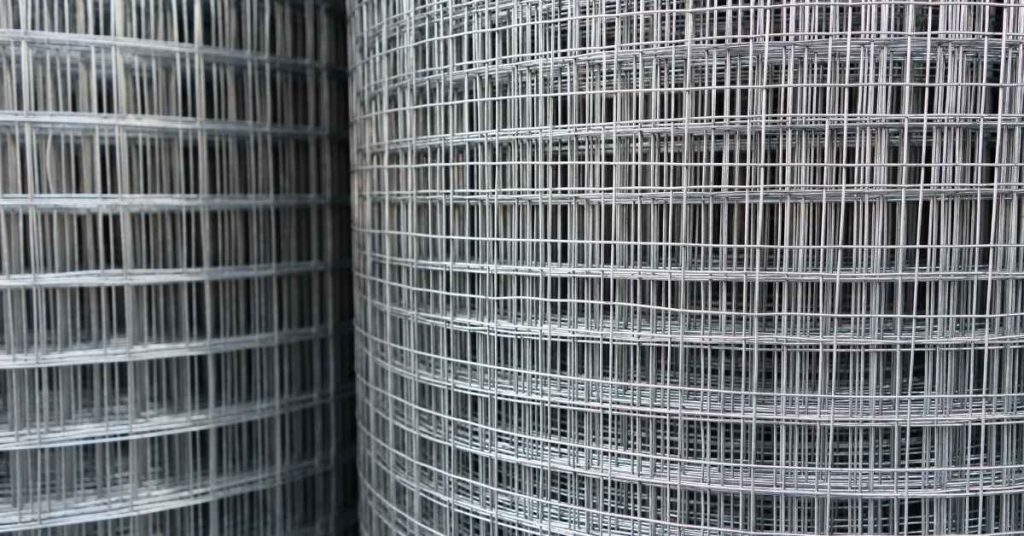
Welded Wire Fabric (WWF) – This is your standard stuff, made by welding intersecting wires together at every crossing point. It comes in various sizes and aperture openings, so check what you need for your job. It’s great for distributing tension evenly across the concrete.
Steel Mesh – This is more of a heavy-duty option, with larger openings and heavier gauge wires. It’s usually used when you’re expecting some serious stress on your concrete, like in foundations or heavy traffic areas. Again, check what size and grade you need.
Now, here’s where they shine: both WWF and steel mesh provide tensile distribution and restraint. That means they help spread out the pull of the concrete as it dries, stopping cracks from forming. But remember, placement matters! You want your mesh right in the middle of your slab for best results.
How they interact in concrete
Fiber reinforcement and wire mesh work together to make your concrete stronger. They’re like a team – each has their own job but they complement each other.
Fibers are good at stopping tiny cracks (micro-cracks) from growing. They move around in the concrete as it’s being poured, so they can get into all those little nooks and crannies where trouble might start.
Wire mesh, on the other hand, is great for bridging bigger gaps (macro-cracks). It sits there, waiting to catch any cracks that try to form. Think of it like a safety net – it’s not everywhere, but when you need it, it’s there.
Together, they make your concrete less likely to crack. Fibers stop the small stuff, mesh catches the big stuff. It’s like having both a security guard (fibers) and a bouncer (mesh) at your party – they’ve got each other’s backs.
When Combining Fiber and Wire Mesh Is Redundant
Identify project scenarios where adding both fiber and mesh offers no measurable benefit and can raise cost or complicate placement. Look for thin slabs, simple pours with low crack risk, or non-structural elements where reinforcement is not needed.
Fibers mainly control microcracking, while mesh controls crack width or provides macro-crack resistance; when their effects overlap, redundancy increases without improving performance. Establish criteria for choosing one approach over the other based on slab thickness, anticipated loads, joint spacing, and exposure, and note that high-strength or heavily reinforced pours may still require both. Outline placement considerations that become trickier with both, and provide practical workflows to minimize issues, such as sequencing and coordination steps to keep fibers dispersed and mesh properly seated.
Small pours, non-structural toppings, and thin slabs
For small concrete pours or thin slabs, like driveways or patios, adding both fiber and wire mesh might be overkill. Here’s why:
Thin slabs don’t need the same level of reinforcement as thicker ones. Too much reinforcement can even cause issues with compaction.
In non-structural toppings, like overlays or topping slabs, cracks aren’t critical. They’re usually just for wear resistance. One type of reinforcement should do the trick here too.
Projects with adequate rebar or engineered reinforcement
Before you add fiber or wire mesh, check your project’s structural drawings. If it already has enough rebar or other engineered reinforcement, adding more might be redundant.
Rebar is designed to handle tension forces and control cracks in concrete. If your rebar meets these needs, additional fibers or mesh might not add much benefit.
So, before you order more materials, double-check with your engineer or architect. They can tell you if what’s already there is enough.
Low-load pedestrian or landscaping applications
For low-demand uses, like garden paths or pedestrian walkways, one type of reinforcement usually does the job. Here’s why:
These areas don’t see much heavy traffic or load. So, they don’t need the same level of crack control as a highway or bridge.
Choose the right fiber or wire mesh for your needs, but remember: you probably won’t need both. Keep it simple and cost-effective.
When Combining Fiber and Wire Mesh Helps
Hybrid use adds value in scenarios with heavy point loads, high flexural or shear demands, and mixes prone to both micro- and macro-cracking. It also helps with rapid crack bridging and distributed crack control during early curing and in service.
Explain how micro-crack control from fibers complements macro-crack resistance from mesh, and mention typical fiber types and mesh configurations, noting how they work together in both placement and service. Provide practical criteria for design decisions, such as target strength, workability, anticipated crack width, curing conditions, and environmental exposure. Include installation tips to avoid conflicts, such as the order of placement and ensuring overlap and proper compaction for even dispersion.
Heavy-duty and industrial slabs with concentrated loads
When you’ve got heavy machinery rolling around, or massive equipment sitting on top of your concrete slab, you need serious strength. That’s where the hybrid approach really shines.
Fiber reinforcement adds toughness and improves post-crack behavior. It helps distribute micro-cracks throughout the slab, preventing them from growing too large or too fast. Steel fibers are your best bet here, as they can handle high loads and provide excellent impact resistance.
Wire mesh, on the other hand, distributes loads evenly across the slab’s surface. It maintains crack spacing by providing a rigid framework that keeps cracks from widening too much. Go for larger grid sizes (like 6×6 or 4×4) to allow fibers to move freely and do their job.
Together, they form an unbreakable team: fibers handle the tiny cracks and sudden impacts, while mesh spreads out heavy loads and keeps bigger cracks in check.
Overlays, repairs, and shotcrete where bonding and toughness are required
When you’re working with thin overlays or repairing existing concrete, you need something that can stick and hold together under pressure. That’s where the combination of fibers and wire mesh comes in.
Fibers improve cohesion in your overlay or repair mix. They help keep everything stuck together as it cures, preventing delamination and improving overall strength. Polypropylene fibers are great for this, as they provide excellent bonding with the surrounding concrete.
Wire mesh supplies surface restraint and anchorage. It helps hold your overlay or repair in place, preventing it from peeling off or cracking prematurely. Go for smaller grid sizes (like 2×2 or 3×3) to maximize surface area contact with the existing concrete.
In shotcrete applications, fibers help maintain a cohesive mix as it’s sprayed onto surfaces, while mesh provides a solid anchor point and helps distribute loads evenly across the newly applied concrete.
Long pours and temperature/shrinkage-sensitive pours
When you’re pouring large areas of concrete, or dealing with high temperatures and shrinkage concerns, you need a combination of tools to keep cracks at bay. That’s where fibers and wire mesh come together again.
Fibers reduce plastic shrinkage. They help control early-age cracking by absorbing the stresses that occur as the concrete sets and loses moisture. This is especially important in large pours, where the risk of plastic shrinkage is higher.
Wire mesh can control longer-term crack widths and alignment. It provides a rigid framework that helps maintain crack spacing as the concrete shrinks over time due to temperature changes or drying. Go for medium grid sizes (like 4×4 or 6×6) to balance load distribution with allowing fibers to move freely.
In service, this combination works together to keep cracks from forming or widening too much. Fibers handle the initial stresses and micro-cracks, while mesh maintains crack spacing and alignment over the long term.
Advantages and Disadvantages of Hybrid Use
Define what counts as hybrid reinforcement and differentiate it from using either option alone. Highlight performance gains like improved crack control distribution, better post-cracking toughness, reduced plastic cracking, and potential reductions in spacing if fibers supplement reinforcement.
Discuss practical downsides such as added labor for fiber distribution, potential segregation, and placement conflicts with mesh. Cover inspection challenges, coordination with pumping and finishing crews, and when non-hybrid alternatives might be simpler or more economical. Include guidance on when hybrid makes sense and general tips for mixing, sequencing, and cost considerations.
Performance advantages and limitations
The combination of fiber reinforcement and wire mesh can boost your concrete’s performance. Here’s how:
Improved toughness: Fibers bridge micro-cracks, preventing them from growing. Mesh handles the big cracks. Together, they make your slab tougher.
Multi-scale crack control: Fibers tackle tiny hairline cracks. Mesh takes care of wider ones. It’s like having a team covering all bases.
Plateaus in benefit: While hybrid use can enhance performance, it might not always be worth the extra cost and effort. For instance, if your slab is already well-reinforced with rebar or mesh alone, adding fibers might not make much difference.
Installation, sequencing, and workmanship challenges
Combining fiber reinforcement and wire mesh can present some installation hurdles:
Mesh buoyancy: Mesh can float to the top if not properly secured. This ruins its effectiveness. Make sure it’s held down.
Fiber dispersion issues: Fibers need even distribution for maximum benefit. If they clump, they won’t work as well. Stir your concrete thoroughly and use compatible mix designs.
Coordination problems: Working with both fibers and mesh requires careful planning. You’ll need to coordinate with your pumping, vibration, and finishing crews to ensure everything goes smoothly.
Procurement and logistics trade-offs
Before you decide to use both fiber reinforcement and wire mesh, consider these procurement and logistics factors:
Added handling and storage: Both fibers and mesh require extra space for storage. You’ll also need more time for installation. Make sure your site can accommodate this.
Potential scheduling impacts: Incorporating both fibers and mesh into your project schedule might cause delays. Plan ahead to avoid any holdups.
Cost-benefit considerations: While hybrid use can enhance performance, it also adds cost. Make sure the benefits outweigh the extra expense for your specific project.
Safety, Code and Standards Considerations
Summarize the most relevant safety, code, and standards to consult for DIY mixes that include fiber and/or wire mesh, including where standards apply and how to interpret reinforcement requirements and serviceability. Reference sources to check for reinforcement and containment guidance and any local amendments.
Note typical testing methods to reference or perform, such as slump, air content, and strength checks, along with fiber distribution checks. Include notes on how results influence mix design adjustments, and outline proper mixing, placement, curing practices to stay compliant and safe. Mention PPE and handling considerations specific to fibers and mesh, plus guidance on documenting compliance and coordinating with local codes or project specs.
Standards, specs, and test methods to check
Before you start your DIY concrete project using fiber and wire mesh, consult these standards and codes:
ACI 318-19: This standard provides guidelines for reinforced concrete. Check for allowed combinations of fiber and mesh.
ASTM C1116/C1116M: This standard covers the test methods for slump and air content, crucial for mix design adjustment.
Local building codes: Always check local amendments or specific requirements. Some areas may have unique rules regarding reinforcement combinations.
Placement, cover, and corrosion risks
Proper placement of wire mesh and adequate concrete cover are vital for durability:
Mesh placement: Position the mesh at the mid-depth of the slab. This provides optimal reinforcement and prevents stress concentrations.
Concrete cover: Ensure sufficient cover over the mesh to protect it from corrosion. ACI 318 recommends a minimum cover of 2 inches for most applications.
Corrosion protection: If using galvanized or epoxy-coated wire, follow the manufacturer’s recommendations for additional protection if needed. Stainless steel mesh may be required in severe exposure conditions.
Inspection and acceptance criteria
Before final acceptance of your concrete pour, ensure the following checklist is completed:
- Fiber dosage: Verify that the correct amount of fiber has been added. Too little may compromise strength, while too much can cause clumping.
- Mesh position: Check that the wire mesh is at the mid-depth of the slab, as designed.
- Mesh overlap: Ensure that mesh overlaps are adequate and properly secured to prevent stress concentrations.
- Consolidation: Verify that the concrete has been properly consolidated around the reinforcement to ensure good bond.
- Slump test: Confirm that the slump test results meet the specified criteria for your mix design.
- Air content test: Ensure that the air content is within acceptable limits to maintain strength and durability.
- Compressive strength test: Verify that cylinder or cube samples have been taken for compressive strength testing.
- Fiber distribution check: A visual inspection may be required to ensure uniform fiber dispersion.
- Pull-out or bond tests: If specified, these tests should be performed to confirm adequate reinforcement bonding.
Quick rule: Any deviations from the above checklist could compromise the strength and durability of your concrete pour. Always follow up with the inspector to address any issues.
Planning and Design Tips to Avoid Redundancy and Maximize Efficiency
Clarify decision criteria for when fiber may replace or supplement wire mesh, and set thresholds that trigger a combined approach. Keep the guidance practical and aligned with typical slab scenarios and exposure conditions. Use plain language that teams can apply on site.
Develop a concise decision flow and a step-by-step checklist to assess redundancy risk, including project type, thickness, anticipated loads, curing methods, and environmental exposure. Specify clear spec language and create drawing conventions that mandate labeling and overlap requirements, plus a QA/QC workflow to ensure proper installation before pour and cure.
Design checks and load-based decision rules
Before you decide to use both fiber reinforcement and wire mesh, do your homework. Consult with a structural engineer.
Perform these checks:
– Load calculations: Ensure the combined system can handle anticipated loads.
– Crack-width analysis: Check if fibers alone can meet serviceability requirements.
– Deflection limits: Verify that the slab won’t deflect too much under load.
Specifying fiber type, dosage, and mesh size clearly
Be specific when you write your specs. Here’s what to include:
– Fiber type: State the exact type of fibers needed (e.g., micro, macro, or a mix).
– Dosage: Specify the minimum dosage rate in pounds per cubic yard.
– Mesh size: Define the mesh gauge and spacing. For example, ‘W1.4’ means 1.4-inch spacing between wires.
Have your teams verify these specs with engineers before ordering materials.
Coordination between design, procurement, and field crews
Good coordination is key to a successful pour. Here’s how:
– Pre-bid clarification: Get all parties on the same page before bidding. Discuss material types, dosages, and mesh sizes.
– Mock-ups: Build test slabs to ensure materials work as expected.
– Placement sequencing: Plan when and how to place fibers and mesh. For example, ‘Fiber first, then mesh at mid-depth’ or vice versa.
Clear communication prevents conflicts and ensures your combined system performs as intended.
Cost Implications and Value Analysis
Outline cost categories such as material costs and labor for installation, along with any tooling, forms, or waste considerations. Keep the focus on comparing upfront costs with lifecycle benefits and avoidance of maintenance or repairs.
Provide a simple decision framework to decide when fiber plus mesh is warranted and when redundancy can be avoided, noting how climate or soil conditions can shift the balance. Include guidance on evaluating redundancy scenarios and factors that influence cost, like mix design, placement, curing, and inspection requirements.
Upfront versus lifecycle cost considerations
When planning your concrete project, it’s crucial to consider both the upfront costs and long-term benefits. Upfront costs include materials like concrete mix, fiber additive, welded wire mesh, and labor for installation.
Why consider lifecycle benefits? Using fiber and wire mesh together can reduce maintenance costs over time by minimizing cracks and extending service life. Fewer repairs mean lower overall costs in the long run.
For example, if your project involves a large slab with high use (like a warehouse floor), investing in both fiber and mesh upfront could save you from costly repairs down the line. But for smaller slabs with low use (like a backyard patio), one might suffice.
To make an informed decision, calculate potential repair costs over your project’s expected lifespan. Compare this to the initial cost of using both materials. This helps you see when investing in both upfront is worth it.
When redundancy wastes money
Using both fiber and wire mesh together isn’t always necessary or cost-effective. In some cases, one can provide sufficient strength and crack resistance without the added expense of the other.
Small slabs: For small concrete slabs with low use (like sidewalks or driveways), using just fiber reinforcement might be enough. The additional cost of wire mesh may not justify the marginal performance gain.
Similarly, in low-use areas like residential garages or basements, one type of reinforcement could suffice. Always consider your project’s specific needs and loading conditions before deciding.
Remember, redundancy doesn’t always mean better performance. It can just mean higher costs and more complex installation. Be mindful of these trade-offs when planning your project.
How to build a simple cost-benefit check
To decide if using both fiber and wire mesh is worth it, follow this practical checklist:
1. Gather data: Collect information like expected loads, repair risk (based on local climate and soil conditions), labor rates in your area, and material prices.
2. Estimate costs: Calculate the upfront cost of using both materials together. Then estimate potential repair costs over your project’s lifespan if you use only one.
3. Verify with professionals: Consult with project engineers or local concrete experts to validate your findings. They can provide insights tailored to your specific situation and help you make an informed decision.
While there are no fixed thresholds, this process helps you understand when investing in both materials makes sense for your project’s unique needs.
Case Studies, Common Mistakes, and Visual Checkpoints for the Field
Describe concrete scenarios that typically require fiber, mesh, or a hybrid approach, with quick reasoning for when redundancy helps versus when it doesn’t. Use practical, on-site language for homeowners and DIY readers.
Offer 2–3 real-world examples to illustrate how design intent, material selection, and installation practices affected performance. List common mistakes in hybrids and provide a visual checkpoint sequence for field teams to verify uniform dispersion, coverage, edge detailing, and proper curing. Include a ready field checklist and tips for communication among designers, contractors, and inspectors to minimize misinterpretation and ensure correct on-site implementation.
Real-world examples and lessons learned
Use this checklist to learn from past projects. See what worked, what didn’t, and why.
- Project A: Fiber-wire mesh hybrid in residential slab.
Success: Proper dosing, good consolidation.
Lesson: Correct fiber dosage is crucial. - Project B: Wire mesh-only footing.
Failure: Cracked under load.
Lesson: Mesh alone isn’t enough for high loads. - Project C: Fiber-reinforced slab-on-grade.
Success: Good fiber distribution, proper cover.
Lesson: Proper cover depth prevents corrosion.
Quick rule: Learn from past projects to avoid repeating mistakes.
Common mistakes to avoid
Use this checklist to prevent common errors that can turn hybrid reinforcement into a problem.
- Insufficient fiber mixing: Inadequate distribution leads to weak spots.
Check: Visually inspect fresh concrete for uniform fiber distribution. - Incorrect mesh cover: Exposed mesh corrodes, weakening the structure.
Check: Measure cover depth at multiple points. - Poor consolidation around fibers: Voids cause weak spots and cracks.
Check: Use a poker vibrator to ensure proper compaction around fibers.
Quick rule: Regular checks help catch mistakes early, preventing costly rework.
Tools, materials checklist, and visual checkpoints
Use this practical site checklist to verify correct hybrid use and ensure quality.
- Fiber mixing: Check fiber dosage before adding to concrete.
Confirm: Use a sample batch to verify proper mixing. - Mesh tie/overlap: Ensure wire mesh is properly tied and overlapped.
Check: Inspect all joints for secure ties and adequate overlap. - Slump and consolidation checks: Ensure concrete slump remains consistent, and proper compaction is achieved.
Confirm: Use a slump cone test and check for voids after compaction.
Quick rule: Regular visual checks help maintain quality control and ensure the hybrid reinforcement works as intended.
Conclusion
Mixing fiber reinforcement with wire mesh can pay off, but only if you use the right combination for the job and stay within safe limits. The goal is durability and a clean finish without wasting material or risking failure.
Before you pour or finish, run this quick, practical check: confirm the project loads and crack control needs, verify the fiber and mesh specs meet the design, plan mesh placement and fiber dosage to avoid overlaps or gaps, size and space rebar or mesh per code guidance, do a small-area test to confirm workability and cure, then mix and install with clean, consistent material, and finally inspect for voids, alignment, and proper curing per the visual checkpoints you’ve seen in the field notes. Keep it simple, document any changes, and don’t skip the safety steps or inspections.
Common mistakes to avoid are overloading the section, mixing materials with incompatible set times, and skipping the safety checks that catch voids or misaligned mesh. Always wear eye and skin protection, keep work areas dry, and never rush curing or handling when materials are fresh or stiff. If you’re unsure about the load path, or if the project axial or lateral requirements seem beyond your experience, stop and call a professional rather than guessing. Stay disciplined, finish with proper curing, and you’ll see the long-term payoff in strength and appearance.
FAQ
When can fiber and wire mesh create unnecessary redundancy in a concrete pour?
If the fiber already runs through the mix and the mesh isn’t providing a separate structural function, you may be doubling effort for no gain. Look for overlapping load paths and ask if both layers will actually carry more load or just complicate placement. Check the product instructions and local guidelines to confirm their intended combined use.
What are clear benefits of using fiber together with wire mesh in typical jobs?
Fiber helps control shrinkage cracking and improves post-crack stiffness, while mesh helps with early crack control and distribution in heavier pours. Together they can improve workability and reduce surface cracking, as long as the mesh is sized and placed correctly for the slab or footing. Verify the engineer’s guidance or manufacturer notes for your exact mix and mesh type.
Are there common setups where redundancy is necessary or unavoidable?
Yes, heavy slabs on ground or areas with unpredictable loads sometimes benefit from both, especially where control of cracking is critical. If the project demands higher post-crack integrity or if the pour is very large with shifting forms, using both can be practical. Always confirm with the label, instructions, or a local rule before proceeding.
What safety and practical tips help when mixing fiber and wire mesh together?
Keep fiber evenly dispersed in the concrete to avoid clumping, and wire mesh should be supported off the ground to sit at the correct depth. Don’t let mesh bow or sag during placement, which can create voids or misalignment. If unsure, check the mesh spacing and fiber type against the manufacturer’s guidance and follow site-specific safety practices.