

Introduction
Anchor bolts are embedded fasteners set in concrete to provide a secure mounting point. Layout tricks include snapping lines, using a center grid, and double-checking offsets before you drill. Always check the label, manufacturer instructions, and local rules before you start.
If a bolt is misplaced, you can fix it by re-drilling or using a repair method designed for concrete. Plan to drill clean holes, align with the member, and anchor with the right type for your concrete condition. Know there are several concrete anchor options and check product labels for suitability and installation steps.
Key takeaways
- Consult Eng-Tips, largest engineering forum for practical anchor bolt advice.
- Review Similar threads for layout tricks and common misplacement cases.
- Use Part and Inventory Search to verify available anchors before planning.
- Plan layout with templates and tolerances to minimize rework during install.
- Know types of concrete anchors and drill-bit selection for applications.
- Safety: verify shoring, PPE, and tripod checks before embedding bolts.
Table of Contents
- Introduction
- Key takeaways
- Why Correct Anchor Bolt Placement Matters
- Types of Anchor Bolt Systems
- Planning the Layout: Templates, Tolerances, and Visual Checkpoints
- Tools and Materials Checklist
- Proper Installation Steps for Embedded Anchor Bolts
- Methods to Fix Misplaced Anchor Bolts
- Troubleshooting Common Installation Issues and Safety Precautions
- Practical Next Steps and Trusted Sources
- Conclusion
- FAQ
Why Correct Anchor Bolt Placement Matters
Anchor bolts are the backbone of how a structure transfers loads from the frame into the foundation. They influence shear, tension, and withdrawal performance, and they keep members aligned through the cure and service life. Misplacements can shift load paths and compromise connections, turning a neat setup into a risky one.
Urgent fixes come when misplacement changes the load path, misaligns base plates, or places bolts outside required tolerances. Cosmetic errors may surface as alignment deviations or loose fixtures, but they still deserve prompt attention to avoid creeping movement. Common failure modes include cracked concrete around anchors, shifted connections, or anchor pull-out under load, which are clues to act now rather than later.
Effects on structural integrity
Misplaced anchor bolts can wreak havoc on your structure’s integrity. They mess up load paths, reducing the capacity of your concrete to bear loads.
Altered load paths mean forces aren’t distributed as planned. This could lead to stress concentrations and unexpected failures.
Misaligned bolts can also cause members to shift out of alignment. This can lead to cracks in your concrete, misaligned connections, and even structural failure over time.
If you spot any of these issues during or after pour, re-inspection or retrofit might be needed to ensure safety and compliance.
When a misplaced bolt becomes a safety or code issue
Some misplacements are just unsightly, but others pose real safety and code compliance risks. Here’s when you need to act fast:
Edge distance: If bolts are too close to the edge, they can’t grip properly. This could lead to pull-out under load. Check your plans; if it’s less than 1/6 of the embedment length, it’s a problem.
Grout interference: Bolts that aren’t properly grouted can corrode or fail to transfer loads. If you see gaps or voids around bolts during pour, address them immediately.
If misplacements fall into these categories, don’t DIY. Get an engineer’s review and follow their prescribed remedial action. Safety first!
Types of Anchor Bolt Systems
Start by identifying the main families: cast-in-place or adhesive-injected (post-installed) systems. Hardware examples typically include wedge anchors, sleeve anchors, drop-in anchors, and epoxy or M‑set anchors. Matching fixes to bolt type helps you choose the right remedy without overhauling the entire connection.
Load compatibility matters: tensile, shear, and combined loading each favor different systems. Material and corrosion considerations drive selection as well, with stainless steel, coated carbon steel, or epoxy coatings performing differently in various environments. Concrete embedment depth, cover, and strength constraints also limit which systems you can use for a given job.
Cast-in-place vs. post-installed anchors
Anchor bolts can be cast-in-place during concrete pouring or post-installed after the concrete has cured. Each method has its own advantages and fixes.
Cast-in-place: These are embedded during concrete pouring, providing high strength and durability. Fixes involve adjusting formwork or re-pouring if misplaced.
Post-installed anchors: These are drilled into cured concrete using mechanical or adhesive systems. They’re versatile but may have lower capacity than cast-in-place. Fixes often involve switching to a different post-install system or adjusting embedment depth.
Bolt materials, coatings, and grades
Choosing the right material and coating for your anchor bolts is crucial to prevent corrosion and ensure longevity. Always check project documents for exact grade specifications.
- Stainless Steel: Highly resistant to corrosion, ideal for exposed or harsh environments. Look for 304 or 316 grades. Avoid in high chloride exposure without proper passivation.
- Carbon Steel with Coatings: Cost-effective but requires protective coatings like galvanizing or epoxy. Check coating thickness and system (e.g., G90, G125).
- Epoxy-coated Bolts: Provides additional protection against corrosion. Ensure proper surface preparation and application.
- Epoxy/M-12 Set Anchors: High-strength, used in high-load applications. Check M-12 rating for load capacity. Avoid over-torquing to prevent bolt failure.
- Exposure Class: Consider environmental factors like moisture, chemicals, and temperature. Higher exposure classes require more corrosion-resistant materials.
Planning the Layout: Templates, Tolerances, and Visual Checkpoints
Begin with a clear coordinate system and reference points so everyone on site speaks the same language about anchor locations. Define origins, axes, and beam references that stay consistent from drawings to the field. This foundation prevents drift during form setup and pour sequencing.
Document templates with hole patterns, spacing, and edge distances, and specify how templates are held in place. Set concrete tolerances for pocket depth, bolt projection, plumbness, and position, and note how tolerances stack up across the layout. Use a simple pre-pour layout checklist and a three-step visual protocol on pour day to catch deviations early.
Creating and verifying layout templates
Before you start digging, create layout templates to ensure accurate anchor bolt placement.
- Choose template material: Use cardboard, plywood, or metal. Metal lasts longer but can dent.
- Design anchorage pattern: Follow your drawings. Ensure bolts are evenly spaced and meet edge distance requirements.
- Transfer dimensions to forms: Mark out bolt locations on the formwork using the template. Use a straight edge for accuracy.
- Check template retention: Secure templates with screws or nails to prevent movement during formwork assembly and pouring.
- Avoid template warping: If using wood, ensure it’s not warped before marking out. Warped templates lead to misplaced bolts.
- Verify template alignment: Align templates with reference points on the formwork. Misaligned templates cause bolts to be off-grid.
- Check hole sizes: Ensure holes in the template match anchor bolt sizes. Wrong size causes poor anchorage.
- Double-check measurements: Re-measure template dimensions against your drawings before pouring. Mistakes here lead to misplaced bolts.
Quick rule: Always double-check your work. A few minutes spent verifying can save hours fixing mistakes later.
Visual checkpoints and acceptance tolerances
Before pouring, perform visual checks to ensure anchor bolt placement is correct. Check contract or engineer-specified tolerances for acceptable ranges.
- Verify template/bolt alignment: Ensure templates are aligned with formwork and bolts are correctly positioned within the holes.
- Check formwork plumbness: Use a level to ensure formwork is vertical. Out-of-plumb forms lead to misplaced bolts.
- Review anchor projection: Ensure bolts project the correct distance from the formwork face. Incorrect projection affects anchorage strength.
- Confirm positional variance: Measure bolt locations against your layout plan. Significant variances indicate a problem with template placement or retention.
- Check concrete cover: Ensure bolts are adequately covered by concrete. Insufficient cover reduces anchorage strength and increases corrosion risk.
- Review rebar/bolt alignment: If using reinforcement, ensure it aligns properly with anchor bolts. Misaligned rebar weakens the structure.
- Inspect bolt condition: Ensure bolts are clean, undamaged, and free of rust or debris. Damaged bolts have reduced strength.
- Measure pocket depth: Use a measuring tape to ensure anchor pockets are the correct depth. Incorrect depth affects anchorage performance.
Quick rule: Tolerances vary by project and region. Always check your contract or consult with an engineer to ensure you’re within acceptable ranges.
Tools and Materials Checklist
Have essential layout tools ready: a tape measure, chalk line or laser, bolt templates or jigs, and a repeatable reference method for spacing and elevation before drilling. Pair these with the anchor types you’ll use and their required ancillary pieces like washers, nuts, thread lockers, or sealants.
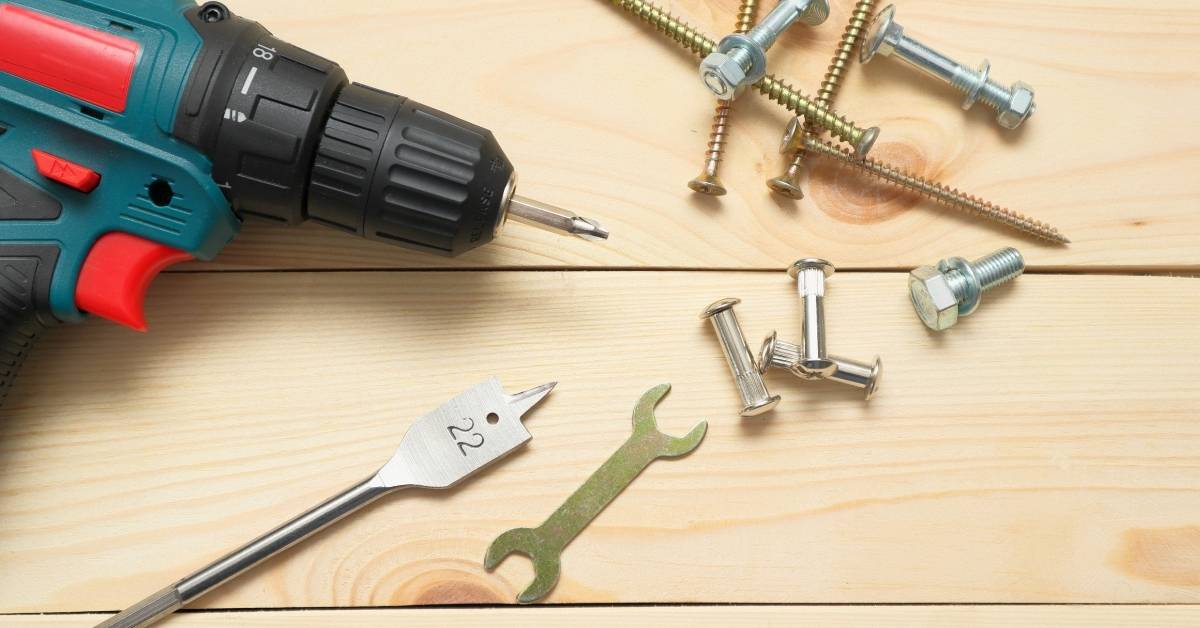
Bring the drilling and prep gear you’ll need: a hammer drill or rotary hammer, masonry bits matched to your anchor diameter, dust collection, and cleaning tools. Include setting aids like spacers and string lines, plus corrective tools such as epoxy kits, drill-out bits, and surface patching materials for misalignment remediation.
Must-have layout and placement tools
Before you start drilling, make sure you have these essentials to ensure accurate anchor bolt placement.
- Tape measure: To mark out exact distances. Inaccurate measuring leads to misplaced bolts.
- Chalk line or laser level: For snapping straight lines and checking horizontal alignment.
- Bolt layout templates or jigs: To ensure consistent spacing and elevation. Without them, bolts can end up too close together or at varying heights.
- Repeatable reference method: Like a plumb bob or transit, to verify vertical alignment and prevent wonky columns.
- Layout pins: To mark exact drill locations. Without them, you might drill in the wrong spot.
- Wire ties: To secure templates in place during drilling. If they’re not secured, templates can shift, ruining your layout.
- Level and plumb check tools: Like a torpedo level or digital angle finder. Skipping this step results in crooked bolts.
- String line or dowel rods: For checking long stretches of layout. Missed misalignments can cause structural issues later on.
Quick rule: Always double-check your layout before drilling. A few extra minutes now saves hours of rework later.
Repair materials and fastening systems
When you’ve got a misplaced bolt or need to reinforce an existing one, these are the repair options to consider.
- Patching mortars: For filling voids around misplaced bolts. Without proper patching, moisture can seep in and cause corrosion.
- Adhesive anchors: For securing new bolts where drilling isn’t an option. Using the wrong adhesive can lead to anchor failure under load.
- Sleeves: For reinforcing existing bolts that are too short or need extra support. Inadequate reinforcement can result in bolt pull-out or fracture.
- Epoxy anchoring kits: For fixing misplaced bolts by filling the void and securing a new bolt. Skipping this step leaves you with a weak anchor point.
- Grout or resin injectors: To fill gaps around existing bolts for added support. Without proper grouting, bolts can wobble under load.
- Grinders or chisels: For cleaning up and preparing surfaces before repair. Inadequate surface prep leads to poor adhesion of repair materials.
- Surface patching materials: To fill in any divots or low spots around misplaced bolts. Uneven surfaces can cause stress concentrations, leading to bolt failure.
Quick rule: Always match your repair material to the substrate and expected loads. A one-size-fits-all approach can lead to costly failures down the line.
Proper Installation Steps for Embedded Anchor Bolts
Learn the two main paths: cast-in-place embedment during pour versus post-installed anchors after curing. Each path uses different templates, tools, and fasteners, so align your plan with the project timeline and field conditions. Understand which system suits your base material and fixture requirements before you start.
Then verify layout accuracy and tolerances, confirm cleanout and embedment depth, and prep the formwork accordingly. For post-installed anchors, emphasize hole cleaning and proper adhesive cure. Documentation of measurements and deviations helps guide remediation if needed later on.
Step-by-step cast-in-place embed procedure
This step-by-step guide walks you through embedding anchor bolts during the concrete pour, ensuring they’re properly placed and protected.
- Prepare formwork: Ensure forms are level, square, and braced. Mark out anchor locations.
- Set templates: Place templates at marked locations. Verify they’re plumb and level.
- Verify elevations: Check that template tops align with desired finish surface elevation.
- Protect embeds: Cover templates with plastic or cardboard to prevent concrete from sticking.
- Pour concrete: Pour around templates, vibrating to remove air pockets. Keep bolts plumb during pour.
- Cure properly: Allow concrete to cure according to mix specifications. Remove forms and templates carefully.
- Check embeds: Inspect embedded bolts for proper placement, alignment, and coverage.
Post-installed anchor installation workflow
This section outlines the process of installing anchors after concrete has cured, using either adhesive or mechanical fasteners.
Hole Preparation: Drill holes as per manufacturer’s guidelines. Clean holes thoroughly to remove dust and debris using compressed air or a boroscope.
Anchor Installation: Follow manufacturer’s instructions for installing anchors. For adhesives, mix according to package directions and apply to hole walls. Insert anchor and torque to specified value. For mechanical anchors, insert and tighten to specified torque.
Setting Checks: Allow cure time as per manufacturer’s guidelines before applying load. Verify anchor is secure by attempting to rotate or pull it.
Methods to Fix Misplaced Anchor Bolts
Begin with a quick diagnostic: assess how far off the bolt is from the design, and whether the misalignment affects the load path or fixture integrity. This guides the scope of work and helps avoid unnecessary disruption. Start with the least invasive fixes first.
If a fix is not possible with simple shifts, consider re-tapping, slotting, or using a retrofit plate with offset holes. If required, you may remove and reinstall anchors or drill new ones while preserving concrete integrity. Compare options like chemical epoxy anchors or sleeves, and rely on manufacturer guidance and code compatibility for the final choice.
Minor on-site adjustments and shimming techniques
If your anchor bolts are slightly off, you might not need to drill new holes. Here’s how to make minor adjustments:
For slotted baseplates, shift the bolt within its slot to center it under the load. This works best when the misalignment is minimal and won’t affect load distribution.
Use grout shims for small gaps between the baseplate and concrete. Apply a thin layer of grout, place the shim, then let it cure before bolting down. This helps distribute loads evenly.
Eccentric loads can cause issues, but if the misalignment is minor (within tolerance), you might get away with repositioning the nut/washer assembly to seat properly without disturbing the concrete.
Re-drill, sleeve, and alternative anchoring solutions
When minor adjustments aren’t enough, consider these repair methods:
Core-drilled sleeves allow you to re-drill the hole and install a new anchor. This works well when the original hole is too large or misaligned but preserves concrete integrity.
For adhesive anchors, like epoxy or expansion anchors, drill a new hole (if possible) and install according to manufacturer instructions. These can be used as alternatives to cast-in embeds in some cases.
If you need to cast-in new embeds, remove the old anchor, clean the hole, seal it if necessary, then pour a new batch of concrete with the new anchor in place. This is more involved but ensures a solid connection.
When to stop and consult a structural engineer
Before attempting any repairs, assess if the misalignment affects load-critical areas. If so, consult an engineer. Here are some thresholds:
Load-critical areas: Misaligned bolts near heavy loads or stress concentrations may require engineering assessment to prevent structural issues.
Edges and boundaries: Bolts close to edges, corners, or other structural boundaries might affect overall stability. An engineer can advise on safe repairs.
Significant pattern changes: If multiple bolts are misaligned in a specific pattern, it might indicate a larger problem with the structure. In this case, always consult an engineer before proceeding with repairs.
Troubleshooting Common Installation Issues and Safety Precautions
Identify frequent misinstallations such as misaligned pours, incorrect embedment depth, or under/over-torqued nuts, and note how these affect performance and aesthetics. Distinguish whether an issue is root-cause related or simply a symptom of misalignment. Use a systematic diagnostic approach to avoid guessing.
Prioritize safety: wear PPE, control dust, detect utilities before drilling, and secure work zones. Follow local codes and manufacturer instructions for repair methods, and document corrections to support future maintenance and warranties. Plan for weather, cure times, and, when needed, non-destructive checks or load tests after remediation.
Common mistakes and how to correct them
Here are some common pitfalls to avoid when embedding anchor bolts.
- Misaligned bolts: Template movement, form shrinkage, or human error can cause this. To fix, saw-cut the concrete, epoxy in new anchors, and ensure templates are secure before pouring.
- Inadequate embedment depth: Incorrect bolt length or poor planning can lead to insufficient embedment. Check plans, use proper bolts, and adjust formwork if needed.
- Settlement after cure: Improper base conditions or curing issues can cause settlement. Inspect forms and base before pouring, and follow specified cure times.
- Incorrect torque: Under-torquing or over-torquing nuts can damage threads or bolts. Use a torque wrench, follow manufacturer’s guidelines, and double-check torque values.
Learn from these mistakes to prevent recurrence in future projects.
Safety, inspection, and permit considerations
Use this checklist before, during, and after embedding anchor bolts to ensure safety and compliance with local codes.
- PPE: Wear appropriate personal protective equipment, including hard hat, safety glasses, gloves, and steel-toed boots.
- Lifting hazards: Be aware of overhead hazards when lifting heavy objects. Use proper lifting techniques and equipment.
- Excavation hazards: Watch for cave-ins, falling loads, and other excavation-related dangers. Follow OSHA guidelines for trench safety.
- Inspection hold points: Check anchor bolts at key stages: before pouring, after initial set, and after final cure. Ensure they meet acceptance tolerances.
- Permits and codes: Obtain necessary permits and follow local building codes. Consult with your local authority having jurisdiction (AHJ) if unsure.
- Utility detection: Before drilling or cutting, locate and protect underground utilities to prevent damage and injury.
- Fall protection: Use fall protection systems when working at heights, following OSHA guidelines for guardrails, safety nets, and personal fall arrest systems.
- Securing work zones: Clearly mark and secure work zones to protect workers and prevent unauthorized access.
- Load testing: After remediation, perform non-destructive checks or load tests as required by the engineer of record or local codes.
Quick rule: Always prioritize safety over speed. Follow these guidelines to protect yourself and others on your jobsite.
Practical Next Steps and Trusted Sources
Compare repair options by considering re-torque or epoxy fixes versus re-drilling and relocating anchors, and weigh downtime against structural impact. Build a simple decision framework to guide the choice, then gather quotes and plan the work timeline. Keep cost and risk in view to prevent under- or over-investing in fixes.
Use a concise inspection checklist to assess alignment, concrete condition, cracks, and corrosion, and know when to stop and consult a professional. Identify trusted sources such as manufacturer notes, relevant standards, and professional communities, and locate official product data sheets for anchors. Document measurements, photos, and decisions to support warranties and future maintenance.
Cost analysis: repair versus re-pour or full rework
When anchor bolts go wrong, you’ve got three main options: retorque and epoxy fix, redrill and relocate, or full reinstallation. Each has its own costs.
Materials: Fixes can be cheap—just a tube of epoxy and some hardware. But re-drilling might need new sleeves and anchors, costing hundreds.
Labor: Retorquing’s quick, but redrilling and reinstallation take time. Get contractor estimates to compare.
Downtime: Every day your project’s stopped means money lost. Consider this in your decision-making.
Liability: If you’re not sure, consult an engineer. They can advise on structural implications and help protect you from costly mistakes.
Inspection checklist and impact on project schedule
Before you fix, inspect. This checklist helps ensure your repair’s solid and won’t delay the project further.
- Alignment: Check bolts are straight and true. Bent bolts need immediate attention.
- Concrete condition: Look for cracks or damage around bolts. If found, consider a full repair.
- Corrosion: Rust means trouble. Bolts might need replacing.
- Load path integrity: Ensure bolts are securely embedded and can bear the load.
- Permissible tolerance for rework: Check codes allowable tolerances for your fix.
- Cracks around bolts: Even hairline cracks need attention. They could grow.
- Bolts’ embedment depth: Too shallow? You might need to reinstall.
- Fastener condition: Check nuts, washers, and other hardware for damage or wear.
Quick rule: If you’re unsure about any item, stop and consult a pro. Better safe than sorry.
Community resources, similar threads, and part/inventory search
Don’t reinvent the wheel. Check these resources for real-world examples and parts.
Eng-Tips: This engineering forum’s a goldmine. Search ‘Similar threads’ for cases like yours.
Manufacturer tech notes: They’ve got detailed guides on their websites. Find your anchor’s maker and learn from them.
Part search: Need a replacement embed or fastener? Use suppliers’ ‘Part and Inventory Search’. It’ll save you time and effort.
ACI/ASTM standards: These set industry benchmarks. Check them to ensure your fix is up to code.
Conclusion
Getting anchor bolts right isn’t optional—it’s what keeps your structure safe, cleanly built, and standing after the first load or tremor. If you lock in the layout, use the right system, and install with proper tolerances, you’ll avoid costly repairs and ugly fixes later.
Check that the layout matches your templates and tolerances, confirm your templates are pinned to the foundation or base, verify the bolts are the correct type and length for the application, test a dry fit or mock-up in a low-stress area, mark and recheck before installation, and then follow the proper sequence: position, drill or set, inspect for plumb and alignment, secure, and test with the intended load subject to a small, controlled trial. If any step looks off, stop and reassess rather than forcing it; small adjustments now beat big problems later.
Avoid these mistakes: rushing through layout, using the wrong bolt type or length, or skipping the visual checks and tolerances. Always clean the holes and surfaces, wear eye and hand protection, and maintain a safe work area. If you’re uncertain about the base materials, loads, or epoxy and expansion settings, don’t gamble—pause and verify against the plan or consult a professional.
When in doubt about critical loads, embedded depth, or hidden utilities, it makes sense to call in a pro instead of pushing onward. Stay methodical, test a little first, and you’ll finish with a solid, dependable install—and the confidence that you didn’t cut corners.
FAQ
What layout tricks help position anchor bolts accurately?
Use simple templates or chalk marks tied to string lines to lock in spacing and alignment. Make plaster or cardboard templates from the planned pattern and check against the actual surface before drilling. Always confirm the layout with a quick visual check and double‑check against any manufacturer templates.
How do I drill and place anchor bolts correctly?
Use the drill bit size and depth specified on the anchor’s label or datasheet. Clean the hole thoroughly before inserting the anchor, then follow the product instructions for seating and tightening. If you’re unsure, stop and verify with the manufacturer’s instructions or local guidelines.
What should I do if a bolt ends up in the wrong place?
Best practice is to remove the bolt and re‑drill in a permissible spot. If the hole can’t be reused, patch it as directed by the product instructions and install a new anchor in the approved layout. When in doubt, consult the anchor’s instructions or a qualified tradesperson.
What types of concrete anchors are commonly used for DIY projects?
Common options include wedge, sleeve, expansion, and epoxy anchors. Each type has its own install method and load path—read the label and follow the manufacturer for your concrete grade and rebar presence. If you’re unsure, compare options against the project’s requirements and local guidance.
What tools and safety steps should I have when setting anchor bolts?
Have a hammer drill or impact drill, the correct drill bits, PPE, a measuring tool, and the anchors’ installation kit. Wear eye protection and sturdy gloves, and keep the work area clear. Always follow the manufacturer instructions and stop if anything seems off.