
Table of Contents
- Understanding Pressure Washing vs. Soft Washing
- Pre-Treatment Options for Effective Algae Removal
- Selecting the Right PSI for Concrete Surfaces
- Step-by-Step Pressure Washing Process
- Safety Precautions and Equipment
- Types of Stains and Suitable Cleaning Solutions
- Environmental Considerations
- Cost-Effective DIY Solutions and Alternatives
- Common Mistakes to Avoid
- Planning and Preparation Steps
- Long-Term Maintenance Tips to Prevent Algae Regrowth
- DIY vs. Professional Services
To remove algae without damaging concrete, start with a sound surface, a wide fan nozzle, the lowest effective pressure, and a small test patch. Keep the wand moving, contain the dirty water, and let the slab dry before deciding whether it needs more cleaning. Never use a zero-degree nozzle, a turbo nozzle, or a stationary spray on concrete unless a qualified operator has confirmed the surface can tolerate it.
Understanding Pressure Washing vs. Soft Washing
Pressure washing relies on water force to lift algae and soil. Soft washing uses low pressure and a compatible cleaner to do more of the cleaning work before a gentle rinse. Either method can be appropriate for concrete; the choice depends on the slab’s condition, the amount of growth, nearby plants, and whether runoff can be controlled.
Pressure Washing Basics
Concrete is durable, but its surface paste can be etched, striped, or removed by an aggressive spray. Cleaning results are not determined by PSI alone. Flow rate, nozzle angle, nozzle orifice, distance, spray angle, dwell time, algae thickness, and the age and condition of the concrete all matter.
Use a 25-degree fan tip for general hard-surface cleaning. A 40-degree tip gives a wider, gentler pattern for a first pass and rinsing. Simpson’s nozzle-selection guidance similarly identifies 25 degrees for hard surfaces and 40 degrees for broader wash-down work. Test first, then increase intensity only if the test area cleans without a visible surface change.
Soft Washing Explained
For light algae, older concrete, or areas where mechanical force is a concern, a concrete-compatible cleaner and low-pressure rinse may be the safer approach. Soft washing may reduce mechanical damage, but it is not automatically the lower-impact option: cleaner overspray, plant exposure, and runoff still need careful control.
Choosing the Right Method for Concrete
Do not pressure wash deteriorated concrete. Stop and arrange an assessment if the slab is scaling, flaking, delaminating, dusting, visibly soft, severely cracked, spalled, or displaced. Also avoid DIY pressure washing painted, coated, stained, exposed-aggregate, stamped, or decorative concrete unless its manufacturer permits the method.
Fresh concrete and recent repairs are a separate case: do not wash them until the installer, repair-product maker, or concrete contractor confirms that cleaning is appropriate. For sound, uncoated concrete with surface algae, a cautious pressure wash is usually practical. For questionable surfaces, begin with brushing and a compatible cleaner instead.

Pre-Treatment Options for Effective Algae Removal
Pre-treatment can reduce the pressure needed to remove algae. Sweep away leaves, grit, and loose growth first. Then use plain water, a concrete-compatible cleaner, or a labeled algae-control product according to its instructions. Do not rely on homemade dilution recipes: active-ingredient strength, permitted surfaces, contact time, rinsing, and disposal requirements vary by product.
Chemical Pre-Treatments
If you use a hypochlorite or algaecide product, choose one whose label permits the intended concrete use. Read the label and safety data before mixing or applying it; algae-control claims are regulated product claims, so the label—not a generic household formula—controls the use. Apply only as directed, test a small inconspicuous area, keep people and pets away, and do not let the solution dry on the slab unless the label specifically allows it.
Protect nearby plants as directed on the label, avoid drift, and plan how treated washwater will be contained before application. Wear eye protection, chemical-resistant gloves, protective clothing, and any respiratory protection the label or SDS calls for. OSHA and NIOSH chemical-safety guidance stresses following labels and SDS instructions, using appropriate PPE and ventilation, and not mixing cleaning products.
Never mix bleach with acids, ammonia, vinegar, toilet-bowl cleaners, or any other cleaner. Dangerous gases or reactions can result. If you cannot protect vegetation, ventilate the work area, and contain runoff, skip chemical treatment and use a professional service instead.
Natural and Eco-Friendly Alternatives
Do not assume vinegar is a safe or dependable algae treatment for concrete. It is acidic, its effectiveness varies, and it can affect cement paste, decorative finishes, nearby metals, soil, and plants. A manufacturer-labeled concrete cleaner is the more predictable choice. For a lightly affected slab, a stiff non-wire brush, water, and a low-pressure rinse may be enough.
Selecting the Right PSI for Concrete Surfaces
Understanding PSI Levels
PSI measures pressure, not guaranteed cleaning ability. Higher PSI does not correct poor technique and can quickly damage weak concrete. Water flow helps carry loosened algae away; a narrow tip concentrates force; and moving closer increases the effect at the surface.
Begin with the machine’s lowest effective setting, a 40-degree fan tip, and a greater distance. Test an inconspicuous area with short, moving passes. If algae remains, try a 25-degree fan, modestly reduce distance, or use label-directed pre-treatment before increasing pressure. The correct distance is conditional on the washer, nozzle, flow, and slab condition—not a fixed number.
Recommended PSI for Concrete
There is no universal PSI setting for concrete. A sound, ordinary slab may tolerate more cleaning force than old, porous, or weathered concrete, but even a powerful machine can be used safely only with the right nozzle and technique. Use the lowest combination that removes algae in the test patch without light bands, roughness, pitting, or exposed aggregate.
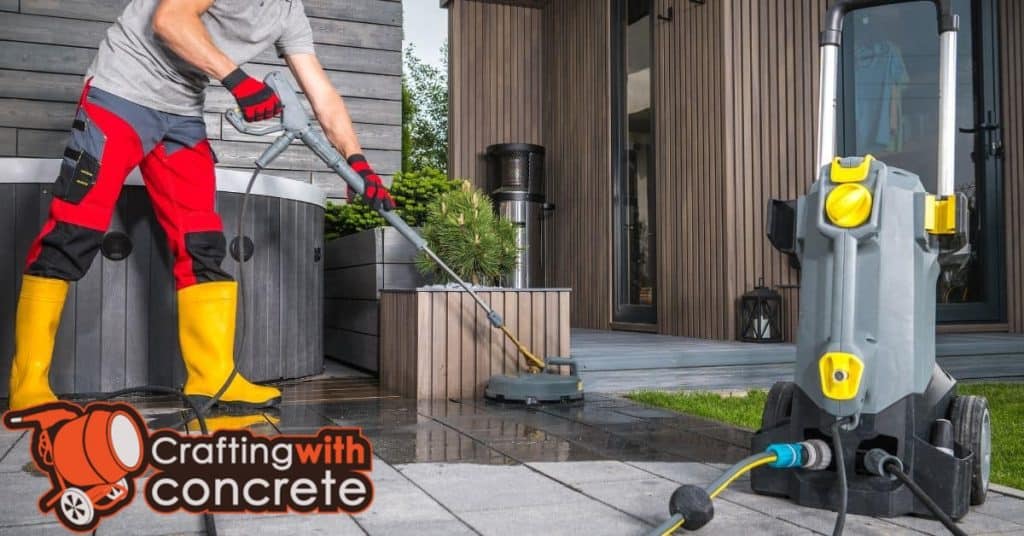
A surface cleaner can make large, flat areas more uniform and reduce wand striping. Use one only if it is rated for your pressure washer, follow its manufacturer instructions, and test it first. It is not a cure for scaling or weak concrete.
Step-by-Step Pressure Washing Process
Step-by-Step Process
- Check conditions and drainage. Work only when rain, strong wind, freezing temperatures, and unsafe runoff are not expected. Trace where washwater will go before connecting the washer.
- Inspect the slab. Mark weak areas, cracks, loose material, coatings, decorative finishes, and failed joints to avoid. Stop if the surface is unsound.
- Clear and protect the area. Sweep debris away. Move furniture and cover or relocate vulnerable items. Protect plants, walls, vehicles, and electrical equipment from spray and cleaner drift.
- Contain runoff. Block or divert nearby storm-drain inlets with suitable barriers. Keep water out of streets, gutters, ditches, ponds, streams, and neighboring property. Set up berms, covers, collection mats, a wet vacuum, or pumps as needed.
- Pre-treat only when needed. Apply a label-approved product at its stated dilution and dwell time. Keep it from drying unless the label permits it, and follow its rinsing and disposal directions.
- Set up and test. Connect the washer according to its manual. Fit a 40-degree fan nozzle first and test a small hidden area with the wand moving. Look for cleaning without surface loss or a lighter spray band.
- Wash in controlled passes. Hold the fan at a shallow angle rather than driving it straight into the surface. Work in small sections with smooth, overlapping strokes. Keep a consistent, safe distance and move continuously. Do not spray directly into cracks, edges, joints, or weak spots.
- Escalate cautiously. If algae remains after the test, use the 25-degree fan or make another moving pass. Do not switch to a zero-degree or turbo nozzle, linger in one spot, or chase a stain by moving extremely close.
- Rinse and recover. Use the wider fan pattern to rinse residue and debris toward your collection setup—not toward a storm drain. Remove contaminated water only as local wastewater, stormwater, and product-label rules permit.
- Dry, inspect, and clean up. Let the concrete dry fully before judging the result. Clean algae can look like a shadow while wet. Rinse and winterize the equipment as its maker directs, remove barriers only after runoff risk has passed, and store unused chemicals in their original containers.
Pressure Washing Technique
Uniform movement matters more than force. Overlap each pass slightly and keep the same pace across the section. A properly adjusted pass leaves an evenly wet, evenly cleaned surface—not stripes, fuzziness, pits, or freshly exposed aggregate.
Stop immediately if you see paste washing away, pale bands, pitting, roughened texture, exposed aggregate, lifted coating, or widening cracks. More washing will not repair that damage.
Rinsing and Final Steps
Rinse all cleaner residue according to the product label while maintaining runoff controls. Do not direct washwater onto soil or a lawn on the assumption that it is harmless or permitted. If the runoff escapes containment, stop work, contain it if safe to do so, and follow local disposal requirements.
Safety Precautions and Equipment
Personal Protective Gear
- Safety goggles or a face shield: protect against debris and chemical splash.
- Hearing protection: pressure washers can be loud during extended use.
- Waterproof, chemical-resistant gloves: select them for the cleaner used, if any.
- Non-slip boots and long sleeves: reduce slip and splash hazards.
- Respiratory protection: use it only when required by the cleaner label or SDS and suitable for that exposure.
Equipment and Tools Needed
- Pressure washer, hose, and manufacturer-approved connections
- 40-degree and 25-degree fan nozzles; never a zero-degree tip for this job
- Optional manufacturer-rated surface cleaner for large, sound slabs
- Stiff non-wire brush and broom
- Concrete-compatible cleaner and low-pressure applicator, if needed
- Drain covers, berms, collection mats, wet vacuum, or pump as runoff conditions require
- PPE listed above
Avoiding Common Hazards
Never point the gun at people, pets, feet, or electrical equipment. Check hoses, fittings, and trigger controls before use. Keep cords and outlets dry, use the electrical protection required by the washer manufacturer, and maintain stable footing. Do not wash from a ladder or work where recoil, overspray, or wet footing could cause a fall.
Types of Stains and Suitable Cleaning Solutions
Algae and Mold Stains
Algae commonly appears as green, black, or dark patches in persistently damp, shaded areas and can make concrete slippery. Brush loose growth first, then use water and a cautious pressure-washing test. If growth is heavy, a label-approved concrete cleaner may reduce the mechanical force required.
Other Stains
Oil, rust, efflorescence, and algae are different problems and may need different products. Do not use an acid cleaner merely because algae remains after washing; acids can alter concrete. Address a separate stain only with a product intended for that stain and surface, and keep its runoff under control.

Environmental Considerations
Eco-Friendly Cleaning Practices
The most important environmental step is controlling washwater. Biodegradable does not mean a cleaner may enter a storm drain or waterway. Use only the amount of product needed, avoid windy conditions, keep spray on the work area, and follow both the product label and local discharge rules.
Disposal of Waste Water
Collect water that contains cleaner, algae residue, sediment, oil, or other contaminants. Disposal options vary by location and contaminant, so check local sewer, stormwater, wastewater, and pesticide requirements before beginning. Stop if rain or failed containment could carry washwater beyond your controls.
Cost-Effective DIY Solutions and Alternatives
Renting vs. Buying Equipment
For a one-time driveway or patio job, renting a pressure washer and a compatible surface cleaner can be more economical than buying. Buy your own PPE, and verify that rented nozzles and accessories match the machine. Do not choose a machine based on a high PSI number alone; controllability, appropriate nozzles, and adequate flow are more useful for this task.
For a small area, a stiff brush and a compatible cleaner may be slower but can be a sensible alte