

Introduction
Cutting control joints in stamped concrete is about planning when to cut, choosing the right blade, and making clean edges to prevent cracks. Get your timing right by planning ahead before you stamp, so the concrete has the strength needed when joints are cut. Always check manufacturer instructions and local rules for any timing limits and blade recommendations, then pick a plan that fits your project.
Blade choice should favor a clean edge and compatibility with stamped textures, and you should follow the manufacturer instructions for speed and feed. Prepare the surface by marking joints, cleaning dust, and doing a quick test cut on a scrap area if available. Plan ahead to avoid ragged edges by aligning joints with stamping patterns and using steady, even cuts.
Key takeaways
- Plan joint layout during stamping to align with expected traffic and visuals.
- Cut control joints after stamping when concrete firmness supports clean blade tracking.
- Choose a sharp, appropriate blade and straightedge for clean edges.
- Use consistent depth and spacing to minimize ragged edges and chipping.
- Prepare substrate, remove laitance, and ensure surface is dry before cutting.
- Schedule weather windows, avoid cutting in wet conditions; wear PPE.
Table of Contents
- Introduction
- Key takeaways
- Why Control Joints Matter for Stamped Concrete
- Timing: When to Cut After Stamping
- Blade Choice and Tool Selection
- Cutting Techniques to Avoid Ragged Edges
- Depth, Spacing, and Layout Planning
- Common Mistakes and Troubleshooting
- Maintenance, Inspection, and Prepping Before Sealing
- Cost, Scheduling, and When to Hire a Professional
- Conclusion
- FAQ
Why Control Joints Matter for Stamped Concrete
Control joints serve a dual purpose for stamped surfaces: they help crack control and protect the long-term appearance of the pattern. If joints are neglected or mislocated, cracks can appear where they disrupt the design, and the stamp texture can begin to distort around the joints.
Plan joint placement around the stamp layout so the pattern stays uniform. Think about alignment with major design changes and the depth needed to reduce stress, while choosing a joint method that preserves fidelity and edge quality. Examine the pros and cons of saw-cut, routing, and pre-formed products for stamped concrete, and tailor your choice to the pattern and climate. Consider timing and environmental factors that influence performance, such as how curing conditions and ambient heat affect crack control. Outline practical steps to map joints, avoid cutting through key pattern features, and select sealant colors that blend or intentionally highlight joints. Watch for common pitfalls like over-penetration, misalignment across expansion directions, and jagged edges at the stamp transitions.
Function of control joints
Control joints serve a vital purpose in stamped concrete. They’re designed to relieve tensile stress, which is the pulling force that can cause cracking.
When concrete cures and hardens, it shrinks slightly. This shrinkage causes stress within the slab. Control joints direct this stress and any resulting cracks to planned locations, preventing random cracking that could mar your stamped pattern.
Properly placed control joints maintain surface integrity by allowing the concrete to move naturally as temperatures change. Without them, the slab would be more prone to cracking and delamination.
Special considerations for stamped surfaces
Stamped concrete is unique, so its control joints need special consideration. The textured surface, colored patterns, and grout lines all play a role in joint placement.
Texture: The relief of the stamp pattern can affect how water drains off the slab. Control joints should be placed to encourage proper drainage and prevent water from pooling, which could erode the stamped surface over time.
Color: Stained or colored concrete requires careful joint placement to maintain a consistent appearance. Cutting through prominent color changes can result in visible lines that disrupt the overall design.
Grout lines: Grout lines are an integral part of many stamped patterns. Control joints should be aligned with these grout lines whenever possible to minimize disruption and preserve the uniform texture of your stamped surface.
Timing: When to Cut After Stamping
This topic weighs the trade-offs between cutting while the concrete is still green and delaying the cut until after initial set. Early grooving can risk ragged edges or chipping, while late cutting may allow surface movement that complicates the cut.
Environmental conditions like temperature and humidity shape the workable window, as do the mix and curing methods used. Use manufacturer guidance or a maturity/indentation check to verify timing and ensure consistent joint depth. Develop a simple field flow or checklist to decide when to delay, when to proceed, and which cutting method best suits the stamped pattern.
Early hand grooving vs. saw cutting later
Hand grooving right after finishing can be done when you need to control cracking and prevent ragged edges. It’s quick but risks compressing the surface.
Saw-cutting later, after initial set, gives a cleaner cut but may result in uncontrolled chipping if done too early.
Waiting for concrete to gain strength reduces these risks. But waiting too long might cause unwanted cracking elsewhere.
Environmental and curing factors that change timing
High temperatures speed up set, allowing earlier cutting. In cold weather, wait longer to ensure concrete’s strength.
Wind and low humidity can cause rapid evaporation, accelerating set. Fog curing slows this down, extending the workable window.
Admixtures like accelerators shorten the time needed for cutting, while retarders extend it.
Visual and simple tests to decide readiness
Press a sharp object into the surface. If no mark is left, it’s not ready. If it leaves a slight mark but bounces back, it’s close.
Try the ‘tack test’. Stick a small piece of duct tape on the surface and pull it off quickly. If concrete comes with it, it’s too early to cut.
Document conditions – temperature, humidity, etc. – for consistent results next time.
Blade Choice and Tool Selection
Identify blade types such as diamond segmented, continuous rim, and turbo, and map each to stamped concrete scenarios to explain edge outcomes. Blade geometry and cooling affect the likelihood of clean, non-ragged cuts on textured surfaces.
Match tool options to project size and control needs, comparing walk-behind saws, handheld saws, and groovers for depth accuracy and edge finish. Decide when renting versus buying makes sense, based on project frequency and total cost of ownership. Consider blade life, maintenance requirements, and signs of dulling that impact edge quality, plus safety concerns like kickback and dust control during cutting near stamped edges.
Blade characteristics and when to use each
The blade you choose makes a big difference in your cut’s quality. Here are the main types:
Diamond Segmented Blades: These have segments of diamond particles attached to the blade’s edge. They’re great for detailed work and intricate patterns. They’re pricey but last long.
Continuous Rim Blades: These have diamonds embedded throughout the entire rim. They’re good for straight, deep cuts in larger projects. They’re cheaper than segmented blades but wear out faster.
Turbo Blades: These combine diamond segments with a turbo edge for faster cutting. They’re ideal for quick, clean cuts in sensitive surfaces. They’re mid-range in price and durability.
Tools: saws, groovers, and finishing tools
Choose your tool based on the job’s size and complexity. Here are your options:
- Hand Groovers: These are simple, manual tools for small jobs or touch-ups. They’re cheap but slow.
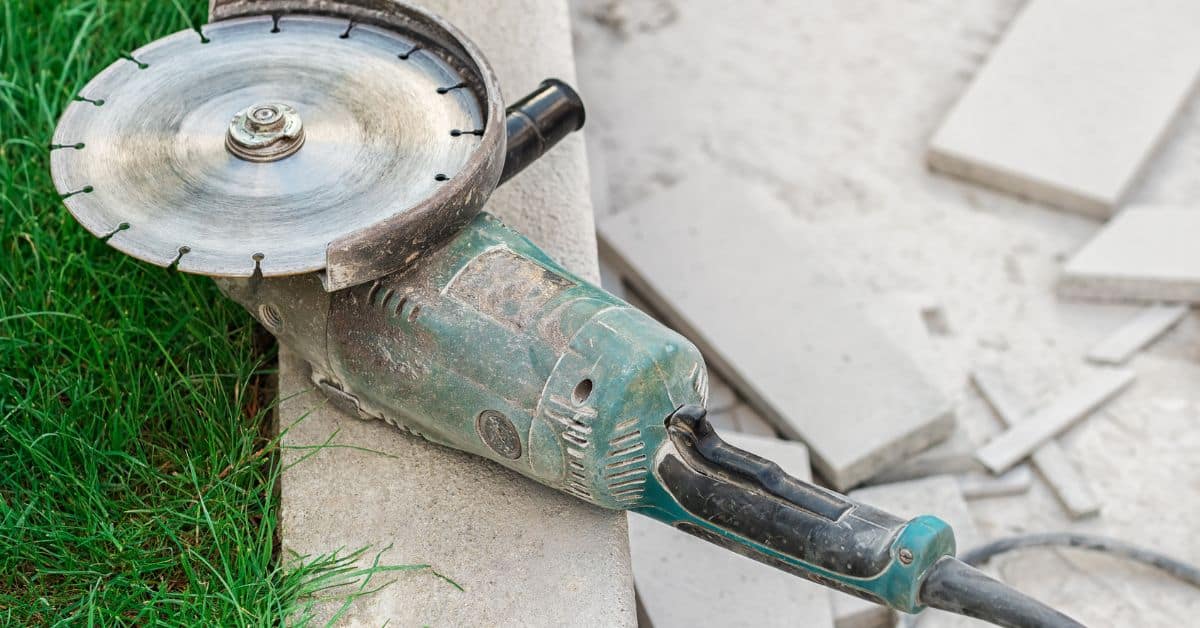
- Masonry Saws (Handheld): These corded or battery-powered saws offer more power and speed. They’re versatile but can be tiring to use.
- Walk-Behind Saws: These are heavy-duty, gas-powered machines for large projects. They’re fast and efficient but expensive to rent or buy.
- Groovers (optional): These attachments create wider, deeper cuts. They’re great for complex patterns but add cost.
- Finishing Tools: After cutting, use a chisel or router to clean up edges and remove burrs. This step ensures a smooth finish.
Safety equipment and safe tool handling
Safety is key when working with power tools. Here’s what you need:
- Personal Protective Equipment (PPE): Wear safety glasses, work gloves, steel-toed boots, and hearing protection.
- Dust Control: Use a dust extractor or wet-cutting attachment to minimize dust. This keeps your workspace clean and protects your lungs.
- Wet-Cutting: For detailed work, use a wet-cutting blade with water to keep the blade cool and reduce dust.
- Kickback Prevention: Always cut away from yourself. If using a walk-behind saw, follow the manufacturer’s guidelines for kickback prevention.
- Proper Technique: Apply steady pressure while cutting. Don’t force the blade through the concrete. Let the tool do the work.
Cutting Techniques to Avoid Ragged Edges
Outline a cutting sequence that begins with shallow passes to minimize blowout and ragged edges, followed by additional light passes for a crisp joint. Document progression on a scrap panel to refine depth and feed rate before working the actual surface.
Discuss depth strategies and blade geometry, noting how blade width and engine power influence the finish. Favor multiple light passes over a single deep cut to reduce chipping, and plan wet cutting or backing supports to protect the edge during the cut. Include guidance on alignment, tracking, and correcting drift without compromising the stamped surface. Emphasize practice runs, PPE, guards, and dust management for a safe, clean jobsite.
Proper feed speed, blade angle, and pass strategy
The key to smooth joints is steady, slow movement. Don’t rush it.
Start with a shallow cut – about 1/8″ deep. This helps prevent chipping. Use a controlled feed rate, around 2-3 inches per second. Too fast and you’ll blow out the edge.
Make multiple light passes rather than one deep cut. After the first pass, increase depth by another 1/8″. Repeat until you reach your desired joint depth. This gives you better edge control and reduces ragging.
Edge protection and backing tactics
Stamped concrete edges are fragile. Protect them with sacrificial boards or tape before cutting.
For deeper cuts, use temporary supports or shims behind the blade to prevent spalling. This distributes pressure evenly and stops the edge from crumbling.
Remember, stamping creates a lot of pressure on the edges. Without support, you’ll end up with ragged, chipped joints.
Post-cut finishing to tidy edges
After cutting, check for any minor ragging. It happens, even with the best techniques.
Use a soft-bristled brush or gentle hand tooling to clean up loose material. Be careful not to damage the texture.
For deeper chips, use a light grinding stone or patching compound. Work gently and test on a scrap piece first. Less is more here – you don’t want to remove too much material.
Depth, Spacing, and Layout Planning
Explain how joint depth relates to slab thickness and how initial spacing should be considered in relation to the stamped pattern. Plan a layout that complements the design and maintains structural performance.
Outline how to verify dimensions and account for structural guidance, codes, or engineer input for non-standard slabs. Pre-mark the layout on the subbase with chalk or string lines, and confirm joints won’t clash with decorative features. Map timing and tool selection to achieve the desired depth and edge quality while preserving the stamped texture.
Depth and spacing principles
Joint depth should be about a quarter of your slab’s thickness. This proportion helps control cracking under load.
For example, if your slab is 4 inches thick, aim for a joint depth of 1 inch.
Spacing depends on the slab’s behavior and loading. Typical patios use 8–12 feet between joints. But consider concentrated loads or heated slabs – you might need closer spacing there.
Aligning joints with stamped patterns and seams
To minimize visual impact, position your joints to match grout lines or pattern seams. This way, they blend in with the design.
Look for natural breaks in the pattern too – these can be good joint locations.
Remember, avoid placing joints where they’ll bisect key design elements.
Interaction with reinforcement and edge conditions
Wire mesh or rebar can influence joint placement. Try not to cut through these when possible – it’s safer and maintains the slab’s strength.
Free edges need special attention too. Place joints close enough to support the edge, usually within 2-4 inches.
Beware, avoid placing joints directly over reinforcement or at free edges if you can. This helps prevent cracking and maintains structural integrity.
Common Mistakes and Troubleshooting
Identify frequent errors such as cutting too early or too late, choosing the wrong blade, or mislaying joints, and outline corrective actions to prevent recurrence. Use quick visual checks to catch issues early and adjust on the fly.
Discuss blade condition and edge quality, including signs of wear that lead to chipping or glazing, and how to maintain RPM and lubrication. Address depth accuracy and spacing, with tips to verify depth before full cuts. Cover layout drift, tracking, and mid-cut corrections, along with a practical troubleshooting checklist for ragged edges or surface defects.
Timing and Cure-Related Mistakes
Premature or delayed cutting can lead to poor joint quality. Avoid these common timing mistakes.
- Cutting too early: Tears fresh concrete, causes ragged joints. Wait for surface set (3-5 hours at 70°F).
- Cutting too late: Seals and cracks the slab. Use a moisture/steam test before cutting.
- Not accounting for temperature: Concrete cures faster in heat. Adjust timing based on ambient temps (e.g., 80°F: cut at 12 hours).
- Skipping test cuts: Ensures consistency but often overlooked. Perform a small stencil cut before full slab.
Corrective actions include controlled repairs or re-cutting, ensuring proper curing and timing in the future.
Tool and Blade Misuse
Worn or wrong blades lead to poor cuts. Inspect your tools regularly.
- Wrong blade: Diamond-cutting wheels for deep, wide joints; scoring blades for shallow, narrow ones. Use diamond wheels (1/4″-3/8″) for 4″-6″ slabs.
- Worn blades: Chipping or glazing indicates blade wear. Replace blades when chipped; sharpen scoring blades as needed.
- Wrong RPM: Too fast = glazing; too slow = chipping. Follow manufacturer’s guidelines (e.g., 120-150 RPM for diamond wheels).
- Insufficient lubrication: Dries out blades, causes excessive wear. Use blade-specific lubricant; reapply every 30 minutes.
- Rentable tools: Groovers and saws available for rent. Expect to pay $50-$100/day per tool.
Aesthetic Layout Errors and Fixes
Misaligned or visible joints can ruin the stamped concrete look. Avoid these layout mistakes.
- Misaligned joints: Causes visual disruption in patterns. Use string/laser guides for straight, even cuts.
- Uneven spacing: Affects slab stability and appearance. Space joints 2-3 times the slab thickness apart (e.g., 6″ slab: 12″-18″ spacing).
- Joints in patterns: Visible joints disrupt stamped features. Pre-mark with durable chalk line or stamp template to avoid.
- Inconsistent depth: Affects joint visibility and slab stability. Use a gauge or test notch to verify depth (1/4″-1/3″ of slab thickness).
Fixes include patching, color touch-up, or minor re-stamping. Maintain layout accuracy for best results.
Maintenance, Inspection, and Prepping Before Sealing
Describe cleaning steps to remove slurry, dust, and curing compounds so the sealer bonds properly. Inspect for defects and determine if minor repairs are needed before sealing.
Verify joint depth and integrity after cutting, ensuring filler remains flush and stable. Confirm the slab has enough cure and appropriate moisture levels before sealing, and plan for proper ventilation and sealer compatibility. Include guidance on addressing spalls and preparing joints for long-term performance.
Cleaning and Inspection Checklist
Before applying sealer, use this checklist to ensure your stamped concrete is clean and free of defects.
- Remove dust: Use a stiff brush or broom to remove loose dust from the joint area. Dust can prevent proper sealer bonding.
- Eliminate slurry: Scrape off any remaining slurry from cutting with a trowel or putty knife. Slurry buildup can lead to uneven sealing.
- Wash away curing compounds: Use a low-pressure wash to remove any curing compounds that may have accumulated in the joints. Residual compounds can hinder sealer adhesion.
- Vacuum for thorough cleaning: After washing, use a wet-dry vacuum to remove any remaining water or residue from the joints. This ensures proper sealer penetration.
- Check for voids: Inspect each joint for any voids or incomplete cuts. Voids can trap moisture and lead to premature sealing failure.
- Inspect for ragging: Look for any ragged edges or rough spots around the joints. These areas may need minor repair before sealing.
- Verify cut depth: Measure the depth of each control joint to ensure they meet the required specifications. Inadequate depth can compromise the slab’s performance.
- Check joint width: Ensure that the width of each control joint is consistent and as per your layout plan. Narrow or wide joints can affect the slab’s appearance and durability.
Quick rule: A thorough cleaning and inspection before sealing helps ensure a long-lasting, attractive finish.
Repairing Ragged, Chipped, or Spalled Joints
Before sealing, repair any damaged joints to ensure a smooth, even surface.
- Light grinding: For minor ragged edges, use a handheld grinder with a diamond blade to lightly grind the edge smooth. Over-grinding can cause more damage.
- Patching with mortar: For chipped or spalled joints, use a matching mortar mix to fill in the damaged area. Ensure the patch is flush with the surrounding concrete.
- Re-cutting shallow areas: If a joint is too shallow, carefully re-cut it using your original cutting technique. Be cautious not to cut too deep.
- Consult a pro for major damage: For extensive damage or if you’re unsure about the repair, consult a professional concrete contractor before proceeding with sealing.
Quick rule: Minor repairs before sealing help maintain the slab’s appearance and durability over time.
When to Seal After Cutting
Allowing adequate cure time before sealing is crucial for a successful outcome. Follow this guide to determine when to apply sealer.
- Slab cure: Wait at least 28 days after pouring and cutting the concrete before applying sealer. This allows the slab to gain sufficient strength.
- Repair cure: If you’ve made any repairs, wait until those areas have also cured for at least 7 days before sealing. This ensures proper adhesion of the sealer.
- Moisture loss: Check that the concrete has lost sufficient moisture. A good rule of thumb is to wait until the slab’s relative humidity is below 75%.
- Temperature conditions: Apply sealer when temperatures are between 50°F and 90°F (10°C and 32°C). Extreme temperatures can affect sealer performance.
- Follow manufacturer’s timing: Always follow the specific cure time recommendations provided by your chosen sealer’s manufacturer for best results.
Quick rule: Patience is key when it comes to sealing. Allowing adequate cure time ensures a long-lasting, effective seal.
Cost, Scheduling, and When to Hire a Professional
Outline how blade and equipment choices influence cut quality, speed, and waste, and compare options for renting versus owning. Consider the impact of tool selection on overall project cost and schedule.
Discuss labor time, weather considerations, and how to plan for contingencies and cleanliness. Emphasize the value of getting multiple quotes, checking references, and recognizing scenarios where a professional is warranted due to complexity or high-visibility surfaces. Plan for safety gear, dust management, and workflow coordination to protect the stamped surface.
Blade and equipment cost considerations
Choosing the right blade and equipment for cutting control joints in stamped concrete is crucial. Let’s compare your options.
- Diamond blades: Expensive upfront but last longest. Ideal for frequent use or large projects. Expect to pay $50-$150 each.
- Carbide-tipped blades: More affordable, around $20-$40 each. Good for occasional use or smaller jobs. Wear out faster than diamond blades.
- Abrasive blades (dry cut): Cheapest option at $10-$20 each. Suitable for light-duty work and small cuts. Produce more dust.
- Saw rental: Renting a saw can be economical if you don’t need it often. Expect to pay $40-$80 per day, plus blade costs.
- Grinder rental: For smaller cuts or touch-ups, rent a grinder for around $25-$50 per day. Use with appropriate diamond blades.
Labor, timeline, and project scheduling tips
Planning your project timeline is key to a successful outcome. Here’s how to sequence your tasks:
Stamping & Curing (2-7 days): Allow enough time for concrete to cure before cutting.
Cutting Joints (1-3 days): Estimate 1-2 hours per 100 sq. ft., depending on complexity and blade choice. Account for weather delays.
Repairs & Sealing (1-5 days): Fix any issues, clean the surface, then seal within 30-90 days after cutting to protect joints.
Hiring a pro: criteria and red flags
Knowing when to hire a professional is important. Here’s what to look for:
Qualifications & Experience: Ask about their experience with stamped concrete, licenses, insurance, and certifications.
Portfolio & References: Request examples of their work and contact past clients to verify quality and professionalism.
Red Flags: Be wary of low-ball quotes, lack of insurance, no local references, or pushy sales tactics. Trust your instincts!
Conclusion
The key to long-lasting, good‑looking stamped concrete is getting the control joints right. Do it with correct timing, the right blade, and clean technique to prevent cracks, ragged edges, and costly fixes later.
Make your plan and run through it as you work: mark the layout, confirm the concrete has cured enough to cut, choose a sharp blade and proper guard, set a conservative cutting depth, do a small test cut, cut straight lines along the marks, space the joints as planned, avoid crossing stamp patterns, keep the edge clean, and inspect the cuts before sealing or finishing. Keep the work area dry and clear, and pause if anything looks out of spec.
Common mistakes to avoid include cutting too soon or too late, using a dull blade, cutting too deep or too shallow, skipping a small test cut, and rushing through joints. Always wear eye and ear protection, use a dust mask where needed, and work with power tools only if you’re comfortable and have secured the surface. If joints aren’t aligned, or the texture is at risk of chipping, stop and reassess rather than forcing a cut.
If the project is large, complex, or you’re unsure about timing, depth, or layout, don’t push on alone. A pro can save you from costly mistakes and protect the texture of your stamps. When in doubt, schedule a professional inspection or help, then get back to the job with confidence and clear next steps.
FAQ
When is the right time to cut control joints after stamping the concrete?
Wait until the surface has hardened enough to hold a cut without tearing, but not so long that the joints become difficult to cut. Check the product label or manufacturer guidance for recommended timing guidance. If in doubt, contact the supplier or a local pro for what to look for before you start.
What blade type should I use to get clean, straight joints in stamped concrete?
Choose a blade made for concrete joints, not a general-purpose blade. Look for blades designed for cutting with minimal chipping and good edge control. Always follow the blade manufacturer’s instructions and test on a scrap area if possible.
How can I avoid ragged edges when cutting control joints?
Keep a steady pace and consistent depth with a stable guide or straightedge. Use scoring or pre-marked lines to guide the cut, and avoid forcing the blade through thicker areas. If edges start to rag, pause, recheck depth, and adjust your approach before continuing.
What should I prepare or plan before stamping to make cutting easier later?
Plan joint locations before you stamp and mark them clearly on the surface. Have the right tools ready (ruler, straightedge, markings, secure guides) and verify blade availability and depth settings ahead of time. Check local rules and manufacturer instructions for any joint spacing or pattern requirements.