

Introduction
Repairing concrete jackhammer damage means rebuilding damaged edges without creating microcracks. Use careful hand tools and proper cleaning to prepare the edge before any repair. Work slowly and check for hollow spots or loose material as you go.
Common causes include over-penetration, vibration, and poor initial compaction, which you can look for as cracks, spalling, or soft edges. To repair without adding microcracks, remove unsound material, clean the edge, and patch with a suitable repair material following manufacturer instructions and local rules. Always test a small area first and follow safe curing practices, and check label instructions for cure times and application temps.
Key takeaways
- Inspect edges for visible chips, spalling, or microcracks before planning repair.
- Choose non-damaging removal methods to minimize further edge deterioration during repairs.
- Use edge-forming aids and controlled hammering to reduce microcrack propagation.
- Prepare surfaces with clean, sound substrate and light scoring for bonding.
- Cure properly, monitor for changes, and avoid rapid drying to prevent cracking.
- If in doubt, hire professionals for complex edge reconstruction and safety.
Table of Contents
- Introduction
- Key takeaways
- Overview of Jackhammer Damage and Why Microcracks Matter
- Identifying Edge Damage — Visual Checkpoints and Diagnostic Methods
- Root Causes Linked to Jackhammer-Induced Damage
- Tools and Materials Checklist for Low-Damage Edge Repair
- Removal and Surface Preparation Methods That Minimize Microcracking
- Step-by-Step Edge Rebuilding Procedure to Avoid Creating Microcracks
- Curing, Monitoring, and Long-Term Integrity
- Costs, Common Mistakes to Avoid, and When to Hire Professionals
- Conclusion
- FAQ
Overview of Jackhammer Damage and Why Microcracks Matter
Jackhammer-induced damage on edges shows as visible edge loss like chips or beveling, while hidden microcracks run parallel or perpendicular to the edge and radiate inward from impact points. Distinguishing between the surface and the subsurface is essential for planning repairs.
High-impact vibrations, repeated hits, and hammer rebound stress the aggregate-paste interface, especially at edges where restraint and geometry concentrate forces. Microcracks matter because they can become crack initiation sites, moisture pathways, and bond-breakers that undermine long-term edge repair durability and sealing.
What are microcracks and how they develop
Microcracks are tiny cracks, often invisible to the naked eye, that form within concrete due to various stresses. Jackhammering induces these microcracks through high-impact vibrations and repeated hits.
Here’s how it happens: each strike of the jackhammer creates a stress wave that travels through the concrete. If this stress exceeds the concrete’s tensile strength, tiny cracks form at aggregate-paste interfaces or along preexisting flaws. These microcracks can run parallel or perpendicular to edges and radiate inward from impact points.
Other factors like thermal changes and shrinkage also contribute to microcrack formation. Over time, these microcracks can propagate into larger defects if left untreated.
Distinguishing jackhammer damage from other deterioration
Jackhammer-induced damage has distinct characteristics that set it apart from other types of concrete deterioration. Understanding these patterns helps in accurate diagnosis and repair.
Impact-related damage: Jackhammering causes visible edge loss (chips, beveling) and hidden microcracks. Damaged areas may exhibit a ‘spiderweb’ pattern of cracks radiating from impact points. Edges are especially vulnerable due to stress concentration.
Other deterioration types: Corrosion damage appears as delamination or popouts, often with rust stains. Freeze-thaw damage shows as surface scaling and flaking. Chemical attack leaves a powdery, crumbly residue. Each has unique visual cues that help identify the cause of deterioration.
Identifying Edge Damage — Visual Checkpoints and Diagnostic Methods
Visual signs to flag immediately include scaling, spalling, delamination, feathered edges, exposed reinforcing, and microcracks along the edge. Note color changes and texture irregularities, and mark suspicious zones for closer inspection.
On-site diagnostics are affordable and practical: perform tap tests for hollow sounds, gently test cohesion with a square-edged tool, and inspect feathering where thickness thins. Use a flashlight at low angles to reveal hidden delamination and compare with adjacent edges.
Visual checkpoints for edges and adjacent surfaces
Before you start any repair work, use this checklist to visually inspect the damaged edge and surrounding concrete.
- Scaling: Look for flaking or peeling surface material. It could be a sign of deeper damage if skipped.
- Spalling: Check for chipped or broken edges. This indicates serious deterioration beneath the surface.
- Delamination: Inspect for layers separating from each other. It might hide extensive damage.
- Feathered edges: Feel for thinning concrete along the edge. It weakens the structure.
- Exposed rebar: Look for any visible reinforcement. It’s a sign of severe damage that needs immediate attention.
- Microcracks: Search for fine hairline cracks. They can grow and compromise the concrete’s integrity if left untreated.
- Color changes: Note any discoloration. It could indicate water intrusion or other issues.
- Texture inconsistencies: Feel for rough patches. They might hide underlying damage.
- Detaching compound: Check if the concrete is pulling away from adjacent surfaces. It’s a sign of serious deterioration.
Quick rule: Don’t skip any item on this list. Each clue points to potential damage that needs addressing.
Non-destructive tests and simple field checks
Before you start digging or drilling, use these non-destructive methods to confirm the extent of damage.
- Sounding: Tap the concrete with a hammer. Listen for hollow sounds that indicate delamination.
- Hammer tap: Gently tap the edge with a chisel or screwdriver. Check for loss of cohesion if it moves easily.
- Moisture checks: Use a moisture meter to detect water intrusion, which can cause damage over time.
- Chain drag: Drag a chain along the edge. Listen for rattling that indicates loose aggregate or delamination.
- Low-angle flashlight inspection: Shine a light at a low angle to reveal hidden cracks and delamination.
- Compare with intact edges: Check adjacent undamaged areas for contrast. It helps pinpoint the extent of damage.
Quick rule: If these tests confirm extensive damage or you’re unsure, consider professional testing to avoid further deterioration.
When to involve a structural engineer or materials lab
Certain conditions require expert assessment. Use this checklist to determine when to call in the professionals.
- Large area damage: If more than 10% of the edge is damaged, consult an engineer.
- Exposed or corroded reinforcement: Any visible rebar needs immediate attention from a structural engineer.
- Load-bearing elements: Damage to supporting structures requires engineering assessment.
- Unusual symptoms: If you notice anything unusual, like unexpected color changes or textures, get expert advice.
- Before major repairs: Before undertaking significant repair work, consult an engineer to ensure your plan is sound.
Quick rule: When in doubt, err on the side of caution. It’s better to involve professionals early than risk further damage or safety issues.
Root Causes Linked to Jackhammer-Induced Damage
Mechanical energy concentrates at edges, causing spalling, chip-out, and micro-fractures. Recognize threshold patterns where edge damage accelerates with different concrete mixes and edge geometries.
Vibration, frequency, and cumulative cycles drive microcracking, with boundary conditions at the edge amplifying stress. Pre-existing weaknesses such as carbonation, rebar risk, prior repairs, and mix conditions amplify susceptibility near edges.
Impact mechanics and vibration transmission
The repeated percussive energy from a jackhammer creates stress concentrations at the edge of concrete. This is due to the mechanical energy pathways that focus on these areas, causing spalling, chip-outs, and micro-fractures.
Improper tool use can exacerbate this issue. Using too much force or not allowing the tool to fully retract between blows can generate even higher stress concentrations, leading to more damage.
The vibration from the jackhammer also plays a role in microcracking. Each blow sends shockwaves through the concrete, and over time, these repeated cycles drive further cracking. Boundary conditions at the edge amplify this stress, making it crucial to be mindful of your technique near edges.
Pre-existing material vulnerabilities (corrosion, carbonation, over-wet concrete)
The condition of the concrete itself plays a significant role in how it responds to jackhammering. Material choices and existing degradation can reduce its resistance to impact, increasing the risk of spalling and delamination.
- Carbonation: Carbonation reduces the alkalinity of concrete, weakening the bond between cement and aggregate. Look for a low carbonation depth rating when selecting concrete mixes. To avoid, use proper curing methods and protect concrete from excessive exposure to carbon dioxide.
- Rebar corrosion: Corroded rebar can cause cracking and spalling. Inspect for signs of rust or delamination before jackhammering. To prevent, use corrosion-resistant rebar and maintain a high concrete cover over the rebar.
- Over-wet concrete: Over-wet mixes can lead to weak bonds between cement and aggregate, making them more susceptible to damage from jackhammering. Check the water-cement ratio when selecting your mix. To avoid, follow mixing instructions carefully and allow proper curing time.
- Prior repairs: Poorly executed or incompatible repairs can create preferential paths for cracking. Inspect any existing repairs before starting work. To prevent, use compatible materials and follow best repair practices.
- Under-timed cure: Concrete that hasn’t cured properly is weaker and more prone to damage. Allow concrete to cure according to the manufacturer’s recommendations before jackhammering.
Tool, bit selection, and operator technique effects
The size of the jackhammer, the type of bit used, and the operator’s technique can all influence the extent of damage caused.
- Jackhammer size: Using a hammer that’s too large for the job can cause excessive damage. Rent or buy a tool that matches your needs. For example, use a 30-lb breaker for heavy duty work and a 20-lb breaker for lighter tasks.
- Bit selection: Blunt bits can cause more damage as they require more force to remove material. Inspect your bits regularly and replace them when they become dull. Consider using diamond-tipped bits for harder materials or where precision is needed.
- Operator technique: Maintaining consistent tool alignment and applying even pressure prevents concentrated loads that can widen edges or create new microcracks. Keep the tool perpendicular to the surface, apply steady pressure, and allow the tool to fully retract between blows.
- Chisel type: Using a chisel bit with too narrow a tip can cause excessive stress concentrations at the edge of the hole. Use a chisel with a tip width that matches your needs.
- Maintenance interval: Regularly maintaining your jackhammer ensures it’s running efficiently and reduces the risk of damage from worn or broken parts. Follow the manufacturer’s recommended maintenance schedule.
Tools and Materials Checklist for Low-Damage Edge Repair
Define low-damage edge repair scope and list tool categories that minimize impact, including hand tools, carbide-tipped chisels, small rotary tools, and edge-safe grinders with vibration reduction. Consider options that keep adjacent concrete steady.
Explore alternatives to jackhammer work with light-duty pneumatic or electric scraping, dust-control vacuums, and manual scoring where appropriate. Outline repair material families and bonding primers suitable for edge work and quick-set versus standard-set options.
Recommended tools and lower-impact alternatives
When repairing concrete edges, use these tools to minimize damage and microcracking.
- Hand Tools: Chisels, hammers, and trowels for small repairs.
- Ring Saws: For precise cuts without vibration. Use diamond blades for concrete.
- Small Breakers: Light-duty pneumatic or electric chipping hammers for edge work.
- Hydraulic Splitters: For controlled, low-vibration splitting of concrete.
- Hydrodemolition: High-pressure water jets for precise removal with minimal vibration. Use when access allows.
- Carbide-Tipped Chisels: For manual chipping and scoring edges.
- Edge-Safe Grinders: Low-speed, high-torque grinders with diamond cups or segments for edge profiling.
- Vibration-Reducing Options: Use rubber mounts or isolation pads on tools to minimize vibration transmission.
Quick rule: Always use the right tool for the job. Match tool power and size to repair needs.
Repair materials and bonding products — what to check
Before purchasing, verify these aspects of repair materials and bonding agents for edge repairs.
- Cement-Based Patch Mortars: Check compressive strength, setting time, and flexibility. Match with existing concrete.
- Polymer-Modified Overlays: Ensure compatibility with existing concrete and proper curing conditions.
- Epoxies or Polyurethanes: Verify pot life, cure time, and resistance to chemicals present in the environment.
- Bonding Agents: Check adhesion promotion, setting time, and compatibility with repair materials.
- Surface Primers: Ensure they improve bonding without causing crazing or edge damage.
- Quick-Set vs Standard-Set: Choose based on project timeline and access needs. Quick-set may require additional curing.
- Compatibility with Existing Concrete: Check for matching compressive strength, expansion/contraction properties, and chemical resistance.
- Manufacturer Data: Follow guidelines for mixing, application, and safety precautions.
- Local Codes: Ensure materials meet local building codes and standards.
Quick rule: Always check manufacturer data and consult with a professional if unsure about material compatibility or application.
Safety equipment and site protection
Protect workers, adjacent structures, and yourself with these safety measures during edge repair work.
- Eye/Face Protection: Wear safety glasses or goggles to protect from debris and chemicals.
- Respirators/Dust Masks: Use appropriate PPE for dust inhalation protection.
- Hearing Protection: Wear earplugs or earmuffs when using power tools.
- Gloves: Use work gloves to protect hands from cuts, abrasions, and chemicals.
- Boots: Wear sturdy, non-slip boots for foot protection and stability.
- Containment/Ventilation: Set up barriers or ventilation systems to control dust and debris.
- Dust Extraction: Use vacuums or wet methods to minimize dust exposure.
- Fall Protection (if working at height): Secure fall arrest systems, guardrails, or safety nets as needed.
- Temporary Edge Protection: Install barriers or warning signs to protect adjacent structures and workers from falling debris.
Quick rule: Never compromise safety for speed. Always use appropriate PPE and site protection measures.
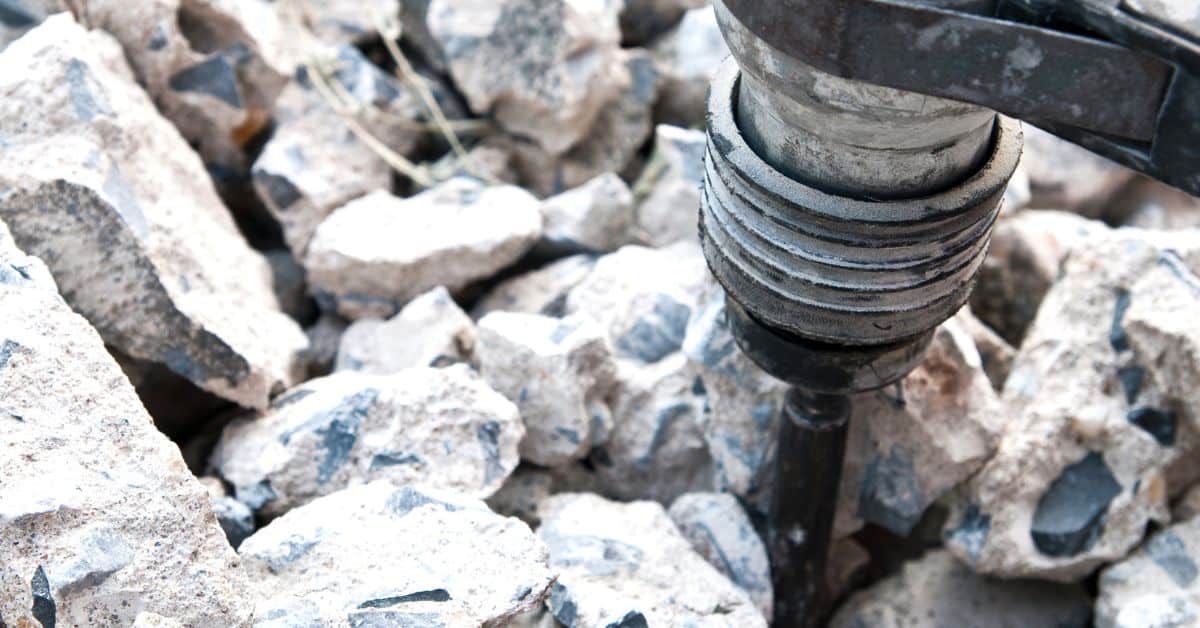
Removal and Surface Preparation Methods That Minimize Microcracking
Define failure modes to address: micr cracks, edge spalling, and surrounding unsound zones guide removal intensity and prep. Focus on preserving sound substrate while removing damaged material.
Prioritize low-impact techniques like grinder-assisted feathering and careful chipping with minimal vibration. Reserve deeper removal for areas where the substrate clearly requires it and plan for proper bonding surfaces afterward.
Low-impact demolition and selective removal techniques
When tackling jackhammer-damaged concrete, the key is to remove just what’s needed without causing more damage. Start by making perimeter saw cuts, about 1/4 inch deep, around the edges of the affected area. This helps contain vibrations and prevents cracks from spreading.
Next, use a hand chipping hammer or a small breaker to remove damaged concrete. Go slow and steady, working your way in from the edges. The idea is to minimize vibration transmission into the sound substrate.
For deeper removal, consider using a hydraulic splitter. It applies pressure instead of impact, reducing vibrations even further. Only use it where necessary, following up with hand chipping to refine the surface.
Abrasive blasting, hydrodemolition, and surface profiling
Sometimes, you need more than just a hammer. Abrasive blasting or hydrodemolition can help achieve the right bond and profile without deep microcracking. But use them wisely.
Abrasive blasting is great for cleaning and profiling surfaces. It’s fast and efficient, but it can also create new cracks if not done right. Make sure to use a low-pressure, high-volume system with a suitable abrasive (like glass beads or plastic pellets) to minimize damage.
Hydrodemolition uses high-pressure water jets to remove concrete. It’s less aggressive than blasting but can still cause microcracking if not controlled properly. Use it where you need deep removal, and always follow up with a thorough inspection for new cracks.
Cleaning, rust remediation, and surface readiness
Before you apply any repair materials, the surface needs to be clean and free of contaminants. Start by removing all loose concrete and dust using a stiff brush or compressed air.
If there’s rebar exposed, treat it for rust. Use a wire brush to remove rust, then apply a primer specifically designed for rebar. This ensures durable adhesion of your repair materials.
Finally, assess the surface readiness. It should be clean, dry, and free of laitance (that thin, weak layer on fresh concrete surfaces). If it’s not, use a scabbler or grinder to remove it. The surface should be sound, absorbent, and ready for priming.
Step-by-Step Edge Rebuilding Procedure to Avoid Creating Microcracks
Begin with initial assessment and perimeter control to prevent vibration-induced cracking. Isolate the work area and establish containment before any cutting or chipping begins.
Then follow a sequence: remove loose material, clean joints, and define the repair contour to match existing geometry. Plan bonding, priming, and surface prep to ensure a solid, crack-free bond.
Step-by-Step Process
The following is a clear, numbered sequence of practical steps for the edge rebuilding procedure to avoid creating microcracks. It starts with preparation and safety checks, then does the main work, and finishes with cleanup or final checks.
- Preparation: Check weather conditions, gather tools, and put on safety gear.
- Perimeter control: Isolate the work area to prevent vibration-induced microcracking or further delamination.
- Main repair: Follow the sequence below for edge reconstruction.
- Cleanup: Remove debris, wash tools, and inspect the repair.
- Final check: Ensure the repair is structurally sound before using the concrete again.
Pre-repair setup: cuts, shoring, and containment
Before starting any repair work, it’s crucial to make clean perimeter cuts. This helps control stresses and prevents further damage.
Use a diamond blade or similar low-impact tool to cut through the concrete at the desired depth and width for your repair.
Next, stabilize adjacent concrete using shoring or other support systems. This prevents the surrounding structure from shifting during repair work, which could cause new cracks.
Finally, isolate the work area with containment measures like plastic sheeting or barriers. This helps control debris and keeps the repair site clean.
Rebar and substrate repair, bonding coat application
Inspect and clean the exposed rebar. If any is corroded, replace it with new rebar before proceeding.
Ensure the substrate is clean, dry, and free of laitance to promote a strong bond between the old and new concrete.
Apply an appropriate primer or bonding agent to the cleaned surface. This helps create a strong, crack-free bond with the repair material.
Before patching, ensure mechanical interlock by creating grooves or using approved methods specific to your repair material.
Placement, consolidation, and finishing techniques
Place the repair material in layers, following the manufacturer’s guidelines for thickness. This helps control slump and differential shrinkage at the edge.
Consolidate each layer properly to expel voids without overworking the concrete. Use a vibrator or other consolidation tool as needed.
For finishing, avoid surface cracking and feathering by using appropriate tools and techniques. Follow the manufacturer’s recommendations for your specific repair material.
After finishing, allow the repair to cure according to the manufacturer’s guidelines. Protect it from premature drying or temperature swings that could induce cracking.
Curing, Monitoring, and Long-Term Integrity
Discuss curing approaches to minimize shrinkage microcracks, including moisture-curing and membrane options, without dictating exact schedules. Consider local product instructions and label guidance for appropriate curing methods.
Outline a monitoring plan after repair: set times for checks, what to look for—hairline cracks, delamination, spalling—and simple inspections you can perform at home. Include long-term factors that influence edge performance and how to document progress.
Curing best practices to reduce shrinkage and microcracking
Proper curing is vital to minimize shrinkage cracks. Follow these steps:
Moisture Retention: Keep the repaired area moist for at least 7 days. Use plastic sheeting, keeping it damp but not waterlogged.
Curing Compounds: Apply manufacturer-specified curing compounds after repair. These seal in moisture and protect from harsh elements.
Temperature & Humidity Control: Maintain consistent temperature (around 70°F/21°C) and humidity (95%) during curing to prevent rapid drying, which causes microcracking.
Visual checkpoints and monitoring frequency
Regularly inspect your repair to catch any issues early. Use this checklist:
- 24-48 hours post-repair: Check for signs of delamination or discoloration.
- 3-7 days: Inspect for hairline cracks and ensure proper curing compound application.
- 14 days: Examine edges for any signs of spalling or chipping.
- 28 days: Assess overall repair integrity and appearance.
- Annually thereafter: Re-inspect for any new cracks, discoloration, or other signs of distress.
Quick rule: Inspect after rain or temperature changes to ensure no water penetration or freeze-thaw damage.
When repaired edges affect structural assessment
Repaired edges may not restore original capacity. Re-evaluate if you notice:
Widespread Cracking: Multiple cracks or a crack network indicates reduced strength and potential failure.
Edge Delamination: Separation of the repair from the substrate weakens the structure, requiring re-evaluation.
Visible Damage: Any signs of spalling, chipping, or other visible damage may warrant load restrictions until further assessment is done.
Costs, Common Mistakes to Avoid, and When to Hire Professionals
Explain cost drivers in plain terms: labor hours, equipment use, and material choices for edge rebuilds, with attention to how each option affects durability and cure time. Keep expectations aligned with typical jobsite realities.
Highlight common DIY mistakes that lead to failure, such as improper prep, over-hammering, undercutting, incompatible patch materials, and skipping proper curing. Provide clear criteria for when to bring in a professional and how to document findings to support that decision.
Cost considerations and trade-offs
The cost of repairing concrete jackhammer damage depends on several factors. The extent of the damage, chosen method of repair, and access constraints all play a role.
Labor: Expect to pay for labor hours at local rates. More damaged edges mean more work and higher costs.
Equipment: If you rent equipment like jackhammers or grinders, factor in rental fees. Owning may be cheaper long-term but requires upfront investment.
Materials: Choose between epoxies, polymer-modified mortars, and concrete patch blends based on durability needs and cure time. Cheaper options might not last as long.
Compare lifecycle costs over initial bids. Cheapest isn’t always best; consider future maintenance and replacement costs.
Common mistakes that create microcracks or premature failure
Here are common DIY mistakes to avoid when repairing concrete edges:
- Improper edge prep: Inadequate cleaning and profiling can lead to poor bonding, causing repairs to fail.
- Over-aggressive hammering: Using a jackhammer too aggressively can create microcracks that weaken the structure.
- Undercutting or rounding edges: This reduces the bearing area, making the edge more susceptible to failure.
- Incompatible patch materials: Using materials not suited to your substrate can result in poor bonding and early failure.
- Insufficient curing and sealing: Skimping on these steps leaves repairs vulnerable to moisture damage and freeze-thaw cycles.
- Neglecting containment of dust and debris: Dust can interfere with bonding and create weak spots in your repair.
Avoid these pitfalls by following the step-by-step process outlined earlier, ensuring proper surface preparation, careful jackhammering, and thorough curing.
Criteria for hiring a specialist or structural concrete contractor
Know when to call in the professionals. Here are situations that warrant specialized help:
Structural cracks: Cracks wider than 1/4 inch, especially those that widen over time, may indicate structural issues requiring professional assessment.
Spalling near edges: Severe edge damage or spalling could compromise the structure’s integrity and needs expert evaluation.
Exposed rebar: Exposed reinforcement requires professional repair to prevent corrosion and maintain structural strength.
Tight tolerances for load-bearing edges: When precision is critical, consider hiring a pro to ensure repairs meet required standards.
Building code or permit compliance: If your project falls under local building codes or requires permits, hire a licensed contractor to ensure everything is up to code.
Conclusion
Repairing edges damaged by a jackhammer is about restoring strength, appearance, and long-term durability while keeping people safe. Think through the edge as a load path, and handle it with care to avoid new cracks.
Follow this practical flow: inspect the edge under good light and dry conditions, confirm the damage pattern and root cause, gather the right tools and materials, prepare the surface to minimize microcracks, rebuild in thin, controlled steps, cure properly, and verify the edge with light use and close monitoring. Start small in a low-stress area to test your method before broader work, and check every step off the critical path as you go.
Common mistakes to avoid are rushing the surface preparation, using thick repair layers, or skipping proper curing and testing. Always PPE up, work with clean, dry edges, and keep heat and vibration controlled during the process. If any crack lines run through the repair area, or the edge sits on a weak substrate, pause and reassess before proceeding.
If the damage is extensive, the edge is severely cracked, or your tests show persistent instability, it makes sense to hire a professional. With careful planning and disciplined execution, you can rebuild a durable edge and keep the project moving. Stay focused, stay safe, and push forward with clear, small steps.
FAQ
What are the common causes of jackhammer damage at concrete edges?
Poor technique and momentum can punch too hard near the edge. Hitting too close to edges or corners can spall or crack the edge. Worn bits or a poorly set machine can bounce and cause unintended impact.
What are the signs that an edge is unsound or deteriorating?
Look for cracks, microcracks, or small chips along the edge. Signs of spalling or flaking concrete indicate hollow or weak sections. A hollow or drum-like sound when rapped with a hammer means the material isn’t solid.
What repair methods help rebuild edges without creating more damage?
Remove only the damaged portion to expose solid, sound material. Use a bonding agent or clean, compatible repair mortar as directed by the product label. Feather the repair so the edges blend and avoid a hard edge that can crack again.
What safety precautions should I follow during jackhammer use and edge repair?
Wear hearing, eye, and hand protection at all times. Keep the work area clear and stable, and avoid working alone. Follow manufacturer instructions for the jackhammer and repair materials, and check local rules on dust control and wet/dry methods.