
Introduction
Concrete finishing for broom direction is the texture you create when you drag a broom across fresh concrete to set a pattern. This defines how much traction you get and how easy it is to clean. Keep it simple and work with what your slab can tolerate—no gimmicks.
Broom patterns range from tight, firm lines to lighter, sweeping textures, and each affects traction and cleanability. Think about where people will walk and how you’ll mop, then check with the product label or installer instructions for guidance. If you have questions, verify material specs and local rules before finishing.
Key takeaways
- Define broom direction early and test texture patterns before pouring full slabs.
- Deeper textures boost grip but collect dirt and debris more readily.
- Choose broom patterns to balance traction with ease of cleaning and maintenance.
- Time curing windows and broom timing impact final texture and slip risk.
- Recent posts from competitors emphasize practical broom finish comparisons and tradeoffs.
- Equipment and material checklist ensures consistent texture; verify broom type compatibility.
- Safety: wear PPE, follow local guidelines, and avoid finishing when surface isn’t firm.
Table of Contents
- Introduction
- Key takeaways
- Why Broom Finish Direction Matters
- Types of Broom Finishes and Texture Levels
- Timing and Concrete Curing — When to Broom
- Tools, Brooms, and Materials Checklist
- Techniques and Best Practices for Broom Finishing
- Longevity, Wear, and Maintenance Impacts
- Safety, Compliance, and Common Mistakes to Avoid
- Practical Next Steps and Trusted Sources
- Conclusion
- FAQ
Why Broom Finish Direction Matters
The way you point the broom can change how the surface feels underfoot. It also affects how easily dirt and debris can be swept away later. The choice becomes critical on ramps, walkways, or garage floors where people and vehicles travel and drainage matters.
Understand the core tradeoff: a direction that boosts traction and slip resistance may trap more dirt, while a direction that favors cleaning can be slicker when wet. Look at ridge orientation and exposed aggregate to predict how the surface will behave in use. Start with a simple decision framework and test a small patch to confirm your expectations before committing to a full pour.
How direction affects traction
The direction of your broom finish has a big impact on how slip-resistant your concrete surface is. Here’s why:
When you sweep the broom in one direction, it creates grooves that run parallel to each other. These grooves help water drain off quickly and provide better grip for feet or tires moving in the same direction.
But, if someone’s walking or a vehicle’s rolling perpendicular to those grooves, they can lose traction, especially when wet. That’s because water can pool in the grooves and create a slippery surface.
So, for ramps and walkways where safety is paramount, you’ll want to consider the dominant traffic direction and align your broom strokes accordingly.
How direction affects cleanability
The way you sweep also determines how easy it is to keep your concrete surface clean. Here’s the deal:
When you sweep in one direction, you’re creating a series of ridges that run parallel to each other. These ridges help direct dirt and debris towards the edges for easy collection.
However, if those ridges are perpendicular to your sweeping motion, they can trap dirt and make it harder to clean. This is especially true in areas where dust or debris accumulates frequently, like garages or pedestrian corridors.
So, for surfaces that need regular cleaning, you’ll want to sweep with the broom strokes running parallel to the direction of your maintenance crew’s motion.
Types of Broom Finishes and Texture Levels
Define broom finishes by texture: coarse, medium, and fine. Each results from broom type, number of passes, and the pressure you apply. The look and feel change with how aggressively you drag the broom and how much material you lift into the texture.
Include specialty textures like ribbed or directional patterns and aggregate broadcast. Note how these feel underfoot and what they mean for cleaning. In short, rough textures grab more grip but hold more debris, while smoother textures are easier to sweep on but may slip in moisture.
Coarse vs fine broom textures
Broom texture is a balance between traction and cleanability. Coarse textures offer better grip but trap more dirt.
Coarse: Created with stiff bristles, multiple passes, or heavy pressure. Expect high skid resistance but expect to sweep often.
Fine: Made with soft bristles, fewer passes, or light pressure. Easier to clean but may be slippery when wet.
Specialty patterns and design-driven finishes
Some textures serve specific purposes beyond traction and cleanability.
Ribbed: Ideal for drainage. Grooves channel water away, reducing puddles. Cleaning is a bit trickier due to the grooves.
Directional broom patterns: Used for aesthetics or ADA compliance. Slip-resistant and easy to clean but may require more maintenance than standard finishes.
Timing and Concrete Curing — When to Broom
Timing hinges on the setting stages you observe on site. Watch for markers like color change and surface firmness to guide when to broom. A green or plastic stage typically accepts more texture, while approaching final set reduces smear risk.
Be aware that ambient conditions and mix details influence the timing window. Temperature, humidity, slab thickness, and cure method all shift how soon you can safely broom without sacrificing durability. Use test patches to verify texture before committing to the whole surface.
Visual and Tactile Readiness Checks
Before you grab the broom, do a quick check to ensure your concrete is ready. This helps avoid over- or under-brooming.
Bleed water gone: Wait for bleed water on the surface to disappear. This indicates that hydration is complete and the concrete is starting to set.
Surface firmness: Gently press your hand onto the surface. It should feel firm, not soft or mushy. If it’s too early, your hand will leave an impression.
Thumbprint test: Press your thumb into the concrete. If it leaves a clear imprint but doesn’t crumble, you’re good to go. If it’s too early, your thumb will sink in too much or the surface will break apart.
Risks of Premature or Delayed Brooming
Timing is crucial. Broom too early or late, and you’ll face problems.
Premature brooming: This can lead to poor surface bond with toppings like sealers or paint. The concrete might be too weak, causing excessive roughness or loss of intended texture.
Delayed brooming: If you wait too long, the surface becomes harder and more difficult to broom. You may end up with smear, drag marks, or reduced abrasion resistance. The concrete might also be too strong, making it hard to achieve the desired texture.
Tools, Brooms, and Materials Checklist
This checklist helps balance traction and cleanability through tool choice and materials. Your broom, floats, edgers, and brushes all drive the final texture. Match the tool to the surface you want to achieve.
Consider fiber type and stiffness, and keep an eye on bleed water and pattern consistency. Additives and sealers can alter friction, so check compatibility with the broom direction and curing plan. Do quick pre-work checks like moisture and temperature to confirm suitability.
Choosing the right broom (fiber and stiffness)
Before you start, ensure your broom is fit for purpose. Here’s a quick checklist.
- Fiber type: Natural bristles leave deeper grooves, better traction but harder to clean. Polymer bristles are smoother, easier to clean but less grip.
- Broom stiffness: Stiffer brooms create coarser textures, more traction but harder to clean. Softer brooms give finer textures, easier to clean but less grip.
- Broom fill: Full broom fill gives deeper grooves, more traction. Less fill results in shallower grooves, easier to clean.
- Avoid worn-out bristles: Worn-out bristles leave inconsistent textures, poor traction and cleanability.
Quick rule: Stiffer brooms with fuller fill give better traction but harder cleaning. Softer brooms with less fill are easier to clean but offer less grip.
Accessories and adjunct products
These tools and additives can fine-tune your finish’s traction and cleanability.
- Bull float: Screeds concrete, removes excess water. Use before brooming for even surface.
- Hand float: Finishes small areas, removes minor imperfections. Use after bull float, before brooming.
- Edger and corner trowel: Clean up edges, corners. Prevents laitance buildup, improves overall finish.
- Finishing brushes: Removes excess water, smoothens surface. Use after brooming for final touch-ups.
- Seeding agents: Enhances traction, but can make cleaning harder. Consider if high-traction areas are needed.
- Penetrating sealers: Improves cleanability, reduces water absorption. Ideal for easy-to-clean surfaces.
Quick rule: Use these tools and additives wisely to balance traction and cleanability based on your needs.
Techniques and Best Practices for Broom Finishing
Set a clear balance goal for traction versus cleanability. Define a target texture and aim for uniform density across the slab. Use a plan that suits your traffic patterns and maintenance expectations.
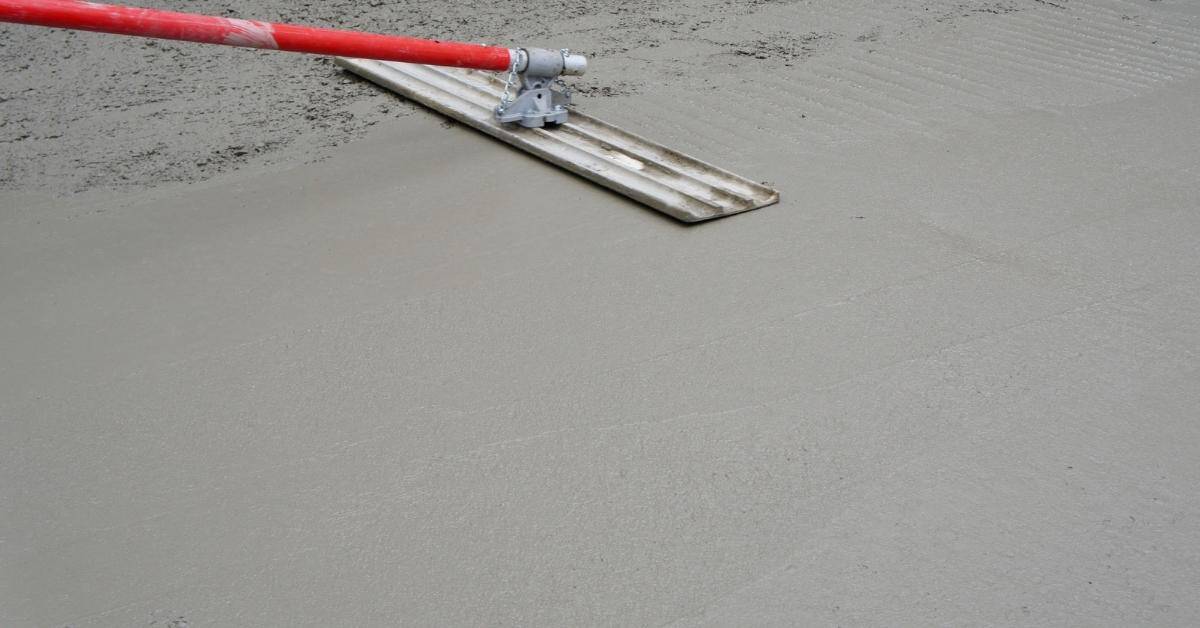
Follow a repeatable sequence, edge to edge, with appropriate overlaps to avoid gaps. Choose a broom pattern and stroke length that suit high-traffic zones or cleaner areas, then adjust speed and pressure based on curing conditions. Keep notes for future patches or repairs.
Recommended stroke direction and overlap patterns
The broom’s direction greatly affects traction and cleanability. Here’s how to set your strokes:
Traffic areas: Broom parallel to traffic for best traction. Start at the edge, work towards the center.
Wet areas: Broom perpendicular to water flow to encourage drainage. Start at the highest point, work downwards.
Overlap strokes by 30-50% to avoid stripes or gaps. For example, if your stroke length is 4 feet, overlap each pass by 1.5 to 2 feet.
Finishing workflow for small and large pours
Timing is crucial in concrete finishing. Here’s a step-by-step guide:
Small pours: After screeding, use a bull float to remove excess water (bleed). Once the surface is level, start brooming. Work methodically, edge-to-edge.
Large pours: Coordinate with your crew. Screed and bull float sections as they’re poured. Broom each section immediately after bull floating, working from one end to the other. Keep a consistent pace to avoid waiting for concrete to set.
For both sizes, maintain steady pressure and speed while brooming. Avoid pausing mid-stroke or leaving unbroomed areas.
Longevity, Wear, and Maintenance Impacts
Texture affects wear patterns and where the finish will wear fastest. High-traffic paths may show different texture changes than edges or corners. Consider how the roughness will hold up over time.
Discuss maintenance cadence and resealing needs, and how weather exposure changes intervals. If wear occurs, patches can be repaired or blended with surrounding texture. Use lifecycle planning to balance traction and ease of cleaning over the years.
Typical wear modes and when to rework
The broom finish on your concrete will change over time due to foot traffic, weathering, and other factors. Here’s what to look out for:
Polishing: High-traffic areas may become smoother and less textured as the top layer of aggregate wears down. This can make the surface slippery.
Clogging: Fine broom finishes can trap dirt, dust, and debris in their texture. Over time, this can lead to a buildup that’s hard to clean and affects traction.
If you notice these issues, it might be time for resurfacing or re-brooming. For minor wear, you can try cleaning the surface and applying a new sealant. But if the texture is significantly worn down, you may need to grind off the old finish and apply a new one.
Cleaning and sealing strategies to preserve balance
Maintaining your concrete’s broom finish involves regular cleaning and periodic sealing. Here are some tips:
For cleaning, use a stiff-bristled broom or a power washer with a wide-angle nozzle to remove dirt without damaging the texture. A mild detergent can help, but avoid harsh chemicals that could strip the sealant.
As for sealing, apply a penetrating sealer every 2-5 years, depending on weather exposure and traffic. This helps protect the surface from moisture and debris while allowing it to breathe. Avoid film-forming sealers, which can trap dirt and make cleaning harder.
Regular maintenance will help preserve your concrete’s traction without making it difficult to clean. But remember, even with the best care, you’ll eventually need to rework the finish due to normal wear and tear.
Safety, Compliance, and Common Mistakes to Avoid
Start with proper PPE and ergonomic setup to protect eyes, hands, and lungs. Footwear with good traction helps on slick surfaces. Plan for noise and tool use if powered equipment is involved.
Be mindful of slip-resistance expectations and local guidance that may apply. Common mistakes include rushing passes, improper broom angle, and inconsistent texture. Have corrective steps ready and document safety briefings.
On-site safety precautions
Safety’s our top priority on the job. Here’s what you need to protect yourself and your crew.
Personal Protective Equipment (PPE): Wear eye/face protection, gloves, and a dust mask or respirator for fresh concrete. If using power tools, add hearing protection.
Footwear: Choose boots with good traction to prevent slips on wet surfaces. Keep them clean and in good condition.
Ergonomics: Maintain proper posture, keep your back straight, and use a stable stance while working. Rotate tasks and take breaks to avoid repetitive strain.
Checklist of common application errors
Use this checklist before, during, and after broom finishing to catch issues early and prevent rework.
- Wrong broom selection: Using a broom that’s too soft or stiff for your concrete mix can lead to poor traction. Check the broom’s fiber type and stiffness against your mix design.
- Poor timing: Brooming too early or late can ruin the finish. Wait until the concrete is visually and tactilely ready, as explained in our earlier guide.
- Inconsistent pressure: Varying broom pressure creates an uneven sheen and texture. Maintain consistent pressure throughout each pass.
- Over-wetting: Too much water can cause the surface to become slippery and lose traction. Keep the broom damp, not wet.
- Under-wetting: Insufficient water can lead to a dusty, weak finish with poor traction. Add more water if the broom isn’t gliding smoothly.
- Improper angle: Brooming at the wrong angle can create unwanted patterns or reduce traction. Follow recommended stroke direction and overlap patterns from our earlier guide.
- Rushed passes: Hurried finishing causes uneven sheen, texture, and reduced traction. Take your time to ensure consistent strokes.
- Inadequate edge protection: Unprotected edges can crumble or chip during brooming. Secure edges with formwork or other supports before starting.
Quick rule: Regularly inspect your work and address any issues promptly to maintain a safe, high-quality finish.
Practical Next Steps and Trusted Sources
Translate the traction vs cleanability tradeoffs into a clear action plan for labor, tools, and ongoing costs. Keep the focus on what your space needs most now and down the line. Write down the chosen direction and expected maintenance tasks for the crew.
Outline a practical workflow from prep through curing and finishing, with scheduling aligned to cure times and typical weather. Use visual checks and QA criteria to judge the finish, and note trusted sources or posts for deeper guidance. Save quick-reference checklists for on-site use.
Cost and scheduling considerations
The finish you choose affects labor, tools needed, and long-term maintenance. Here’s what to consider:
Labor: A textured finish takes more time than a smooth one. Plan extra crew hours for brooming.
Tools: You’ll need specific brooms and accessories. Invest in quality tools for better results and longevity.
Maintenance: Textured finishes may require re-brooming or resealing over time. Factor this into your long-term budget.
Visual checkpoints and simple on-site tests
Inspect the finish immediately after brooming to ensure quality. Here’s a quick checklist:
- Uniform texture: Check for consistent patterns across the surface.
- Absence of ridges: Feel and look for any high or low spots.
- Water-shedding behavior: Pour water on the surface to see how it beads up and drains.
- Traction test (walk/drag): Walk and drag a heavy object across the surface to ensure grip.
- Edge care: Inspect edges for proper finishing and no exposed aggregate.
- Aggregate exposure: Check if aggregates are properly exposed for traction.
- Slope check: Ensure the surface slopes away from buildings to prevent water pooling.
- Cracking: Look for any cracks that may have formed during curing.
Quick rule: If it looks and feels right, it probably is. But always do these checks to be sure.
Recent posts and further topics to explore
Want to dive deeper? Check out these recent posts:
Anti-slip additives: Learn how to enhance traction with additives (link).
Broom tool reviews: See what other DIYers think of different broom tools (link).
Maintenance regimes: Understand how to care for your concrete finish over time (link).
Overlay options: Discover ways to refresh or change your concrete finish without breaking up the existing one (link).
Conclusion
Getting the broom finish direction right matters for safety, durability, and how clean and usable the surface stays over time. Decide early which texture you want, then finish in a clean, predictable pass to avoid tearing the surface or leaving high spots that trap dirt.
Do this in order: choose the texture level you need, set your joints and edges, time the pass with the right curing window, keep a steady pace, test a small patch first, and then roll out to the full area, rechecking as you go for consistency and edge work, while wearing proper eye and skin protection.
Avoid common mistakes: don’t rush the broom pass, don’t broom across freshly placed concrete that isn’t firm enough, and don’t change broom direction mid-job after it’s begun. Always keep tools clean, maintain a stable temperature and moisture level, and wear the right safety gear. Safety first and test a small patch first to verify texture and timing before committing to the full area.
If the surface is large, complex, or you see inconsistent curing, consider bringing in a pro instead of pushing through. A careful approach now saves costly repairs later and keeps the finish true and durable. Stay steady, follow the plan, and you’ll end with a finish that looks good and lasts.
FAQ
What exactly is a broom finish for concrete, and how is it applied?
A broom finish creates fine lines on the concrete surface using a broom as it’s being set. You drag the broom across the surface after it’s poured and when the concrete has reached a workable firmness, not too wet and not fully set.
How do traction needs change with different broom patterns?
Some patterns grip more than others. A deeper or tighter stroke can grab more traction, but it also dulls cleanability. Match pattern to the area: more traction where slip risk is high, lighter texture where cleaning is key.
What should I consider for cleanability with broom finishes?
Coarser textures catch dirt easier. Softer, lighter strokes leave smoother lines that are easier to sweep and mop. If you’ll be brooming, plan a finish that balances texture with how you’ll clean the floor regularly.
Follow recommended curing patterns for your concrete type—keep it protected, and avoid rapid drying. If you’re unsure, check the product label or manufacturer guidance for suitable curing methods and durations.