Introduction
Vetting commercial metal roofing contractors means checking credentials, past work, and contract terms before hiring.
You want to confirm licensing, insurance, and proven experience with metal roof systems. Review their recent projects and talk to prior customers to gauge workmanship and reliability.
Ask about specific metal roof types they install and their familiarity with your system. Read the contract carefully for scope of work, payment terms, timeline, and warranties, and ask for clarifications in writing. Check what conditions apply to changes, site access, and what happens if problems show up after installation.
Key takeaways
- Verify credentials, licensing, and insurance with official state or local contractor records.
- Review past metal roofing projects to gauge workmanship and customer experiences.
- Clarify contractor expertise across metal roof types and compatible system components.
- Inspect contracts for scope, payment terms, timelines, warranties, and change-order processes.
- Prioritize safety: confirm site safety plans, PPE, fall protection, and OSHA basics.
- Ask smart questions about guarantees, response times, and long-term roof performance expectations.
Table of Contents
- Introduction
- Key takeaways
- Why Vetting Commercial Metal Roofers Matters
- Verify Credentials, Licensing, Insurance & Permits
- Practical Next Steps and Trusted Sources
- Evaluate Technical Expertise in Metal Roofing Systems
- Inspecting Contracts, Scopes of Work and Warranties
- Safety Protocols and Compliance (Osha and Jobsite Practices)
- Smart Questions to Ask Prospective Contractors
- Budgeting, Cost-Saving Tips and Decision Checklist
- Conclusion
- FAQ
Why Vetting Commercial Metal Roofers Matters
Choosing the wrong contractor can bite you later with cost overruns, code issues, and a roof that doesn’t perform. Poor workmanship can shorten roof life and complicate warranty support when you need it most. Vetting carefully protects your asset and preserves ROI by reducing downtime and long-term maintenance surprises.
Focus on pillars like credentials, licensing, insurance, safety programs, and metal-roof certifications or manufacturer approvals. Do due diligence on recent commercial metal roof projects, inspect portfolios, and talk to references to verify real site performance and client satisfaction. Scrutinize the contract for clear performance specs, material brands and gauges, installation methods, timeline, change orders, and explicit warranty terms. Watch for red flags in pricing structures and scope gaps, and tie everything back to long-term asset protection and ROI through a practical checklist you can use before signing.
Common commercial metal roofing project outcomes
The outcome of your commercial metal roofing project depends heavily on the contractor you choose. Here’s what to expect from both successful and problematic projects.
Successful Projects: A well-vetted, experienced contractor will deliver a durable, long-lasting roof that meets local codes and manufacturer standards. You’ll enjoy minimal maintenance costs, reduced lifecycle disruptions, and full warranty fulfillment.
Problematic Projects: Poorly selected contractors can lead to cost overruns, code violations, subpar workmanship, premature roof failure, and gaps in warranty support. These issues result in long-term asset depreciation, downtime, and unexpected repair costs.
How local context changes the vetting process
Local factors play a significant role in commercial metal roofing projects. Here’s how to adapt your vetting process to account for climate, municipal codes, and local supply chains.
Climate: Consider your area’s weather patterns when evaluating contractors. Ask about their experience with high winds, heavy snow loads, or extreme temperatures. Local knowledge is crucial for designing a roof that can withstand your specific climate.
Municipal Codes: Ensure the contractor understands and follows local building codes. They should be familiar with any regional requirements for insulation, ventilation, or fire resistance. Check their credentials to confirm they’re licensed to work in your area.
Local Supply Chains: Inquire about the contractor’s relationships with local metal roofing suppliers. A strong connection can ensure timely delivery of materials and access to high-quality products. Additionally, supporting local businesses can help boost your community’s economy.
Verify Credentials, Licensing, Insurance & Permits
Start by confirming licensing requirements for your jurisdiction and that the contractor is in good standing with the right board. Note any specialty licenses specific to metal roofing and verify current status. Require evidence of trade certifications and affiliations relevant to commercial metal installations.
Inspect insurance protections like general liability, workers’ compensation, and employer’s liability, and obtain certificates with policy numbers and dates. Ensure an additional insured endorsement covers your project. Look for clear permit handling details, timelines for plan review, and proof of code compliance. Vet subcontractor controls and ensure COIs cover subs; review the safety program and request verifiable references plus a concise portfolio of similar projects with scope and outcomes. Identify red flags such as expired licenses or vague permit handling and outline remediation steps before you sign.
Licensing and certifications to confirm
The first step in vetting a commercial metal roofing contractor is ensuring they have the right credentials. Here’s what you should look for:
State Contractor License: Check if the contractor has an active, up-to-date license specific to your state and jurisdiction. You can usually verify this with your local licensing board.
Business Registration: Ensure their business is legally registered in your area of work. This protects you from any legal issues that might arise during or after the project.
Manufacturer Certifications: Many metal roofing manufacturers offer certification programs for contractors. These certifications ensure the contractor has been trained and approved to install specific systems. Ask for proof of these certifications, especially for the type of metal roof you’re considering.
Insurance, bonds and liability limits to request
Protecting yourself from potential liabilities is crucial. Here’s what insurance coverage you should request:
General Liability Insurance: This covers damages or injuries that occur on your property during the project. Ask for a certificate of insurance (COI) with policy numbers, effective dates, and an additional insured endorsement specific to your project.
Workers’ Compensation Insurance: This covers medical expenses and lost wages if a worker is injured on your property. Again, request a COI with the same details as above.
Umbrella Liability Insurance: This provides additional coverage beyond general liability insurance. It’s a good idea to ask for this as well, especially for larger projects.
Permits, code compliance and inspection process
Before any work begins, ensure the following checklist is completed to avoid delays or penalties:
- Who Applies for Permits: Confirm who will apply for the necessary permits. It’s usually the contractor’s responsibility.
- Permit Timelines: Understand how long it takes for plan reviews and permit issuance in your area to manage expectations.
- Anticipated Permit Numbers: Ask for these so you can track the progress of your permits.
- Code Compliance: Ensure the contractor is familiar with local building codes, especially those related to metal roofs like wind resistance and fire safety. They should also understand reflectivity requirements to avoid issues with neighboring properties.
- Final Inspection: Confirm who will schedule and attend the final inspection. This ensures your project meets all code requirements.
- Certificates of Occupancy: After completion, ensure you receive a certificate of occupancy to prove your building complies with local codes and can be legally occupied.
- Subcontractor Licenses: If subcontractors are used, confirm they have the necessary licenses. The prime contractor’s COI should cover all subs.
- Safety Program: Ask for proof of an OSHA 30/10 certification and a site-specific safety plan to ensure safe working conditions.
Quick rule: Always keep records of permits, inspections, and certificates. They’re crucial for future reference and can help prevent disputes.
Practical Next Steps and Trusted Sources
Define a clear vetting workflow with a step-by-step evaluation of portfolios, references, and reviews. Use a checklist for each item to note scope, scale, timelines, and outcomes. Keep the process consistent across bidders to reveal true capabilities.
In portfolio reviews, look for system compatibility and real project details that match your building size and climate. Contact former clients to verify on-time completion and post-install support, and request case studies or photos of similar work. Use online reviews with discernment, weighing recency and credibility, and balance those with direct references. Ensure licenses, insurance, and safety records are current, with bonding information if applicable.
What to Request in a Portfolio or Case Study
When evaluating a contractor’s portfolio, look for specific details that align with your project. Here’s what to ask for:
Project Details: Size and type of the building, metal roofing system used (type, thickness, coating), and any standout features.
Timeline: Start and completion dates to understand their efficiency and scheduling capabilities.
Before/After Photos: To assess their work quality and transformation. Also, ask for photos of the roof’s underside if accessible.
Contactable Owner/Facility Manager: Request contact information for the owner or facility manager to discuss their experience with the contractor.
How to Vet References and Read Reviews
References and reviews are crucial. Here’s how to make the most of them:
Reference Checks: Ask for a list of references, then contact each one with these questions: Was the project completed on time? Did it stay within budget? How were change orders handled? What was their post-installation support like?
Reading Reviews: Look for recency (recent reviews are more relevant), volume (more reviews indicate a contractor’s longevity and popularity), sentiment (positive or negative), and credibility. Be wary of fake, inflated, or consistently negative reviews.
Spotting Fake/Inflated Reviews: Check if the reviewer has reviewed other businesses (too many reviews from one person can be suspicious). Also, look for repetitive language or overly glowing praise, which could indicate a planted review.
Local Presence, Service Area, and Emergency Response
A local office and service area are crucial for commercial properties. Here’s why:
Local Office/Warehouse Access: A local office means quicker access to materials and support during installation or repairs. It also allows for better communication and accountability.
Service Area: Ensure they serve your area. This ensures they’re familiar with local codes, weather conditions, and can respond quickly in case of emergencies.
Emergency Repair Capabilities: For commercial properties, downtime is money lost. Ask about their emergency repair services – how quickly they can dispatch a crew, and if they have 24/7 support.
Evaluate Technical Expertise in Metal Roofing Systems
Understand the common commercial metal systems and where each excels in climate, building type, and budget. Distinguish standing seam from through-fastened or panel-based systems and know how substrate choices and coatings impact performance. Identify which system fits your project before talking to installers.
Build a contractor-expertise checklist focused on the exact system you need, including required manufacturer qualifications, installer certifications, training hours, and years of experience with that system. Ask for references and a portfolio demo for the exact setup, and inspect existing installations for workmanship and long-term durability. Verify compatibility with insulation, underlayment, and attachment methods, and review warranty scope and exclusions related to the system type.
System types and installation skill differences
The first step in evaluating a contractor’s expertise is understanding the different commercial metal roofing systems. Each system requires specific installation skills to prevent common failure points.
Standing Seam: These roofs have concealed fasteners, making them more aesthetically pleasing and durable. Contractors must be skilled in proper seam alignment and secure attachment to avoid leaks and wind damage.
Exposed-Fastener (Through-Fastened R-Panel): This system is simpler to install but requires precise screw placement to prevent water intrusion. Contractors should know how to properly space screws and use the right fasteners for the substrate.
Architectural Panels: These systems require careful handling to avoid damage during installation. Contractors must be skilled in proper panel alignment, secure attachment, and sealing of edges and penetrations.
Retrofit Metal Systems: These go over existing roofs, so contractors must understand how to properly prepare the old roof, install underlayment, and attach the new system securely without damaging the structure below.
Material knowledge and supplier/manufacturer partnerships
The materials used in a metal roofing system significantly impact its performance and lifespan. Contractors should have strong relationships with suppliers and manufacturers to ensure they’re using the best materials for your project.
- Coil Selection: Contractors should know how to select coils with the right gauge, width, and coating for your specific needs. They should work with suppliers who can provide these coils on demand.
- Coating Knowledge: Different coatings like Kynar 500 or PVDF have different warranties and performance characteristics. Contractors should understand which coating is best for your climate and building type.
- Warranty Familiarity: Warranties vary by manufacturer and material. Contractors should be familiar with the warranties they’re offering to ensure they cover what you need.
- Avoiding Common Mistakes: Wrong Gauge: Using too thin a gauge can lead to denting, puncturing, or even failure in high winds. Too thick and it’s expensive and heavy.
Incompatible Coatings: Using the wrong coating can lead to cracking, chalking, or staining over time.
Tools, equipment and crew qualifications
A well-equipped contractor with a skilled crew is crucial for a successful metal roofing project. Here’s what to look for:
- Brakes: These machines shape the metal coils into panels. Contractors should have high-quality brakes that can handle your chosen gauge and width.
Tip: Ask about their brake’s maximum capacity. - Rollformers: These machines create the standing seams or other profiles in the metal. They should be well-maintained and suitable for your chosen system.
Tip: Inquire about their rollformer’s profile capabilities. - Safety Gear: Contractors should provide safety harnesses, guardrails, or other fall protection equipment to keep their crew safe on your roof.
Warning: Never work with a contractor that doesn’t prioritize safety. - Crew Certifications: Look for OSHA 10-hour or 30-hour training certificates. These indicate the crew has been trained in jobsite safety and health.
Tip: Ask to see these certifications.

Inspecting Contracts, Scopes of Work and Warranties
Make scope language crystal clear with defined deliverables, inclusions vs exclusions, and objective acceptance criteria. Tie performance standards to measurable outcomes to prevent scope creep. Ensure the contract aligns with the project’s metal roofing install specifics and integration with the existing structure.
Review payment terms and schedule, change orders, and the handling of taxes and lien releases. Set a realistic timeline with milestones and weather contingencies, and note any penalties or incentives tied to schedule. Detail warranties for material and workmanship, transferability, and conditions that could void coverage. Cover cleanup, site access, safety, and the required warranty and as-built documentation delivery.
Scope of Work and Measurable Deliverables
The scope of work is your blueprint for the project. It should be crystal clear, listing every task and deliverable.
Here’s what to expect:
- Roof drawings: Detailed plans showing panel layouts, flashing details, and attachment methods.
- Materials list: A complete inventory of panels, fasteners, sealants, and other materials needed.
- Acceptance criteria: Objective standards for completing each task. This helps prevent scope creep – changes that add costs and delay completion.
Payment Schedules, Retainage, and Change Order Protection
Payment terms protect you from shady contractors. Here’s how:
Milestone-based payments: Tie payments to completed tasks, not time spent.
Retainage: Hold back a small percentage (usually 10%) of each payment until the job is complete. This ensures the contractor finishes the work.
Change orders should be in writing, detailing:
- The change itself.
- Its impact on time and cost.
- How it affects warranties and schedules.
Warranties: Workmanship vs. Manufacturer Coverage
Understand the two types of warranties:
Workmanship warranty: Covers installation errors by your contractor, typically lasting 1-5 years.
Manufacturer warranty: Covers defects in materials, usually ranging from 20 to 50 years. Both should be transferable to future owners.
Verify these conditions in writing:
- Warranty duration and coverage.
- Who maintains and remedies issues.
- What voids the warranty (like improper maintenance or damage).
Safety Protocols and Compliance (Osha and Jobsite Practices)
Establish a safety framework with fall protection, guardrails, nets, and safe access on all roof work. Define when protections must be inspected and updated, and ensure perimeter controls are in place. Keep safety top of mind from the first pencil sketch to the final punch list.
Specify hot-work controls, permits, fire watches, and extinguishers near cutting or welding operations. List required PPE and on-roof procedures to minimize hazards. Align OSHA documentation with training certifications, OSHA 300 logs, and incident reporting. Outline a site-specific Safety Plan, toolbox talks, daily briefings, and coordination with all subs for a safe, compliant project.
Required safety plans and documentation
Before any work begins, ensure the contractor provides written safety plans. These are crucial for a safe and organized jobsite.
Fall Protection Plan: This outlines where guardrails, safety nets, or personal fall arrest systems (PFAS) will be used. It should include details like anchor points, lanyards, harnesses, and deceleration devices.
Site-Specific Hazard Assessment: This document identifies potential hazards on your property, such as uneven surfaces, power lines, or hazardous materials. It’s crucial for planning safety measures to mitigate these risks.
Toolbox Talk Records: These are short meetings held at the start of each shift to discuss specific job tasks and any related safety concerns. They should be documented and made available upon request.
Onsite practices to watch for during bidding and mobilization
When the contractor arrives, observe their initial setup. This can indicate their commitment to safety and professionalism.
Edge Protection: Ensure all edges are protected with guardrails, safety nets, or other fall protection measures before work begins.
Anchor Points: Check that anchor points for harnesses and lanyards are properly installed and inspected. They should be clearly marked and accessible to workers.
Equipment Staging & Material Handling: Look for organized equipment staging areas and proper material handling techniques, such as using dollies or pallet jacks instead of carrying heavy loads by hand.
Housekeeping: A clean jobsite indicates a well-managed one. Keep an eye out for debris removal, clear walkways, and proper storage of tools and materials.
Environmental and fire-safety considerations
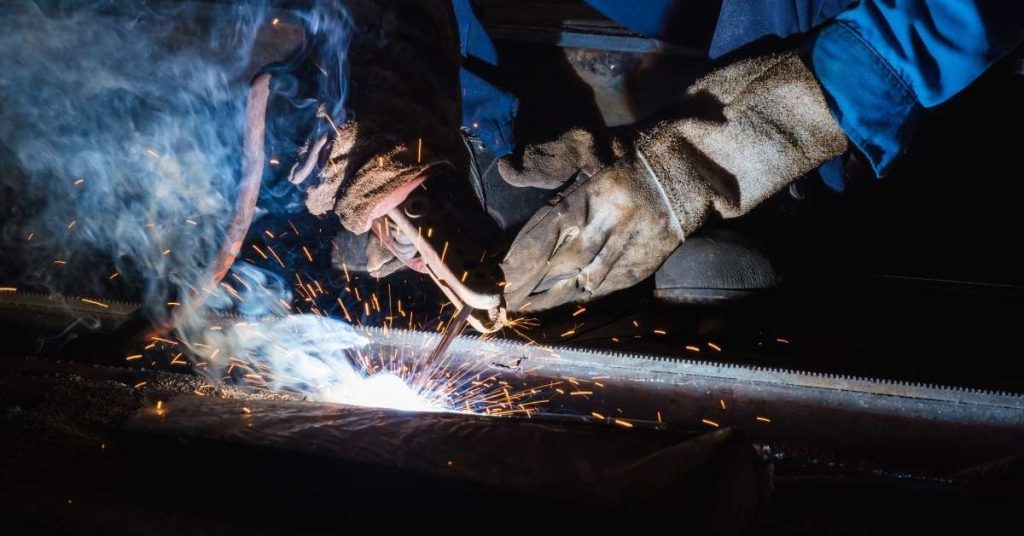
Metal roofing involves hot work like welding and cutting, which can pose environmental and fire risks. Here’s what to look for:
Spark Control During Cutting: Contractors should use spark-arresting blankets or other spark control measures when cutting metal to prevent fires.
Debris Containment & Runoff Management: They should contain debris and manage runoff to prevent pollution of nearby water sources. This might involve using containment barriers, collecting runoff in tanks for disposal, or using absorbents for spills.
Permitting & Insurance: These safety measures can affect permitting requirements and insurance coverage. Ensure the contractor understands these implications and has the necessary permits and insurance to protect both your property and their workers.
Smart Questions to Ask Prospective Contractors
Ask about certifications, prior metal roofing projects, and typical timelines to gauge technical competence. Probe their ability to handle load calculations and site-specific details for metal systems. Look for evidence of solid project management and problem-solving skills.
Review invoicing transparency, change-order handling, and the project management structure. Check safety protocols, insurance coverage, and subcontractor use. Request examples of on-site challenges and RFIs, and ask how they maintain quality under pressure. Gather references, review warranties, and confirm post-install support. Note red flags like vague warranties or little documentation, and use a quick scoring method to compare bidders.
Project-specific technical questions
To ensure the contractor understands your specific needs, ask about their approach to these project details:
Attachment method: Ask how they plan to secure the metal roofing panels to your structure. This could be through clips, screws, or other methods.
Substrate preparation: Inquire about their process for preparing the surface where the metal roof will be installed. This might involve removing old materials, applying a barrier, or ensuring the surface is level and dry.
Thermal movement solutions: Metal roofs expand and contract with temperature changes. Ask how they’ll accommodate this movement to prevent leaks or other issues.
Leak-detection strategies: Find out what measures they take during installation to minimize the risk of leaks, and how they plan to address any that might occur post-installation.
Business, logistics and communication questions
Understanding their business practices and communication structure helps manage expectations:
Project manager point of contact: Ask who your primary point of contact will be throughout the project. This person should be readily available to answer any questions or address concerns.
Escalation path: Inquire about the chain of command if you have an issue that needs to be escalated. Knowing this process can help resolve problems more efficiently.
Expected site hours: Ask what their typical working hours are and if there will be any exceptions (like weekend work). This helps manage expectations for noise and activity around your home.
Lead times: Find out how long it takes them to order materials, schedule subcontractors, etc. This can help you understand potential delays in the project timeline.
Cost, schedule and post-installation support questions
Understanding their pricing structure, timeline, and post-installation support helps you make an informed decision:
Detailed line-item estimate: Request a breakdown of the costs involved in your project. This should include labor, materials, permits, etc.
Schedule with milestones: Ask for a detailed schedule outlining key milestones in the project. This can help you plan around any disruptions to your daily life.
Warranty service response times: Inquire about their warranty coverage and how quickly they respond to service requests under warranty. This gives you an idea of what kind of support you can expect post-installation.
Maintenance plans: Ask about any recommended maintenance for your new metal roof. They should provide guidance on how to care for the roof to ensure its longevity.
Budgeting, Cost-Saving Tips and Decision Checklist
Set a realistic total project cost and tie it to downtime tolerance and occupancy needs. Build in a contingency buffer and align budgeting with performance expectations. Keep the focus on long-term value rather than upfront sticker price alone.
Identify cost drivers such as material gauge, coating, panel profile, and insulation. Differentiate between replacement and retrofit options and weigh lifecycle costs. Watch for non-obvious costs like permits, scaffolding, or long-term maintenance planning. Use itemized quotes, compare warranties, verify qualifications, and consider performance-based incentives or penalties. Create an owner-led plan to reduce costs without sacrificing performance, and establish a go/no-go checklist that includes risk, ROI, safety, and QA plans.
Typical cost drivers and where to focus savings
Before diving into negotiations, understand what drives up costs. This checklist helps you identify areas for potential savings.
- Roof complexity: More cuts, curves, or penetrations mean higher labor costs. Ask about these specifics on estimates.
- Insulation requirements: Thicker insulation increases material and installation costs. Consider if your climate needs justify the extra expense.
- Specialty finishes: Custom colors, textures, or coatings add to material costs. Opt for standard options where possible.
- Access constraints: Difficult access may require additional safety measures or equipment, driving up labor and rental costs.
- Panel profile: More intricate profiles can increase material and installation costs. Choose simpler profiles when suitable.
- Material gauge and coating: Thicker materials and advanced coatings offer better performance but cost more. Balance performance needs with budget.
- Surface prep: Existing roof condition affects prep work needed, impacting labor costs. Inquire about prep requirements upfront.
- Roof size: Larger roofs require more materials and labor, driving up costs. Consider if your estimate accounts for size accurately.
Quick rule: Don’t skimp on essentials like insulation or coating to save money. Focus on reducing labor-intensive tasks and standardizing materials.
Owner responsibilities and prep to lower costs
Before contractors arrive, tackle these tasks to minimize delays and additional charges.
- Clear staging areas: Ensure access roads are clear and safe for equipment. Remove any obstacles that could slow down work.
- Coordinate utilities: Notify utility companies about your project to avoid service disruptions during installation. This may require temporary power setups.
- Grant access: Provide contractors with clear, safe access to the roof and necessary areas inside the building. Ensure all doors are unlocked and paths are clear.
- Remove obstructions: Clear the roof of any debris, equipment, or other obstacles that could hinder installation progress.
- Prepare for crane use: If cranes are needed, ensure there’s enough space and stability for them to operate safely. Remove any hazards in the area.
- Plan for waste disposal: Arrange for proper disposal of old roofing materials to avoid additional fees or delays.
- Communicate with neighbors: Inform nearby businesses or residents about your project to manage expectations and minimize complaints.
Quick rule: The more you prepare before contractors arrive, the smoother the installation process will be, reducing change orders and delays.
Final pre-signing checklist and project timeline template
Before signing any contracts, ensure you’ve covered all bases with this comprehensive checklist. Use the following timeline as a guide for your project.
- Review contract: Ensure the scope of work, payment schedule, and warranties align with your expectations and previous discussions.
- Check permits: Confirm that all necessary permits have been obtained or are in process. This can significantly delay projects if overlooked.
- Verify insurance: Ensure contractors carry adequate liability and workers’ compensation insurance to protect both parties.
- Confirm safety plans: Review and approve the contractor’s site-specific safety plan before work begins.
- Establish communication: Set up regular progress updates and a clear point of contact for any issues that arise during installation.
- Finalize material selection: Make sure all materials have been chosen, ordered, and are ready for delivery as needed.
- Plan for inspections: Schedule final inspections with local authorities and arrange for any necessary follow-up actions.
Quick rule: A thorough pre-signing checklist and a well-planned timeline help ensure your project stays on track, on budget, and meets all relevant standards.
Conclusion
Vetting the right commercial metal roofers isn’t optional. It protects people on the job, keeps your roof durable, and preserves the appearance of your building without turning into a money pit. The goal is to hire pros who understand metal systems, follow the rules, and stand behind their work.
Do this in plain language: confirm licenses, insurance, and permits; check references and proven metal-roof experience; read scopes of work and warranties carefully; ask the smart questions you prepared, and verify safety plans and jobsite practices before any hammer hits metal. Start with trusted sources, verify credentials, and then compare pricing and timelines against a clear scope with a written warranty.
Common mistakes to avoid include skipping the verification step, ignoring safety protocols, and assuming the lowest bid is best. Always test a small area or detail first if possible, require proper fall protection and material handling plans, and demand a written contract that spells out scope, schedule, and guarantees. If the project feels large, complex, or the roofer hesitates on documentation, don’t push ahead—call in a professional sooner rather than later. Stay focused, stay safe, and you’ll finish with a solid roof and peace of mind.
FAQ
How do I verify credentials, licensing, and insurance for metal roofing contractors?
Ask to see current licenses and proof of insurance. Check that general liability and workers’ comp are in force, and confirm the insurer and policy numbers on the certificates. Look for manufacturer or trade certifications on the company’s materials and training records.
How should I review a contractor’s past work and customer experience?
Request a list of recent projects and speak to past clients if possible. Look for photos of metal roof types similar to yours and note any recurring issues. Ask about how they handled timelines, communication, and any problems that came up during the project.
What should I know about a contractor’s expertise in specific metal roofing systems?
Clarify which metal roof types they install and retrofit, and if they are trained on those systems. Ask about coatings, underlayment, and fastening methods used for your climate and substrate. Ensure they follow manufacturer guidelines for the exact system you’re considering.
What contract details should I scrutinize before signing?
Get the full scope of work in writing, including materials, labor, and any submittals. Review payment terms, project timeline, milestone dates, and change order processes. Confirm warranty coverage, what it includes, and how to file a claim.
What smart questions should I ask before final commitment?
Ask how they handle safety on the job site and what site-specific precautions they take. Inquire about how they manage debris, access, and weather delays. Check who will be your single point of contact and how you’ll receive updates during the project.

